Bab el-Gasus
The discovery and subsequent dispersal of Bab el-Gasus have left a lasting impact on Egyptology, inspiring both scholarly research and public fascination. Efforts such as the “Gate of the Priests”...
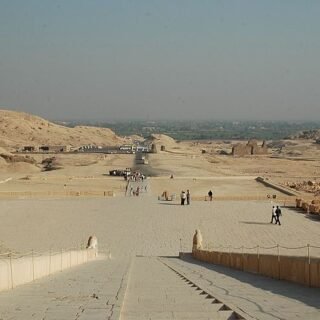
The discovery and subsequent dispersal of Bab el-Gasus have left a lasting impact on Egyptology, inspiring both scholarly research and public fascination. Efforts such as the “Gate of the Priests”...

The Egyptian Museum of Berlin, part of the Neues Museum on Museum Island, is one of the world’s premier institutions for the study and display of ancient Egyptian artifacts. Its...
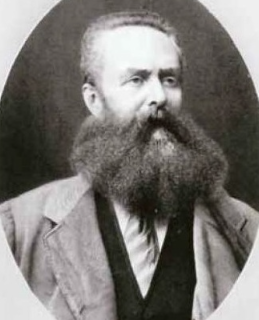
Count Michał Tyszkiewicz (1828–1897) was a Polish-Lithuanian nobleman, antiquities collector, and early Egyptologist whose passion for ancient history and artifacts helped shape the study of Egyptian antiquities in Europe. Born...

E. A. Wallis Budge (1857–1934) was a prominent English Egyptologist, philologist, and author who made significant contributions to the study and popularization of ancient Egyptian and Near Eastern culture. Known...

John Gardner Wilkinson played a crucial role in the 19th-century exploration of ancient Egyptian tombs, particularly in Thebes. Arriving in Egypt in 1821, he spent over a decade documenting the...

King Tutankhamun‘s tomb, officially catalogued as KV62, is located in the Valley of the Kings near Luxor, Egypt. Discovered on November 4, 1922, by British archaeologist Howard Carter and financed...

The discovery of the tomb of Tutankhamun in 1922 by Howard Carter and George Herbert, 5th Earl of Carnarvon, marked a watershed moment in the history of Egyptology and captured...





