The Electoral College is a unique and foundational element of the U.S. presidential election system. It is a process, not a physical institution, established by the United States Constitution in 1787. The system reflects the complex balance between state and federal interests, the mistrust of direct democracy held by the Founding Fathers, and the desire to give smaller states more power in the presidential election process. While it has played a key role in every U.S. presidential election since its creation, it has also been the subject of ongoing debate and controversy.
To understand the Electoral College fully, World History Edu explores its historical origins, how it works, how it has evolved, and the major criticisms and defenses of this unique system.
This in-depth examination will cover its inception at the Constitutional Convention, the changes brought by the Twelfth Amendment, significant elections that shaped its use, and the reform efforts that continue to this day.

Every four years, American voters cast ballots for a slate of electors rather than directly for the president. These electors, chosen by each state, make up the Electoral College. The electors are pledged to vote for the presidential candidate who wins the popular vote in their state, and their collective votes determine the president, not the national popular vote itself.
Historical Origins: The Constitutional Convention of 1787
The Electoral College was born out of intense debates during the Constitutional Convention in Philadelphia in 1787. The Founding Fathers faced a critical dilemma: how to elect the president in a way that balanced the powers of the federal government with the rights of individual states while protecting the fledgling nation from potential dangers of direct democracy.
Several methods for selecting the president were proposed during the Convention, including direct election by the people, election by Congress, and election by state governors or legislatures. However, each proposal had its supporters and detractors, and none could gain universal approval.
Fears of Direct Democracy
One of the key concerns of the delegates at the Convention was the fear of direct democracy. While the idea of giving power directly to the people was supported by some, many Founders worried that popular elections could lead to the rise of demagogues—leaders who would appeal to the emotions of the masses to gain power, even if they lacked the necessary qualifications to lead the nation effectively. Virginia delegate George Mason famously likened allowing the general public to directly elect the president to “referring a trial of colors to a blind man.”
At the time, there was also the concern that most voters would lack the knowledge and information needed to make an informed choice about who should be president. Without the communication tools that exist today, many voters would have had little access to information about candidates outside their own states. The Founders feared that this lack of information would lead to regional candidates being favored, which could result in a fragmented or unworkable presidency.
Balancing State and Federal Interests
Another major challenge was the need to balance the interests of large and small states. Delegates from smaller states were worried that a direct national election would leave them overshadowed by larger states with more voters. They wanted a system that would give them a proportional role in choosing the president, rather than being dominated by the more populous states.
The result was the creation of the Electoral College, which gave each state a number of electors equal to its total number of representatives in Congress (the sum of its senators and representatives in the House). This gave smaller states at least three electoral votes, ensuring that they would have a voice in the presidential election process.
The system also sought to balance the interests of slaveholding and non-slaveholding states. The infamous Three-Fifths Compromise, which counted enslaved individuals as three-fifths of a person for purposes of representation, gave Southern states more electoral power than they would have had based solely on their voting populations.
The Final Compromise
The Electoral College was proposed as a compromise that addressed both concerns—the need for a buffer between the popular vote and the final decision, and the need to give smaller and less populous states a meaningful role in electing the president. Under this system, the people would vote for electors, who would then meet to cast their votes for the president and vice president. The Founders believed that these electors, who were chosen by the states, would be knowledgeable individuals capable of making an informed decision about who should lead the nation.
The system was included in Article II, Section 1 of the U.S. Constitution. It outlined how electors were to be chosen and how they would meet in their respective states to cast their votes for president. The candidate who received a majority of the electoral votes would become president. If no candidate received a majority, the election would be decided by the House of Representatives, with each state casting one vote.
READ MORE: Challenges faced by the Founding Fathers of the United States
The Electoral College in Early Elections
The first use of the Electoral College occurred in the 1789 election, in which George Washington was unanimously elected as the nation’s first president. In this early form of the system, each elector cast two votes: one for president and one for vice president. The person with the most votes became president, and the runner-up became vice president. This system worked smoothly in the early elections when there was a clear consensus candidate, like Washington, but as political parties began to form, the system’s flaws became apparent.
The Election of 1800 and the Twelfth Amendment
The election of 1800 exposed one of the major weaknesses of the original Electoral College system. Thomas Jefferson and Aaron Burr, both members of the Democratic-Republican Party, tied in the electoral vote, even though Jefferson was clearly intended to be the party’s presidential candidate and Burr was intended to be the vice-presidential candidate. The tie threw the election to the House of Representatives, where it took 36 ballots to break the deadlock and elect Jefferson as president. Burr’s refusal to step aside created a political crisis and highlighted the need for reform.
In response, the Twelfth Amendment was passed in 1804. This amendment changed the Electoral College process by requiring electors to cast separate ballots for president and vice president, preventing a repeat of the 1800 debacle. The Twelfth Amendment remains in effect today, and the process it established is largely the same one used in modern presidential elections.
How the Electoral College Works Today
The basic structure of the Electoral College remains largely unchanged from its original design, though it has been modified by the Twelfth Amendment and various state laws. Here’s how the system works today:
-
Allocation of Electors
Each state is allocated a number of electors equal to its total number of senators and representatives in Congress. This means that the minimum number of electors for any state is three (two senators and one representative). The total number of electors is 538, which includes three electors for the District of Columbia, as granted by the 23rd Amendment. The number of electors per state varies based on population, with larger states like California having 54 electors and smaller states like Wyoming having just three.
-
Selection of Electors
In most states, electors are chosen by political parties in advance of the general election. These electors are typically party loyalists or political figures who are pledged to vote for the party’s candidate if that candidate wins the popular vote in their state. The names of the electors are often not listed on the ballot, and voters may not even be aware that they are technically voting for electors rather than for the presidential candidates themselves.
-
General Election and Winner-Takes-All System
On Election Day, which is held on the first Tuesday after the first Monday in November, voters in each state cast their ballots for president. In 48 states and the District of Columbia, the candidate who wins the majority of the popular vote in the state receives all of the state’s electoral votes. This is known as the winner-takes-all system. Maine and Nebraska use a different method, allocating two electoral votes to the winner of the statewide popular vote and the remaining electoral votes based on the popular vote in each congressional district.
-
Electors Meet to Cast Their Votes
After the general election, the electors meet in their respective state capitals on the first Monday after the second Wednesday in December. At this meeting, they cast their official votes for president and vice president. These votes are recorded on Certificates of Vote, which are sent to Congress to be counted.
-
Certification of Electoral Votes
In early January, Congress meets in a joint session to count the electoral votes and certify the results. The Vice President, who serves as the President of the Senate, presides over the session and formally announces the winner. If a candidate receives a majority of the electoral votes (270 out of 538), they are declared the winner. If no candidate receives a majority, the election is decided by the House of Representatives, with each state casting one vote.
-
Inauguration
The president-elect and vice president-elect are inaugurated on January 20, officially beginning their terms of office.
Major Elections and Controversies
Throughout U.S. history, there have been several presidential elections where the workings of the Electoral College have led to controversy or unusual outcomes. In some cases, candidates have won the presidency despite losing the popular vote, which has fueled debate over whether the system should be reformed or abolished.
1. Election of 1824
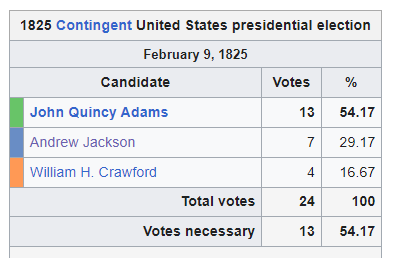
The election of 1824 was one of the first major Electoral College controversies. In this election, four candidates—Andrew Jackson, John Quincy Adams, William Crawford, and Henry Clay—competed for the presidency.
Jackson won the most electoral votes but did not secure a majority. As a result, the election was decided by the House of Representatives, which chose Adams as president, despite Jackson having won the popular vote. Jackson and his supporters decried the outcome as a “corrupt bargain” and used it as a rallying cry in the next election, which Jackson won.
2. Election of 1876
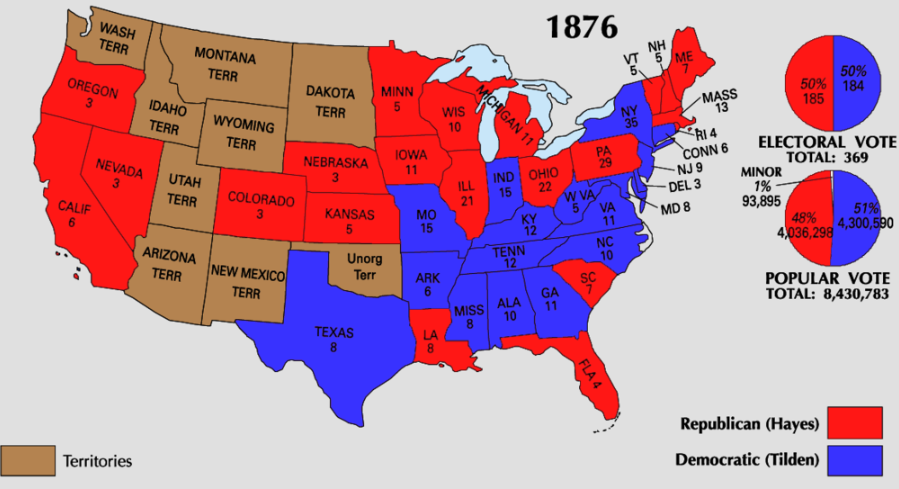
The election of 1876 between Rutherford B. Hayes and Samuel J. Tilden was one of the most contentious in U.S. history. Tilden won the popular vote, but there were disputes over the electoral votes in several states.
A special electoral commission was created to resolve the disputes, and Hayes was eventually declared the winner by a single electoral vote, even though he lost the popular vote by more than 250,000 votes. The outcome was part of a political deal that ended Reconstruction in the South.
3. Election of 1888
In the election of 1888, incumbent President Grover Cleveland won the popular vote but lost the electoral vote to Benjamin Harrison. Harrison won key swing states and secured the necessary electoral votes to win the presidency, despite Cleveland receiving more total votes nationwide.

4. Election of 2000
The 2000 election between George W. Bush and Al Gore brought renewed attention to the Electoral College and its potential flaws. Gore won the national popular vote by more than 500,000 votes, but the outcome hinged on the results in Florida, where the vote was extremely close. After weeks of recounts and legal challenges, the U.S. Supreme Court ultimately ruled in favor of Bush in Bush v. Gore, effectively awarding Florida’s electoral votes to Bush and giving him a narrow victory in the Electoral College.
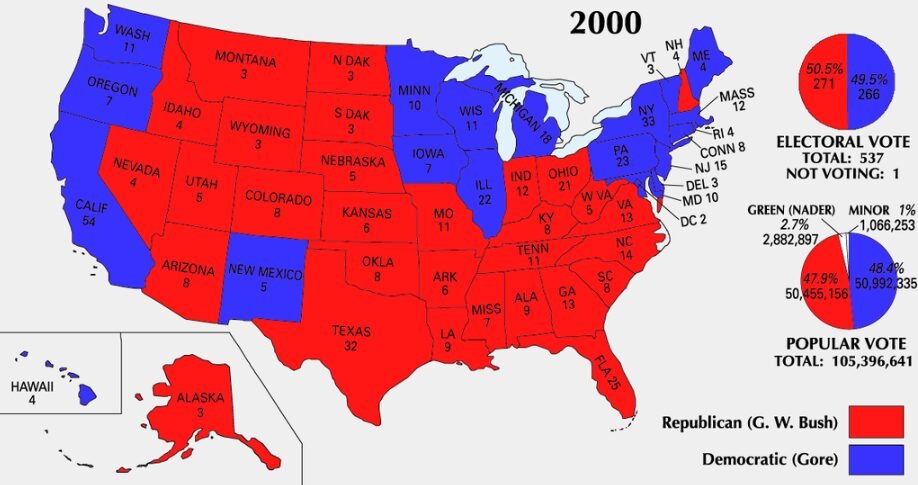
The Electoral College has played a significant role in shaping recent elections, particularly in 2000 and 2016, when the winning candidates (George W. Bush and Donald Trump) lost the popular vote but won the Electoral College. These elections reignited debates over the fairness and relevance of the Electoral College in modern American democracy.
5. Election of 2016
The 2016 election between Donald Trump and Hillary Clinton was another instance where the Electoral College produced a result that did not match the popular vote. Clinton won the popular vote by nearly 3 million votes, but Trump won key swing states like Pennsylvania, Michigan, and Wisconsin, giving him a majority of the electoral votes. This outcome reignited calls for reform of the Electoral College system.

2016 United States presidential election
Criticisms of the Electoral College
The Electoral College has faced numerous criticisms throughout its history, particularly in light of elections where the popular vote winner did not become president. Some of the key criticisms include:
1. Disproportionate Influence of Smaller States
One of the most significant criticisms of the Electoral College is that it gives smaller states disproportionate influence. Because each state is guaranteed at least three electoral votes, even the least populous states have more electoral power per capita than larger states. For example, Wyoming has three electoral votes for its population of about 580,000, while California has 54 electoral votes for its population of nearly 40 million. This means that a vote in Wyoming carries more weight in the Electoral College than a vote in California.
2. Winner-Takes-All System
The winner-takes-all system used in most states can result in a candidate winning all of a state’s electoral votes even if they only win a narrow majority of the popular vote in that state. This system can also lead to significant disparities between the popular vote and the electoral vote, as seen in the 2000 and 2016 elections. Critics argue that this undermines the democratic principle of “one person, one vote” and can result in candidates being elected without broad public support.
3. Focus on Swing States
Because of the winner-takes-all system, presidential campaigns tend to focus on a small number of swing states—states where the outcome is uncertain and could go either way. States that are reliably Democratic or Republican are often ignored, as their outcomes are seen as predictable. This focus on swing states can skew national campaigns and policy discussions, as candidates tailor their messages to appeal to voters in these critical states rather than addressing the concerns of the entire nation.
4. Faithless Electors
Faithless electors are electors who vote for someone other than the candidate they are pledged to support. While rare, faithless electors have appeared in several elections, raising concerns about the integrity of the Electoral College system. Most states have laws requiring electors to vote according to the popular vote, but the existence of faithless electors adds an element of uncertainty to the process.
5. Minority Rule
The Electoral College can lead to situations in which a candidate wins the presidency with less than a majority of the popular vote. This has happened five times in U.S. history, most recently in 2016. Critics argue that this undermines the legitimacy of the election and the democratic process, as the president may not have broad support from the electorate.
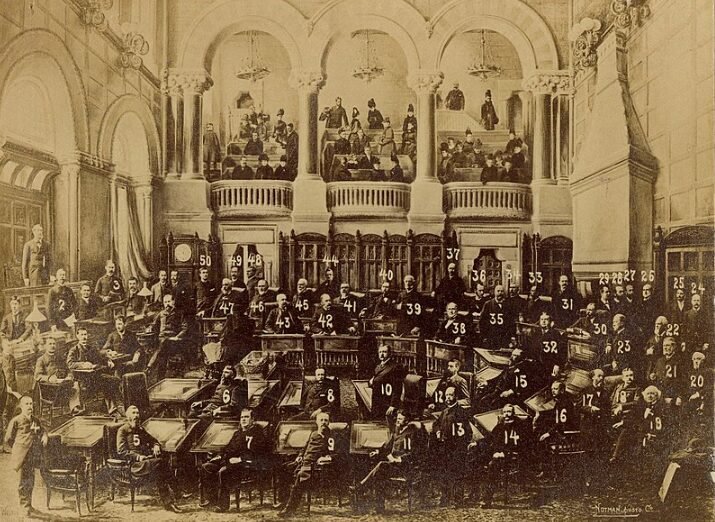
New York’s Electoral College delegation voted for Benjamin Harrison in 1888, one of five presidents elected without the popular vote.
Defenses of the Electoral College
While the Electoral College has its detractors, it also has staunch defenders who argue that the system plays an important role in preserving the federal nature of the United States and preventing the tyranny of the majority. Some of the key defenses of the Electoral College include:
1. Preserving Federalism
Supporters of the Electoral College argue that the system helps preserve the federal nature of the United States by ensuring that states play a key role in the presidential election process. By giving states a voice in the election, the Electoral College ensures that smaller states are not overshadowed by larger states with bigger populations. This helps to maintain the balance of power between the states and the federal government.
2. Preventing Regional Candidates
The Electoral College encourages candidates to build broad coalitions across multiple states, rather than focusing solely on winning votes in large population centers or specific regions. This helps prevent the rise of regional candidates who may appeal to voters in one part of the country but lack national support.
3. Stability and Certainty
The Electoral College provides a clear and definitive process for electing the president, which helps ensure the stability of the political system. In most cases, the Electoral College produces a decisive outcome, even when the popular vote is close. This can help prevent prolonged legal battles or disputes over the election results, as seen in the 2000 election.
Reform Proposals
Over the years, there have been numerous proposals to reform or abolish the Electoral College. Some of the most prominent reform ideas include:
1. Abolishing the Electoral College
One of the most straightforward reform proposals is to abolish the Electoral College altogether and replace it with a direct popular vote for president. This would ensure that the candidate who receives the most votes nationwide is elected president, which advocates argue would be more democratic and reflective of the will of the people. However, abolishing the Electoral College would require a constitutional amendment, which is a difficult and lengthy process that requires the approval of two-thirds of both houses of Congress and three-fourths of the states.
2. National Popular Vote Interstate Compact (NPVIC)
The National Popular Vote Interstate Compact is an agreement among a group of U.S. states and the District of Columbia to award their electoral votes to the winner of the national popular vote, regardless of the outcome in their own state. The compact would only take effect if enough states join to guarantee that the national popular vote winner receives at least 270 electoral votes. As of now, the compact has been adopted by 16 states and the District of Columbia, representing 195 electoral votes, but it has not yet reached the 270-vote threshold needed to go into effect.
3. Proportional Allocation of Electoral Votes
Another reform proposal is to allocate electoral votes proportionally, rather than using the winner-takes-all system. Under this system, electoral votes would be distributed based on the percentage of the popular vote that each candidate receives in a state. For example, if a candidate wins 60% of the vote in a state with 10 electoral votes, they would receive 6 electoral votes, while their opponent would receive 4. This system would more accurately reflect the popular vote while maintaining the structure of the Electoral College.
4. District System
A variation of the proportional allocation proposal is the district system used by Maine and Nebraska. In this system, electoral votes are awarded based on the results in individual congressional districts, with two additional votes going to the statewide winner. This system allows for a more nuanced distribution of electoral votes and reduces the impact of the winner-takes-all approach.
Conclusion
The United States Electoral College is a complex and controversial institution that has played a central role in the country’s presidential elections for more than two centuries. While it was designed to balance the interests of large and small states and provide a safeguard against populism, it has also been criticized for its potential to result in minority rule, its focus on swing states, and its disproportionate influence on smaller states.
As political dynamics continue to evolve and as the country grapples with questions about the future of its democratic institutions, the debate over the Electoral College is likely to persist. Whether it remains in its current form or undergoes significant reform will depend on the outcome of ongoing political debates and the ability to build consensus for change.
Frequently Asked Questions about the United States Electoral College

Electoral votes, out of 538, allocated to each state and the District of Columbia for the 2024 and 2028 elections are based on the 2020 census, with each jurisdiction receiving at least 3 votes. Image: Electoral College vote certificates from the 2020 election were secured by congressional staff during the January 6 Capitol attack.
What is the primary argument in favor of the Electoral College?
Supporters argue that the Electoral College requires presidential candidates to appeal to a broad range of voters across the country, preventing them from focusing solely on large population centers. This encourages candidates to campaign in different regions and seek support from a variety of states, ensuring a more geographically diverse voter base.
How does the winner-takes-all method work in most states?
In most states, the winner-takes-all method awards all of the state’s electoral votes to the candidate who wins the majority of the popular vote in that state, regardless of the margin of victory. For example, if a candidate wins 51% of the vote in a state, they receive 100% of the state’s electoral votes.
Which states do not use the winner-takes-all system?
Maine and Nebraska do not use the winner-takes-all system. Instead, they allocate two electoral votes to the statewide winner, while the remaining votes are distributed based on the results in individual congressional districts.
What is a primary criticism regarding the unequal distribution of voting power in the Electoral College?
Critics argue that the Electoral College gives disproportionate voting power to smaller states. Because each state receives a minimum of three electors regardless of population size, voters in smaller states like Wyoming have more electoral influence per capita compared to voters in larger states like California. This is seen as a violation of the “one person, one vote” principle.
What are “faithless electors,” and why are they a concern?
Faithless electors are electors who do not cast their vote in line with the outcome of the popular vote in their state. Although most states have laws requiring electors to honor their pledges, the possibility of faithless electors going against the will of the voters remains a concern. However, such instances have been rare and have never changed the outcome of an election.
Why do critics argue that the Electoral College gives disproportionate importance to swing states?
Critics argue that the Electoral College system places too much focus on swing states—those where neither political party has a clear advantage. Because these states can decide the outcome of the election, candidates tend to focus their campaigns and resources on swing states, while voters in “safe” states may feel ignored or neglected.
What reforms have been proposed to address the issues with the Electoral College?
Many have proposed abolishing the Electoral College in favor of direct popular elections for the president. This would ensure that the candidate who receives the most votes nationwide wins the election. Other reforms include proportional allocation of electoral votes or adopting the National Popular Vote Interstate Compact, where states agree to allocate their electoral votes to the winner of the national popular vote.
How are electors chosen according to the U.S. Constitution?
According to Article II, Section 1, Clause 2 of the U.S. Constitution, each state appoints a number of electors equal to its congressional delegation (the number of representatives plus two senators). The method for selecting electors is determined by state legislatures, and federal office holders are prohibited from serving as electors.
How are electoral votes officially counted?
After the electors cast their votes in December, the results are sent to Congress, where they are officially counted during a joint session of the House and Senate in early January. The vice president, as president of the Senate, presides over this session. If no candidate receives a majority of electoral votes (at least 270), a contingent election is held.
What happens if no candidate receives a majority of electoral votes?
If no candidate wins a majority of electoral votes, a contingent election takes place. The House of Representatives elects the president, with each state delegation casting one vote. The Senate elects the vice president, with each senator casting one vote.
How did the ratification of the Twenty-third Amendment affect the Electoral College?
The Twenty-third Amendment, ratified in 1961, granted Washington, D.C., three electoral votes, giving the federal district representation in the Electoral College. This brought the total number of electors to 538, where it remains today.
Why was the Electoral College originally chosen as the method for electing the president?
The Electoral College was chosen as a compromise during the Constitutional Convention to balance the interests of small and large states and to protect the influence of slave states. Smaller states and slave states sought to increase their power in presidential elections, and the Three-Fifths Compromise allowed enslaved people to be counted for purposes of allocating electors, even though they could not vote.
What did Alexander Hamilton argue in favor of the Electoral College in Federalist No. 68?
In Federalist No. 68, Alexander Hamilton argued that the Electoral College would ensure that the president was chosen by knowledgeable and independent electors, rather than through popular vote or by Congress. He believed this system would help prevent corruption and foreign influence, as electors would meet in their states and vote separately, rather than gathering in one place where they could be manipulated.
What changes were made to the Electoral College by the Twelfth Amendment?
The Twelfth Amendment, ratified in 1804, addressed issues from earlier elections by requiring electors to cast separate ballots for president and vice president. This eliminated the confusion that had occurred in the election of 1800, where Thomas Jefferson and Aaron Burr received the same number of electoral votes, leading to a deadlock.

What role did political parties play in complicating the Electoral College system?
The emergence of political parties and nationally coordinated election campaigns complicated the Electoral College system. In the elections of 1796 and 1800, the system led to situations where the president and vice president came from different parties, or where a tie occurred between candidates from the same party, which led to the creation of the Twelfth Amendment.
Why do some argue that the Electoral College undermines democratic principles?
Critics argue that the Electoral College undermines democratic principles by allowing minority rule. A candidate can win the presidency without winning the national popular vote, and the system gives disproportionate power to smaller states and swing states. This, critics claim, distorts the will of the majority of voters.
What is the National Popular Vote Interstate Compact, and how does it aim to reform the Electoral College?
The National Popular Vote Interstate Compact is an agreement among several U.S. states to award their electoral votes to the winner of the national popular vote, regardless of the outcome in their individual states. The compact would go into effect if states representing at least 270 electoral votes join the agreement, effectively ensuring that the president is elected by the national popular vote.
How does the Electoral College balance state and federal interests?
The Electoral College was designed to balance state and federal interests by giving each state a role in selecting the president. It combines state-based representation (through the allocation of two electors per state) with population-based representation (through the allocation of electors based on the number of House representatives).
How does the focus on swing states affect national elections?
The focus on swing states affects national elections by shifting the attention of candidates toward these pivotal states. As a result, candidates may prioritize the issues and concerns of swing state voters, while voters in reliably Democratic or Republican states may feel that their votes have less impact on the outcome. This dynamic often skews campaign strategies and resource allocation.

In the 2020 presidential election, based on 2010 census data, Joe Biden won 306 electoral votes, while Donald Trump secured 232 out of the total 538 votes.





