
Ertuğrul is illustrated in the 16th-century Ottoman miniature book “Sübhatü’l-ahbâr” by Derviş Mehmed.
Ertuğrul Ghazi was a 13th-century leader of the Kayi tribe of the Oghuz Turks and the father of Osman I, the founder of the Ottoman Empire. Though historical records about his life are scarce, later Ottoman chronicles provide a mix of legend and history, portraying him as a courageous warrior and an instrumental figure in the rise of the Ottomans. His contributions laid the foundation for the state that would eventually become a global empire.
Early Life and Lineage
There is little definitive information about Ertuğrul’s early life, and much of what is known comes from sources written long after his time. According to Ottoman tradition, he was the son of Suleyman Shah, the leader of the Kayi tribe. However, some historical accounts suggest that he may have instead been the son of Gündüz Alp. Regardless of his parentage, Ertuğrul’s ancestry is often traced to Oghuz Khagan, a legendary figure believed to be a descendant of Noah.
The Kayi tribe, which belonged to the larger Oghuz Turkic confederation, was known for its warrior ethos and nomadic lifestyle. Fleeing from the Mongol invasions in Central Asia, Ertuğrul and his followers migrated westward into Anatolia, where they sought refuge and new opportunities under the rule of the Seljuk Sultanate of Rum.
Ertuğrul Ghazi was a 13th-century Turkic leader and the father of Osman I, the founder of the Ottoman Empire.
Migration to Anatolia and Alliance with the Seljuks
Following the death of his father, Ertuğrul and his followers ventured into Anatolia, leaving behind his brothers Sungur Tekin and Gündoğdu, who remained in the east. Alongside his mother, Hayme Hatun, and his brother Dündar Bey, Ertuğrul sought new lands in the west.
Upon arriving in Anatolia, Ertuğrul aligned himself with the Seljuk Sultanate of Rum, which was engaged in battles against the Byzantine Empire and other rival factions. His military prowess and loyalty to the Seljuks earned him the favor of Sultan Kayqubad I, who granted him lands in Karaca Dağ, a strategically significant mountainous region between Diyarbakır and Urfa.
Ertuğrul’s Role in Expanding Turkish Dominance
Ertuğrul’s alliance with the Seljuks was not merely symbolic; he played an active role in battles against the Byzantines and other adversaries. His leadership in securing victories for the Seljuks solidified his status as a formidable warrior and a key figure in frontier defense.
As a reward for his service, he was later granted control over the town of Söğüt, a small but strategically located settlement on the Byzantine border. This town would become the base for his tribe and later serve as the initial capital of the emerging Ottoman state.
Legacy as a Ghazi Warrior
Ertuğrul is often referred to as a “Ghazi,” a title given to Muslim warriors who fought against non-Muslim forces. This designation highlights his role in the struggle between the Muslim Turks and the Christian Byzantines. Like his son Osman I and later Ottoman rulers, he embodied the spirit of frontier warriors who expanded the Muslim domain in Anatolia.
The concept of Ghazi warriors played a significant role in shaping the Ottoman identity. They were not only military leaders but also protectors of Islam, and their conquests were often framed as religious and political missions.
Ertuğrul Ghazi remains one of the most celebrated figures in Ottoman history, despite the limited historical records available about his life.
Family and Succession
Ertuğrul had at least three known sons: Osman I, who went on to establish the Ottoman Empire; Saru Batu Savcı Bey; and Gündüz Bey. Though little is known about his other sons, Osman’s leadership and vision carried forward Ertuğrul’s legacy, turning his father’s small principality into a formidable state.
There are conflicting reports regarding Ertuğrul’s wife. Some sources claim that Osman’s mother was Halime Hatun, though the historical accuracy of this claim remains debated. A grave bearing her name exists near Ertuğrul’s tomb in Söğüt, further fueling speculation about her identity.
Historical Evidence of Ertuğrul’s Existence
While much of Ertuğrul’s story is rooted in legend, some historical evidence confirms his existence. A coin minted during the reign of Osman I bears the inscription “Minted by Osman son of Ertuğrul,” indicating that Ertuğrul was a real figure.
Additionally, Ottoman chronicles from the 15th century, including the works of historians such as Aşıkpaşazade and Enveri, document Ertuğrul’s role in laying the groundwork for the Ottoman state. However, earlier sources, such as those from the Seljuk period, do not mention him, leading some historians to question the authenticity of later narratives.
The Tomb and Commemoration of Ertuğrul
Ertuğrul is believed to have died around 1280 or 1281 in Söğüt, where he was buried. His tomb, originally built by Osman I, has undergone several renovations over the centuries. The most significant reconstruction was carried out by Sultan Abdul Hamid II in the 19th century.
Today, Ertuğrul’s tomb remains a revered site in Turkey, attracting visitors and historians alike. The town of Söğüt continues to hold an annual festival in his honor, celebrating his role in Ottoman history.
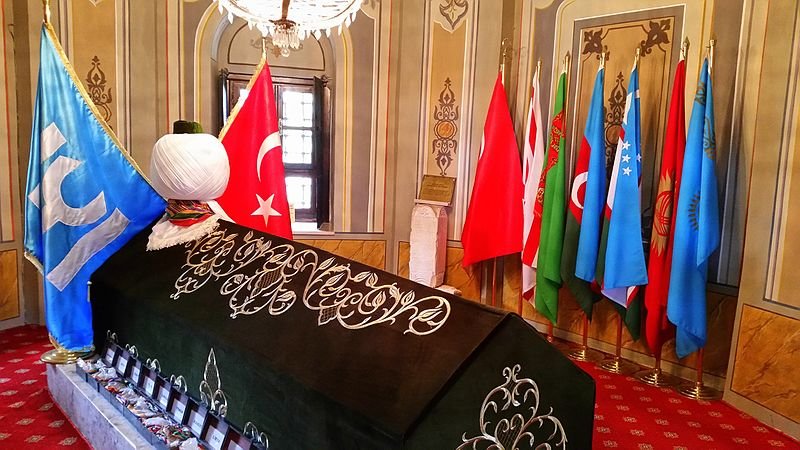
Grave of Ertuğrul
Did you know…?
In modern times, Ertuğrul has gained widespread recognition through television dramas and historical novels. The Turkish TV series Diriliş: Ertuğrul (2014–2019) brought his story to a global audience, dramatizing his struggles, alliances, and battles. The show’s popularity led to an increased interest in his life and the early history of the Ottoman Empire.
Ertuğrul’s Influence on Ottoman Culture
Ertuğrul’s legacy extends beyond military conquests. His leadership style, commitment to justice, and role in establishing a principality on the Byzantine frontier served as a model for future Ottoman rulers. The Ottomans embraced the idea of Ghazi warriors and continued expanding their empire under the same ideological framework.
Ertuğrul also became a cultural icon, representing the values of bravery, loyalty, and Islamic piety. His name has been immortalized in various ways, including military regiments, naval ships, and mosques named in his honor.
Frequently Asked Questions
What is known about Ertuğrul Ghazi’s origins?
His lineage is debated; some sources claim he was the son of Suleyman Shah, while others suggest he was the son of Gündüz Alp.
What role did Ertuğrul play in the Seljuk Sultanate of Rum?
He served the Seljuks and was rewarded with dominion over Söğüt, laying the foundation for the Ottoman state.
Did Ertuğrul participate in military campaigns?
Yes, he assisted the Seljuks against the Byzantines, for which he was granted lands in Karaca Dağ and later Söğüt.
How do historians confirm Ertuğrul’s existence?
Coins minted by Osman I reference Ertuğrul as his father, confirming his historical existence.
What is Ertuğrul’s legacy?
His tomb in Söğüt is a significant historical site, and he is honored through annual festivals, monuments, and mosques.
What was Ertuğrul’s religious and cultural significance?
He is regarded as a Ghazi, a champion of Islam, who played a key role in establishing a strong Islamic-Turkic state.





