Establishment of the Tudor Dynasty: History & Major Facts
The establishment of the Tudor dynasty marked a significant turning point in English history, characterized by dramatic shifts in political power, social structure, and cultural development. In the article below, World History Edu explores the origins, rise, and impact of the Tudor dynasty, covering major events and figures that defined this era.

The Tudor dynasty’s establishment and reign were pivotal in shaping the course of English history. Image: Tudor Rose, the emblem of the House of Tudor.
Origins of the Tudor Dynasty
The Tudor dynasty’s roots trace back to the complex web of English and Welsh nobility. The family name “Tudor” derives from the Welsh name “Tudur.” The dynasty’s founder, Henry Tudor (Henry VII), was born on January 28, 1457, to Edmund Tudor and Margaret Beaufort.
Edmund Tudor (c. 1430 – 1456) was the son of Owen Tudor, a Welsh courtier who had secretly married Catherine of Valois, the widow of King Henry V of England. Margaret Beaufort was a descendant of John of Gaunt, Duke of Lancaster, and a legitimized descendant of Edward III.
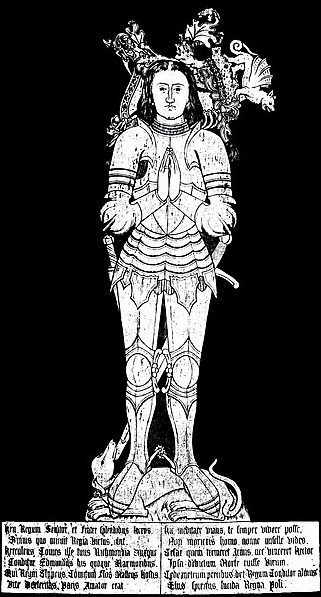
Known as the father of Henry VII of England, Edmund Tudor was the half-brother of Henry VI of England. Image: Edmund Tudor’s tomb effigy.
The political landscape of the time was tumultuous, dominated by the Wars of the Roses—a series of civil wars fought between the rival houses of Lancaster (red rose) and York (white rose) for control of the English throne. Henry Tudor’s claim to the throne was tenuous, but his Lancastrian lineage provided a glimmer of legitimacy amidst the chaos.
The Rise of Henry Tudor
Henry Tudor’s path to the throne was fraught with danger and uncertainty. After the death of his father, Edmund Tudor, and the seizure of power by the Yorkist King Edward IV, Henry and his mother fled to Brittany in France. There, Henry lived in exile, under constant threat from Yorkist agents.
The turning point came in 1483, when Richard III seized the throne after the death of his brother, Edward IV. Richard’s usurpation alienated many nobles and commoners, creating a fertile ground for rebellion. In 1485, Henry Tudor, backed by French financial and military support, launched an invasion of England. On August 22, 1485, Henry’s forces met Richard III’s army at the Battle of Bosworth Field.
The Battle of Bosworth Field was a decisive moment in English history. Richard III was killed in combat, and Henry emerged victorious. As the new king, Henry VII was crowned on the battlefield, symbolizing the end of the Wars of the Roses and the beginning of the Tudor dynasty. To solidify his claim, Henry married Elizabeth of York, the daughter of Edward IV, thus uniting the warring houses of Lancaster and York and symbolically ending the dynastic conflict.
Consolidation of Power
Henry VII’s reign (1485-1509) was marked by efforts to strengthen and stabilize the monarchy. He focused on consolidating power, reducing the influence of overmighty nobles, and restoring financial stability to the kingdom. Henry’s marriage to Elizabeth of York was a strategic move that helped to legitimize his reign and secure the loyalty of former Yorkist supporters.
To further secure his position, Henry implemented various policies to weaken the power of the nobility. He established the Court of Star Chamber, a judicial body that dealt with cases of corruption and abuse of power by nobles. He also relied heavily on financial bonds and recognizances to ensure the loyalty and good behavior of potentially troublesome nobles.
Henry VII’s fiscal policies were aimed at restoring the royal treasury, depleted by years of civil war. He carefully managed royal finances, avoiding costly wars and implementing efficient tax collection methods. By the end of his reign, Henry had amassed a considerable fortune, providing a stable financial foundation for his successors.
Henry VIII and the Break with Rome
Henry VII was succeeded by his second son, Henry VIII, in 1509. Henry VIII’s reign (1509-1547) is one of the most well-known periods of English history, marked by significant religious, political, and social changes.
One of the defining events of Henry VIII’s reign was his break with the Roman Catholic Church. Initially a devout Catholic, Henry’s desire for a male heir led him to seek an annulment of his marriage to Catherine of Aragon, which the Pope refused to grant. In response, Henry initiated a series of legislative acts that severed England’s ties with the Papacy, leading to the English Reformation.
The Act of Supremacy in 1534 declared Henry VIII the Supreme Head of the Church of England, effectively establishing a national church separate from Roman authority. This move allowed Henry to annul his marriage to Catherine and marry Anne Boleyn, although the subsequent marriages and political machinations further complicated the religious landscape.
Henry VIII’s dissolution of the monasteries (1536-1541) was another significant event, resulting in the closure and destruction of religious houses across England and the seizure of their wealth by the Crown. This not only enriched the monarchy but also fundamentally altered the religious and social fabric of the country.
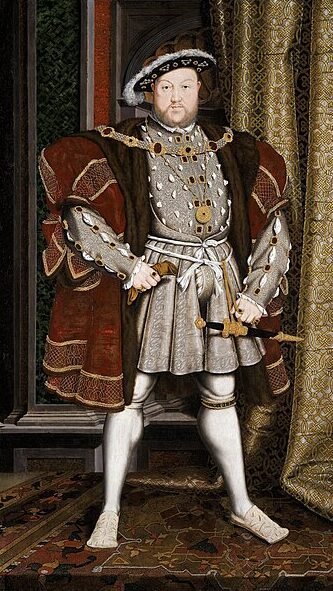
Image: Henry VIII (1491 – 1547)
Edward VI and the Protestant Reformation
Henry VIII was succeeded by his son, Edward VI, in 1547. Edward’s reign (1547-1553) was characterized by further advancements in the Protestant Reformation. As Edward was only nine years old at the time of his accession, his government was initially controlled by regents, including his uncle, Edward Seymour, Duke of Somerset, and later John Dudley, Duke of Northumberland.
During Edward’s reign, Protestant reforms were aggressively pursued. The Book of Common Prayer, first issued in 1549 and revised in 1552, standardized English-language worship and reflected Protestant theology. Additionally, the Forty-Two Articles of Religion (1553) outlined the doctrinal basis of the Church of England, emphasizing key Protestant beliefs.
Edward VI’s untimely death in 1553 at the age of 15 led to a succession crisis. Northumberland’s attempt to install Lady Jane Grey, a Protestant, as queen failed when Mary, Henry VIII’s Catholic daughter, rallied support and deposed Jane after only nine days on the throne.
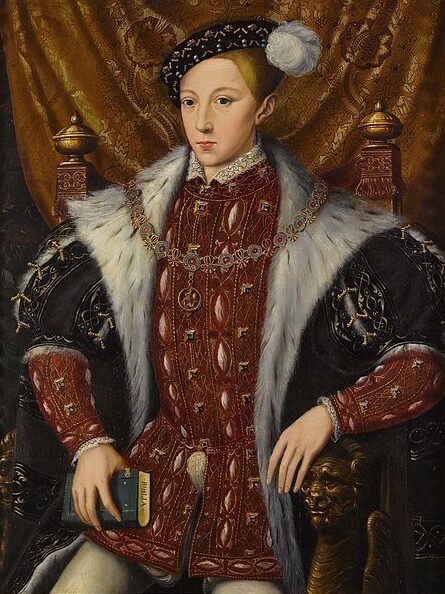
Image: Edward VI (1537 – 1553)
Mary I and the Catholic Restoration
Mary I, also known as “Bloody Mary,” reigned from 1553 to 1558. Her accession marked a dramatic reversal of her half-brother Edward’s Protestant reforms. A devout Catholic, Mary sought to restore Roman Catholicism in England. She repealed many of the religious laws enacted under her father and brother, and she reestablished papal authority over the English church.
Mary’s marriage to Philip II of Spain, a staunch Catholic, was deeply unpopular and fueled fears of Spanish domination. Her reign is most notorious for the Marian Persecutions, during which hundreds of Protestants were burned at the stake for heresy. These actions earned her the moniker “Bloody Mary” and deepened religious divisions within the country.
Mary’s efforts to reestablish Catholicism ultimately failed. Her harsh measures alienated many of her subjects, and her inability to produce an heir left the Protestant Elizabeth as her successor.
Elizabeth I and the Elizabethan Era
Elizabeth I, the last of the Tudor monarchs, ascended the throne in 1558. Her reign (1558-1603) is often referred to as the Elizabethan Era, a period marked by relative stability, flourishing arts, and exploration.
Elizabeth’s religious policy aimed at establishing a middle way between Catholicism and Protestantism, known as the Elizabethan Religious Settlement. The Act of Uniformity (1559) restored the use of the Book of Common Prayer, while the Thirty-Nine Articles (1563) defined the doctrinal foundations of the Church of England. Elizabeth’s pragmatic approach helped to ease religious tensions and avoid the extremes of her predecessors’ reigns.
Politically, Elizabeth faced numerous challenges, including threats from Catholic powers like Spain and internal plots to overthrow her. The most significant external threat was the Spanish Armada in 1588. The defeat of the Armada was a defining moment in Elizabeth’s reign, bolstering English national pride and establishing England as a formidable naval power.
Elizabeth’s reign also saw the flourishing of English culture, particularly in literature and theater. The works of William Shakespeare, Christopher Marlowe, and other playwrights and poets became defining features of the Elizabethan cultural renaissance. Exploration and colonization efforts expanded under Elizabeth, with figures like Sir Francis Drake and Sir Walter Raleigh playing prominent roles in establishing English presence in the New World.
The End of the Tudor Dynasty
Elizabeth I never married and left no direct heir. Her death in 1603 marked the end of the Tudor dynasty. The crown passed to James VI of Scotland, the son of Mary, Queen of Scots, who became James I of England, initiating the Stuart dynasty.
Despite its relatively brief duration, the Tudor dynasty left a profound legacy on England. The period saw the transformation of the monarchy, the establishment of the Church of England, and significant cultural developments. The Tudors navigated through civil wars, religious upheaval, and political intrigue, ultimately shaping the future of England and laying the groundwork for its emergence as a major European power.
Major Facts About the Tudor Dynasty
- Henry VII’s Ascendancy: The Tudor dynasty began with Henry VII’s victory at the Battle of Bosworth Field in 1485, ending the Wars of the Roses.
- Union of Houses: Henry VII married Elizabeth of York, uniting the houses of Lancaster and York and symbolically ending the dynastic conflict.
- Consolidation of Power: Henry VII established the Court of Star Chamber and implemented financial bonds to control the nobility and restore royal finances.
- Henry VIII’s Reign: Henry VIII’s reign saw the English Reformation, the break with Rome, and the establishment of the Church of England.
- Dissolution of Monasteries: Henry VIII dissolved monasteries, seizing their wealth and altering the religious and social landscape of England.
- Edward VI’s Protestant Reforms: Edward VI’s reign advanced Protestant reforms, including the Book of Common Prayer and the Forty-Two Articles of Religion.
- Mary I’s Catholic Restoration: Mary I attempted to restore Catholicism, leading to the Marian Persecutions and her unpopularity.
- Elizabeth I’s Religious Settlement: Elizabeth I established a middle way between Catholicism and Protestantism, easing religious tensions.
- Defeat of the Spanish Armada: Elizabeth I’s navy defeated the Spanish Armada in 1588, establishing England as a naval power.
- Cultural Flourishing: The Elizabethan Era saw a cultural renaissance with the works of Shakespeare, Marlowe, and other literary figures.
- Exploration and Colonization: Elizabeth’s reign expanded English exploration and colonization efforts in the New World.
- End of the Tudor Dynasty: The Tudor dynasty ended with Elizabeth I’s death in 1603, leading to the Stuart dynasty’s succession.
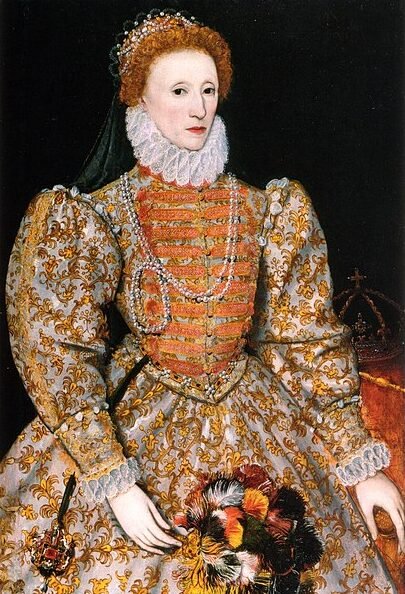
From the consolidation of power by Henry VII to the religious transformations under Henry VIII and Elizabeth I, the Tudors left an indelible mark on the nation’s political, religious, and cultural landscape. Image: Elizabeth I (1533 – 1603).
Frequently Asked Questions about the Tudors

The House of Tudor was an English and Welsh dynasty that held the throne of England from 1485 to 1603, ruling for 118 years. It included five monarchs: Henry VII, Henry VIII, Edward VI, Mary I, and Elizabeth I. Image: Mary I (1516 – 1558).
From where did the Tudor dynasty descend?
The Tudor dynasty descended from the Tudors of Penmynydd, a Welsh noble family, and Catherine of Valois.
Which two houses did the Tudors succeed and were followed by?
The Tudors succeeded the House of Plantagenet and were followed by the Scottish House of Stuart.
Who was the founder of the Tudor dynasty?
The founder of the Tudor dynasty was Henry Tudor, who became Henry VII.
Henry VII’s claim to the throne was legitimized through his victory at the Battle of Bosworth Field, where he defeated Richard III, and his marriage to Elizabeth of York, uniting the houses of Lancaster and York.
What significant event marked the beginning of the Tudor era?
The Battle of Bosworth Field on August 22, 1485, marked the beginning of the Tudor era, where Henry VII defeated and killed Richard III.
How did Henry VII consolidate his power during his reign?
Henry VII consolidated his power by establishing the Court of Star Chamber to curb the power of nobles, implementing financial measures to restore the royal treasury, and marrying Elizabeth of York to unite Yorkist supporters with his Lancastrian base.
What significant act did Henry VIII implement in Ireland?
Henry VIII implemented the Crown of Ireland Act 1542, which proclaimed English authority over the Kingdom of Ireland.
How did Henry VIII’s reign impact the religious landscape of England?
Henry VIII’s reign saw the English Reformation, which severed England’s ties with the Roman Catholic Church and established the Church of England with the king as its Supreme Head.
The Act of Supremacy and how the English Monarch became Supreme Head of the Church of England
What were the main issues during Henry VIII’s reign?
The main issues during Henry VIII’s reign included royal succession, marriage, the succession rights of women, and significant religious changes due to the English Reformation.
Henry VIII was succeeded by his son Edward VI, who continued Protestant reforms, and then by his half-sister Mary I, who attempted to restore Catholicism and earned the nickname “Bloody Mary” for her persecution of Protestants.
What was significant about Elizabeth I’s reign?
Elizabeth I’s reign, known as the Elizabethan Era, provided a period of stability and cultural flourishing. Her religious policy established a middle way between Catholicism and Protestantism, easing religious tensions, and her reign saw a cultural renaissance marked by the works of Shakespeare and other literary figures.
What event marked the end of the Tudor dynasty?
The death of Elizabeth I in 1603, who died childless, marked the end of the Tudor dynasty.
Elizabeth I was succeeded by her cousin James VI of Scotland, who became James I of England. This succession led to the Union of the Crowns, initiating the Stuart dynasty.
How did the formation of Great Britain and the United Kingdom happen?





