First siege of Missolonghi (1822)
The Greek War of Independence began in 1821, aiming to liberate Greece from centuries of Ottoman rule. Missolonghi, a strategically located port town in western Greece, played a critical role due to its position controlling naval and land routes. Following Ottoman victories at Peta and Suli, the path to Missolonghi became accessible to Ottoman forces.
The Start of the Siege

Reşid Mehmed Pasha, known as Kütahı (1780–1836), was an Ottoman general and Grand Vizier, pivotal in Greece’s War of Independence.
On October 25, 1822, an Ottoman army of approximately 11,000 troops, led by Omer Vrioni and Reşid Mehmed Pasha, with naval support from Yussuf Pasha of Patras, laid siege to Missolonghi. Inside the town, Greek leaders Alexandros Mavrokordatos, Markos Botsaris, and Athanasios Razi-Kotsikas commanded a small defense force of 600 men with just 14 cannons. Supplies were critically low, with food and ammunition expected to last only a month.
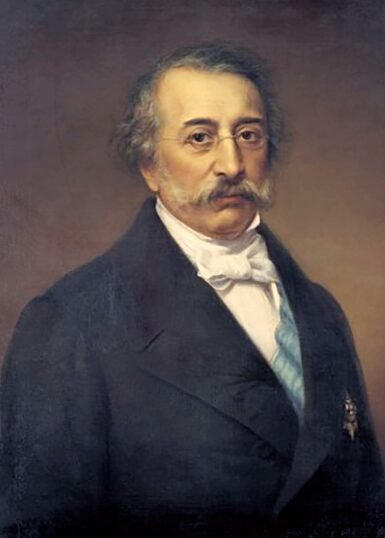
Alexandros Mavrokordatos (1791–1865) was a prominent Greek statesman, diplomat, politician, and Phanariote family member.
Ottoman Strategy and Greek Resistance
Rather than attacking immediately, the Ottomans attempted to negotiate with the Greeks, underestimating the defenders’ resolve. This delay allowed the Greeks to prolong the talks while awaiting reinforcements. By November, Greek ships had disrupted the Ottoman fleet and delivered fresh troops, food, and supplies to Missolonghi. The negotiations ended, and the Ottomans resumed the siege with greater determination.
The December Assault
Weeks of bombardment and minor skirmishes culminated in a planned Ottoman assault on the night of December 24, 1822. The attackers hoped to exploit the element of surprise, but a Greek informant working for Vrioni warned the defenders. The Greeks prepared their defenses, repelling the Ottoman attack in a decisive victory.
The Ottoman Retreat
By December 31, 1822, the siege was lifted as the Ottomans retreated. Their withdrawal was disastrous; while crossing the flooded Achelous River, over 500 Ottoman soldiers drowned. The failed siege marked a significant morale boost for the Greek forces and a severe embarrassment for the Ottoman leadership.
Aftermath and Symbolism
Missolonghi’s successful defense ensured it remained under Greek control. The town’s resistance became a symbol of the broader struggle for independence. Missolonghi would later face two more sieges, with its final fall in 1826 after a heroic defense. The town’s role in the war gained international recognition, especially with the arrival of Lord Byron, a key philhellene, who died there in 1824.
Significance of the First Siege
The First Siege of Missolonghi highlighted both Greek resilience and Ottoman miscalculations. It demonstrated the strategic importance of unity, preparation, and exploiting enemy errors. The town’s defense inspired Greek fighters and international supporters, cementing its legacy as a bastion of freedom in the Greek War of Independence.
Important Questions and Answers
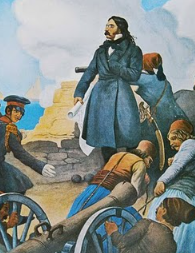
The First Siege of Missolonghi was an Ottoman attempt to capture the strategic port during Greece’s War of Independence. Image: Alexandros Mavrokordatos defends Missolonghi by German painter Peter von Hess
When did the First Siege of Missolonghi take place?
The siege began on October 25, 1822, during the early stages of the Greek War of Independence.
Why was Missolonghi strategically important?
It was a vital port town that could control access to western Greece, making it a key location in the war.
Who commanded the Ottoman forces during the siege?
The Ottoman forces were led by Omer Vrioni and Reşid Mehmed Pasha, with naval support from Yussuf Pasha.
What were the conditions inside Missolonghi during the siege?
The defenders, led by Alexandros Mavrokordatos, Markos Botsaris, and Athanasios Razi-Kotsikas, had only 600 men, 14 cannons, and limited provisions that could last about a month.

Markos Botsaris (1790–1823), a Souliot chieftain and general, heroically led efforts during Greece’s independence, especially at Missolonghi.
Why did the Ottomans initially fail to capture the town?
Instead of launching an immediate assault, they chose to negotiate, giving the Greeks time to bring reinforcements and supplies in November.
How did the Greeks repel the major Ottoman assault on December 24, 1822?
A warning from Vrioni’s Greek secretary allowed the defenders to prepare, and the Ottomans were defeated when they launched their surprise attack.

Vizier Omer Pasha Vrioni, an Ottoman Albanian commander and ruler, played a key role in the Greek War of Independence.
What were the consequences of the Ottoman retreat?
As the Ottoman army withdrew, over 500 soldiers drowned while crossing the flooded Achelous River.
What was the long-term significance of the First Siege of Missolonghi?
The successful defense boosted Greek morale, symbolized their resilience, and inspired international support for their independence struggle.





