Flora Tristan
Flora Tristan (1803–1844) was a pioneering French-Peruvian writer and activist who played a vital role in shaping early feminist theory and socialist discourse. Her ideas on the intersection of gender equality and workers’ rights not only influenced her contemporaries but also paved the way for modern feminist and proletarian movements. Known for works such as Peregrinations of a Pariah (1838), Promenades in London (1840), and The Workers’ Union (1843), Tristan’s intellectual contributions endure as milestones in both feminist and socialist history. Her legacy as the grandmother of the painter Paul Gauguin further intertwines her name with cultural history.
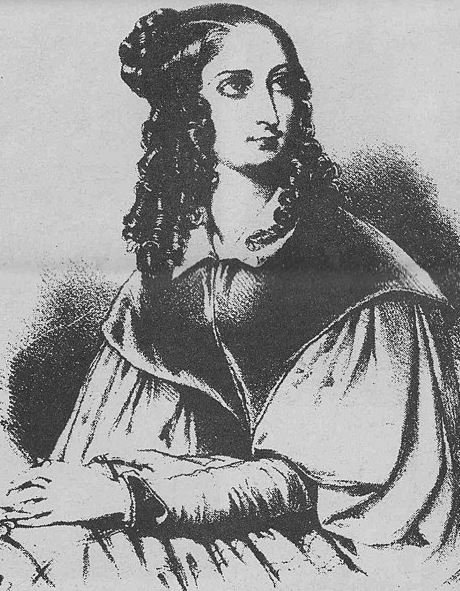
Portrait of Flora Tristan.
Early Life and Influences
Flora Tristan was born on April 7, 1803, in Paris, France, to a unique lineage that merged French and Peruvian heritage. Her father, Mariano Tristán y Moscoso, was a Peruvian colonel of the Spanish Navy and a member of a prominent family in Arequipa, Peru. Her mother, Anne-Pierre Laisnay, was French. The family’s fortunes took a sharp downturn after her father’s untimely death in 1807, leaving Flora and her mother to face financial difficulties.
In 1833, Flora traveled to Arequipa to claim her inheritance from her wealthy Peruvian relatives. Her uncle, Juan Pío de Tristán y Moscoso, controlled the inheritance and refused to grant her the wealth she believed was rightfully hers. Although her quest for financial security was unsuccessful, her experiences in Peru profoundly influenced her worldview. Her travel diary, later published as Peregrinations of a Pariah (1838), provides a vivid portrayal of the political and social upheavals in Peru during its post-independence era.
During this period, Tristan also encountered influential thinkers, including Simon Ganneau, a mystic with androgynous philosophies, and Éliphas Lévi, an occultist writer who became her close friend. These figures, along with her exposure to the realities of social inequality, shaped her later activism and writings.
Contributions to Feminism and Socialism
Flora Tristan’s work laid the groundwork for the fusion of feminist and socialist ideologies. At a time when both movements were fragmented and often dismissed, Tristan’s writings brought coherence to the struggles of women and workers, presenting them as intertwined causes.
Merging Feminism with Socialism
Tristan argued that the liberation of women was inseparable from the emancipation of the working class. Her analysis of capitalism’s failings highlighted how patriarchal structures oppressed women while economic systems exploited workers. Her insight that gender equality was essential for achieving social equality remains a cornerstone of feminist socialism.
In her groundbreaking work The Workers’ Union (1843), Tristan advocated for the unification of workers, emphasizing solidarity as a means to combat capitalist oppression. She extended this vision to include women, asserting that progress for the proletariat required gender emancipation. This work is considered one of the earliest attempts to organize workers on a global scale, predating later labor movements.
Feminist Foundations
Tristan was among the first thinkers to conceptualize feminism as a critical component of broader social reform. Her writings challenged the misogyny and prejudices of her time, offering a critique of how societal structures subordinated women. She built upon the ideals of the French Revolution, which had introduced notions of equality but largely excluded women from its promises.
Flora Tristan believed that the emancipation of the proletariat and the sexes were inseparable, advocating for workers’ unions and equality as pathways to social progress.
Tristan’s synthesis of feminist and socialist thought opened the door for later movements, particularly the rise of proletarian feminism in the late 19th and early 20th centuries. By addressing the intersections of class and gender oppression, she inspired future activists to adopt more inclusive approaches to social justice.
Notable Works
Tristan’s writings remain significant for their intellectual depth and practical relevance. Each of her major works reflects her engagement with critical social issues of her time.
Peregrinations of a Pariah (1838)
This travel memoir documents Tristan’s journey to Peru and offers a sharp critique of the inequities she observed. Blending personal narrative with political commentary, the book explores themes of colonialism, social stratification, and gender inequality.
Promenades in London (1840)
In this work, Tristan examines the conditions of the working poor in London, offering a detailed account of the city’s urban squalor. Her observations highlight the dehumanizing effects of industrial capitalism, particularly on women and children.
The Workers’ Union (1843)
Perhaps her most influential work, The Workers’ Union is a call to action for the working class to unite across national boundaries. Tristan outlines practical steps for organizing workers, advocating for universal education, equal pay for women, and labor rights.
Legacy
Flora Tristan’s impact on feminist and socialist thought cannot be overstated. She was one of the first to articulate a vision of societal progress that required the simultaneous liberation of women and workers.
Tristan’s writings helped shape the trajectory of feminist thought by emphasizing the structural roots of gender inequality. She provided a foundation for later feminists to address not only individual discrimination but also systemic oppression. Her assertion that “there exist oppressed women who are capable of oppressing other women” remains a poignant reminder of the complexities within feminist struggles.
Tristan’s vision of worker solidarity laid the groundwork for subsequent labor movements and socialist ideologies. Her call for the organization of workers as a unified force anticipated the formation of international labor unions and inspired figures such as Karl Marx and Friedrich Engels.
As women’s histories gained prominence, Tristan’s life and work emerged as vital sources for understanding the contributions of women to social progress. Her advocacy for gender and class equality serves as a testament to the enduring relevance of her ideas.
Family Connections
Flora Tristan’s family tree is notable for its influence across various fields. She was the grandmother of Paul Gauguin, a celebrated post-impressionist painter known for his vivid depictions of Tahitian life. This familial connection adds another layer to Tristan’s legacy, linking her intellectual contributions to the cultural sphere.
Challenges and Final Years
Flora Tristan’s activism was met with resistance during her lifetime. Her ideas often clashed with the prevailing norms of society, making her a polarizing figure. Despite these challenges, she remained committed to her mission of social and gender equality.
Tristan’s tireless efforts took a toll on her health. She died on November 14, 1844, at the age of 41, while advocating for workers’ rights. Her final days were marked by her unwavering dedication to the causes she championed.
Frequently Asked Questions
What is Flora Tristan’s connection to Peru?
Tristan’s father was a Peruvian aristocrat, and she traveled to Peru in 1833 to claim her inheritance. Though unsuccessful, her experiences were documented in her book Peregrinations of a Pariah (1838).
What are Flora Tristan’s most notable works?
Her most significant works include Peregrinations of a Pariah (1838), Promenades in London (1840), and The Workers’ Union (1843), which addressed workers’ rights and women’s equality.
What was Flora Tristan’s contribution to feminism and socialism?
Tristan merged feminist and socialist ideologies, asserting that the emancipation of the working class and gender equality were interconnected. She is considered a foundational figure in feminist and socialist movements.
How did Flora Tristan influence future feminist movements?
By organizing fragmented ideas of women’s equality from the French Revolution, Tristan laid the groundwork for the rise of feminism in the late 19th century, integrating feminist and proletarian struggles.
What role did spirituality play in her life?
Tristan was influenced by the mystic Simon Ganneau and occultist Éliphas Lévi, which shaped her philosophical and spiritual outlook on equality and justice.





