Founding Father William Hooper
William Hooper (1742–1790), a distinguished American Founding Father, transitioned from a loyal colonial attorney to a fervent supporter of American independence. His contributions to the Continental Congress, the signing of the Declaration of Independence, and his post-Revolution efforts shaped the nation’s formative years.
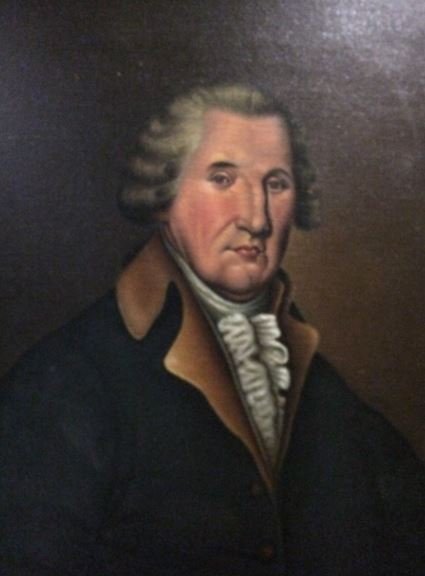
A portrait of William Hooper.
READ ALSO: Founding Fathers of the United States of America
Early Life and Education
William Hooper was born on June 28, 1742, in Boston, Massachusetts, as the eldest of five children. His father, also named William Hooper, was a Scottish minister who had studied at the University of Edinburgh before immigrating to Massachusetts. His mother, Mary Dennie, was the daughter of John Dennie, a prominent merchant from the area. Hooper’s father envisioned a future for his son in the clergy and enrolled him at the Boston Latin School at the age of seven, where he was instructed by the distinguished educator John Lovell.
By 1757, at the age of sixteen, Hooper entered Harvard University. He was recognized as a diligent student and graduated with honors in 1760, earning a Bachelor of Arts degree. Despite his father’s aspirations, Hooper chose not to pursue a career in the church and instead pursued a career in law. He apprenticed under James Otis, a prominent Boston attorney known for his radical views and opposition to British colonial policies. Hooper studied under Otis until 1764, when he completed his legal training. However, with Boston saturated with legal practitioners, Hooper sought new opportunities and decided to leave Massachusetts.
Life in North Carolina and Early Career
In 1764, Hooper relocated to Wilmington, North Carolina, where he began practicing law and soon established himself as a reputable circuit court lawyer in the Cape Fear region. He quickly gained the trust of the local elite, including wealthy landowners and influential lawyers, and earned recognition for his legal acumen. By 1767, Hooper solidified his standing by marrying Anne Clark, the daughter of a prosperous settler and the sheriff of New Hanover County. The couple had three children: William, born in 1768, Elizabeth, born in 1770, and Thomas, born in 1772.
Hooper’s career advanced rapidly, and he held multiple influential positions within a few years. In 1769, he was appointed deputy attorney of the Salisbury District and, by 1770, he became the deputy attorney general of North Carolina. Initially, Hooper was aligned with the British colonial government and actively supported Governor William Tryon during the War of the Regulation. The Regulators, a rebellious group opposing colonial taxation and corruption, became a growing threat to the colonial administration. Hooper advised Governor Tryon to suppress the rebels with force and even accompanied the troops to the Battle of Alamance in 1771, where the Regulators were defeated. Hooper’s association with Governor Tryon and his role in suppressing the rebellion led to resentment among many Patriots, who viewed him as a Loyalist.
Transition to Revolutionary Patriot
Hooper’s allegiance to the British crown began to waver as tensions between the colonies and Great Britain intensified. His disillusionment with British colonial policies and his growing belief that independence was inevitable led him to reassess his political views. Hooper was elected to the North Carolina General Assembly in 1773, where he opposed attempts to impose restrictive laws regulating the provincial courts. This stance alienated him from Loyalists and increased his standing among Patriots, though some still distrusted him due to his earlier support of Governor Tryon.
Hooper foresaw the likelihood of colonial independence and expressed his sentiments in a letter to his friend James Iredell, predicting that the colonies would “build an empire upon the ruins of Great Britain.” As his views aligned more closely with the Patriot cause, Hooper became actively involved in organizing a new colonial assembly after the governor disbanded the previous one. He was also appointed to the Committee of Correspondence and Inquiry, further solidifying his commitment to the Revolutionary movement.
Role in the Continental Congress and Signing of the Declaration of Independence
In 1774, Hooper was appointed as a delegate to the First Continental Congress, where he served on several key committees. He was re-elected as a delegate to the Second Continental Congress, but his responsibilities in North Carolina divided his time between Congress and local governance. As a result, Hooper was not present for the vote on the Declaration of Independence on July 4, 1776. However, he arrived in time to sign the document on August 2, 1776, securing his place in history as one of the signers of the Declaration.
Following the signing of the Declaration, Hooper’s financial situation deteriorated, leading him to resign from Congress in 1777 and return to North Carolina to resume his legal career. His support for the Patriot cause placed him in constant danger. The British sought to capture him, and his estates in both Finian and Wilmington were targeted and burned by British forces. Hooper moved his family to Wilmington for safety, but in 1781, after the British captured Wilmington following the Battle of Guilford Court House, Hooper was separated from his family and forced to rely on friends for survival. During this period, Hooper contracted malaria and endured significant hardship before reuniting with his family after nearly a year. They settled in Hillsborough, North Carolina, where Hooper resumed his work with the North Carolina assembly until 1783.
Post-Revolution Years and Political Career
After the conclusion of the American Revolution, Hooper returned to his legal practice but faced challenges due to his political leanings. Despite his contributions to the Revolution, Hooper’s leniency toward Loyalists and his alignment with the Federalist Party caused his popularity to decline. Hooper’s mistrust of the lower classes and his connections with the Federalist elite alienated him from many former allies. His compassionate approach toward Loyalists, whom he believed should be treated fairly, led some to accuse him of harboring Loyalist sympathies.
In 1786, Hooper was called back to public service when he was appointed a federal judge in a border dispute between New York and Massachusetts, although the case was ultimately resolved out of court. During the period leading up to the ratification of the United States Constitution, Hooper was an ardent advocate for its adoption. He campaigned extensively in North Carolina, promoting the benefits of a stronger federal government and urging the state to ratify the new Constitution.
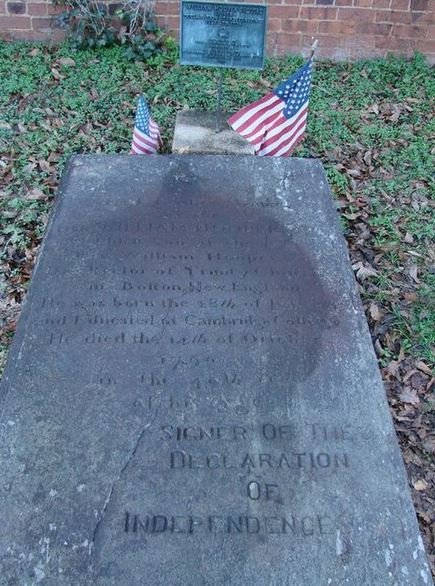
Grave of William Hooper, located in Hillsborough, North Carolina.
Declining Health and Death
By the late 1780s, Hooper’s health had begun to deteriorate. He continued to participate in public life despite his declining condition but eventually withdrew from active political engagement. On October 14, 1790, William Hooper died at the age of 48. He was laid to rest in the Presbyterian Churchyard in Hillsborough, North Carolina. Later, his remains were reinterred at Guilford Courthouse National Military Park, where they remain a symbol of his contributions to the founding of the United States.
William Hooper’s life reflects the complexities of the American Revolution and the challenges faced by those who navigated shifting political landscapes.
Legacy and Recognition
William Hooper’s contributions to the American Revolution and his role in shaping the nation’s early political landscape earned him a lasting legacy. Despite the controversies surrounding his political stance and his treatment of Loyalists, Hooper’s dedication to the cause of independence and his work in securing the nation’s future cannot be overlooked. His home in Hillsborough, known as the Nash-Hooper House, was declared a National Historic Landmark in 1971 and is part of the Hillsborough Historic District.

Frequently Asked Questions
What was William Hooper’s early educational background?
William Hooper attended Boston Latin School and later graduated from Harvard University in 1760 with honors. Though his father wished for him to enter the clergy, Hooper pursued a career in law, studying under Boston attorney James Otis.
Why did William Hooper move to North Carolina?
After completing his legal studies in 1764, Hooper moved to Wilmington, North Carolina, due to the oversaturation of lawyers in Massachusetts. He quickly established a reputable law practice and gained the trust of local elites.
How did Hooper initially view British colonial authority?
Initially, Hooper supported British colonial rule and worked closely with Governor William Tryon to suppress the Regulator rebellion in North Carolina. His role in the War of the Regulation led to tensions with Patriot sympathizers.
What caused Hooper to shift his allegiance to the Patriot cause?
Hooper’s views evolved as tensions between Britain and the colonies grew. By 1773, he had become a vocal critic of British policies and was elected to the North Carolina General Assembly, where he aligned himself with the Patriot cause.
What role did Hooper play in the Continental Congress?
Hooper served as a delegate to the First and Second Continental Congresses, where he contributed to the Revolutionary effort. Though he missed the initial vote on the Declaration of Independence, he signed it on August 2, 1776.
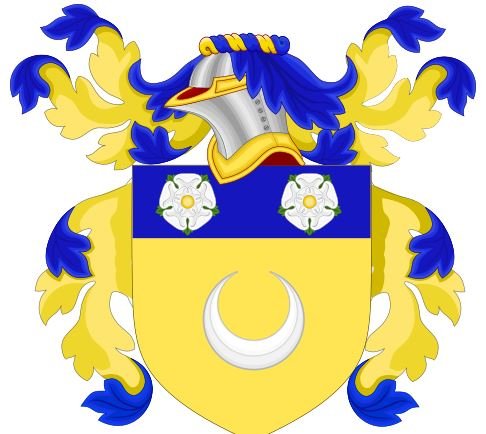
William Hooper’s Coat of Arms
Why did Hooper resign from Congress and return to North Carolina?
Hooper resigned from Congress in 1777 due to financial difficulties and the need to resume his law practice. He faced threats from the British and endured the destruction of his estates during the war.
How was Hooper perceived after the Revolution?
Hooper’s leniency toward Loyalists and alignment with the Federalist Party led to a decline in his popularity. Despite his contributions to the Revolution, his political stance created friction with many Patriots.
What is William Hooper’s lasting legacy?
Hooper’s contributions to American independence and his role in shaping the new nation’s government are commemorated through his home, the Nash-Hooper House, which was declared a National Historic Landmark in 1971.





