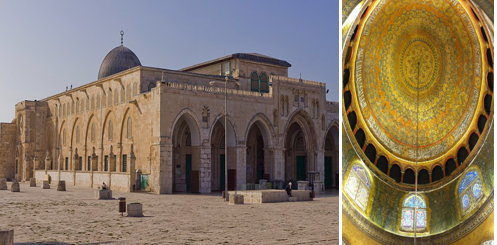
Muslim Conquest of the Levant in the 7th Century
The Muslim conquest of the Levant, also known as the Arab conquest of Syria, was a pivotal military campaign undertaken by the Rashidun Caliphate during the early years of Islam, from 634 to 638 CE. This event marked a significant shift in the political and cultural landscape of the region, leading to the gradual expansion of the Islamic Empire and the collapse of Byzantine rule in the Levant. The conquest occurred within the broader context of the Arab-Byzantine Wars, and its success was largely attributed to the leadership of figures such as Khalid ibn al-Walid, Abu Bakr, and Umar ibn al-Khattab.
Rashidun Caliphate and the First Four Muslim Caliphs of the Islamic World
Context of the Conquest: Roman Syria
Syria, a historical region that had been part of the Roman Empire for centuries, was a strategic area in the eastern Mediterranean. Under Roman rule, the region was organized into several provinces, including Syria and Palestine, which stretched from Antioch and Aleppo in the north to the Dead Sea in the south. The area was predominantly inhabited by Greek and Aramaic-speaking people, with a significant Arab population in the south and east, particularly under the influence of the Ghassanid Arabs, a Christian Arab tribe that acted as vassals to the Romans.
The Roman Empire had faced multiple challenges, including frequent invasions by the Sassanid Persians and internal instability. In the 7th century, the Byzantine Empire, as the Eastern Roman Empire was known, was recovering from a series of wars with the Persians. Despite this, the Byzantine military was stretched thin, and their control over Syria was precarious, especially in the face of increasing raids by Arab forces.

A map showing Muslim invasion of the Levant
Byzantine and Sassanid Struggles
Before the rise of the Rashidun Caliphate, Syria had been a battleground between the Byzantine Empire and the Sassanid Persians. The Byzantine emperor Heraclius had managed to reclaim Syria from the Sassanids after a lengthy war, culminating in the peace treaty of 628 CE. However, the region was left vulnerable, with Byzantine defenses weakened and many garrisons still recovering from the prolonged conflict. By the time of the Muslim conquests, Byzantine forces in the Levant were ill-prepared for the swift and aggressive Arab military campaigns that followed.
The Prelude: Muhammad’s Encounter with the Byzantines
Military confrontations between the early Muslims and the Byzantines began during the lifetime of the Prophet Muhammad. In 629 CE, the Battle of Mu’tah marked the first significant military engagement between the Muslim forces and the Byzantine Empire. Although the Muslims were defeated in this battle, it demonstrated their capability to challenge the Byzantine presence in the region.
In the years following Muhammad’s death in 632, the nascent Islamic state, under the leadership of Abu Bakr, sought to expand its influence and confront the Byzantine Empire directly. This led to a series of military expeditions into the Levant, starting with the expeditions led by Usama ibn Zayd in 632, which were aimed at avenging the deaths of prominent Muslims, including Muhammad’s close companion Zayd ibn Harithah.
Succession Following the Death of the Islamic Prophet Muhammad
The Rise of the Caliphate: Abu Bakr and Umar
The rise of the Rashidun Caliphate under Abu Bakr set the stage for the conquest of Syria. Abu Bakr’s leadership proved instrumental in unifying the Arab tribes after the Ridda Wars (the Wars of Apostasy), which were fought against tribes that had revolted after Muhammad’s death. With Arabia unified, Abu Bakr turned his attention toward external expansion, and the campaign against the Byzantine Empire was one of the key objectives.
Following Abu Bakr’s death in 634, his successor, Umar ibn al-Khattab, continued the military campaigns. Under Umar’s leadership, the Arab forces were reorganized, and the Rashidun army grew more disciplined and strategically efficient. The most notable military leader during this period was Khalid ibn al-Walid, known as “the Sword of Allah,” whose military prowess was crucial to the success of the conquest.

A calligraphic seal bearing Abu Bakr’s name, displayed in the Hagia Sophia, Istanbul.
The Initial Phase of the Conquest: 634–636 CE
The First Campaigns
The Muslim military campaign in Syria began in 634, when Abu Bakr ordered a series of coordinated expeditions into the region. The Rashidun forces were divided into several corps, each with specific objectives. These included Amr ibn al-As, who targeted Palestine; Yazid ibn Abu Sufyan, who aimed for Damascus; and Khalid ibn al-Walid, who focused on southern Syria. The initial phases of the conquest were marked by swift movements and a series of engagements that destabilized Byzantine control over the region.
One of the first significant encounters was the Battle of Ajnadayn, which took place in the summer of 634 near the hills of Jabal Ajnadayn in southern Syria. Despite being outnumbered, the Muslim forces decisively defeated the Byzantine army. This victory paved the way for further Muslim advances into Syria and Palestine.
The Role of Khalid ibn al-Walid
Khalid ibn al-Walid emerged as the foremost military leader of the Muslim forces. His strategic brilliance and bold tactics played a key role in the success of the conquest. After the Battle of Ajnadayn, Khalid moved swiftly through the region, capturing key cities and fortresses. His most famous maneuver was the strategic march through the desert, which caught the Byzantine forces by surprise and disrupted their defensive positions.
The military genius of Khalid ibn al-Walid and the leadership of Caliphs Abu Bakr and Umar ibn al-Khattab were key factors in the success of the campaign.
Khalid’s forces continued to advance, capturing cities such as Bosra and Damascus. The fall of Damascus in 636 was a pivotal moment in the conquest, as it was one of the most important Byzantine strongholds in the Levant. The city’s capture led to the collapse of Byzantine authority in much of Syria and forced Emperor Heraclius to retreat to Anatolia.

The Conquest of the Central Levant and Palestine
Following the fall of Damascus, the Muslim forces turned their attention to central Syria and Palestine. The cities of Emesa (modern Homs) and Palmyra were captured after fierce resistance. In Palestine, the Muslims launched a series of successful sieges, including the capture of Jerusalem in 637. The conquest of Jerusalem was a significant event, as it marked the end of Byzantine rule in the region and solidified Muslim control over the holy city.
The Muslim conquest of Palestine also had significant religious and cultural implications. While the Byzantine Empire had been a bastion of Christianity, the arrival of Islam led to the gradual integration of Palestinian territories into the Islamic world. The local Christian population was generally allowed to continue practicing their faith, and the city of Jerusalem became a major center of Islamic importance.
The Battle of Yarmouk: The Decisive Victory
One of the most decisive battles of the entire campaign occurred in 636 at the Battle of Yarmouk, near the Yarmouk River. This battle marked the end of Byzantine attempts to reclaim Syria and solidified Muslim dominance in the Levant. The Byzantine forces, commanded by Emperor Heraclius’ generals, were decisively defeated by Khalid ibn al-Walid’s forces, despite being heavily outnumbered.
The Battle of Yarmouk was a turning point in the Arab-Byzantine Wars, as it effectively ended Byzantine control over the Levant. After the battle, the Muslim forces were able to capture the remaining Byzantine strongholds in the region, including the city of Antioch, which fell in 637.
The Muslim conquest of the Levant had profound and lasting effects on the history of the region. It marked the end of Byzantine rule and the beginning of Islamic domination in the eastern Mediterranean.
The Conquest of Northern Syria and the Final Stages
After the defeat of the Byzantine army at Yarmouk, the Muslim forces moved northward, capturing key cities in northern Syria, including Aleppo and Chalcis. The Byzantine Empire, exhausted by the ongoing wars and unable to effectively reinforce its positions, could not mount a successful counteroffensive. By the end of 638, most of Syria and Palestine were under Muslim control, and the region was integrated into the newly established Islamic state.

A map showing the route of the Muslim invasion of northern Syria.
The Siege of Jerusalem
In 637, the Muslims laid siege to Jerusalem, which was one of the last major Byzantine strongholds in the region. The siege lasted several months, and the city eventually surrendered. The Muslim forces, under the leadership of Caliph Umar ibn al-Khattab, agreed to a peaceful conquest, allowing the Christian inhabitants to maintain their religious practices. This event was seen as a significant moment in Islamic history, as it marked the beginning of Muslim rule in Jerusalem.
The Administrative Changes Under Muslim Rule
After the conquest, the Muslim authorities reorganized the Levant into several administrative districts, known as “junds.” These included Jund Dimashq (Damascus), Jund Hims (Homs), Jund al-Urdunn (Jordan), and Jund Filastin (Palestine). The Muslims maintained a relatively tolerant policy towards the local Christian and Jewish populations, allowing them to practice their religions in exchange for paying the jizya (a tax levied on non-Muslims).
The Byzantine civil administration was largely retained in the short term, with Greek remaining the administrative language for several decades. However, the influence of the local Arab population grew, and the region gradually transformed under Islamic rule.

Frequently Asked Questions
Who were the key leaders during the conquest?
The key leaders were Khalid ibn al-Walid, the most prominent military commander, and the Caliphs Abu Bakr and Umar ibn al-Khattab, who organized and oversaw the campaigns.
How did the Byzantine Empire fare before the Muslim conquest?
The Byzantine Empire was weakened by long wars with the Sassanid Persians, and its military presence in the Levant was stretched thin, making the region vulnerable to the Muslim invasion.
What role did Khalid ibn al-Walid play in the conquest?
Khalid ibn al-Walid was instrumental in the success of the Muslim forces, using innovative tactics and strategic maneuvers, such as his surprise march through the Syrian desert, which disrupted Byzantine defenses.
What was the significance of the Battle of Yarmouk?
The Battle of Yarmouk (636 CE) was a decisive victory for the Muslims over the Byzantine army, effectively ending Byzantine rule in Syria and securing the Levant for the Rashidun Caliphate.
How did the Muslims manage to capture Jerusalem?
In 637 CE, after a lengthy siege, the Muslims captured Jerusalem. The city surrendered peacefully, and Caliph Umar ibn al-Khattab accepted the surrender, ensuring protection for Christian inhabitants.
What changes occurred in the Levant under Muslim rule?
The region was reorganized into several administrative districts, and while the Muslim rulers tolerated local Christian and Jewish populations, the region gradually became an integral part of the expanding Islamic state.
What was the long-term impact of the conquest?
The conquest of the Levant marked the end of Byzantine influence in the region and laid the foundations for the Umayyad Caliphate, with Damascus becoming the capital of a rapidly expanding Islamic empire.