Hungarian Composer and Violinist Joseph Joachim
Joseph Joachim was a celebrated Hungarian violinist, conductor, composer, and teacher of the 19th century, renowned for his performances, compositions, and close collaborations with Johannes Brahms.
Early Life and Origins
Joseph Joachim was born on June 28, 1831, in Köpcsény, Hungary, now Kittsee, Austria. The seventh of eight children in a Jewish-Hungarian family, he grew up in the prominent Köpcsény Kehilla, part of the Siebengemeinden under the Esterházy family’s protection. Despite modest means, his parents ensured he received excellent training. Joachim was also related to influential individuals such as philosopher Ludwig Wittgenstein and suffragette Maud Joachim.
At age five, Joachim began violin lessons with Stanisław Serwaczyński, the finest violinist in Pest. By age seven, he performed publicly, demonstrating early virtuosity. In 1839, Joachim continued his studies at the Vienna Conservatory with noted instructors like Joseph Böhm, who introduced him to chamber music.
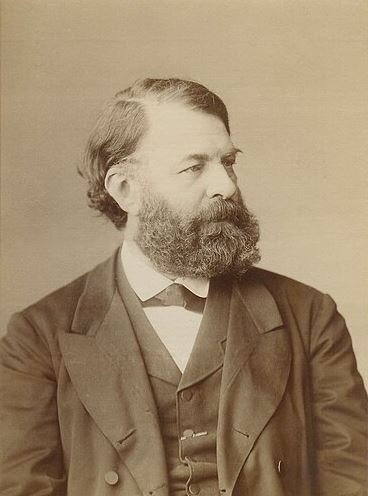
A photo of Joseph Joachim during his early 50s
Leipzig Years and Mentorship by Mendelssohn
In 1843, Joachim moved to Leipzig under the care of his cousin Fanny Wittgenstein. Here, he became a protégé of Felix Mendelssohn, who guided him in theory and composition. Joachim studied violin under Ferdinand David and performed in the prestigious Gewandhaus Orchestra. His first major success was playing the “Otello Fantasy” by Heinrich Wilhelm Ernst at the Gewandhaus.
London Debut and Beethoven’s Violin Concerto
Joachim’s breakthrough came at age 12 during his London debut in 1844. Conducted by Mendelssohn, he played Beethoven’s Violin Concerto, a performance that elevated the concerto’s status and cemented Joachim’s reputation. Critics praised his technique, and audiences embraced him. This marked the beginning of a lifelong connection with England, where he performed regularly.
Maturity and Musical Philosophy
By 1847, following Mendelssohn’s death, Joachim briefly taught at the Leipzig Conservatory and led the Gewandhaus Orchestra. He then joined Franz Liszt’s circle in Weimar, where he explored avant-garde ideas. However, Joachim eventually rejected Liszt’s progressive ideals and associated music, favoring a purer, classical approach.
In 1852, Joachim became the concertmaster at the court of Hanover. This period allowed him the freedom to tour extensively and develop his musical philosophy. He broke ties with Liszt and the New German School, aligning himself with composers like Brahms, Schumann, and Clara Schumann, whose restrained, expressive style resonated with him.
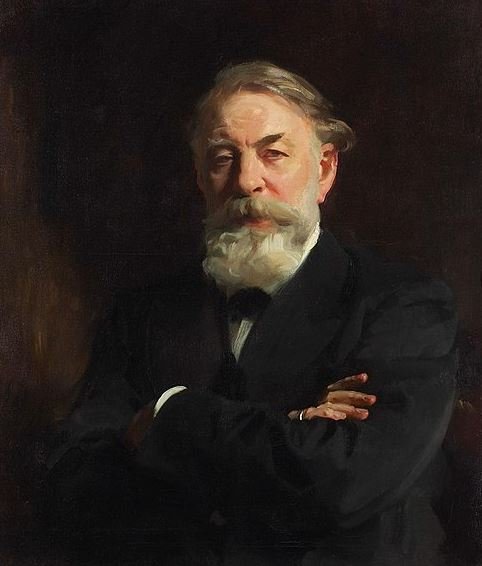
Portrait of Joachim by US painter John Singer Sargent
Brahms and the Lower Rhine Music Festival
In 1853, Joachim met Johannes Brahms at the Lower Rhine Music Festival, where he performed Beethoven’s Violin Concerto again. This meeting sparked a lifelong friendship. Joachim championed Brahms’ music, often consulting on compositions like the Violin Concerto and the Double Concerto. He also played a pivotal role in introducing Brahms to Robert and Clara Schumann.
Berlin Years and Founding of the Hochschule
Joachim’s marriage to opera singer Amalie Schneeweiss in 1863 coincided with his move to Berlin in 1866. He became the first director of the Hochschule für ausübende Tonkunst, where he shaped future generations of musicians. Despite personal challenges, including a divorce from Amalie in 1884, Joachim maintained his professional stature.
Joachim Quartet and Chamber Music
Joachim’s string quartet, formed in 1869, became renowned across Europe. Its repertoire included Beethoven’s late string quartets and works by Brahms. As a chamber musician, Joachim was instrumental in popularizing works by Bach, Beethoven, and Mendelssohn.
A Tireless Performer and Advocate
Joachim’s advocacy extended to lesser-performed works. His revival of Beethoven’s Violin Concerto, along with Bach’s solo violin sonatas and partitas, showcased his dedication to historical and technical excellence. His influence on English audiences through the Popular Concerts in London further solidified his reputation.
Compositional Contributions
Although less celebrated as a composer, Joachim’s works include violin concertos, overtures, and chamber pieces. His Hungarian Concerto in D Minor, Op. 11, is among his most respected compositions. Additionally, he wrote cadenzas for Beethoven’s and Brahms’ violin concertos, reflecting his technical expertise.
Friendship with Brahms
Joachim’s friendship with Brahms experienced strains, particularly after a dispute during Joachim’s divorce. However, their bond was eventually restored, symbolized by Brahms composing the Double Concerto as a reconciliation gesture.
Legacy and Honors
Joachim’s contributions were widely recognized. He received honorary doctorates, including from Cambridge, and celebrated milestones like his 60th performance anniversary in London. A Stradivarius violin was presented to him in honor of his achievements.
Recording Pioneer
In 1903, Joachim became one of the first prominent violinists to record his playing, offering invaluable insights into 19th-century performance practices.
Death and Lasting Impact
Joseph Joachim died on August 15, 1907, in Berlin. His legacy endures as a violinist who bridged classical traditions with modern interpretations, championed Brahms’ works, and influenced countless musicians through his teaching and performances.
Frequently Asked Questions
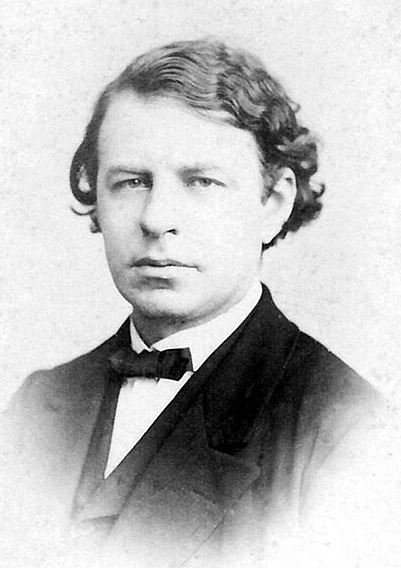
A beardless picture of Joseph Joachim.
Where and when did Joachim debut with Beethoven’s Violin Concerto?
Joachim debuted in London in 1844 at the age of 12, performing Beethoven’s Violin Concerto with Felix Mendelssohn conducting.
What was Joachim’s relationship with Brahms?
Joachim was a close friend, collaborator, and advocate of Brahms’ music. He premiered Brahms’ Violin Concerto in 1879 and influenced Brahms’ compositions, including contributing to the cadenza of the concerto.
What role did Joachim play in the revival of classical works?
He played a pivotal role in reviving works such as Beethoven’s Violin Concerto, Bach’s Sonatas and Partitas for Solo Violin, and Beethoven’s late string quartets.
What distinguished Joachim’s violin playing style?
His style was characterized by restraint, purity, and focus on expressing the music rather than showcasing virtuosity, aligning with his deeply interpretive approach.
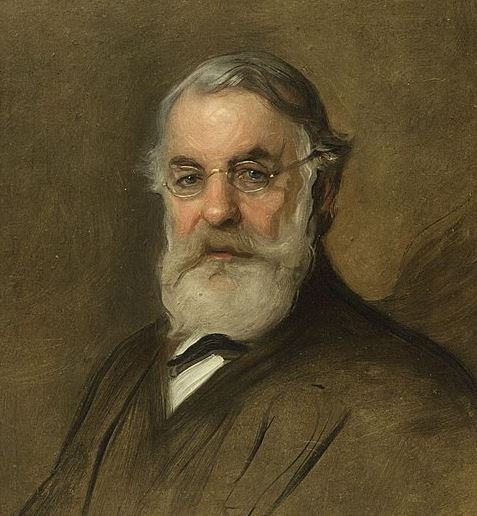
A 1903 portrait of Joseph Joachim.
Why did Joachim leave Hanover?
He resigned in 1865 in protest against anti-Semitism when an orchestra member was denied promotion due to his Jewish heritage.
What was Joachim’s involvement in chamber music?
He founded the Joachim Quartet in 1869, considered Europe’s finest, and performed extensively in chamber music, especially in England and Berlin.
What are Joachim’s notable compositions?
His best-known work is the Hungarian Concerto (Violin Concerto No. 2 in D minor, Op. 11). He also composed overtures, cadenzas, and other violin works.





