Frederick II of Denmark
Frederick II was a complex and dynamic monarch whose reign was defined by military ambition, economic reform, architectural innovation, and intellectual patronage. While earlier historical narratives often painted him as an unsophisticated and indulgent ruler, contemporary research reveals a shrewd, intelligent, and effective leader.
Early Life and Upbringing
Frederick II was born on July 1, 1534, at Haderslevhus Castle. As the son of Duke Christian of Schleswig and Holstein, who later became King Christian III of Denmark and Norway, and Dorothea of Saxe-Lauenburg, Frederick was brought up in a time of political unrest. Denmark was experiencing a civil war known as the Count’s Feud, which significantly influenced Frederick’s early years. His father emerged victorious in this struggle, securing Denmark as a Protestant stronghold and centralizing the authority of the Crown.
Christian III ensured his son was proclaimed heir apparent in 1536, making Frederick the designated successor. His education focused primarily on theology, governance, and diplomacy. Despite this structured upbringing, Frederick struggled with dyslexia, which made reading and writing difficult. However, he was known to be intelligent, articulate, and quick-witted. His political and military training began in earnest when he was sent to Malmöhus in Scania in his early twenties, where he gained experience in administration and military matters.
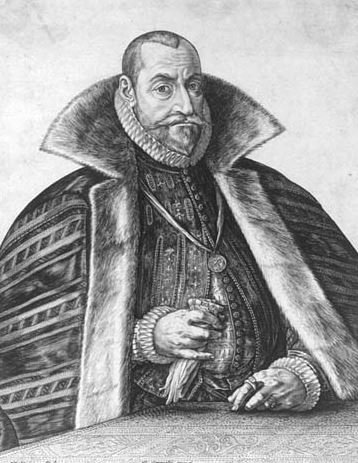
A portrait of Frederick II of Denmark
Accession and Early Reign
Following the death of his father in 1559, Frederick ascended to the throne of Denmark and Norway. His early reign was marked by military ambition, reflecting his adversarial and proud nature. One of his first acts was to lead a campaign to conquer Dithmarschen, a region that had successfully resisted Danish control for decades. The campaign, led by Johan Rantzau, resulted in a swift Danish victory and added to Frederick’s reputation as a warrior king.
However, his greatest military endeavor, the Northern Seven Years’ War (1563–1570) against Sweden, proved far more challenging. The war arose from territorial disputes and rivalries with Sweden’s King Erik XIV. Despite Denmark’s initial military success, the war eventually stagnated, draining both economic and military resources. The Treaty of Stettin (1570) ended the war with no significant territorial changes, teaching Frederick an important lesson in diplomacy and fiscal management.
Domestic Policies and Government Relations
Frederick II initially had a tense relationship with the Council of the Realm (Rigsraad), Denmark’s governing body of nobles. The Council opposed his military campaigns due to their cost and disruption. However, Frederick learned to navigate the political landscape by rewarding nobles with lands and privileges, thus securing their loyalty. His ability to balance personal authority with noble cooperation became one of the hallmarks of his reign.
Following the Northern Seven Years’ War, Frederick focused on rebuilding Denmark’s economy. He implemented tax reforms and raised the Sound Dues, a toll on ships passing through the Øresund strait. These measures significantly increased Denmark’s revenue and allowed the monarchy to regain financial stability.
Architectural and Cultural Contributions
Frederick II was a great patron of architecture and the arts. One of his most notable contributions was the construction of Kronborg Castle at Elsinore, completed in the 1580s. This grand Renaissance fortress served as a symbol of Denmark’s power and controlled access to the Baltic Sea. It later became famous as the setting for William Shakespeare’s Hamlet.
In addition to Kronborg, Frederick expanded Frederiksborg Castle and enhanced several royal residences. His reign also saw the development of Denmark’s navy, making it one of the most formidable maritime forces in Europe at the time. The king’s interest in cultural and scientific advancement led him to support scholars and intellectuals, including the famous astronomer Tycho Brahe.
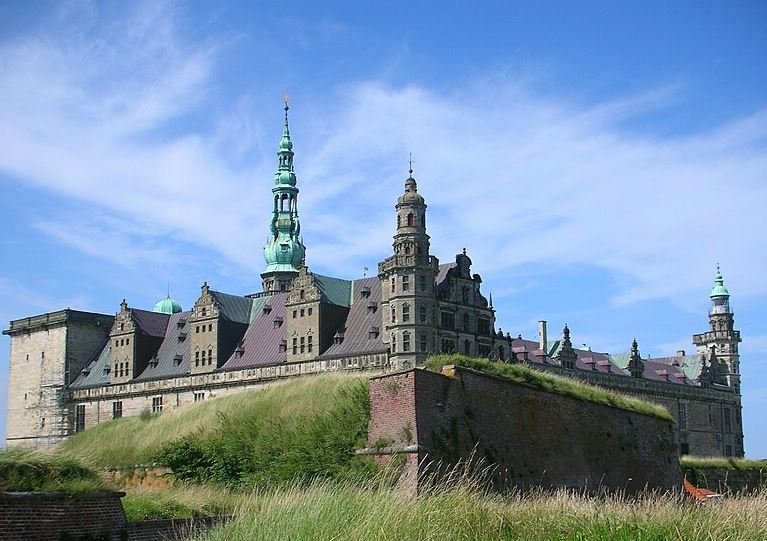
A photo of the Kronborg Castle in 2008.
Marriage and Family Life
Frederick married Sophie of Mecklenburg-Güstrow in 1572. Their union was one of the happiest royal marriages of the Renaissance era, characterized by mutual affection and respect. Together, they had seven children, including Christian IV, who would later become one of Denmark’s most celebrated monarchs. Queen Sophie played a significant role in managing estates and finances, demonstrating remarkable administrative skill, particularly after Frederick’s death.
Relations with Foreign Powers
Frederick sought to establish Denmark as the dominant power in the North. While his early military ventures were aggressive, he later adopted a more cautious foreign policy, avoiding unnecessary conflicts. He maintained amicable relations with Russia, securing trade agreements and stabilizing Denmark’s position in the Baltic. His diplomatic efforts extended to England and the Holy Roman Empire, with Denmark playing a key role in the power balance of Northern Europe.
Despite his rivalry with Sweden, Frederick preferred to engage in symbolic contests with his Swedish counterparts rather than direct warfare. This competition often took the form of constructing grand castles and tracing genealogical claims to noble lineages. Such displays of power reflected the era’s emphasis on prestige and legacy.
Frederick II’s contributions to Denmark’s naval strength, financial stability, and cultural institutions positioned the kingdom as a major European power.
Patronage of Science and Education
Frederick II’s reign marked a turning point in Danish intellectual life. He was deeply interested in science, particularly in alchemy and astronomy. His most significant contribution was his patronage of Tycho Brahe, whom he provided with the island of Ven to establish Uraniborg, one of the most advanced observatories of the period. Brahe’s astronomical work laid the groundwork for future scientific discoveries, including those of Johannes Kepler.
Frederick also reformed the University of Copenhagen, increasing funding and expanding its academic programs. He supported scholars who worked in various fields, from medicine to theology, ensuring that Denmark remained at the forefront of Renaissance learning.
Personal Life and Court Culture
Frederick II was known for his love of hunting, drinking, and elaborate feasts. While earlier historians depicted him as an inebriated and unsophisticated ruler, more recent studies highlight his strategic use of leisure activities to build alliances and strengthen political bonds. The informal nature of his court allowed him to engage with nobles and diplomats in a relaxed setting, fostering loyalty and camaraderie.
Though often overshadowed by his son, Christian IV, Frederick II played a crucial role in fortifying Denmark’s monarchy, economy, and cultural influence. His reign laid the groundwork for Denmark’s golden age.
He was also deeply religious, aligning himself with Lutheran orthodoxy. He took an active role in church affairs, banning the Book of Concord to prevent religious disputes from destabilizing his realm. His religious policies reinforced Denmark’s Protestant identity and helped maintain internal stability.
Death and Legacy
Frederick II died on April 4, 1588, at Antvorskov Castle. His death marked the end of a prosperous and largely peaceful era for Denmark and Norway. He was buried at Roskilde Cathedral, where his son, Christian IV, later erected a grand monument in his honor.
Despite his accomplishments, Frederick II was often overshadowed by his son, who ruled for six decades. However, modern historians recognize Frederick’s role in strengthening the Danish monarchy, fostering economic growth, and supporting cultural and scientific advancements. His reign laid the foundation for Denmark’s golden age under Christian IV.
Timeline of Frederick II of Denmark’s life and reign
1534 – Born on July 1 at Haderslevhus Castle.
1536 – Proclaimed heir apparent after his father, Christian III, wins the Count’s Feud.
1554 – Establishes his own court at Malmö Castle.
1557–58 – Travels in the Holy Roman Empire, meeting European rulers.
1559 – Becomes King of Denmark-Norway; conquers Dithmarschen.
1563–70 – Leads Denmark in the costly Northern Seven Years’ War against Sweden.
1570 – Signs Treaty of Stettin, ending the war.
1572 – Marries Sophie of Mecklenburg; they have seven children.
1574–85 – Rebuilds Kronborg Castle into a Renaissance fortress.
1580 – Bans the Lutheran Book of Concord to maintain religious unity.
1583 – Strengthens Danish control over trade routes and the Sound Dues.
1588 – Dies on April 4 at Antvorskov. Buried in Roskilde Cathedral.
Frequently Asked Questions
What were Frederick II’s early influences and education?
Frederick II was shaped by the turbulent Count’s Feud, which led to his father’s victory and Denmark’s Protestant consolidation. Despite suffering from dyslexia, he was intelligent and received training in governance, theology, and military affairs.
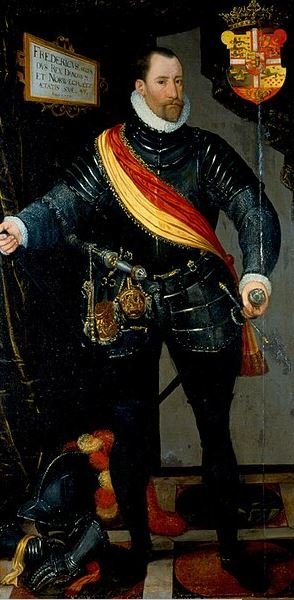
A portrait of Frederick II by Flemish artist Hans Knieper.
How did Frederick II come to power?
He succeeded his father, Christian III, in 1559, inheriting a centralized and strengthened monarchy. His early reign focused on military expansion, including the successful conquest of Dithmarschen.
What was the significance of the Northern Seven Years’ War?
The war (1563–1570) against Sweden stemmed from territorial disputes but ended in a costly stalemate. The Treaty of Stettin preserved Denmark’s status, but the conflict drained resources, shaping Frederick’s shift towards a more cautious foreign policy.
How did Frederick II strengthen Denmark’s economy?
Following the war, he restructured finances by raising the Sound Dues, imposing tax reforms, and rewarding loyal nobles with lands, ensuring economic recovery and stability.
What were Frederick II’s most notable architectural contributions?
He initiated the construction of Kronborg Castle at Elsinore, an imposing Renaissance fortress, and expanded Frederiksborg Castle. These projects symbolized Denmark’s power and prestige.
How did Frederick II support science and education?
He was a patron of intellectuals, most notably Tycho Brahe, whom he granted the island of Ven to build Uraniborg Observatory. He also expanded the University of Copenhagen, supporting advancements in various fields.
What role did Frederick II’s marriage play in his reign?
His marriage to Sophie of Mecklenburg-Güstrow in 1572 was harmonious and produced seven children, including Christian IV. Sophie later managed estates efficiently, securing financial stability for the monarchy.
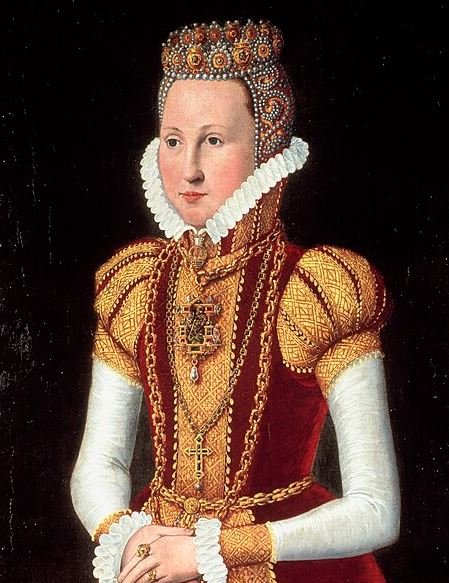
Portrait of Sophie of Mecklenburg-Güstrow by Hans Knieper.





