Italian Baroque Painter Guido Reni
Guido Reni (1575–1642) was one of the most influential painters of the Italian Baroque era. His works, characterized by a classical elegance reminiscent of the Renaissance masters, combined elements of ideal beauty, delicate coloration, and graceful composition. While deeply embedded in the Baroque movement, his style remained distinct from the dramatic intensity of Caravaggio and instead leaned toward a refined, lyrical interpretation of religious and mythological themes. Reni’s impact on European art extended beyond his lifetime, influencing painters in Italy, France, and Spain.
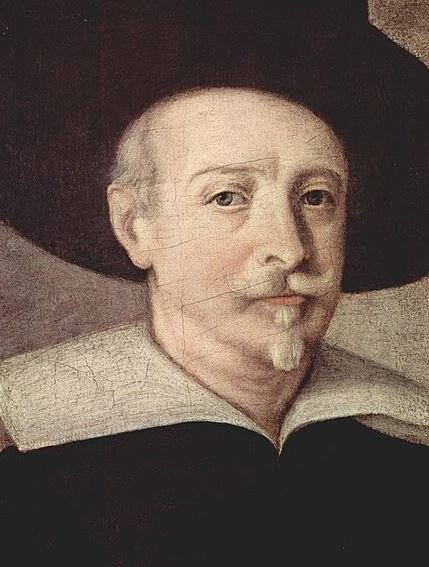
A 1635 self-portrait of Guido Reni.
Early Life and Training
Born in Bologna on November 4, 1575, Guido Reni was the son of Daniele Reni and Ginevra Pozzi. His family, although musical, encouraged his artistic pursuits, leading him to apprentice at the age of nine under the Flemish painter Denis Calvaert. During his time in Calvaert’s studio, he developed a meticulous approach to drawing and learned the technical precision that would later define his work. Reni’s fellow apprentices included Francesco Albani and Domenichino, both of whom would go on to become prominent artists.
As a young artist, Reni gravitated toward the progressive approach of the Carracci family, who sought to unify the naturalism of the Renaissance with the dynamic energy of the Baroque. By 1595, Reni had joined the Accademia degli Incamminati, an art academy founded by Ludovico Carracci. Under the guidance of Ludovico and his cousins, Annibale and Agostino, Reni refined his technique and developed a sophisticated approach to composition.
Early Commissions and Break from the Carracci
During his years with the Carracci academy, Reni contributed to several commissions, particularly altarpieces. However, a dispute over payment led him to leave the academy by 1598. Around this time, he also began exploring printmaking and created engravings commemorating Pope Clement VIII’s visit to Bologna. His independent career began to flourish as he gained recognition for his refined style and ability to convey ethereal beauty in religious themes.
Roman Period and Rise to Prominence
In 1601, Reni moved to Rome, where he was recruited to work under Annibale Carracci on the frescoes for the Farnese Palace. This period exposed him to the grandeur of Roman Baroque art, but he soon began receiving independent commissions. One of his first major works in Rome was The Crucifixion of St. Peter (1604–1605), which demonstrated his ability to blend classical composition with emotional expressiveness.
During the papacy of Pope Paul V (1605–1621), Reni became one of the most sought-after painters, particularly by the influential Borghese family. His refined, harmonious style made him a favorite among aristocratic and religious patrons. His fresco masterpiece, L’Aurora (1613–1614), located in the Casino dell’Aurora of the Palazzo Pallavicini-Rospigliosi, remains one of the greatest achievements of Baroque ceiling painting. Unlike the exuberant compositions of Pietro da Cortona, Reni’s Aurora exhibited a classical restraint and graceful movement, aligning him more with Raphael’s influence than Caravaggio’s dramatic contrasts.

Reni’s “L’Aurora”
Return to Bologna and Maturity
By 1614, Reni had returned to Bologna, where he established a successful studio that trained numerous young artists. His commissions during this period included the dome fresco Saint Dominic in Glory (1613–1615) in the Basilica of San Domenico, an exquisite composition that demonstrated his ability to translate celestial themes into visual poetry. He also painted Massacre of the Innocents (1611), which showcased his use of emotional intensity without resorting to the harsh realism often associated with Baroque painting.
Reni’s artistic maturity was marked by a shift toward lighter palettes and softer contours, as seen in his multiple renditions of Saint Sebastian (circa 1615). This work, celebrated for its idealized male beauty, gained admiration among later artists, including 19th-century painters and writers like Oscar Wilde.
Naples Experience and Artistic Struggles
In 1618, Reni traveled to Naples to complete a ceiling fresco for the Cathedral of San Gennaro. However, his stay was brief due to hostility from local artists, particularly followers of Caravaggio, who resented foreign competition. According to accounts, Neapolitan painters conspired against him, possibly even poisoning his assistant. Fearful for his safety, Reni left Naples and never returned.
Back in Bologna, he continued to receive prestigious commissions, including Samson Victorious (1621), Atalanta and Hippomenes (1622–1625), and The Israelites Gathering Manna (1614–1615). His works from this period displayed an increasing delicacy in execution, often incorporating a pastel-like quality that distinguished them from the dramatic chiaroscuro of his contemporaries.

Later Years and Declining Fortune
Despite his success, Reni struggled with financial instability due to his compulsive gambling habit. His excessive betting on card games often forced him to accept commissions at lower rates or quickly produce multiple versions of popular works to recover losses. His declining financial situation affected the quality of his later works, some of which appeared rushed or left unfinished.
Nevertheless, Reni continued to produce masterpieces well into the 1630s. His painting of St. Michael Archangel (1636), commissioned by Pope Urban VIII’s Barberini family, became one of his most famous images. Legend has it that he depicted Satan with the features of Cardinal Giovanni Battista Pamphilj (later Pope Innocent X) as an act of personal revenge.
Reni was a compulsive gambler, which led to financial troubles despite his success. He often had to rush commissions or create multiple copies of paintings to recover his losses.
By the late 1630s, Reni’s style had become even more ethereal, with a luminous softness that foreshadowed the Rococo movement. However, his health deteriorated, and he died on August 18, 1642, in Bologna. He was buried in the Rosary Chapel of the Basilica of San Domenico, where his legacy as one of Italy’s great painters was honored for generations to come.
Legacy and Influence
Guido Reni’s influence extended far beyond his lifetime, shaping the works of Baroque and Neoclassical painters across Europe. His idealized figures, harmonious compositions, and mastery of color were particularly admired in France, where artists such as Le Brun, Le Sueur, and Greuze drew inspiration from his work. In Spain, his paintings influenced Murillo and Ribera, while in Italy, his refined style remained a model for religious art.
While his contemporaries often pursued dramatic contrasts and theatrical compositions, Guido Reni remained committed to idealized forms and serene expression.
Despite the decline of his reputation in the 19th century—when critics like John Ruskin dismissed his art as overly sentimental—Reni’s work experienced a revival in the mid-20th century. Exhibitions in Bologna and beyond reaffirmed his status as a master of Baroque classicism. Today, his paintings are housed in major museums worldwide, including the Louvre, the Prado, and the National Gallery in London.
Frequently Asked Questions
Why did Guido Reni leave the Carracci Academy?
Reni left the Carracci Academy around 1598 due to a dispute over unpaid work. This led him to establish himself as an independent artist, gaining commissions that propelled his career.
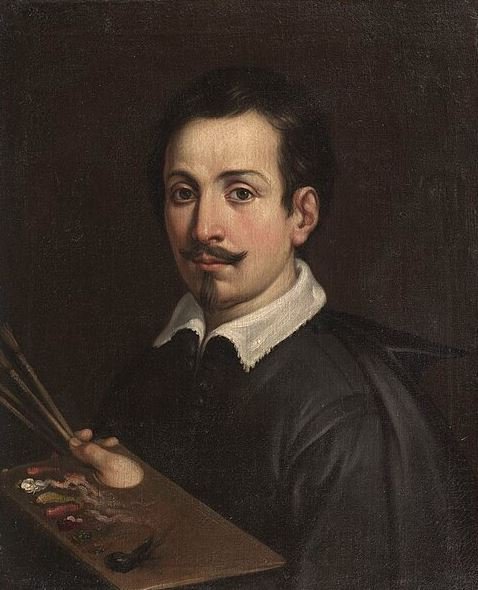
A self-portrait of Reni
What is Reni’s most famous fresco?
His most famous fresco, L’Aurora (1613–1614), is located in the Casino dell’Aurora in Rome. It depicts Apollo in his chariot bringing light to the world, showcasing his refined classical style.
How did his time in Rome shape his career?
In Rome, Reni worked on prestigious commissions under Pope Paul V and the Borghese family, gaining recognition as one of the leading painters of his time. His works from this period display a blend of grandeur and serenity.
Why did he leave Naples shortly after arriving?
Reni left Naples due to hostility from local painters who saw him as a competitor. Rumors suggest that rival artists conspired to poison him or his assistants, prompting his hasty departure.
What was Reni’s most reproduced painting?
His Saint Sebastian (circa 1615) became one of his most frequently reproduced works. The painting’s idealized beauty and serene suffering captivated audiences for centuries.