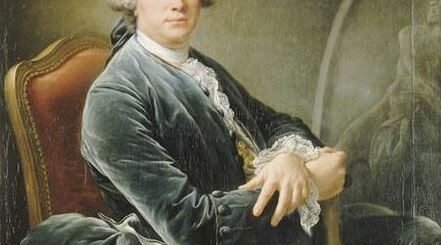
French Egyptologist Christiane Desroches Noblecourt
Christiane Desroches Noblecourt, a pioneering French Egyptologist, stands as one of the most influential figures in the preservation of ancient monuments, particularly the temples of ancient Egypt. Her contributions to Egyptology and the preservation of cultural heritage have earned her a lasting legacy. Here is everything that you need to know about the life and major accomplishments of Christiane Desroches Noblecourt, a scholar who overcame challenges in a field dominated by men.

A 2009 photo of Noblecourt.
Early Life and Education
Christiane Desroches was born on November 17, 1913, in Paris, France. From a young age, she exhibited a deep fascination with history and archaeology, showing a particular interest in ancient Egypt. This passion would guide her throughout her life. Desroches pursued her education in archaeology, studying at the École du Louvre and later at the Sorbonne, where she earned degrees in Egyptology.
In the early 20th century, the field of Egyptology was largely male-dominated, and it was uncommon for women to hold prominent positions in archaeology or academia. Desroches, however, was undeterred. She began her career as a researcher at the Louvre Museum, where she worked in the Department of Egyptian Antiquities, becoming the first woman to hold such a role. Her appointment marked the beginning of a lifelong dedication to uncovering and preserving the treasures of ancient Egypt.
Early Career and World War II
During the 1930s, Desroches began to make a name for herself in the world of Egyptology. Her work included research trips to Egypt, where she participated in excavations and studies of ancient tombs and temples. As a woman in the field, she often faced skepticism from her male colleagues, but her expertise, knowledge, and determination won her respect over time.
During World War II, Christiane Desroches Noblecourt’s courage and commitment to preserving history took on a new dimension. When the war broke out, she remained at the Louvre Museum in Paris, where she played a critical role in safeguarding France’s Egyptian antiquities from Nazi looting. Under the direction of Jacques Jaujard, the head of France’s national museums, Desroches helped organize the evacuation of priceless artifacts from the Louvre, including the treasures of Tutankhamun, to protect them from potential theft or destruction by the occupying German forces.
Working in secret, Desroches and her colleagues moved these artifacts to remote locations throughout France, hiding them in chateaus and other secure locations. Her efforts ensured that France’s collection of Egyptian artifacts would survive the war unscathed. This act of bravery during one of the most tumultuous times in modern history was an early demonstration of her unwavering dedication to preserving cultural heritage, no matter the obstacles.
Challenges and Controversies Surrounding the Discovery of Tutankhamun’s Tomb
Breaking Barriers in Egyptology
Christiane Desroches Noblecourt’s rise in the field of Egyptology was nothing short of remarkable, especially given the challenges women faced in the academic and archaeological communities at the time. She became one of the leading experts on ancient Egyptian art and culture, contributing to significant discoveries and scholarship throughout her career.
Her work was not confined to academia. Desroches was deeply committed to making Egypt’s ancient heritage accessible to the broader public. She was instrumental in organizing exhibitions, writing books, and delivering lectures that brought the wonders of ancient Egypt to audiences around the world. Her publications, which included detailed studies on prominent Egyptian figures like Ramses II and Queen Nefertiti, were widely regarded as authoritative works in the field.
In 1954, Desroches published a groundbreaking study on the tomb of Tutankhamun, titled La Grande Nécropole de Thèbes. This work provided an in-depth analysis of the tomb’s contents and highlighted the significance of the treasures found within. The publication was hailed for its meticulous scholarship and its ability to convey the majesty of ancient Egypt to a broad readership.
Her role as a woman in a traditionally male-dominated field made her an inspiration for future generations of female Egyptologists. Christiane Desroches Noblecourt was not content to be a trailblazer in name only; she actively encouraged and supported other women in the field, helping to break down the barriers that had long kept them on the fringes of archaeology and Egyptology.

Image: A statue portraying Ramses II.
The UNESCO Nubian Campaign and the Aswan High Dam
Perhaps the most defining moment of Christiane Desroches Noblecourt’s career came in the 1960s, when she led an international effort to save some of Egypt’s most precious monuments from destruction.
The Egyptian government, under President Gamal Abdel Nasser, had announced plans to build the Aswan High Dam, a massive infrastructure project that would generate electricity and provide irrigation for millions of Egyptians. However, the construction of the dam also posed a significant threat to the ancient temples and monuments of the Nubian region, as the rising waters of Lake Nasser would submerge many of these historic sites.
Among the threatened sites were the temples of Abu Simbel, a massive rock-cut temple complex built by Pharaoh Ramses II (also known as Ramses the Great), and the Temple of Philae, dedicated to the goddess Isis. These monuments, which had stood for over 3,000 years, faced destruction if no action was taken. The thought of losing such irreplaceable treasures of human history galvanized Desroches Noblecourt into action.
In 1960, UNESCO launched the Nubian Campaign, an international initiative to save the endangered monuments. Christiane Desroches Noblecourt was at the forefront of this campaign, working tirelessly to rally support from countries around the world. She lobbied governments, raised funds, and helped coordinate the complex logistics required to relocate the temples to higher ground. The effort was unprecedented in its scope, involving archaeologists, engineers, and laborers from over 50 countries.
The relocation of the temples, particularly Abu Simbel, was a monumental engineering feat. The entire complex had to be carefully dismantled, block by block, and reassembled at a new site located 200 meters inland and 65 meters higher than the original location. The task was made even more challenging by the sheer size of the temple’s statues and reliefs, some of which weighed over 30 tons.
The Nubian Campaign took nearly two decades to complete, but it was ultimately a success. The temples were saved, and the effort became one of the most iconic examples of international cooperation in the preservation of cultural heritage. Desroches Noblecourt’s leadership and vision were instrumental in making this happen. She worked not only as an advocate but also as a symbol of the campaign, using her influence to bring attention to the cause and ensure that the world understood the importance of saving these monuments.
The successful relocation of the Nubian temples was hailed as one of the greatest archaeological achievements of the 20th century. For her role in the effort, Christiane Desroches Noblecourt was widely recognized and honored. Her work on the Nubian Campaign solidified her reputation as a leader in the field of cultural preservation and a tireless advocate for the protection of historical monuments.
Contributions to Egyptology and Cultural Preservation
In addition to her work on the Nubian Campaign, Christiane Desroches Noblecourt made lasting contributions to Egyptology and the preservation of cultural heritage. Her research on ancient Egyptian art, religion, and history helped shape modern understanding of the civilization, and her publications continue to be referenced by scholars in the field.
One of her most significant contributions was her study of Queen Nefertiti, one of Egypt’s most enigmatic figures. Desroches Noblecourt’s research helped to shed light on Nefertiti’s role as a powerful queen and co-regent alongside her husband, Pharaoh Akhenaten. Her work on Nefertiti culminated in the publication of Nefertiti: L’Image du Pharaon (Nefertiti: The Image of the Pharaoh) in 1986, a book that provided a comprehensive analysis of the queen’s legacy and influence.
Desroches Noblecourt also played a major role in organizing exhibitions that brought the treasures of ancient Egypt to audiences around the world. In 1967, she curated an exhibition at the Louvre Museum in Paris that featured the treasures of Tutankhamun. The exhibition was a massive success, attracting millions of visitors and sparking a renewed global interest in ancient Egypt. It also helped raise awareness of the importance of preserving Egypt’s cultural heritage, which had been under threat from looting and the illegal trade in antiquities.
Her advocacy extended beyond Egypt. Desroches Noblecourt was a vocal supporter of international efforts to protect cultural heritage sites around the world. She believed that the loss of ancient monuments and artifacts was a tragedy not just for the countries in which they were located but for all of humanity. As a result, she worked closely with organizations like UNESCO to promote the preservation of endangered cultural sites globally.
Strength and Resilience
Christiane Desroches Noblecourt’s career was marked by a remarkable resilience and determination. Her strength was both literal, as demonstrated by her role in relocating the Nubian temples, and metaphorical, as she consistently broke down barriers and overcame obstacles throughout her life.
Her work in the male-dominated field of Egyptology was a testament to her perseverance. Despite facing skepticism and resistance from her colleagues, she rose to the top of her profession through hard work, intellect, and a relentless dedication to her craft. She was not only a scholar but also a leader, an advocate, and a visionary.
Noblecourt’s strength was also evident in her unwavering commitment to the protection of cultural heritage. The French Egyptologist believed that the monuments and artifacts of the past were invaluable treasures that connected humanity to its shared history, and she devoted her life to ensuring that these treasures would be preserved for future generations.
Did you know…?
When French leader General Charles de Gaulle questioned Noblecourt’s decision to commit France to the rescue of the temples without government approval, she boldly reminded him of his own unauthorized actions during World War II, drawing a parallel to his radio appeal without authorization from the Vichy government.
Legacy
Christiane Desroches Noblecourt’s pioneering work in Egyptology, her leadership in the Nubian Campaign, and her advocacy for the preservation of cultural heritage have left an indelible mark on the world. She is remembered not only for her scholarly contributions but also for her role as a guardian of history.
In 2007, Noblecourt was awarded the Grand Collar of the Nile, Egypt’s highest state honor, in recognition of her efforts to preserve the country’s ancient heritage. It was a fitting tribute to a woman who had dedicated her life to protecting the treasures of Egypt.
Christiane Desroches Noblecourt passed away on June 23, 2011, at the age of 97, but her legacy lives on. The monuments she helped save, the research she conducted, and the barriers she broke continue to inspire scholars, archaeologists, and preservationists around the world.
Questions and Answers about Christiane Desroches Noblecourt and her involvement in the relocation of Abu Simbel
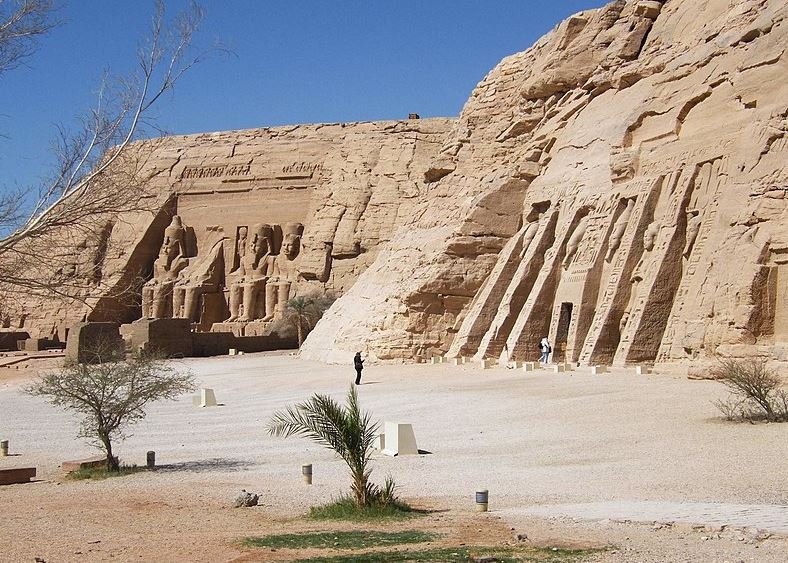
The Great Temple of Ramesses II is on the left, while the Small Temple of Hathor and Nefertari is on the right.
Who was Christiane Desroches Noblecourt?
Christiane Desroches Noblecourt was a renowned French Egyptologist, known for her strength, determination, and groundbreaking work in archaeology. She was the first woman to lead an archaeological excavation in 1938 and played a pivotal role in the rescue of the Abu Simbel temples in the 1960s.
What made Christiane Desroches Noblecourt’s work at Abu Simbel so monumental?
Noblecourt led the international effort to save the Abu Simbel temples from being submerged by the construction of the Aswan High Dam. She brought together more than 45 countries, secured funding, and coordinated a massive engineering project to move the temples to higher ground, a feat that is regarded as one of the greatest achievements in archaeological preservation.
Why were the Abu Simbel temples at risk of being destroyed?
The construction of the Aswan High Dam, designed to control the flooding of the Nile and generate electricity, would create Lake Nasser. This massive reservoir posed a serious threat to the archaeological sites in the Nubian region, including the Abu Simbel temples, which were at risk of being submerged if no action was taken.
How did Desroches Noblecourt respond to the threat posed by the Aswan High Dam?
Noblecourt, tasked by UNESCO to assess the situation, did more than just conduct a survey. She launched a full-scale campaign to raise global awareness, secure financial backing, and assemble an international team of architects and archaeologists to save the temples. Her efforts successfully mobilized the world to rescue these ancient monuments.
What was the process involved in relocating the Abu Simbel temples?
Between 1964 and 1968, the Abu Simbel temples were carefully cut into blocks weighing between 20 and 30 tons each. These blocks were transported and reassembled 65 meters higher and 300 meters back from their original location. More than two thousand workers, including Italian quarrymen, worked on this unprecedented archaeological engineering project.
The decision to dismantle the temples of Abu Simbel was a painful and heavily debated one. Many archaeologists were distressed by the idea of cutting into the ancient structures, but the alternative—losing the temples beneath the waters of Lake Nasser—was unthinkable. Ultimately, the decision was made to dismantle and relocate the temples to preserve them for future generations.
What was the outcome of the Abu Simbel relocation from an engineering standpoint?
The relocation of the temples was considered a success. The temples were rebuilt on a new site with cement domes that replicated the original hills. Despite the complexities involved, the temples were saved, though there was a slight deviation in the original celestial alignment, resulting in the sun entering one day later than before.
What was significant about the celestial alignment of the Abu Simbel temples?
The Abu Simbel temples were precisely aligned so that on October 21 and February 21, the sun’s rays would penetrate the sanctuary to illuminate the statues of Ramses II and the gods Amun and Ra-Horakhty, while the statue of Ptah, associated with the underworld, remained in shadow. This alignment was replicated during the relocation, with only a one-day deviation from the original dates.
How did Desroches Noblecourt contribute to the preservation of cultural heritage beyond the Abu Simbel project?
Noblecourt was a passionate advocate for preserving not just the physical monuments but also the cultural and spiritual heritage they represented. She worked with French Minister of Cultural Affairs, André Malraux, to launch a global appeal emphasizing the importance of art and history as part of the world’s shared heritage.
When did Christiane Desroches Noblecourt pass away, and what is her lasting impact?
Christiane Desroches Noblecourt passed away in 2011. Her lasting impact is the preservation of significant ancient monuments, particularly the Abu Simbel temples, and her advocacy for the global recognition of cultural heritage as a universal responsibility.