Friedrich Wilhelm von Steuben: Life and Role in the American Revolutionary War
Friedrich von Steuben, a Prussian military officer, transformed the Continental Army during the American Revolution through rigorous training, discipline, and organization, leaving a lasting impact on U.S. military practices and history. In this article WHE takes a deeper look into the history and background this military officer.
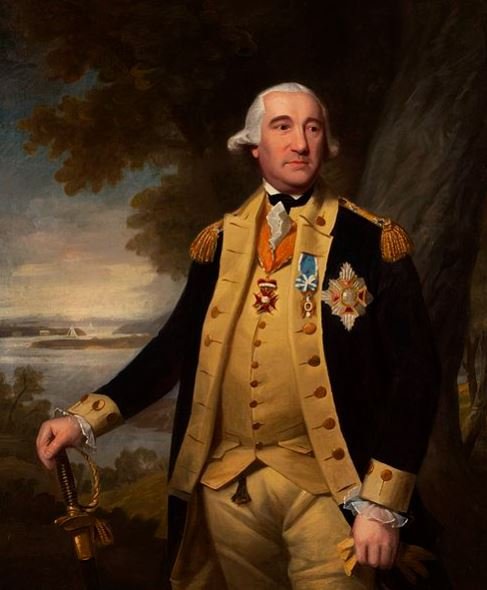
Von Steuben’s portrait by American artist Ralph Earl.
Early Life and Military Career
Friedrich Wilhelm von Steuben was born on September 17, 1730, in Magdeburg, Prussia. His father, a Prussian engineer, exposed him to military life early, and by the age of 14, he had witnessed the siege of Prague in 1744. In 1747, he formally joined the Prussian Army, which was renowned for its strict discipline and combat effectiveness. Over 17 years of service, he participated in multiple battles during the Seven Years’ War and was promoted to the rank of captain. His military career included serving as an aide-de-camp to King Frederick II of Prussia and attending elite military training schools. However, in 1763, after the war’s conclusion, he was discharged under unclear circumstances, possibly due to internal rivalries.
Continental Army General Horatio Gates: Life and Major Accomplishments
European Years and Connection to America
After leaving the army, Steuben worked as a court chamberlain for the Prince of Hohenzollern-Hechingen, a minor German principality. During this time, he was awarded the title of Freiherr, or “baron,” by the Duchess of Württemberg. Financial difficulties in the 1770s led him to seek military employment. Through his connections in France, he was introduced to American diplomats Benjamin Franklin and Silas Deane, who saw potential in his military expertise. With their endorsement, Steuben set sail for America in 1777, offering his services to General George Washington without requesting an initial salary.
Friedrich von Steuben served in the highly disciplined Prussian Army for 17 years, reaching the rank of captain and working closely with King Frederick II (Frederick the Great) as an aide-de-camp.
Contributions to the American Revolution
Steuben arrived at Valley Forge in February 1778, where he was appalled by the poor state of the Continental Army. Lacking proper training, organization, and supplies, the army was in dire need of reform. Washington appointed him as temporary Inspector General, allowing him to implement European-style training techniques. He introduced rigorous drills, proper use of the bayonet, sanitation improvements, and organizational reforms that drastically enhanced the army’s efficiency. His training manual, “Regulations for the Order and Discipline of the Troops of the United States,” became the army’s official guide and remained in use for decades.
His impact was first seen at the Battle of Monmouth in June 1778, where his disciplined training helped the American forces hold their ground against the British. Recognizing his invaluable contributions, Congress officially commissioned him as Inspector General with the rank of Major General. Throughout the remainder of the war, Steuben continued to serve as a key military advisor, assisting with logistics, strategy, and troop organization.
Role in the Final Campaigns and Post-War Life
In the later years of the war, Steuben was instrumental in the Southern campaign, assisting Nathanael Greene and aiding in the buildup of Continental forces. At the Siege of Yorktown in 1781, he commanded a division, playing a crucial role in the final American victory. After the war ended, he contributed to the demobilization of the army and the development of a peacetime defense strategy.
Steuben became a U.S. citizen in 1784 and was granted land in New York. However, he struggled financially despite receiving a pension from Congress. He spent his final years in relative seclusion, passing away on November 28, 1794. His legacy endures through numerous honors, including statues, towns named after him, and the annual Steuben Parade celebrating German-American heritage. His training methods and military reforms laid the foundation for the professional development of the U.S. Army, cementing his place as one of the key figures of the American Revolutionary War.

FAQs about Friedrich Wilhelm von Steuben
Where was Friedrich von Steuben born?
Friedrich von Steuben was born in Magdeburg, Prussia (now part of Germany) on September 17, 1730, into a military family.

Portrait of Friedrich Wilhelm von Steuben. Created by American artist Charles Willson Peale.
What was his role in the Prussian Army?
He served in the Prussian Army for 17 years, participating in the Seven Years’ War and rising to the rank of captain before being discharged in 1763.
How did von Steuben join the American Revolution?
Through French diplomatic connections, he was introduced to Benjamin Franklin and Silas Deane, who recommended him to General George Washington as a military advisor.
What were his main contributions to the Continental Army?
He transformed the undisciplined American troops into an organized fighting force by implementing Prussian-style drills, discipline, and military organization at Valley Forge.
What was the “Blue Book” and why was it important?
The Regulations for the Order and Discipline of the Troops of the United States, commonly known as the “Blue Book,” was his military drill manual that standardized training for American soldiers.
How did von Steuben contribute to American victories?
His training methods played a crucial role in battles like Monmouth (1778) and Yorktown (1781), where his disciplined troops helped secure American victories.
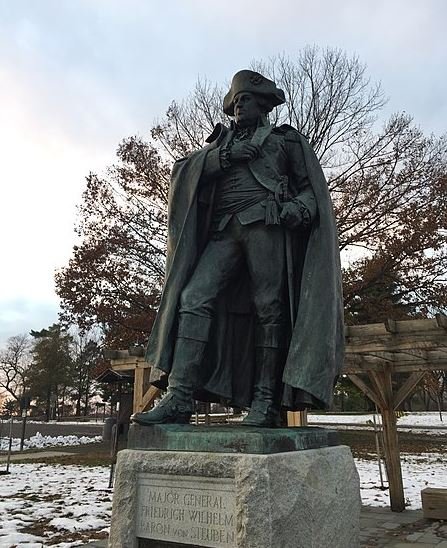
Friedrich Wilhelm von Steuben’s statue at the National Historical Park.
What happened to von Steuben after the war?
He became a U.S. citizen and was granted land in New York, but faced financial struggles despite receiving a pension from Congress.
How is von Steuben remembered today?
His legacy lives on through statues, towns named in his honor, the annual Steuben Parade, and his lasting influence on U.S. military training.





