Genocide in the Ancient World
Genocide in the ancient world, while not always explicitly labeled as such, manifested in various forms across different civilizations. Ancient wars and conquests often led to the deliberate and systematic destruction of populations, cultures, and communities, whether for power, revenge, territorial gain, or religious motives.
In the article below, World History Edu provides a concise outline of key historical examples and the context in which these acts took place, breaking down the aspects that contribute to our understanding of ancient genocide.
Understanding Genocide in Historical Context
The term “genocide” wasn’t coined until the 20th century, but the actions it describes existed well before. Coined by Raphael Lemkin in 1944, genocide is defined by the UN as acts “committed with intent to destroy, in whole or in part, a national, ethnical, racial, or religious group.” Although ancient societies may not have conceptualized genocide in the modern sense, they practiced systematic destruction to annihilate rival communities or cultures.

Remnants of the Punic quarter in Carthage.
Motivations Behind Genocidal Acts in Ancient Societies
Ancient genocidal acts typically stemmed from motivations such as territorial expansion, cultural dominance, and religious superiority. Key factors included:
- Territorial expansion: Conquering new lands often involved subjugating or destroying local populations.
- Political power: Ensuring dominance often required the elimination of potential rivals.
- Cultural or religious superiority: Some groups justified their acts of destruction by labeling their targets as inferior or barbaric.
Notable Instances of Genocide in the Ancient World

The Assyrian Empire (circa 900-600 BCE)
The Assyrians were known for their ruthless military campaigns across the Near East. They practiced widespread destruction and displacement of populations to instill fear and prevent rebellion. King Ashurbanipal and others were notorious for their brutality, as documented in Assyrian records that detail mass slaughters, enslavement, and cultural destruction.
- Policy of Deportation: The Assyrians often deported entire populations to disrupt community bonds, essentially eradicating cultures and identities.
- Cultural Genocide: By destroying temples and centers of worship, Assyrians sought to eradicate the religious identity of subjugated peoples.
The Roman Empire (circa 27 BCE–476 CE)
Romans expanded their empire through calculated brutality, eradicating cultures that resisted assimilation. For instance:
- The Punic Wars (264-146 BCE): Rome’s annihilation of Carthage marked one of the earliest known examples of complete cultural and physical destruction. Rome systematically destroyed Carthage, killed or enslaved its people, and prevented the reestablishment of the city.
- Jewish-Roman Wars (66–136 CE): In response to Jewish revolts, Roman forces executed mass slaughters, demolished Jerusalem, and displaced survivors, essentially eradicating Jewish political autonomy in the region.
The Greek and Macedonian Campaigns
Greek city-states and Macedonian rulers, like Alexander the Great, were known for harsh conquests that bordered on genocide, particularly in non-Greek territories.
- Thebes and Others: In 335 BCE, Alexander destroyed Thebes and enslaved its people as a warning to others, aiming to suppress resistance to his rule.
- Persian Campaigns: Alexander’s conquests in Persia involved mass slaughters, cultural erasure, and attempts to replace local religions and customs with Greek ones.
READ ALSO: What were the famous battles Alexander the Great fought in?
The Mongol Empire (13th-14th centuries CE)
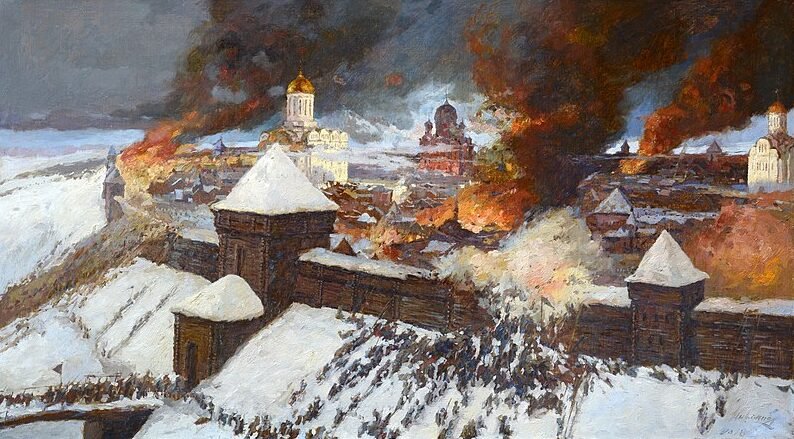
The December 1237 Siege of Ryazan during the Mongol invasion of Kievan Rus’.
Though later than most ancient societies, the Mongol Empire’s methods of conquest resembled genocidal practices of earlier times.
Genghis Khan’s forces used intimidation tactics that included the slaughter of entire towns. These acts were meant to inspire submission, but they often resulted in the complete destruction of resistant populations.
Why didn’t the Great Mongol Emperor Genghis Khan invade India?
Religious and Cultural Justifications for Genocide
Many ancient genocidal acts were justified through religious motives or beliefs in cultural superiority. Examples include:
- Religious Texts and Justifications: Some ancient texts, such as the Hebrew Bible, describe divinely-sanctioned destruction. The Book of Joshua, for instance, includes accounts of entire Canaanite communities being destroyed, possibly as a means to secure territorial claims and establish a unified religious identity.
- Ethnocentric Attitudes: Ancient Greeks often considered non-Greek cultures as “barbaric,” which they used as a rationale for subjugation or destruction.
Methods of Genocide in the Ancient World
Ancient genocidal acts involved various methods, from direct killing to cultural annihilation:
- Mass Slaughter and Enslavement: Conquering armies often slaughtered entire populations, with survivors enslaved or exiled.
- Cultural Erasure: Destruction of temples, texts, and symbols of cultural identity was common.
- Forced Assimilation: Some conquerors sought to assimilate the conquered through language, religion, and customs, thus erasing distinct cultural identities.
The Legacy of Ancient Genocide
The genocides of ancient times had long-lasting impacts on history, particularly on culture, demographics, and regional power dynamics. Ancient genocidal practices also contributed to a legacy of trauma and resistance that often endured through oral histories and surviving cultural practices.
Frequently asked questions

At Horvat ‘Ethri, an archaeological site located in the Judean Lowlands of present-day Israel, the ruins reveal a mass grave holding the remains of several individuals, one of whom shows evidence of beheading.
Why is genocide often perceived as a modern phenomenon?
Genocide is often seen as a modern phenomenon due to the scale and awareness of atrocities committed during the 20th century, particularly by the Nazis in WWII. These events brought global attention to the concept of genocide, making it appear unique to the modern age.
Who coined the term “genocide,” and what does it mean?
The term “genocide” was coined by Polish-Jewish lawyer Raphael Lemkin in 1944. He combined “geno-” (Greek for race or tribe) and “-cide” (Latin for killing) to describe a systematic effort to destroy a particular group’s essential foundations, intending to eliminate the group itself.
What was Raphael Lemkin’s contribution to the modern understanding of genocide?
Lemkin’s work, particularly his 1944 book Axis Rule in Occupied Europe, established genocide as a coordinated plan aimed at destroying the fundamental foundations of a group’s life to annihilate it. His ideas became the basis for the contemporary definition of genocide.
How did the United Nations define genocide in 1948?
In 1948, the UN adopted the “Convention on the Prevention and Punishment of the Crime of Genocide,” which defined genocide as the intent to destroy, in whole or in part, a national, ethnical, racial, or religious group. This definition emphasizes both intent and the act of destruction.
What are the two main components required for an event to be classified as genocide?
For an event to be considered genocide, there must be a clear intent to destroy a specific group and the actual destruction of that group, including its social, cultural, or political identity.
What are two examples of potential genocide in the ancient world?
Two examples of potential genocide in the ancient world are the Roman destruction of Carthage in 146 BCE and the Athenian massacre at Melos in 416 BCE. Both cases exhibit clear intent and systematic destruction of specific groups.
Why did Rome seek the destruction of Carthage?
Rome viewed Carthage as a persistent threat and rival across the Mediterranean. Despite Carthage’s attempts to comply with Rome’s demands, Rome issued impossible terms, ultimately using Carthage’s resistance as justification for declaring war. Their goal was to eradicate Carthage’s people, culture, and autonomy to eliminate Rome’s primary competitor.
How did the Roman army treat the people of Carthage after breaching the city?
After breaching Carthage’s defenses in 146 BCE, the Roman army massacred the city’s inhabitants and sold survivors into slavery. The historian Polybius described the destruction as “immediate and total,” signaling Rome’s intent to permanently destroy Carthage.
What phrase did the Roman statesman Cato the Elder famously use to emphasize Rome’s goal regarding Carthage?
Cato the Elder famously ended his speeches with the phrase “Carthago delenda est” (“Carthage must be destroyed”), underscoring Rome’s unyielding intent to eliminate Carthage completely.
What led to the Athenian massacre at Melos?
During the Peloponnesian War, Athens viewed the neutral island city-state of Melos as a liability. When the Melians refused Athens’ demands for surrender, Athens initiated a siege. After the Melians surrendered, the Athenians killed all men of military age and sold the women and children into slavery, intending to destroy Melian society as a warning to others.
How does Thucydides’ account of the Melian Dialogue illustrate Athens’ intent?
In The Melian Dialogue, Thucydides recounts that Athens openly warned Melos of “destruction” if they resisted. Athens saw Melos as militarily inferior and was unambiguous about its intent to subdue or destroy Melian society entirely, aligning with modern genocide criteria.
What broader purpose did the massacre at Melos serve for Athens?
The massacre served as a warning to other Greek states to remain loyal to Athens during the Peloponnesian War. By obliterating Melos, Athens sought to solidify control and prevent further resistance from neutral or hostile states.
How do these examples from Carthage and Melos fit into the modern concept of genocide?
Both cases meet the elements of genocide as defined by Lemkin and the UN. In Carthage, Rome intended to eliminate its main rival completely, while in Melos, Athens aimed to destroy a neutral society to assert dominance. Both involved deliberate acts targeting the destruction of a unique group’s identity and existence.





