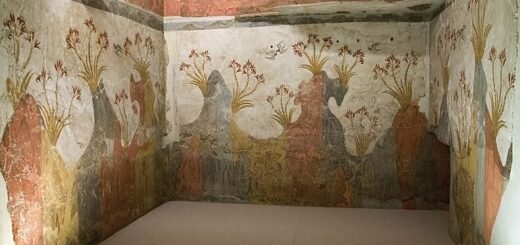
Jewelry from the Minoan Civilization
Minoan jewelry, produced during the Bronze Age civilization that flourished on the island of Crete from around 3000 to 1100 BCE, is a fascinating subject due to its artistry, craftsmanship, and cultural significance. It reflects not only the technological advancements of the Minoans but also their religious beliefs, societal structure, and interactions with neighboring civilizations.
Historical Context
The Minoan civilization is known for its remarkable achievements in art, architecture, and trade. Jewelry, being a portable form of art, played a significant role in expressing wealth, status, and identity. The Minoans were masterful goldsmiths, influenced by earlier cultures like Egypt and Mesopotamia, and they developed their own unique style that combined functionality with aesthetics.
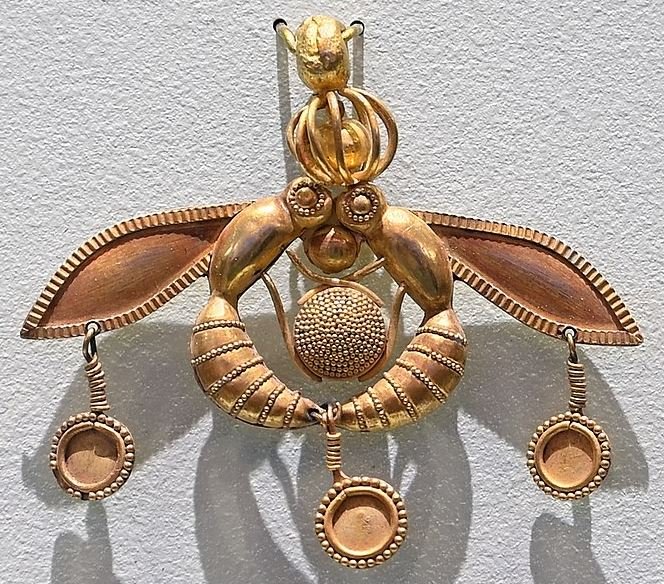
The Malia Pendant, a gold artifact from Chrysolakkos tomb (Minoan era, 1800–1650 BC).
Materials Used in Minoan Jewelry
Minoan jewelry was predominantly made from precious metals such as gold and silver, which were often alloyed with other materials to improve durability or achieve desired color tones. Gold was particularly favored and could be sourced from places such as Egypt or the Near East, as Crete had limited natural reserves of this metal.
In addition to gold and silver, the Minoans used materials such as:
- Electrum: A naturally occurring alloy of gold and silver, which gave jewelry a pale, yellowish hue.
- Bronze: Used for more utilitarian items and some jewelry.
- Semi-precious stones: Stones such as carnelian, amethyst, and rock crystal were often incorporated into jewelry pieces.
- Ivory and Faience: Imported materials that were sometimes used for inlays or combined with precious metals.
- Glass and Faience beads: These materials added color and variety to Minoan jewelry, and were often used in necklaces and other decorative items.
Techniques of Minoan Jewelry Making
Minoan goldsmiths employed advanced techniques that were quite sophisticated for their time. These techniques included:
- Filigree: The art of making fine threads of gold, twisted and soldered onto a base metal to create intricate patterns. Filigree was used extensively in Minoan jewelry, particularly in brooches, earrings, and pendants.
- Granulation: A technique where tiny gold beads or granules were soldered onto a surface to create textured patterns. This method was often used to embellish gold surfaces with elaborate decorative motifs.
- Repoussé: In this technique, the goldsmith would hammer the reverse side of a thin metal sheet to create a raised design on the front. This method was particularly effective for making lightweight but richly textured items.
- Casting: The Minoans used molds to cast jewelry in bronze and gold. The “lost wax” method, in which a wax model is encased in clay, melted away, and replaced with molten metal, was one of the most common methods of creating more complex forms.
- Inlaying: Stones or glass were set into the surface of metal pieces, enhancing the overall visual effect of the jewelry.
Types of Minoan Jewelry
Minoan jewelry came in a wide range of forms, each serving different purposes—some were purely decorative, while others had religious or symbolic meanings.
Necklaces and Pendants
The Minoans crafted elaborate necklaces made from gold beads, semi-precious stones, and faience. Pendants often depicted religious symbols, animals, or nature motifs. The most famous Minoan pendant is the “Bee Pendant” from the Malia treasure, which shows two bees holding a drop of honey, symbolizing fertility and abundance.
Bracelets and Armlets
Made primarily from gold and bronze, these items were often engraved or embossed with geometric patterns or scenes from nature. Bracelets were sometimes worn in pairs, and the designs could indicate the wearer’s status.
Rings
Minoan rings, especially those made from gold, were often large and used for sealing documents or other ceremonial purposes. The surfaces of these rings were engraved with detailed scenes, often depicting religious rituals or interactions with gods. The famous “Ring of Minos” shows a scene of a goddess surrounded by worshippers.
Earrings
Earrings were typically made from gold, using techniques such as granulation and filigree. They ranged from simple hoops to more elaborate designs with hanging elements or inlays of semi-precious stones.

Minoan gold earring at the British Museum.
Diadems and Hair Ornaments
Diadems, or headbands, were worn by both men and women, signifying high status. These were made from thin sheets of gold, often decorated with repoussé designs of animals, plants, or religious symbols. Hairpins and combs made from gold, ivory, or faience were also commonly used as decorative and functional pieces.
Beads and Amulets
Beads were strung together to form necklaces and bracelets. Amulets, small objects believed to hold protective powers, were also common in Minoan jewelry, often taking the form of animals or sacred symbols like the bull, which had religious significance.
Symbolism and Function
Minoan jewelry was not just ornamental but often carried significant symbolic meanings. Common motifs included:
The Minoans had a deep connection with nature, which is reflected in their jewelry. Flora and fauna, such as lilies, bees, and lions, are frequently represented. The bull, in particular, was a central figure in Minoan culture, symbolizing strength and fertility. The “Horns of Consecration” were also a recurring motif, representing the sacred bull and often found in temples and palatial complexes.
Many pieces of Minoan jewelry featured religious symbols associated with their polytheistic belief system. For instance, double axes (labrys) and goddesses with raised arms were common motifs in pendants and rings, linking the wearer with the divine. Some of these symbols were thought to offer protection or enhance fertility.
The intricate designs and advanced techniques employed by Minoan goldsmiths reflect a deep understanding of both form and function, where beauty and symbolism were interwoven.
Jewelry was a clear indicator of social status in Minoan society. The more elaborate and finely made the jewelry, the higher the status of the wearer. Jewelry was also used in burial practices, where the deceased were adorned with items that indicated their social rank in life.
Minoan jewelry, along with other luxury items, played a role in trade and diplomatic exchanges. Minoans traded extensively across the Aegean, Egypt, and the Near East, and their jewelry was highly valued in these regions. This interaction influenced both Minoan styles and techniques, creating a blend of local and foreign elements in their craftsmanship.
Famous Minoan Jewelry Discoveries
Many significant examples of Minoan jewelry have been discovered in excavations at sites such as Knossos, Malia, and Phaistos. Some of the most famous finds include:
- The Malia Treasure: Discovered in a tomb at Malia, this treasure trove of jewelry includes the famous gold “Bee Pendant,” as well as bracelets, rings, and diadems, all showcasing the intricate techniques of Minoan craftsmanship.
- The Aigina Treasure: Although not found in Crete but rather on the island of Aigina, this hoard of Minoan jewelry provides insight into the far-reaching influence of Minoan craftsmanship. The treasure includes gold diadems, necklaces, and bracelets, many featuring repoussé and granulation techniques.
- The Gold Signet Rings: Found in various tombs, these rings were used as seals and often depict complex religious or ceremonial scenes. The level of detail in the engravings suggests that these items were both personal adornments and symbols of power.
Influence of Minoan Jewelry on Other Cultures
The Minoan civilization had a profound influence on neighboring cultures, particularly through its extensive trade networks. Minoan jewelry styles were adopted and adapted by other cultures in the Mediterranean, such as the Mycenaeans, who succeeded the Minoans as the dominant power in the Aegean region.
Minoan jewelry’s designs, techniques, and motifs influenced later civilizations, particularly the Mycenaeans, ensuring that the artistic and cultural legacy of the Minoans endured.
Minoan designs and techniques, especially the use of filigree and granulation, can be seen in later Greek jewelry. Similarly, motifs such as the double axe and the bull persisted in Greek art and religious iconography. Through their contacts with Egypt, the Near East, and other Aegean cultures, the Minoans helped disseminate artistic ideas that shaped the development of jewelry in the ancient world.
Questions and Answers
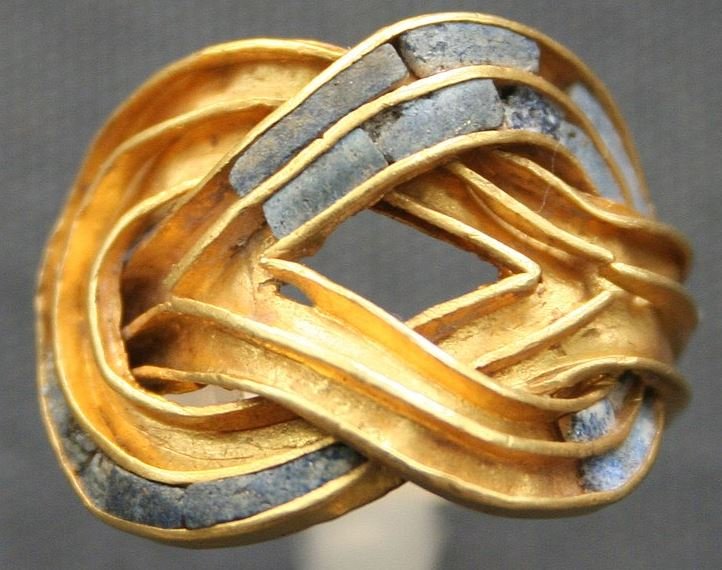
Minoan gold knot ring
What does Minoan jewelry reflect about the civilization of Bronze Age Crete?
Minoan jewelry reflects the civilization’s advanced metalworking skills, appreciation for nature, and love for flowing, expressive shapes. It also demonstrates their ability to combine beauty with function, making jewelry both decorative and culturally significant.
Which civilizations initially influenced Minoan jewelry-making?
Minoan jewelry-making was initially influenced by Egypt and the Babylonians via Syria. However, Minoan jewelers eventually developed their own distinct style, creating innovative designs and perfecting advanced techniques in metalwork.
What materials were commonly used in Minoan jewelry?
Minoan jewelers used a variety of materials, including gold, silver, bronze, gold-plated bronze, and semi-precious stones like rock crystal, carnelian, lapis lazuli, and jasper. They also used amethyst, faience, enamel, ivory, shell, glass-paste, and Egyptian blue, a synthetic material between faience and glass.
Why was gold highly valued in Minoan jewelry-making, and where was it sourced from?
Gold was highly prized in Minoan society due to its rarity and value, often imported from Egypt, Anatolia, and possibly Romania. It was mostly reserved for the elite, who used it in various forms such as beaten, engraved, and embossed.
What advanced metalworking techniques were used by Minoan jewelers?
Minoan jewelers employed techniques like engraving, embossing, filigree (fine gold wire), inlaying, and granulation. Granulation involved attaching tiny gold spheres using a mixture of copper salt and glue, which soldered the spheres in place when heated.
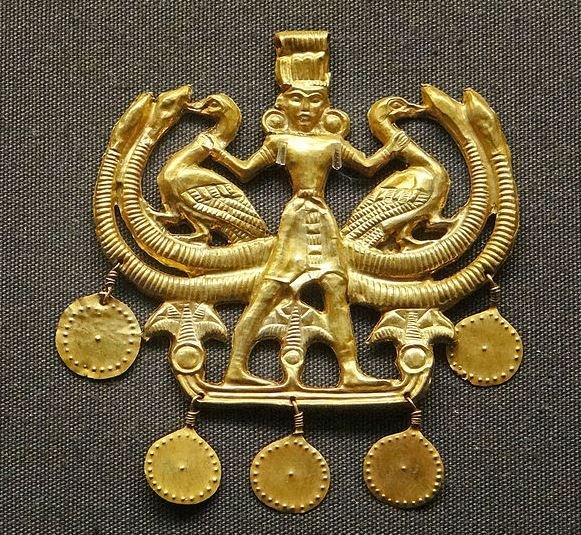
A golden pendant depicting Master of Animals.
What forms of jewelry were common in Minoan culture?
Minoan jewelry took many forms, including diadems, headbands, necklaces, pendants, bracelets, armlets, hairpins, earrings, and rings. Each piece often featured nature-inspired designs like flowers, leaves, and animals.
What made rings particularly significant in Minoan society?
Rings in Minoan society were important both as decorative pieces and for their functional role as seals used in administrative and ceremonial contexts. These rings often featured engraved scenes depicting religious rituals, animals, and mythical creatures.
How were seal rings used in Minoan society?
Seal rings were used to impress soft clay or wax with a recognizable design, marking documents like orders, receipts, and political correspondence. These rings often represented authority and were sometimes passed down through generations.
What are some notable examples of Minoan jewelry?
Two famous examples of Minoan jewelry include the Bee Pendant and the Master of the Animals Pendant. The Bee Pendant features two bees holding a drop of honey, showcasing detailed craftsmanship, while the Master of the Animals Pendant depicts a figure holding birds, likely representing a nature god or priest.
Where were the oldest examples of Minoan jewelry found, and from what period do they date?
The oldest examples of Minoan jewelry were found in tombs on the island of Mochlos, dating from around 2350 to 2150 BCE. These pieces include a thin gold diadem with Cretan ibexes depicted in dot-repoussé.
How did Minoan jewelry influence other cultures, particularly the Mycenaeans?
Minoan jewelry had a strong influence on surrounding cultures, especially the Mycenaeans of mainland Greece. While Mycenaean jewelry incorporated more martial themes and emphasized gold, they retained many Minoan motifs, such as plants and animals, reflecting the artistic legacy of Minoan craftsmanship.
What is the significance of the Bee Pendant in Minoan jewelry?
The Bee Pendant is significant for its intricate craftsmanship, using techniques like granulation and filigree to depict two bees holding a drop of honey. It is one of the finest examples of Minoan jewelry, reflecting the culture’s artistic and technical mastery.
What is the Master of the Animals Pendant, and what does it represent?
The Master of the Animals Pendant, believed to have been looted from Crete and found in Aegina, depicts a figure holding birds, likely representing a nature god or priest. It symbolizes the connection between the Minoan people and the natural world.