Giovanni Cavazzi da Montecuccolo
Giovanni Antonio Cavazzi da Montecuccolo was an Italian Capuchin missionary priest known for his travels in 17th-century Portuguese Angola and for documenting the region’s history, culture, and Capuchin missionary activity.
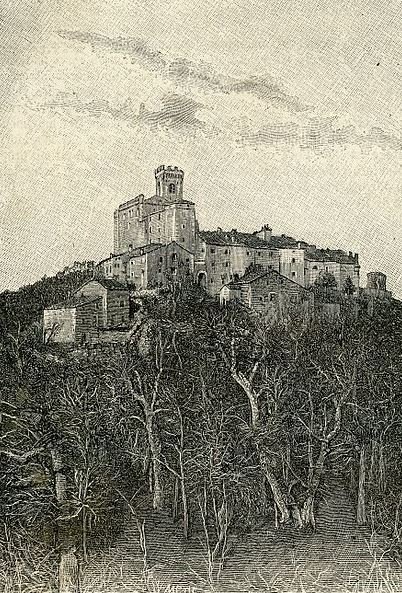
Castle of Montecuccolo
Early Life and Entry into the Mission
Giovanni Antonio Cavazzi da Montecuccolo was born in 1621 in Montecuccolo, near Modena in northern Italy. A member of the Capuchin branch of the Franciscan Order, he joined the religious community with a deep devotion to the spiritual ideals of piety, humility, and evangelism.
Despite these virtues, Cavazzi was not known for academic brilliance. In fact, his intellectual performance was considered so lackluster that he nearly missed the opportunity to be appointed to the Capuchin mission in Central Africa. However, his evident religious zeal ultimately outweighed concerns about his scholarly ability, and he was chosen for the demanding assignment.
Cavazzi’s acceptance into the mission reflected the values of the Capuchin Order, which prized spiritual dedication over intellectual prowess. The 17th-century Capuchin missions, part of a larger Catholic missionary effort orchestrated by the Congregation for the Propagation of the Faith (Propaganda Fide), aimed to spread Christianity beyond Europe’s borders. For Cavazzi, this meant traveling to one of the more remote and challenging corners of the Portuguese empire—Angola.
Treaty of Tordesillas and the division of the New World between Spain and Portugal
Arrival in Angola and Early Travels
In 1654, Cavazzi arrived in Luanda, the capital of Portuguese Angola. From this coastal base, he began his extensive missionary journey inland. Assigned to serve the Portuguese Army as a chaplain, Cavazzi used this role to travel through various regions of Angola and its neighboring kingdoms. His experiences during this time formed the foundation for his later historical writing.
One of Cavazzi’s earliest and most notable journeys took him to the eastern regions of the colony, an area with limited European influence and considerable indigenous political autonomy. His travels included participation in military expeditions and diplomatic visits to powerful African courts, giving him an unprecedented view into local customs, politics, and religious life. His accounts would later reveal a deep fascination and respect for the complexities of Central African societies.
Encounters with African Royalty
Among the most significant moments in Cavazzi’s missionary career were his encounters with prominent African rulers. In 1659, he accompanied Portuguese forces into the central highlands, expanding his knowledge of inland Angola. A year later, in 1660, Cavazzi visited the court of Queen Nzinga (also known as Njinga or Ana de Sousa), the ruler of Matamba and Ndongo, and one of the most influential figures in 17th-century Central Africa.
Queen Nzinga was renowned for her resistance to Portuguese colonial expansion and her skillful diplomacy. Her court was an epicenter of political strategy, cultural synthesis, and religious negotiation. Cavazzi’s visit there marked a turning point in his understanding of African leadership and statecraft. He returned to Nzinga’s court in 1662 and remained until after her death in 1663, indicating a level of trust and acceptance rare for a European missionary. Cavazzi not only witnessed her passing but also presided over her funeral—an extraordinary event reflecting the close relationship he had built with the queen and her people.
After Nzinga’s death, Cavazzi continued his work in Matamba until 1665. His prolonged exposure to African courts, especially Matamba and the Kingdom of Kongo, provided him with insights into their political systems, social structures, and religious beliefs. These observations would later enrich his historical writings with vivid, first-hand details.

A depiction of Queen Nzinga
Return to Italy and Historical Writings
Cavazzi returned to Italy in 1667, bringing with him not only memories and notes from his time in Africa but also a strong determination to document the Capuchin mission’s work and the cultures he had encountered. Though he had begun writing during his time in Angola, it was after his return to Europe that he embarked on a more comprehensive historical project.
His primary assignment in Italy was to compile a formal history of the Capuchin mission in Central Africa. Drawing from personal experience, missionary reports, and archival research, he constructed an expansive narrative. Despite the importance of the work, the Propaganda Fide was hesitant to publish it immediately. Internal concerns about its content or the broader politics of publication may have delayed its release. It was only in 1687, nearly a decade after Cavazzi’s death, that the work finally saw publication.
Giovanni Antonio Cavazzi da Montecuccolo’s writings offer rare insights into African political life, cultural practices, and interactions with European missionaries during a critical period of colonial and religious expansion.
Meanwhile, in 1673, Cavazzi returned to Angola as the Prefect of the Capuchin mission, this time holding a position of higher authority. During this second sojourn, he had the opportunity to revisit earlier mission sites and perhaps reflect on the changes occurring in the region. His administrative and pastoral duties, however, did not prevent him from continuing his literary endeavors. Upon returning to Italy in 1677, he composed a second account of the Capuchin mission, although this work remained unpublished until the twentieth century.
Cavazzi passed away on July 18, 1678. His life, marked by devotion, travel, and scholarship, left a profound legacy in both religious and historical circles.
READ ALSO: The countries in Africa that weren’t colonized
Major Work: Istorica Descrizione de’ Tre Regni Congo, Matamba ed Angola
Cavazzi’s most significant literary contribution was his detailed historical and ethnographic work titled Istorica Descrizione de’ tre regni Congo, Matamba ed Angola (“Historical Description of the Three Kingdoms: Kongo, Matamba, and Angola”). This extensive chronicle presented a wide-ranging account of the people, politics, customs, and landscapes of Central Africa, as well as the history of the Capuchin mission in the region.
The work was initially published posthumously in 1687 and drew considerable attention across Europe. A German translation appeared in 1694, followed by a French version in 1732. The text offered European readers a rare, detailed glimpse into African life through the lens of a missionary who had spent over a decade immersed in the region. Cavazzi’s writing combined theological reflection with ethnographic curiosity, documenting rituals, warfare, diplomacy, and local beliefs with considerable nuance.
In 1965, a modern critical edition and Portuguese translation of the Istorica Descrizione was released in Lisbon in two volumes, edited by Graziano Saccardo. This edition reaffirmed Cavazzi’s importance as a historical source and made his work accessible to contemporary scholars.
Discovery of the Original Manuscripts and Illustrations
In 1969, historian Giuseppe Pistoni made a remarkable discovery that further enhanced Cavazzi’s reputation. While examining documents in the Araldi Family archives in Modena, Pistoni found the original manuscripts of Cavazzi’s work, written in Africa around 1668. These manuscripts were far more than mere texts—they contained vivid watercolor illustrations that provided rare visual representations of 17th-century Central African life.
The illustrations depicted scenes from everyday life, religious ceremonies, warfare, and the royal court of Queen Nzinga. These images, created under Cavazzi’s direction, offered a visual ethnography that complemented his written narrative. They have since been published by scholar Ezio Bassani, adding a unique dimension to Cavazzi’s contributions as a chronicler.
The richness of these illustrations underscored the immersive nature of Cavazzi’s mission. He was not a detached observer but a participant in the world he described. The drawings remain invaluable for understanding how 17th-century Europeans perceived and represented Africa.
Additional Writings: Biographies of Missionaries
Beyond his major historical work, Cavazzi also compiled biographies of Capuchin missionaries who had served and died in Ethiopia and Central Africa. His collection, titled Vite dei Frati Minori Cappuccini del Ordine del Serafica Padre San Francisco, morti nelle Missioni d’Etiopia dall’anno 1645 sino all’anno 1677 (“Lives of the Capuchin Friars of the Order of the Seraphic Father St. Francis, Who Died in the Missions of Ethiopia from 1645 to 1677”), offered detailed accounts of their efforts and martyrdoms.
This text, like much of Cavazzi’s work, blended spiritual hagiography with historical observation. It reflected his belief in the sanctity of missionary life and the profound sacrifices made in the pursuit of religious outreach. Some of these biographical accounts also appeared in his earlier Istorica Descrizione, indicating that Cavazzi viewed the missionary experience as inseparable from the broader African narrative.

History of the Catholic Church: How and When Did Catholicism Begin?
Frequently Asked Questions
When and where did Cavazzi carry out his missionary work?
Giovanni Cavazzi da Montecuccolo arrived in Luanda, Angola, in 1654 and worked extensively in the Portuguese-controlled regions, including travels to Pungo Andongo, Matamba, and the Kingdom of Kongo.
What notable African leader did Cavazzi interact with?
He visited Queen Nzinga (Njinga) in 1660, returned to her court in 1662, presided over her funeral in 1663, and remained in Matamba until 1665.
What is Cavazzi’s most important written work?
His most significant work is Istorica Descrizione de’ tre regni Congo, Matamba ed Angola, a comprehensive account of Central African kingdoms and the Capuchin mission.
Why was the publication of his major work delayed?
Although commissioned by the Holy Congregation for the Propagation of the Faith, the work was not published until 1687, after Cavazzi’s death, due to institutional reluctance.
Did Cavazzi return to Angola after his first mission?
Yes, he returned in 1673 as prefect of the Capuchin mission and went back to Italy in 1677.
What significant discovery about Cavazzi’s work was made in 1969?
Giuseppe Pistoni found Cavazzi’s original illustrated manuscripts in the Araldi Family papers in Modena, offering new insight into his African experiences.
What other writings did Cavazzi produce?
He also wrote a second biographical account of the Capuchin mission and compiled Vite dei Frati Minori Cappuccini, a collection of missionary biographies covering 1645–1677.





