Who represented the Kingdom of Great Britain at the Treaty of Paris in 1783?

The British diplomats who negotiated and signed the Treaty of Paris in 1783
The Treaty of Paris, signed in 1783, was a landmark event that officially ended the American Revolutionary War and established the United States as an independent nation. On the British side, two key figures played instrumental roles in negotiating and finalizing the treaty: Richard Oswald and David Hartley. Their diplomatic efforts reflected the changing political environment in Britain at the time, as the British government sought to end the costly conflict while trying to preserve as much influence as possible in the post-war world.
In the article below, World History Edu delves into the lives and careers of the British representatives.

The first page of the Treaty of Paris, signed on September 3, 1783
Richard Oswald: The Early Negotiator
Richard Oswald was a Scottish merchant, diplomat, and seasoned negotiator who took the lead on behalf of Britain during the initial phases of the peace talks. He was chosen by Prime Minister Lord Shelburne to represent British interests, largely due to his extensive experience in commerce and his existing connections with key figures in the American cause, including Benjamin Franklin.
Oswald had a background in trade, particularly in the Atlantic world, where he had been involved in ventures related to the slave trade and the mercantile economy. This experience gave him a deep understanding of the economic interests at stake in the peace negotiations.
Oswald was seen as a pragmatic and flexible negotiator, traits that made him a suitable choice for such a delicate diplomatic mission. At the time, Britain was facing significant pressures: the war had drained its resources, and public support for continuing the conflict had diminished. The defeat at Yorktown in 1781 had further weakened Britain’s position, making it clear that a military solution was no longer viable. Instead, diplomacy became the primary avenue for resolving the conflict.
Oswald’s approach to the negotiations was conciliatory, and he recognized that the independence of the United States was inevitable.
Oswald was sent to Paris in 1782 to begin preliminary discussions with the American representatives. These talks were complex and required navigating a variety of issues, including territorial boundaries, trade relations, and the fate of Loyalists who had supported Britain during the war.
Oswald’s approach to the negotiations was conciliatory, and he recognized that the independence of the United States was inevitable. Rather than obstructing this reality, Oswald focused on ensuring that Britain retained favorable terms in the post-war settlement, particularly regarding trade and access to key resources.
One of Oswald’s significant achievements during the negotiations was the drafting of the preliminary articles of peace, which were agreed upon in November 1782. These articles laid the groundwork for the final treaty and included important provisions related to territorial boundaries, fishing rights, and the repayment of debts owed by American colonists to British creditors.
While Oswald sought to protect British interests, his relatively lenient stance helped facilitate the peace process and avoid prolonging the conflict.

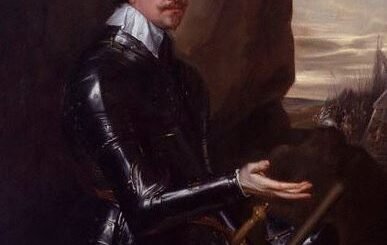
British diplomat Richard Oswald. Portrait by William Denune
David Hartley: The Final Negotiator
While Richard Oswald played a crucial role in the early stages of the negotiations, David Hartley was brought in to finalize the Treaty of Paris. Hartley was a British politician and a close associate of Charles James Fox, a prominent member of the Whig party who had long opposed the war with the American colonies. Hartley’s personal opposition to the conflict made him an ideal choice to conclude the negotiations, as he was seen as someone who would work earnestly toward peace.
Hartley’s background as a politician and diplomat was rooted in his strong humanitarian ideals and his consistent advocacy for reconciliation with the American colonies. Throughout the war, he had argued that the conflict was both morally wrong and economically disastrous for Britain.
He believed that peace was the only viable solution and had consistently pushed for diplomatic efforts to end the hostilities. His views aligned with those of many in Britain who had grown weary of the war and its heavy costs, both in terms of finances and human lives.

David Hartley the Younger (1732 – 19 December 1813). Image: Painted by George Romney, engraved by James Walker
In 1783, as the negotiations entered their final phase, Hartley was appointed as Britain’s official representative to complete the treaty. By this point, the main issues had largely been settled through the preliminary articles negotiated by Oswald, but Hartley’s task was to finalize the agreement and ensure its implementation. On September 3, 1783, David Hartley signed the definitive Treaty of Paris on behalf of the British government, marking the formal conclusion of the American Revolutionary War.
Hartley’s background as a politician and diplomat was rooted in his strong humanitarian ideals and his consistent advocacy for reconciliation with the American colonies.
Hartley’s role was not merely ceremonial; he was deeply involved in the final discussions that ensured the treaty would be accepted by both sides. His personal commitment to peace and his longstanding relationship with key American figures, such as Benjamin Franklin, helped smooth over any lingering disagreements. Hartley’s work ensured that the terms of the treaty were not only agreeable to the British government but also set the stage for a more peaceful post-war relationship between Britain and the United States.
READ MORE: 10 Longest-Reigning British Monarchs of All Time
Key Issues in the Negotiations
The Treaty of Paris addressed several critical issues that were central to ending the war and establishing a stable post-war relationship between Britain and the newly independent United States. These issues included territorial boundaries, trade rights, the fate of Loyalists, and the repayment of debts. Both Oswald and Hartley played key roles in negotiating these terms, ensuring that Britain’s interests were protected while also accommodating the demands of the Americans.
- Territorial Boundaries
One of the most important aspects of the treaty was the definition of the new territorial boundaries for the United States. The British government recognized the need to concede significant territory to the Americans, and the treaty established the boundaries of the United States from the Atlantic Ocean to the Mississippi River. The northern boundary was set along the Great Lakes, while the southern boundary was established at the northern edge of Florida, which remained under Spanish control.
These territorial concessions were substantial, and Britain’s decision to grant them was influenced by both Oswald’s pragmatism and Hartley’s desire for a lasting peace. The new borders effectively doubled the size of the United States, providing it with vast new lands for future expansion. For Britain, the loss of these territories was a major blow, but the negotiators recognized that maintaining them was no longer feasible after the military defeat in the colonies.
- Fishing Rights
Another key issue in the negotiations was the question of fishing rights, particularly in the waters off Newfoundland and the Gulf of Saint Lawrence. These areas had been important fishing grounds for both British and American fishermen before the war, and securing access to these resources was a priority for both sides. The treaty granted American fishermen the right to fish in these waters, a concession that was seen as important for maintaining economic stability in the New England region.
While the British negotiators, including Oswald and Hartley, were reluctant to grant these fishing rights, they ultimately agreed to them as part of the broader effort to secure peace. The inclusion of these provisions in the treaty helped ensure that economic relations between the two nations could be restored and that American trade could flourish in the post-war period.
- Loyalists and Property Rights
One of the more contentious issues during the negotiations was the fate of the Loyalists—those American colonists who had remained loyal to the British crown during the war. Many of these individuals had fled to Canada or Britain during the conflict, and their property had been confiscated by the revolutionary governments. The British negotiators sought assurances that the Loyalists would be compensated for their losses and that their property would be restored.
The treaty included provisions that recommended the return of confiscated property to the Loyalists, but this was a recommendation rather than a binding obligation. In practice, many American states ignored these provisions, and most Loyalists did not receive compensation. This issue remained a point of tension between Britain and the United States for years after the war, and it contributed to the difficult relationship between the two nations in the early post-war period.
- Repayment of Debts
Another important provision in the Treaty of Paris was the recognition of pre-war debts owed by American colonists to British creditors. Before the war, many American merchants and landowners had borrowed money from British lenders, and the war had disrupted the repayment of these debts. The British government was keen to ensure that these debts would be honored, as it was crucial for the restoration of economic ties between the two nations.
The treaty stipulated that American courts would recognize these debts and that efforts would be made to facilitate their repayment. This provision was important for re-establishing economic relations between Britain and the United States, although it also proved controversial in the years following the war. Many American debtors resisted repaying these obligations, and the issue of unpaid debts remained a source of friction between the two countries.

Image: A map showing the United States and its territories after the signing of the Treaty of Paris in 1783.
Challenges and Legacy
While the Treaty of Paris was a significant achievement, it did not resolve all the issues between Britain and the United States. Several challenges persisted in the years following the treaty’s signing, including disputes over the exact location of the northern boundary and the continued presence of British troops in frontier forts in the Great Lakes region. These issues would not be fully resolved until later agreements, such as the Jay Treaty in 1794.
For Britain, the Treaty of Paris marked the end of a major chapter in its imperial history. The loss of the American colonies was a significant blow, but Britain quickly shifted its focus to other parts of its empire, particularly in India and the Caribbean. The treaty also paved the way for a new relationship between Britain and the United States, one that would evolve over the coming decades as the two nations navigated their post-war relationship.
In the end, the roles of Richard Oswald and David Hartley were pivotal in bringing the American Revolutionary War to a peaceful conclusion. Oswald’s pragmatic approach to the negotiations and Hartley’s commitment to peace ensured that the treaty was successfully negotiated and signed. While the treaty had its flaws and left some issues unresolved, it remains one of the most important diplomatic achievements of the 18th century, shaping the future of both Britain and the United States for generations to come.
Lord North: the British Prime Minister Who Lost the American Colonies
Questions and Answers on the Peace Negotiations of the Treaty of Paris (1783)

Peace negotiations began in Paris in April 1782, following the American victory in the Revolutionary War. Image: Benjamin West’s 1783 portrait of the Treaty of Paris shows the American delegation, including John Jay, John Adams, Benjamin Franklin, Henry Laurens, and William Temple Franklin. The British refused to pose, leaving the portrait unfinished.
Who represented the United States during the peace negotiations?
The United States was represented by Benjamin Franklin, John Jay, Henry Laurens, and John Adams.
When was the treaty drafted, and where was it signed?
The Treaty of Paris was drafted on November 30, 1782, and it was signed on September 3, 1783, at the Hôtel d’York in Paris, which is now located at 56 Rue Jacob.

Image: A commemorative plaque marks the site at 56 Rue Jacob in Paris, where the Treaty of Paris was signed on September 3, 1783.
Who signed the Treaty of Paris on behalf of the United States and Britain?
The treaty was signed by John Adams, Benjamin Franklin, John Jay (for the United States), and David Hartley (for Great Britain).
The British representatives were Richard Oswald and David Hartley. Both played crucial roles in the peace negotiations.
What was Richard Oswald’s background, and why was he chosen to represent Britain?
Richard Oswald was a Scottish merchant and experienced negotiator. He was selected due to his knowledge of colonial trade and his previous experience with issues concerning the American colonies. His connections with key American figures, such as Benjamin Franklin, also made him a suitable candidate for the peace talks.
What role did Oswald play during the negotiations?
Oswald led the early negotiations and drafted the preliminary articles of peace in November 1782, which laid the foundation for the final treaty. He took a moderate stance, understanding the inevitability of American independence, and focused on securing favorable terms for Britain, particularly in trade and territorial boundaries.
Who was David Hartley, and when did he join the negotiations?
David Hartley was a British politician and an ally of Whig leader Charles James Fox. He joined the negotiations later to finalize the treaty. Hartley was known for his personal opposition to the war and his advocacy for reconciliation with the American colonies.
What were Hartley’s views on the war, and why was he chosen to finalize the treaty?
Hartley opposed the war, believing it was unjust and harmful to Britain. His appointment reflected the changing political climate in Britain, where many had grown weary of the conflict. Hartley’s goal was to promote peace and cooperation between Britain and the newly independent United States.

King George III of Great Britain (reign: 25 October 1760 – 29 January 1820) was the last monarch to rule the Thirteen American Colonies. David Hartley and Richard Oswald represented the Kingdom of Great Britain and King George III during the negotiations. Image: Coronation Portrait of George III by Scottish artist Allan Ramsay
What was David Hartley’s role in the signing of the Treaty of Paris?
In September 1783, David Hartley signed the final Treaty of Paris on behalf of Great Britain. He worked alongside the American delegation to conclude the formal terms of peace, which were largely based on the preliminary agreements drafted by Oswald.
How did Oswald and Hartley contribute to the overall negotiation process?
Oswald handled much of the initial dialogue and laid the groundwork for the peace agreement, while Hartley finalized the treaty and signed it. Together, they represented different phases of British diplomacy and were critical in shaping the final document.
What was the significance of the Treaty of Paris for Britain and the United States?
The Treaty of Paris officially recognized the independence of the United States, marking a major loss for the British Empire. Despite this, Hartley’s involvement ensured a smooth conclusion to the conflict and laid the foundation for future peace and cooperation between the two nations.

Last page of the Treaty of Paris in 1783