Greco-Turkish War (1897): History and Major Facts
The Greco-Turkish War of 1897, known also as the Thirty Days’ War, centered on Crete, an Ottoman province with a predominantly Greek-speaking populace yearning for union with Greece. Although the Ottoman Empire emerged victorious on the battlefield, international mediation spurred the formation of an autonomous Cretan State under Ottoman suzerainty, appointing Prince George of Greece as High Commissioner. In Greece, the conflict was called the Black ’97 or Unfortunate War, revealing national disappointment. Both countries recognized critical shortcomings in their military structures, prompting them to pursue essential reforms.
Background
Crete’s longstanding desire for union with Greece stemmed from ethnic, cultural, and religious ties, along with resentment toward Ottoman governance.
The 1878 Pact of Halepa promised autonomy, yet the empire’s irregular enforcement undermined its value. Revolts in 1885, 1888, and 1889 revealed entrenched resentments.
By the mid-1890s, Sultan Abdul Hamid II faced mounting pressure from foreign powers interfering in Cretan matters. The arrival of Greek volunteers and an expanded Ottoman garrison heightened tensions, suggesting a larger conflict.
Opposing factions on Crete continued to clash, escalating discord and heralding war with Greece. Amid these tensions, both Christian and Muslim communities on Crete endured periodic violence, further damaging any prospects of a stable coexistence.
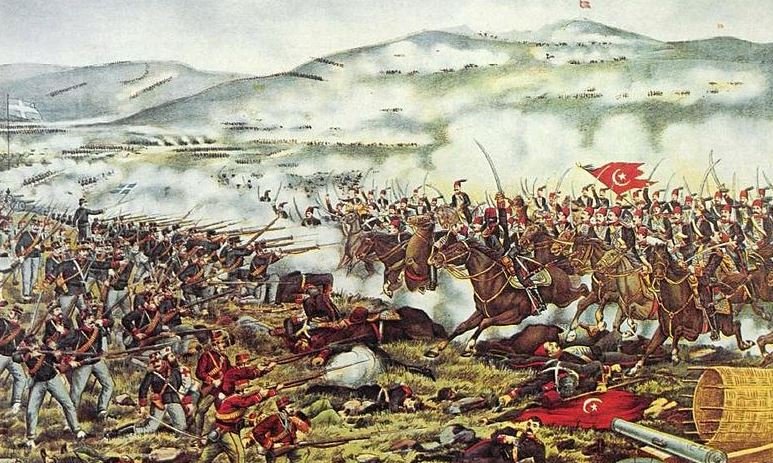
An illustration of the Battle of Velestino, one of the battles during the Greco-Turkish War.
Prelude to War
Public outrage in Athens rose, with nationalists berating Prime Minister Deligiannis and King George I for inaction. The National Society pressed for conflict, influencing army officers.
In February 1897, Greek troops landed near Chania, disregarding Great Power warnings, and Colonel Timoleon Vassos declared Crete’s union with Greece. Though foreign navies blockaded the island, Greek determination outweighed diplomatic caution, propelling both sides toward open hostility. This environment of turmoil set the stage for a broader confrontation that neither side could ultimately avoid.
Opposing Forces
Under German-influenced reforms, the Ottoman Army, commanded by Edhem Pasha, wielded modern rifles and artillery. Greece, led by Crown Prince Constantine, relied on outdated Gras rifles and limited training.
With around 45,000 men in Thessaly and 16,000 in Epirus, the Greeks faced 58,000 Ottoman troops in Thessaly and 26,000 in Epirus. Although naval resources existed, neither side risked a large-scale sea engagement.
The Ottoman advantage in equipment and organization would prove decisive. Additionally, the Ottoman Army benefited from superior logistical networks, enabling more efficient movement of men and supplies.

Edhem Pasha
Start of the War
In April 1897, hostilities erupted along the Thessaly border. Greek leaders hoped to ignite local uprisings within Ottoman territory, yet the modernized Ottoman Army pressed forward, winning key engagements. Greek defenses buckled under superior artillery and discipline.
Alarmed by a potential regional conflagration, the Great Powers intervened to restrain the Ottomans. Ultimately, Greek authorities requested an armistice, conceding territorial and monetary reparations to halt the victorious Ottoman forces.
Meanwhile, volunteers attempted minor incursions behind Ottoman lines, but these proved inconsequential. Supply issues, poor coordination, and outdated weaponry hamstrung Greek operations.
Overwhelmed by methodical Ottoman assaults, Greek morale waned. By mid-May, the war was all but decided on the ground. International journalists covered these developments closely, making this conflict among the first to garner significant global media attention.
Thessalian Front
Thessaly became the primary battleground, with Ottoman columns swiftly capturing Tyrnavos and Larissa. Crown Prince Constantine’s defensive schemes collapsed under unrelenting attacks, compelling retreats.
At Domokos, Greek forces, bolstered by Italian volunteers under Ricciotti Garibaldi, staged a last stand. Though they briefly checked the Ottomans, their lines broke, sealing Thessaly’s fate. This front’s swift collapse underscored Greece’s lack of robust military planning and training. Ottoman commanders used coordinated advances to encircle Greek positions, multiplying their tactical advantages.
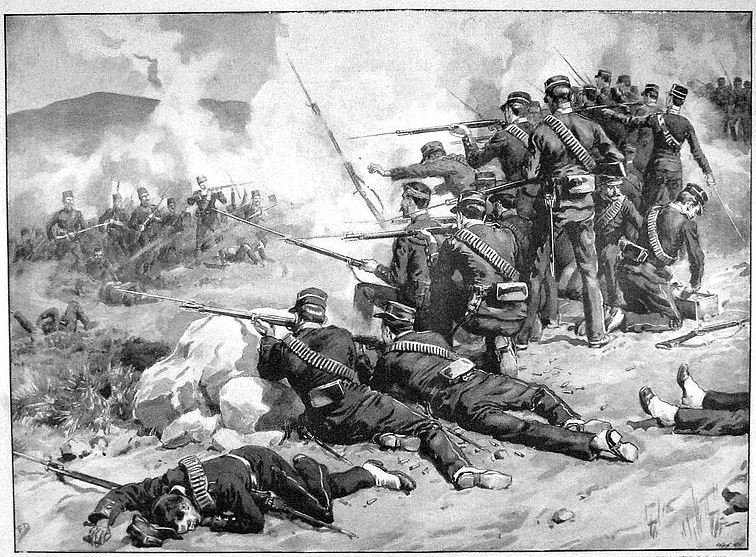
An illustration depicting a clash between Greeks and Turks at Rizomylos
Epirus Front
In Epirus, Greece aimed to disrupt Ottoman supply routes near Arta and Preveza. Early advances buoyed morale but soon stalled due to weak logistics and limited reinforcements. Ottoman units, aided by Albanian fighters, repelled Greek sorties with relative ease.
Repeated setbacks exposed the flawed command structure in Athens. By mid-May, Greek efforts had unraveled, confirming that the Epirus campaign would not offset the failures in Thessaly. Despite occasional minor successes, local populations suffered disruptions, illustrating the war’s broader humanitarian toll.
Armistice
Fearing a wider crisis, European diplomats demanded a halt to hostilities. By May 1897, negotiations forced Greece to accept an onerous peace. The Kingdom ceded minor border areas and paid hefty indemnities, while foreign observers took control of Greek finances.
Nevertheless, the Ottomans ended their advance short of Athens, mindful of international pressure. Thus concluded a brief conflict that illustrated both the reach of the Great Powers and the volatility of Balkan relations. For Greece, the indemnity deepened an already precarious financial situation, forcing reliance on foreign loans and oversight.
Aftermath
Though mainland combat ceased, Crete remained tense until late 1898, when foreign intercession led Ottoman troops to depart. The island became autonomous under Prince George, paving the way for full union with Greece in 1913. The Greek defeat fueled internal demands for sweeping reforms.
Outrage over military incompetence and bureaucratic failure contributed to the Goudi coup of 1909 and elevated Eleftherios Venizelos as a leading reformer. Under his guidance, Greece modernized its forces and economy, enabling successful campaigns in the Balkan Wars.
The lessons of 1897 ultimately galvanized change, transforming national structures and forging a stronger state. As a result, Greece’s political landscape shifted dramatically in decades.

Frequently Asked Questions
What was the primary cause of the Greco-Turkish War of 1897?
The primary cause was the status of Crete, an Ottoman province with a Greek-majority population seeking union with Greece. Tensions escalated due to unrest on the island and Greek intervention.
Why did the Ottomans emerge victorious despite external pressures?
The Ottoman Army was better organized, equipped, and trained, benefiting from German-led reforms, while Greece’s military was poorly prepared, lacked modern weapons, and suffered from weak leadership.
What role did the Great Powers play in the conflict?
The Great Powers intervened diplomatically and militarily to prevent a broader war, blockading Crete, halting the Ottoman advance toward Athens, and facilitating the establishment of an autonomous Cretan State.
How did the war impact Greece domestically?
The Greek defeat exposed military and governmental weaknesses, leading to public discontent and political reform, culminating in the Goudi coup of 1909 and subsequent modernization under Eleftherios Venizelos.
What was the outcome for Crete following the war?
Although the Ottomans won the war, Crete gained autonomy under Ottoman suzerainty, eventually uniting with Greece in 1913 after the withdrawal of Ottoman troops in 1898.
What were the broader implications of the war for the region?
The war highlighted the fragility of Balkan stability, the influence of European powers, and the importance of military modernization, setting the stage for future conflicts and alliances in the region.