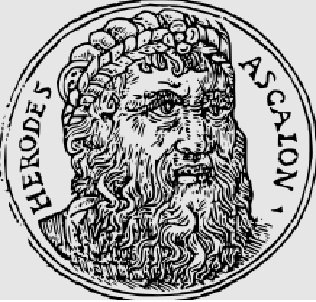
A medallion of Herod the Great from the Promptuarium Iconum Insigniorum, 16th century.
Herod the Great was a Roman client king of Judea, known for his extensive building projects, including the expansion of the Second Temple.
Early Life and Background
Herod the Great, born around 72 BCE in Idumea, was the son of Antipater the Idumaean and Cypros, a Nabatean Arab princess. His father, a high-ranking official under the Hasmonean ruler Hyrcanus II, was instrumental in securing Herod’s rise to power. The Idumaeans, originally of Edomite descent, had been forcibly converted to Judaism in the previous century, making Herod a Jew by both upbringing and political necessity. Despite this, his religious legitimacy was often questioned due to his mixed heritage and strong ties to Rome.
Rise to Power
Herod’s ascent to political prominence began when he was appointed governor of Galilee in 47 BCE. In this role, he efficiently collected taxes for Rome and gained a reputation for suppressing banditry, although his harsh methods led to criticism from the Sanhedrin.
His close alliance with Rome, particularly through Mark Antony and later Augustus (Octavian), ensured his advancement. When the Parthians invaded Judea in 40 BCE and placed Antigonus II Mattathias on the throne, Herod fled to Rome. There, he convinced the Roman Senate to name him “King of the Jews.”
Returning to Judea with Roman support, he waged a three-year campaign, culminating in the siege of Jerusalem in 37 BCE. With the defeat of Antigonus, Herod firmly established his rule, marking the beginning of the Herodian dynasty.
Herod’s Political Maneuvering and Reign
As Rome’s client king, Herod balanced diplomacy and ruthless pragmatism to maintain his rule. He faced opposition from the Hasmonean family, particularly his mother-in-law Alexandra, who sought to restore Hasmonean influence through her son Aristobulus III. To counter this, Herod orchestrated Aristobulus’ appointment as High Priest, only to later have him drowned under suspicious circumstances. This was one of many instances where Herod eliminated potential threats, including executing his wife Mariamne I and several of his own sons.
Herod’s relationship with Rome was crucial for his reign. Initially aligning with Mark Antony, he swiftly switched allegiance to Octavian following Antony’s defeat at Actium in 31 BCE. At a meeting in Rhodes, Herod successfully convinced Octavian of his loyalty, securing his position as king. This ability to navigate the treacherous waters of Roman politics allowed him to maintain control over Judea.
Building Projects and Architectural Legacy
Herod is best remembered for his ambitious construction projects, which reshaped Judea’s landscape and reinforced his authority. His most famous endeavor was the massive expansion of the Second Temple in Jerusalem, a project intended to win the favor of the Jewish population. He doubled the size of the Temple Mount, employing thousands of workers, including Jewish priests to maintain religious purity in construction. The Western Wall, a remnant of this expansion, remains a significant site today.
Beyond Jerusalem, Herod developed several cities, including Caesarea Maritima, featuring a grand harbor built with advanced Roman engineering techniques. Other projects included the fortress-palace of Masada, the desert retreat of Herodium, and numerous aqueducts, theaters, and roads. These structures not only displayed Herod’s wealth and power but also facilitated trade and military defense.
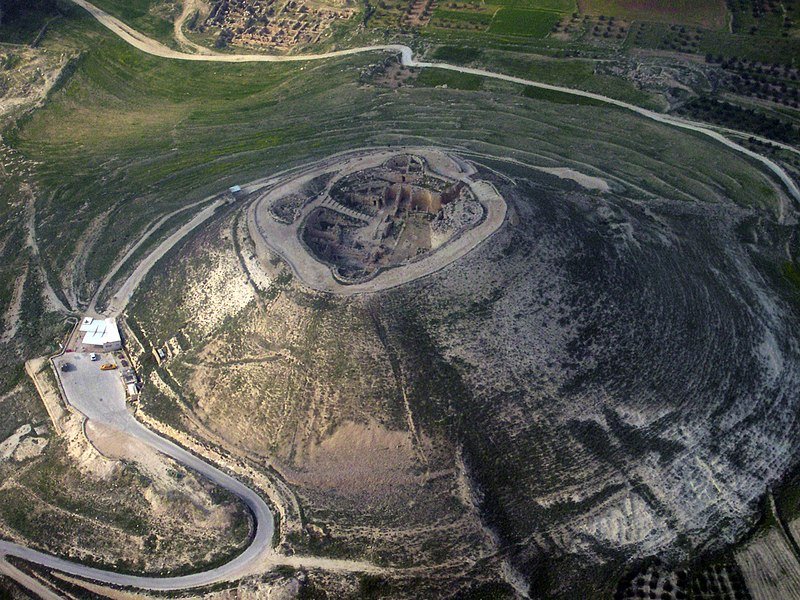
An aerial view of Herodium, taken from the southwest.
Herod’s Administration and Governance
Herod ruled with an iron fist, employing a vast network of spies and secret police to suppress dissent. His regime was marked by heavy taxation to fund his grandiose projects and gifts to Rome. While these measures helped stabilize the economy and infrastructure, they also fueled resentment among the Jewish population.
Despite his authoritarian rule, Herod occasionally acted in the interest of his subjects. During a severe famine in 25 BCE, he provided grain from his personal stores and reduced taxes to alleviate suffering. However, his favoritism toward Roman customs, as seen in the introduction of Greco-Roman entertainment and statues, often alienated traditional Jews. His appointment of foreign high priests further eroded his support among the religious elite.
Religious and Cultural Conflicts
Although Herod publicly identified as Jewish and adhered to Jewish laws in certain respects, his affinity for Roman and Hellenistic culture led to significant opposition. His construction of non-Jewish temples, including one dedicated to Augustus, fueled accusations that he prioritized Roman interests over Jewish traditions. The placement of a golden eagle above the entrance of the Temple in Jerusalem was particularly offensive to devout Jews, symbolizing Roman authority over their sacred space.
Herod’s rule saw conflicts between the major Jewish sects. The Pharisees opposed him for undermining Jewish laws, while the Sadducees, who had ties to the Temple priesthood, resented his interference in religious affairs. His disregard for traditional governance exacerbated tensions, contributing to unrest that persisted even after his death.
The Massacre of the Innocents and Biblical Accounts
The Gospel of Matthew describes Herod as the orchestrator of the Massacre of the Innocents, ordering the execution of all male infants in Bethlehem to eliminate a potential rival—Jesus of Nazareth. However, there is no contemporary historical evidence to support this event, and it is absent from Josephus‘ accounts. Many scholars view it as a literary device reflecting Herod’s well-documented paranoia and cruelty, particularly in light of his execution of family members.
The New Testament also mentions Herod’s descendants, including Herod Antipas, who played a role in the execution of John the Baptist and presided over part of Jesus’ trial. His grandson, Herod Agrippa I, appears in Acts 12 as a persecutor of early Christians.
Herod’s Final Years and Death
Herod’s later years were marred by illness, paranoia, and political instability. Suffering from a painful disease, which some modern scholars speculate may have been chronic kidney failure or Fournier’s gangrene, he became increasingly erratic. He executed his eldest son Antipater for alleged treason and revised his will multiple times regarding succession.
Josephus records that Herod, fearing that no one would mourn his death, ordered the execution of prominent Judeans upon his passing to ensure public grief. This order was never carried out, but it highlights the extent of his paranoia.
Herod died in 4 BCE in Jericho, and his kingdom was divided among his three surviving sons—Herod Archelaus, Herod Antipas, and Philip the Tetrarch—under Roman oversight. His death triggered widespread unrest, ultimately leading to direct Roman rule over Judea by 6 CE.
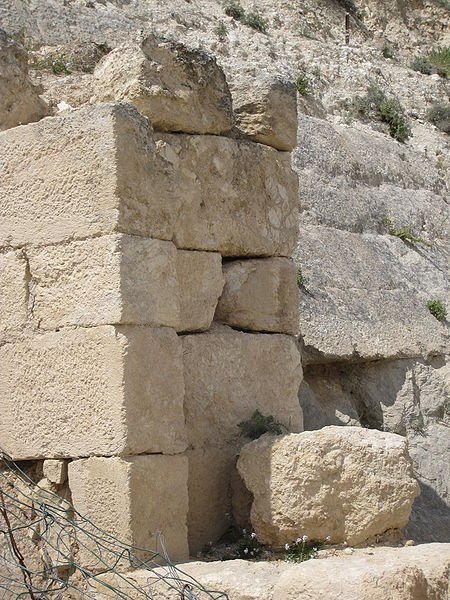
Herod’s Tomb
Herod’s Tomb and Archaeological Discoveries
Josephus states that Herod was buried at Herodium, a desert fortress he had constructed. In 2007, Israeli archaeologist Ehud Netzer announced the discovery of Herod’s tomb at the site, although debate continues regarding its authenticity. The excavation revealed a broken sarcophagus but no remains, raising questions about whether the tomb was desecrated in antiquity.
While Herod the Great successfully maintained Roman favor and implemented extensive infrastructural developments, his despotic rule fostered deep resentment.
Legacy and Historical Interpretation
Herod’s legacy remains deeply polarizing. On one hand, he was an architectural visionary whose projects transformed Judea, laying the groundwork for its later development. His diplomatic skill ensured stability in a volatile region, securing Judea’s place within the Roman Empire.
Conversely, his reign is often remembered for its brutality. His willingness to execute family members, impose heavy taxation, and suppress dissent painted him as a tyrant in both Jewish and Christian traditions. Even Roman historians acknowledged his cruelty, with Emperor Augustus reportedly quipping that it was “better to be Herod’s pig than his son,” a reference to his execution of three sons despite his adherence to Jewish dietary laws.
Modern historians recognize Herod as a complex figure—a shrewd politician, master builder, and ruthless ruler. His reign set the stage for the events leading up to the Jewish-Roman conflicts of the first century CE, shaping the course of Jewish history under Roman rule.
Frequently Asked Questions
How did Herod the Great rise to power?
He gained favor with the Romans through his father’s connections, was appointed King of the Jews by the Roman Senate in 40 BCE, and solidified his rule after defeating Antigonus.
What were Herod’s major construction projects?
He rebuilt the Second Temple in Jerusalem, constructed the port city of Caesarea Maritima, and built fortresses such as Masada and Herodium.
Why was Herod’s rule controversial?
He was seen as both a successful ruler and a tyrant, known for his brutal suppression of opposition and execution of family members, including his wife and sons.
What is Herod’s connection to the Massacre of the Innocents?
The Gospel of Matthew attributes the killing of infants in Bethlehem to him, but there is no corroboration in historical sources like Josephus.
How did Herod maintain Roman support?
He aligned himself with Roman leaders such as Mark Antony and later Augustus, proving his loyalty and administrative capabilities.
What happened after Herod’s death?
His kingdom was divided among his sons—Archelaus ruled Judea, Antipas ruled Galilee and Perea, and Philip ruled territories east of the Jordan.
Was Herod ethnically Jewish?
He was of Idumean and Nabatean descent, raised as a Jew, but his legitimacy was questioned due to his family’s forced conversion.
How did Herod die?
He suffered from a painful illness, possibly kidney failure or gangrene, and attempted suicide before dying around 4 BCE.
Where is Herod’s tomb?
It was discovered in 2007 at Herodium, though some scholars dispute the identification of the site.





