Roman Province of Judea: History and Major Facts
Judaea was a Roman province established in 6 CE, encompassing Judea, Idumea, Samaria, Galilee, and parts of Philistia. It was formed after the deposition of Herod Archelaus, transitioning from semi-autonomous vassalage to direct Roman rule.

Map of the Roman Province of Judaea (6–41 CE).
How Judaea became a Roman Province
Judaea became a Roman province in 6 CE, following the deposition of Herod Archelaus, whose misrule prompted his subjects to appeal directly to Emperor Augustus. This administrative change marked the end of the Herodian Kingdom’s semi-autonomous status and its transition to direct Roman governance. Initially a satellite of the larger province of Syria, Judaea included regions such as Judea, Samaria, and Idumea, with its capital moved from Jerusalem to Caesarea Maritima.
The name “Judaea” was derived from the ancient Kingdom of Judah and symbolized the continuation of Jewish cultural and religious identity within the constraints of Roman rule. Despite its limited economic value, Judaea’s strategic position controlled vital trade routes and served as a buffer against Rome’s eastern rival, the Parthian Empire.
Governance Under Roman Prefects and Procurators
The governance of Judaea was distinct from senatorial or imperial provinces, as it was managed by prefects or procurators of the equestrian order rather than consular governors. The first prefect, Coponius, was appointed by Publius Sulpicius Quirinius, who conducted a census in 6 CE. This census provoked unrest, including a notable rebellion led by Judas of Galilee, reflecting the province’s volatile sociopolitical climate.
Notable figures like Pontius Pilate, who governed during 26–36 CE, played critical roles in Judaea’s history. Pilate’s tenure is marked by tensions with Jewish religious leaders and the execution of Jesus of Nazareth, an event central to the emergence of Christianity. Later prefects faced similar challenges, balancing Roman authority with local religious and cultural sensibilities.
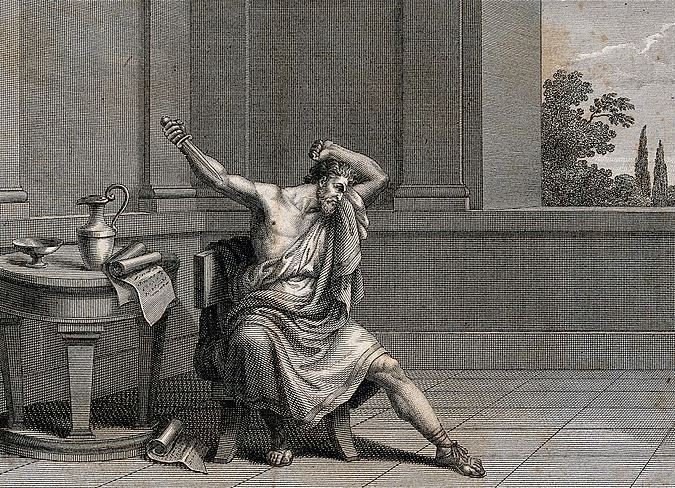
An engraving depicting Pontius Pilate.
Judaea’s Role in the First Jewish-Roman War
Discontent with Roman governance reached a breaking point in 66 CE, sparking the First Jewish-Roman War. The revolt was fueled by economic disparities, heavy taxation, and religious tensions, including sacrilegious acts such as Emperor Caligula‘s attempt to install his statue in the Jerusalem Temple. The war culminated in the Roman siege of Jerusalem in 70 CE, led by General Titus (later Emperor Titus), resulting in the destruction of the Second Temple—a pivotal event in Jewish history that marked the end of the Second Temple period.
The war’s aftermath saw Judaea’s elevation to a province governed by a legate of praetorian rank, reflecting its increased strategic importance. The province remained under military oversight to suppress further rebellions and maintain order.
Economic and Social Conditions of the Province
Agriculture formed the backbone of Judaea’s economy, with wheat, barley, olives, and grapes as primary crops. Rabbinic literature and archaeological evidence suggest the cultivation of vegetables, legumes, and even rice. Coinage minted by Roman governors reflected attempts to accommodate Jewish religious sensibilities, avoiding imperial portraits and instead featuring symbols like palm trees and grain.
Agriculture, including wheat, barley, olives, and grapes, formed the economic backbone. Local coinage reflected Jewish sensibilities but ceased after 70 CE, marking a decline in Jewish autonomy.
Despite these measures, Roman rule strained Jewish society. Famine and social disparities fueled unrest, while the destruction of the Temple disrupted religious and economic systems centered around Jerusalem. The Jewish population faced displacement, heavy taxation, and the imposition of the Fiscus Judaicus, a punitive tax levied on Jews across the empire.
The Transition to Syria Palaestina
Following the suppression of the Bar Kokhba Revolt (132–136 CE), Judaea was merged with Galilee and renamed Syria Palaestina by Emperor Hadrian. This renaming aimed to erase Jewish ties to the land and symbolized Rome’s punitive response to repeated uprisings. The establishment of Aelia Capitolina, a Roman colony on the ruins of Jerusalem, further marginalized Jewish presence in the region.
Hadrian’s measures included bans on circumcision and other Jewish practices, exacerbating tensions and effectively ending Jewish aspirations for autonomy. The remaining Jewish population dispersed across the empire, with some communities migrating to Galilee and other areas.
Religious and Cultural Transformations
The destruction of the Second Temple necessitated a fundamental shift in Jewish religious life. With the Temple’s sacrificial system rendered obsolete, Jewish leaders emphasized the synagogue as the central institution for worship and communal life. Rabbinic Judaism emerged as the dominant religious framework, focusing on Torah study and oral traditions, which were later codified in the Mishnah and Talmud.
The loss of the Temple also spurred Jewish apocalyptic and theological writings, such as the Apocalypse of Baruch and Fourth Esdras, which interpreted the destruction as divine punishment and envisioned future restoration. Meanwhile, Christianity began to differentiate itself from Judaism, framing the Temple’s destruction as divine retribution for the rejection of Jesus.
Military and Administrative Changes
Post-revolt Judaea saw significant military fortification. Roman legions, including the famed Legio X Fretensis, were stationed in the region, with garrisons established to quell further dissent. Roman veterans settled in newly founded colonies like Emmaus, reshaping the province’s demographics and reinforcing Roman cultural dominance.
Administrative shifts reflected Judaea’s rebellious history. It transitioned from a procuratorial province to one governed by legates of consular rank, indicating its elevated status and the challenges of maintaining control. The renaming to Syria Palaestina further integrated the region into Rome’s imperial framework.
Conclusion
Judaea’s history as a Roman province is marked by its role as a focal point of resistance and transformation. The First Jewish-Roman War and subsequent revolts reshaped Jewish identity, leading to the development of Rabbinic Judaism and the diaspora’s prominence. Roman policies, including the destruction of Jerusalem and the renaming of the province, left a lasting impact on Jewish cultural memory.
Despite its eventual suppression, Judaea’s legacy persisted in the Jewish people’s continued connection to the land and their religious traditions, which adapted and endured in the face of adversity.
Major Provinces and their Annexation Timeline in the Roman Republic
Frequently Asked Questions

A map of Roman empire showing Judaea (in red) during Hadrian’s era.
What led to the Roman intervention in the region?
Roman intervention began in 63 BCE when Pompey ended the Hasmonean civil war, sacked Jerusalem, and established Syria as a Roman province. The region’s governance was restructured, with local leaders installed under Roman authority.
What role did Herod the Great play in the history of Judaea?
Herod the Great was appointed King of Judea by the Roman Senate in 40 BCE and ruled until his death in 4 BCE. He consolidated Roman influence, eliminated Hasmonean rivals, and undertook massive construction projects, including Caesarea Maritima.
How did direct Roman administration affect the province?
Direct Roman rule began in 6 CE with a census by Quirinius, triggering Judas of Galilee’s revolt. The province, governed by Roman prefects and later procurators, faced persistent tensions, including revolts, religious disputes, and economic challenges.
What significant events occurred during Roman rule?
Key events include the crucifixion of Jesus c. 30–33 CE, Caligula’s statue crisis in 37 CE, the First Jewish–Roman War (66–73 CE), the destruction of the Second Temple in 70 CE, and the incorporation of Galilee and Perea into the province.
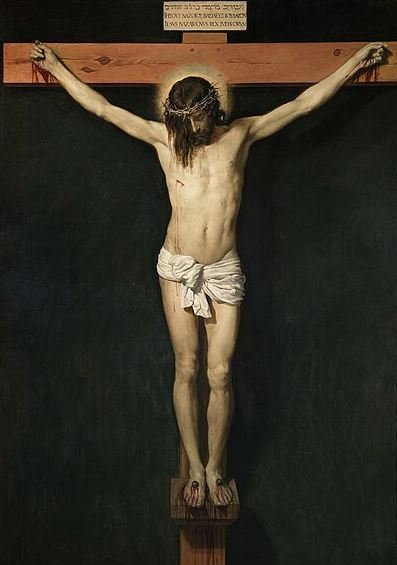
A painting by Spanish artist Diego Velázquez, entitled “Christ Crucified”
Who were notable Roman governors of Judaea, and what were their roles?
Notable governors include Pontius Pilate (26–36 CE), who ordered Jesus’ crucifixion, and Gessius Florus (64–66 CE), whose misrule contributed to the First Jewish–Roman War. Governors varied in their administrative styles and effectiveness in maintaining order.
Who are the most important kings of the Kingdom of Jerusalem?