How were the Ottomans stopped from advancing into Europe?
The Ottoman Empire‘s expansion into Europe represents a significant chapter in the history of the continent, marked by military confrontations, shifting alliances, and evolving socio-political landscapes. This expansion was curtailed through a series of key battles, strategic setbacks, and the collective efforts of various European powers. Understanding how the Ottomans were stopped requires a look at several pivotal moments from the 14th to the 20th century, during which their advance was halted and eventually reversed.
Early Expansion and Resistance
The Ottoman Empire began its rise in the late 13th century in Anatolia under Osman I, from whom the empire gets its name. Rapid expansion into the Balkans followed, facilitated by the decline of the Byzantine Empire and the fragmentation of Eastern Europe into smaller, weaker states. The Ottomans used superior military organization, including the famed Janissaries, and exploited political divisions within Europe to press forward.
The Siege of Vienna (1529)
One of the most significant attempts at expansion into Central Europe was the first Siege of Vienna in 1529. Led by Sultan Suleiman the Magnificent, the Ottoman army marched towards Vienna, a key Habsburg stronghold. This siege was crucial because Vienna was a gateway for further expansion into the heart of Europe. However, the siege failed due to logistical challenges, harsh weather conditions, and stiff resistance from the city’s defenders. This failure marked a significant halt in the Ottoman advance towards Central Europe.

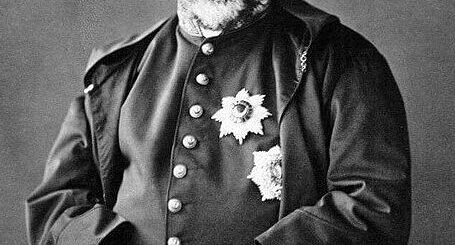
Image: Suleiman the Magnificent (1494 – 1566)
The Battle of Lepanto (1571)
The naval battle of Lepanto in 1571 was another critical point. This clash involved the Holy League, a coalition of Catholic maritime states including Spain, Venice, and the Papacy, against the Ottoman fleet in the Gulf of Patras. The Holy League’s decisive victory significantly weakened the Ottoman naval power, curtailing their ability to project power across the Mediterranean, thereby safeguarding Western Europe from further Ottoman encroachments via sea.
The Long War (1593-1606)
The Long War, or the Thirteen Years’ War, fought between the Habsburgs and the Ottomans over control of Central Europe, further drained Ottoman resources and morale. Despite initial successes, the war concluded with the Treaty of Zsitvatorok, which ended with no significant territorial changes but marked a shift in power dynamics, as the Ottomans were forced to agree to terms that reflected a more equal footing with European powers, a departure from their former superiority.

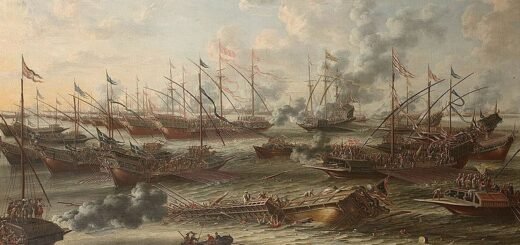
The resilience and strategic counter-efforts of European states, combined with the Ottoman Empire’s own overextension and the challenges of governance over a vast and diverse territory, contributed to the eventual cessation of their expansion. Image: An illustration of the Long War.
The Second Siege of Vienna (1683)
The second Siege of Vienna in 1683 marks a pivotal turning point. The Ottoman army, led by Grand Vizier Merzifonlu Kara Mustafa Pasha, laid siege to Vienna. This time, the response was a more unified European effort, with Polish, Austrian, and German forces under the command of King John III Sobieski of Poland coming to Vienna’s aid. The resulting defeat of the Ottomans in the Battle of Vienna not only lifted the siege but also marked the beginning of a sustained pushback against Ottoman forces in Europe.

The defeat of the Ottoman Empire at the Siege of Vienna in 1683 marked a pivotal moment in European history, effectively halting the Ottoman advance into Central Europe. Image: A painting by Italian artist, depicting the Battle of Vienna.
The Great Turkish War (1683-1699)
Following the second siege of Vienna, the Great Turkish War saw the Holy League of European powers, including the Habsburgs, Poland, Venice, and Russia, take the offensive against the Ottomans. The war concluded with the Treaty of Karlowitz in 1699, which forced the Ottomans to cede significant territories in Central Europe, marking a substantial reversal in their European fortunes.
Decline in the 18th and 19th Centuries
Throughout the 18th and 19th centuries, the Ottoman Empire faced a gradual decline in military and economic power compared to the rapidly industrializing and modernizing European states. This decline was exacerbated by internal strife, administrative inefficiency, and continued warfare, such as the Russo-Turkish Wars, which further eroded Ottoman territories in Europe.

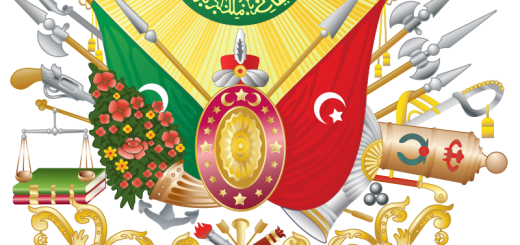
The halt of the Ottoman advance into Europe was not the result of a single event but rather a series of battles, sieges, and diplomatic efforts over centuries. Image: The Ottoman Empire’s coat of arms.
FAQs
When did the Ottoman Empire begin its expansion into Europe?
The Ottoman Empire began its expansion into Europe in the late 14th century, following their establishment in Anatolia under Osman I. The Ottomans moved into the Balkans, taking advantage of the weakening Byzantine Empire and fragmented European states.
What were the key strategies the Ottomans used in their European campaigns?
The Ottomans employed a combination of military innovation, including the use of elite Janissary infantry, effective siege tactics, and strategic marriages and alliances. They also exploited political divisions among European states to further their expansion.
What was the significance of the Battle of Kosovo in 1389?
The Battle of Kosovo in 1389 was a significant early victory for the Ottomans in Europe. Although it was a pyrrhic victory with heavy losses on both sides, it allowed the Ottomans to consolidate their power in the Balkans and paved the way for further expansion.
How did the fall of Constantinople in 1453 impact Ottoman expansion into Europe?
The fall of Constantinople in 1453 was a critical milestone that solidified Ottoman control over the remnants of the Byzantine Empire. It provided the Ottomans with a strategic capital and a springboard for further conquests into Eastern Europe.
Who was Constantine XI Palaiologos, the last emperor of the Byzantine Empire?
What was the role of the Janissaries in the Ottoman military campaigns?
The Janissaries were an elite infantry corps composed of Christian boys converted to Islam and trained as soldiers. They played a crucial role in Ottoman military successes due to their discipline, advanced training, and use of firearms.
What were the main reasons for the Ottoman defeat at the Siege of Vienna in 1683?
The Ottoman defeat at the Siege of Vienna in 1683 was due to several factors: the timely arrival of a relief force led by the Polish King John III Sobieski, logistical challenges faced by the Ottomans, effective defensive tactics by Vienna’s defenders, and the decisive cavalry charge by the Holy League.
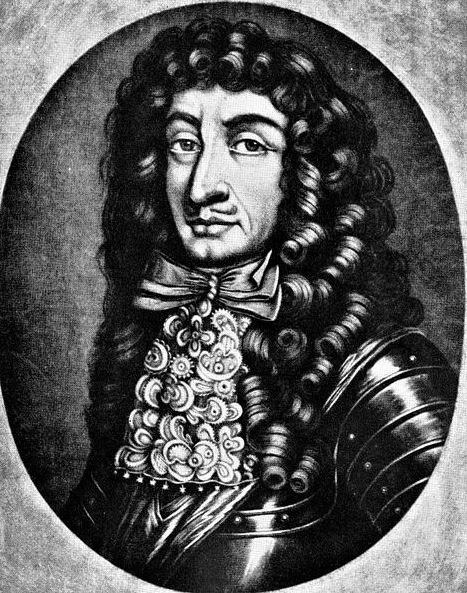
The Siege of Vienna began in July 1683, with the Ottomans surrounding the city, cutting off supplies, and launching repeated assaults on Vienna’s defenses. The defenders, led by Ernst Rüdiger von Starhemberg, held out bravely despite being vastly outnumbered and facing severe hardships. Image: Portrait of Ernst Rüdiger von Starhemberg.
How did the Battle of Lepanto in 1571 influence Ottoman expansion?
The Battle of Lepanto in 1571 was a significant naval defeat for the Ottomans at the hands of the Holy League. It curtailed Ottoman naval dominance in the Mediterranean and marked a halt in their maritime expansion into Europe.
What was the impact of the Treaty of Karlowitz in 1699 on the Ottoman Empire?
The Treaty of Karlowitz in 1699 marked the end of the Great Turkish War and resulted in substantial territorial losses for the Ottoman Empire. It forced the Ottomans to cede significant territories in Central Europe to the Habsburgs and other European powers, marking a significant retreat of Ottoman influence in the region.
How did the Ottoman Empire’s internal issues contribute to their halted expansion?
Internal issues such as administrative inefficiencies, economic difficulties, corruption, and succession crises weakened the Ottoman Empire’s ability to maintain and expand its territories. These internal problems, combined with external military pressures, contributed to the halting of their expansion into Europe.
How did European alliances impact the Ottoman expansion?
European alliances, such as the formation of the Holy League, played a crucial role in countering Ottoman expansion. These alliances allowed European states to pool resources and coordinate military efforts more effectively against the Ottoman threat.
What were the long-term consequences of the Ottoman defeat at Vienna for Europe?
The long-term consequences of the Ottoman defeat at Vienna included the stabilization of Central Europe, the decline of Ottoman influence, and the eventual shift in power towards European states. This defeat marked the beginning of a period where European powers increasingly took the offensive against the Ottoman Empire.
Did the Ottoman Empire attempt further expansions into Europe after the Siege of Vienna?
After the Siege of Vienna, the Ottoman Empire’s attempts at further expansion into Europe were significantly hindered. Subsequent military efforts were mostly defensive as they faced continuous pressure from European coalitions. The Treaty of Karlowitz solidified this shift, leading to a period of territorial losses and declining influence in Europe.