The Arab Cold War (1950s–1970s) was a period of political and ideological rivalry among Arab states. It originated with the Egyptian Revolution of 1952, which overthrew King Farouk and abolished the monarchy. The Free Officers Movement, led by Mohamed Naguib and Gamal Abdel Nasser, sought to reduce feudalism, end Western influence, and establish Egypt as a republic. Nasser’s leadership and his promotion of pan-Arab nationalism, socialism, and secularism positioned Egypt as a revolutionary force in the Arab world.
Nasser’s influence grew after the 1956 Suez Crisis, when Egypt nationalized the Suez Canal and resisted British, French, and Israeli forces. This victory solidified Nasser’s status as the leader of Arab nationalism, inspiring revolutionary movements across the Arab world, including uprisings in Algeria and South Yemen and the establishment of republican governments in Iraq, North Yemen, and Libya.
Causes of the Arab Cold War

The central cause of the Arab Cold War was the ideological rift between secular revolutionary republics, led by Nasser’s Egypt, and conservative monarchies, led by Saudi Arabia. Nasser’s vision of pan-Arabism sought to unite Arab states under socialism and secular nationalism, countering the monarchies’ reliance on tradition, rentierism, and Islamism.
The global Cold War amplified the ideological divide within the Arab world. The United States supported monarchies like Saudi Arabia and Jordan to counter Soviet influence, while the Soviet Union backed revolutionary republics like Egypt. However, most Arab states avoided full alignment with either NATO or the Warsaw Pact, maintaining some degree of non-alignment.
The Arab Cold War saw multiple proxy conflicts, such as the North Yemen Civil War (1962–1970). Egypt supported the republican Yemen Arab Republic, while Saudi Arabia backed royalist forces. These conflicts reflected the broader struggle for ideological dominance between republics and monarchies.

Royalist Yemeni forces attempt to repel an Egyptian armored attack
Nasser sought to expand Egypt’s influence by promoting Arab nationalism and supporting anti-colonial movements. His attempts to unify Arab states through initiatives like the United Arab Republic (1958–1961), a federal union with Syria, showcased his ambition but also revealed the challenges of achieving Arab unity.

Egyptian President Nasser visits Sanaa in April 1964, welcomed by crowds alongside Yemeni President al-Sallal.
Effects of the Arab Cold War
Nasser’s ideology inspired revolutionary uprisings across the Arab world. Monarchies in Iraq, North Yemen, and Libya were overthrown, and nationalist movements gained momentum in regions under colonial rule, such as Algeria and South Yemen. These changes reshaped the political landscape of the Middle East.
Conservative monarchies, particularly Saudi Arabia, responded by forming alliances to counter Nasser’s influence. Saudi Arabia used its oil wealth and religious authority to promote Islamic solidarity and challenge revolutionary ideologies. The creation of the Muslim World League in 1962 exemplified this strategy.
The Arab Cold War exacerbated regional instability through proxy conflicts. The North Yemen Civil War and other disputes drained resources and deepened divisions within the Arab world. These conflicts often mirrored the broader Cold War rivalry between the United States and the Soviet Union.
The 1967 Six-Day War dealt a significant blow to Nasser’s vision of pan-Arabism. Egypt’s loss of the Sinai Peninsula and the war’s broader Arab defeat weakened Nasser’s credibility. His death in 1970 marked a turning point, as his successor, Anwar Sadat, pivoted away from Nasserism toward pragmatism and alignment with the United States.
The Arab Cold War formally ended in 1979 with the Iranian Revolution, which introduced a new axis of conflict between Arab states and Shi’a Iran. The rise of Sunni-Shi’a sectarianism overshadowed the earlier ideological rivalry between Arab republics and monarchies.
Legacy of the Arab Cold War
The Arab Cold War had a profound impact on the Middle East. It highlighted the ideological divisions within the Arab world and underscored the influence of external powers in shaping regional dynamics. While Nasser’s pan-Arabism failed to achieve lasting unity, it inspired nationalist and anti-imperialist movements globally.
The period also marked the rise of Saudi Arabia as a dominant force, leveraging its oil wealth and religious authority to gain influence. The decline of Nasserism and the rise of Islamism in the late 20th century reflected the shifting political and ideological landscape, setting the stage for subsequent conflicts in the region.
Frequently Asked Questions

The Arab Cold War was a period of intense political rivalry within the Arab world (1950s–1970s), where revolutionary Arab republics, led by Egypt under Gamal Abdel Nasser, clashed ideologically with conservative monarchies like Saudi Arabia, reflecting broader global Cold War dynamics. Image: President Gamal Abdel Nasser and King Faisal in Cairo, December 1969
What triggered the Arab Cold War?
The Egyptian Revolution of 1952, which overthrew King Farouk and established a republic under Nasser’s leadership, marked the start of the Arab Cold War. It introduced pan-Arab nationalism, socialism, and secularism, opposing the monarchies’ conservatism.
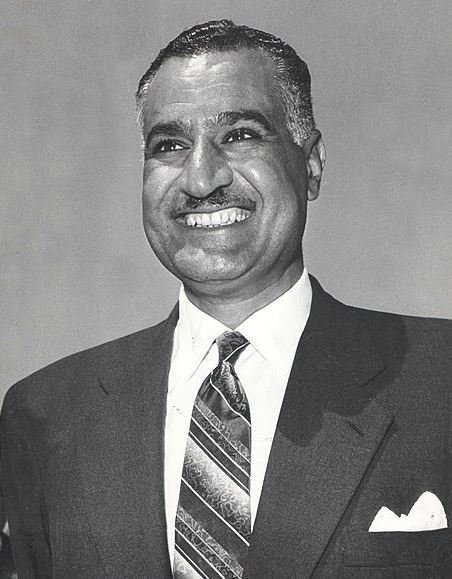
Image: A 1962 picture of Gamal Abdel Nasser
Why was Nasser’s Egypt influential in this period?
Nasser’s nationalization of the Suez Canal and Egypt’s political victory in the 1956 Suez Crisis elevated him as a leader of Arab nationalism. His policies inspired republican movements and uprisings across the Arab world.
How did monarchies counter Nasser’s influence?
Monarchies like Saudi Arabia and Jordan formed alliances and supported conservative ideologies. Saudi Arabia, in particular, promoted Wahhabi Islam through initiatives like the Muslim World League to counter Nasser’s secularism and socialism.
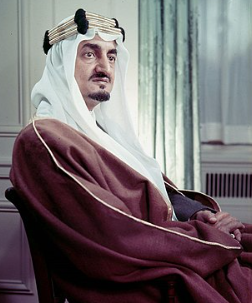
Faisal bin Abdulaziz Al Saud was King of Saudi Arabia from 1964 to 1975
Was the Arab Cold War linked to the global Cold War?
Yes, the global Cold War influenced the Arab Cold War. The United States backed conservative monarchies, while the Soviet Union supported revolutionary republics like Egypt. However, most Arab states avoided full alignment with NATO or the Warsaw Pact.
What were key proxy conflicts during the Arab Cold War?
The North Yemen Civil War (1962–1970) was a major proxy conflict, with Saudi Arabia backing royalists and Egypt supporting the republican Yemen Arab Republic. Other regional conflicts also reflected the broader ideological divide.
What role did superpowers play in the Arab Cold War?
The U.S. supported conservative monarchies to counter Soviet influence, while the USSR aided Nasserist republics. However, both blocs carefully avoided direct confrontation, focusing on their respective Arab allies.
What led to the decline of Nasserism?
The 1967 Six-Day War severely weakened Nasser’s pan-Arab vision due to Egypt’s territorial losses. His death in 1970 and Anwar Sadat’s pivot to pragmatism and alignment with the U.S. further marked the decline of Nasserism.
How did the Arab Cold War evolve post-Nasser?
Sadat prioritized Egypt’s national interests, aligning with Saudi Arabia and the U.S., leading to the 1973 Yom Kippur War success and the 1978 peace treaty with Israel. These actions isolated Egypt from the Arab League.
The Path from the Yom Kippur War to the Camp David Accords
What ended the Arab Cold War?
The Iranian Revolution of 1979 shifted regional dynamics, introducing a new focus on Arab-Iranian tensions and Sunni-Shi’a conflicts. The rise of Islamism and declining intra-Arab rivalries also contributed to its end.
How did Saudi Arabia’s role change during this period?
Saudi Arabia leveraged its oil wealth and religious authority to gain influence, especially after the 1973 oil embargo. Its promotion of Islamic solidarity through initiatives like the Muslim World League countered revolutionary ideologies.
What is the legacy of the Arab Cold War?
The Arab Cold War underscored ideological divisions in the Arab world and influenced later conflicts, including Arab-Iranian tensions. It also highlighted the lasting impact of external powers on Middle Eastern geopolitics.





