History of the Hebrew Bible
The Hebrew Bible, also known as the Tanakh or Miqra, is the canonical collection of Hebrew scriptures comprising the Torah, the Nevi’im, and the Ketuvim. It has played a significant role in Judaism and has influenced Christianity and Islam. Different Jewish sects and religious traditions have preserved various versions of the canon, including the Septuagint, the Samaritan Pentateuch, and the Dead Sea Scrolls. The most authoritative version in Rabbinic Judaism today is the Masoretic Text, compiled by Jewish scholars between the 7th and 10th centuries CE.
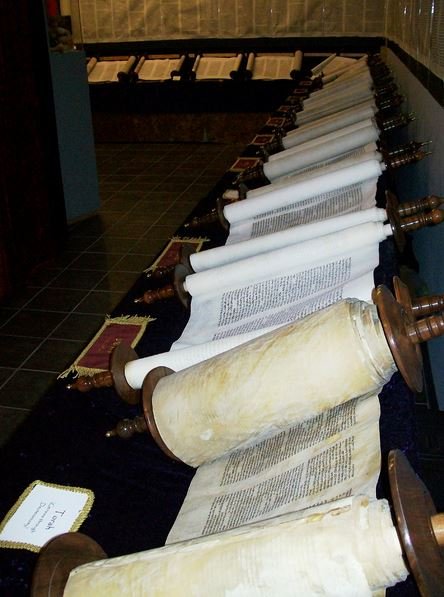
A photo of a set of the Tanakh scrolls.
The Structure of the Hebrew Bible
The Torah (The Law)
The Torah, also called the Pentateuch or the Five Books of Moses, includes:
- Genesis (Bereishit) – The story of creation, the patriarchs, and the early history of Israel.
- Exodus (Shemot) – The Israelites’ liberation from Egypt and the establishment of the covenant at Mount Sinai.
- Leviticus (Vayikra) – The priestly code and religious laws.
- Numbers (Bamidbar) – The Israelites’ journey through the wilderness.
- Deuteronomy (Devarim) – Moses’ speeches and laws given before entering the Promised Land.
The Nevi’im (The Prophets)
This section is divided into:
- Former Prophets: Joshua, Judges, Samuel (1 & 2), and Kings (1 & 2), which narrate the history of Israel.
- Latter Prophets: Isaiah, Jeremiah, Ezekiel, and the Twelve Minor Prophets, focusing on prophecy, social justice, and divine messages.

Joshua 1:1, as contained in the Aleppo Codex, a medieval manuscript containing the Hebrew Bible.
The Ketuvim (The Writings)
The final section includes diverse literary genres such as wisdom literature, poetry, and historical records:
- Poetic Books: Psalms, Proverbs, and Job.
- Five Scrolls (Megillot): Song of Songs, Ruth, Lamentations, Ecclesiastes, and Esther.
- Historical and Apocalyptic Writings: Daniel, Ezra-Nehemiah, and Chronicles (1 & 2).
Development and Canonization
The Hebrew Bible developed over centuries, with oral traditions preceding written texts. The Torah was likely completed by the 5th century BCE, while the Nevi’im and Ketuvim were compiled and edited between the 2nd century BCE and the 2nd century CE.
The canonization of the Hebrew Bible occurred in three stages:
- Torah: Recognized as authoritative by the 5th century BCE.
- Nevi’im: Established by the 2nd century BCE.
- Ketuvim: Finalized by the 2nd century CE.
The finalization of the canon was influenced by historical events such as the Babylonian exile and the destruction of the Second Temple in 70 CE. The Council of Jamnia (c. 90 CE) is often cited as a key moment in defining the Hebrew canon, though this remains debated among scholars.
Linguistic and Textual Variants
The Hebrew Bible is mostly written in Biblical Hebrew, with some portions in Biblical Aramaic (e.g., in Daniel and Ezra). Key textual versions include:
- The Masoretic Text (MT): The authoritative text in Rabbinic Judaism.
- The Septuagint (LXX): A Greek translation used in Hellenistic Judaism and early Christianity.
- The Samaritan Pentateuch: A version preserved by the Samaritan community.
- The Dead Sea Scrolls: Early manuscript fragments revealing textual variations.
The Hebrew Bible and Other Religious Traditions
The Hebrew Bible forms the foundation of Jewish religious life, law, and identity. Rabbinic interpretations, such as the Talmud and Midrash, expand upon the biblical texts.
Christianity adopted the Hebrew Bible as the Old Testament, though different Christian traditions include additional books (e.g., the Deuterocanonical books in Catholic and Orthodox Bibles). The Septuagint significantly influenced early Christian theology and scripture.
For Jews, the Hebrew Bible is the divine law and history of their people. For Christians, it is seen as prophecy and foreshadowing of the coming of Jesus.
Islam recognizes the Tawrat (Torah) and other parts of the Hebrew Bible as divine revelation, though it believes the original message was later altered. The Quran references biblical figures such as Moses, David, and Solomon.
READ MORE: History of Islam: How and When Did Islam Begin?
Themes and Theology
A central theme of the Hebrew Bible is monotheism—the belief in one God, YHWH. The covenant between God and Israel is foundational, with promises of land and blessings contingent upon obedience.
The Torah provides legal codes governing religious, social, and ethical life. Themes of justice, charity, and holiness are emphasized, particularly in the prophetic writings.
The Torah (Genesis, Exodus, Leviticus, Numbers, and Deuteronomy) is the foundational text of Jewish law and tradition, traditionally attributed to Moses.
The Hebrew Bible addresses human suffering and divine justice. Books like Job explore why the righteous suffer, while the prophetic writings promise future redemption and restoration.

The Hebrew Bible’s Influence on Culture and Identity
The Hebrew Bible has been central to Jewish identity. Its narratives shaped Jewish self-perception as a distinct people with a shared history and destiny. In modern times, Zionism has drawn upon biblical themes of return and nationhood.
Biblical themes have inspired literature, art, and music. Works from Dante’s Divine Comedy to Milton’s Paradise Lost reflect biblical influence. Modern literature continues to draw on its motifs.
The Hebrew Bible’s moral teachings have influenced Western legal traditions. Concepts like justice, human dignity, and the sanctity of life have roots in biblical law.
Frequently Asked Questions about the Hebrew Bible

A Torah scroll opened to the Book of Genesis.
How does the Tanakh differ from the Christian Old Testament?
The content is largely the same, but the arrangement and interpretation differ. The Protestant Old Testament mirrors the Tanakh’s books, though in a different order. Catholic and Orthodox Christian Bibles include additional Deuterocanonical books.
What is the Masoretic Text, and why is it significant?
The Masoretic Text, compiled between the 7th and 10th centuries CE, is the authoritative version of the Hebrew Bible in Rabbinic Judaism. It includes precise vowel markings and cantillation signs for pronunciation and interpretation.
What are the oldest textual sources of the Hebrew Bible?
Ancient versions include the Dead Sea Scrolls, the Greek Septuagint, the Syriac Peshitta, and the Samaritan Pentateuch, all of which predate the Masoretic Text and differ in various ways.
What role do the Nevi’im and Ketuvim play?
Nevi’im (Prophets) narrates Israel’s history and prophetic messages, while Ketuvim (Writings) includes poetry, wisdom literature, and historical narratives.
What are the main themes of the Hebrew Bible?
Monotheism, covenant with God, ethical laws, justice, prophecy, redemption, and theodicy (explaining suffering in a just world).
How was the canon of the Hebrew Bible determined?
The Torah was accepted first, followed by the Prophets by the 2nd century BCE. The Writings were finalized between the 1st and 2nd centuries CE.
What languages are in the Hebrew Bible?
Primarily Biblical Hebrew, with sections in Biblical Aramaic (parts of Daniel, Ezra, and one verse in Jeremiah).
How has the Hebrew Bible influenced Judaism and Christianity?
It shaped Jewish identity, law, and culture. Christianity adopted it as the Old Testament, interpreting it as a precursor to the New Testament.
What are some major translations of the Hebrew Bible?
The Septuagint (Greek), Targum (Aramaic), Peshitta (Syriac), and various modern translations, including the Jewish Publication Society’s Tanakh.
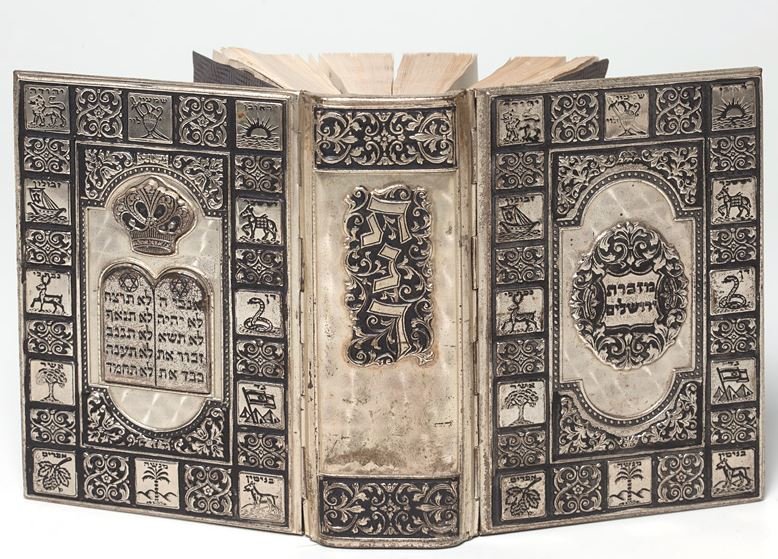
A 1962 Israel-printed Tanakh, housed in the Jewish Museum of Switzerland’s collection.
What is the historical context of the Hebrew Bible’s composition?
The texts developed over centuries, influenced by Israelite history, from the monarchy to the Babylonian exile and Persian restoration.
Why do different Jewish and Christian traditions have varying canons?
The Jewish canon excludes books found in the Christian Deuterocanonical texts, reflecting differing religious authorities and historical traditions.





