Villa Poppaea
The Villa Poppaea, also known as Oplontis Villa A, is an opulent Roman seaside villa (villa maritima) located in Torre Annunziata, Southern Italy. Situated between Naples and Sorrento, this villa was a prime example of the luxury that characterized elite Roman residences along the Gulf of Naples. Buried under volcanic ash during the eruption of Mount Vesuvius in 79 AD, the villa remains an archaeological treasure, providing invaluable insights into Roman architecture, art, and daily life.
Ownership and Historical Significance
Archaeological evidence suggests that the villa may have belonged to Poppaea Sabina, the second wife of Emperor Nero. A pottery shard bearing the name of a freedman associated with Poppaea was discovered at the site, lending credibility to this theory. The villa’s grandeur, with its marble columns, lavish frescoes, and expansive gardens, indicates it was built for a person of significant wealth and status, reinforcing the possibility that it was indeed a residence of the imperial court.
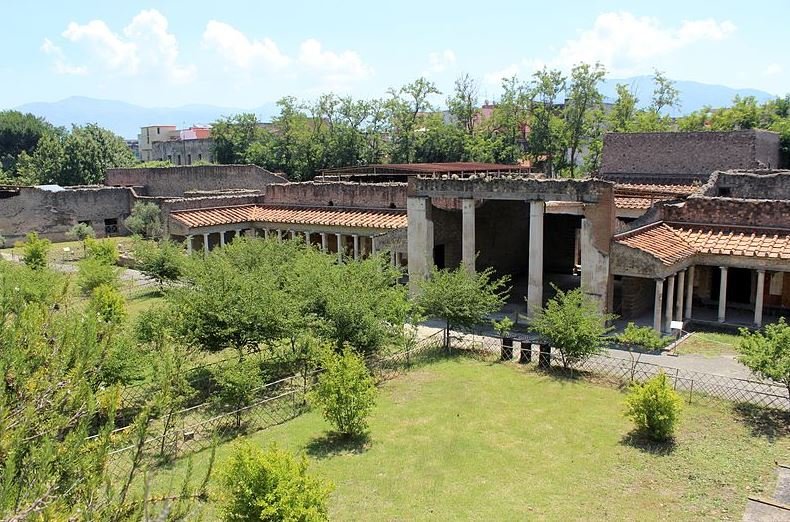
Front view of the Villa Poppaea.
Architectural Grandeur and Layout
The villa was strategically built on an elevated shelf 14 meters above sea level, offering breathtaking views of the Bay of Naples. Ancient sources, including Strabo, described the coastline as a continuous stretch of grand estates, reflecting the Roman elite’s preference for seaside retreats. While much of the villa has been excavated, its full extent remains unknown due to modern construction covering parts of the site.
The Villa Poppaea was constructed in the 1st century BC and underwent significant expansion during the reign of Emperor Claudius (41–54 AD). The initial layout revolved around an atrium, with reception rooms and a triclinium (dining area) serving as focal points for social gatherings. In later expansions, luxurious baths, peristyles, and a vast swimming pool were added. The renovations reflected the evolving tastes of Roman aristocracy, incorporating elements of the Third and Fourth Pompeian Styles in its decorative frescoes.
A defining feature of the villa is its immense swimming pool (piscina), measuring 60 by 17 meters. Surrounded by colonnades and lush gardens, the pool area served as a space for entertainment and relaxation. Numerous statues and fountains adorned the complex, with some sculptures relocated from their original positions following the eruption.
Frescoes: Masterpieces of Roman Art
The villa is renowned for its well-preserved frescoes, which offer a glimpse into the artistic preferences of Rome’s elite.
Second Style Frescoes
The earliest frescoes belong to the Second Pompeian Style (90–25 BC), characterized by illusionistic depictions of architecture. These frescoes create the impression of depth, portraying grand columns, doorways, and scenic landscapes that enhance the villa’s opulent ambiance.
Third Style Frescoes
Frescoes from the Third Style (25 BC–40 AD) abandon illusionistic depth in favor of intricate decorative elements. A notable example is found in the caldarium (hot bath), which features a depiction of Hercules in the Garden of the Hesperides, framed by delicate architectural designs.
Fourth Style Frescoes
Later renovations introduced Fourth Style frescoes, marked by a combination of realistic perspective and elaborate mythological themes. One of the most striking rooms, the oecus (main living area), displays detailed paintings of theater masks, peacocks, and floral motifs, reflecting the Roman appreciation for theatrical and natural elements.
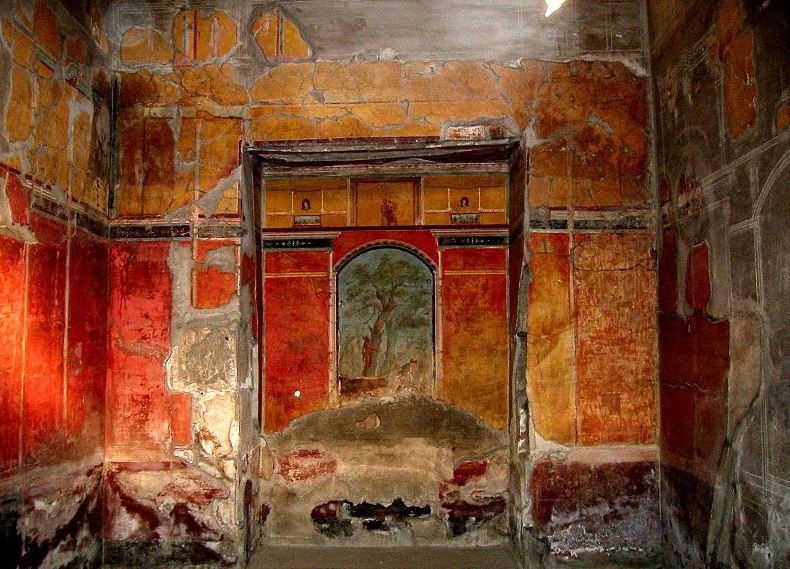
Villa Poppaea’s caldarium
Gardens and Green Spaces
By the early 1990s, archaeologists had identified 13 distinct gardens within the villa. These gardens included peristyle courtyards, enclosed ornamental spaces, and expansive park-like areas featuring shade trees, fountains, and sundials.
Excavations revealed evidence of olive trees, lemon trees, oleanders, and plane trees, along with a carbonized apple, indicating the presence of apple orchards. Wall paintings in some gardens depicted lush vegetation and birds, creating an immersive natural environment within the villa.
Excavation and Rediscovery
The villa was first encountered in the 18th century during the construction of the Sarno aqueduct. In 1839, Bourbon excavators conducted brief explorations, unearthing parts of the peristyle and garden area. However, systematic excavations did not begin until the 20th century.
From 1964 to the mid-1980s, extensive excavations brought the villa to light, revealing its full architectural splendor. The discovery of the immense swimming pool and numerous artifacts solidified its status as one of the most significant Roman villas ever unearthed. Some portions of the villa remain unexcavated due to modern urban development.
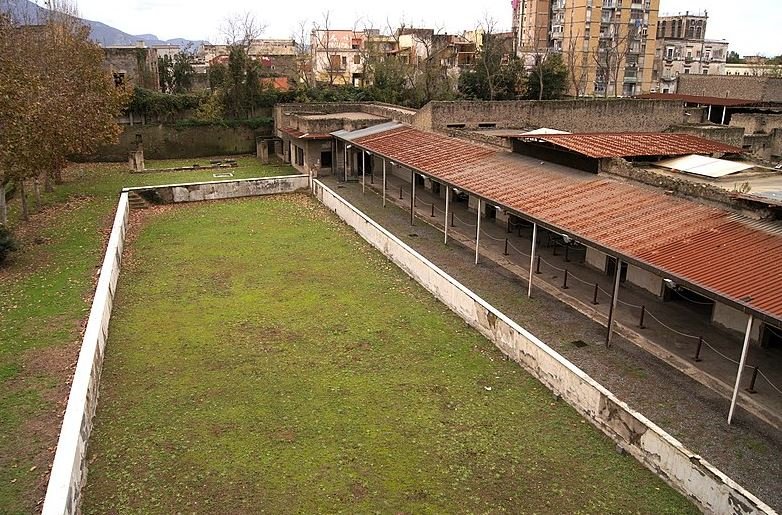
The swimming pool at the Villa Poppaea.
Nearby Villa: Oplontis Villa B
Located close to Villa Poppaea is Oplontis Villa B, also known as the Villa of Lucius Crassius Tertius. Unlike the aristocratic grandeur of Villa Poppaea, Villa B functioned as a commercial estate, likely involved in agricultural production and trade.
Unlike the lavish Villa Poppaea, Villa B was a working estate, likely used for wine and oil production, where 54 people perished during the eruption.
Unlike Villa Poppaea, which appears to have been unoccupied during the eruption, Villa B contained the remains of 54 individuals who perished in the disaster. Among the remains were fine jewelry, silverware, and coins, suggesting that the victims had gathered their valuables in an attempt to flee.
Artifacts and Legacy
Numerous artifacts from the villa, including sculptures, frescoes, and household items, are preserved in the Naples National Archaeological Museum. These pieces provide critical insights into Roman luxury and daily life, highlighting the craftsmanship and artistic achievements of the period.
Frequently Asked Questions
How was the villa preserved?
It was buried under volcanic ash during the eruption of Mount Vesuvius in 79 AD, similar to Pompeii and Herculaneum, preserving its structure and decorations.
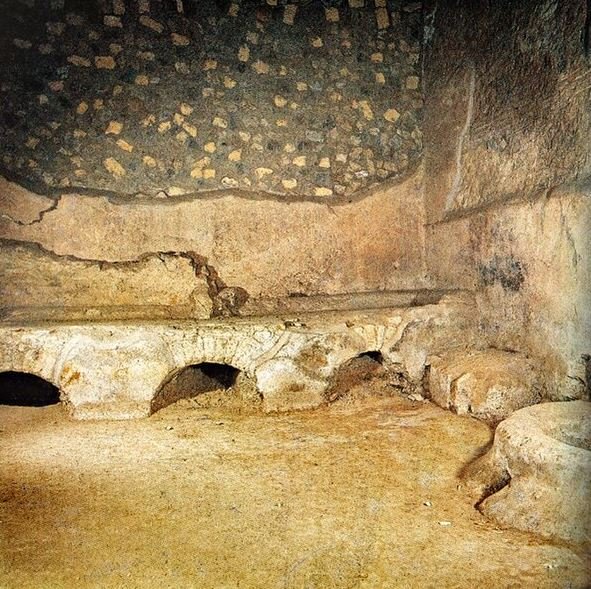
A view of the Villa Poppaea’s kitchen.
What makes the villa architecturally significant?
It features grand marble columns, elaborate frescoes, mosaic floors, and one of the largest private swimming pools in the Roman world, indicating extreme wealth.
What styles of frescoes are found in the villa?
The villa contains high-quality frescoes in the Second, Third, and Fourth Pompeian Styles, including illusionistic architecture and mythological scenes.

What evidence links the villa to Poppaea Sabina?
A pottery shard bearing the name of a freedman of Poppaea Sabina was found at the site, suggesting her ownership or connection to the villa.
What types of gardens were in the villa?
Several gardens were discovered, including a peristyle garden, enclosed gardens with painted walls, and a large park-like area with fruit and shade trees.
When was the villa rediscovered?
It was first identified in the 18th century during aqueduct construction, but major excavations took place between 1964 and the mid-1980s, revealing much of the site.





