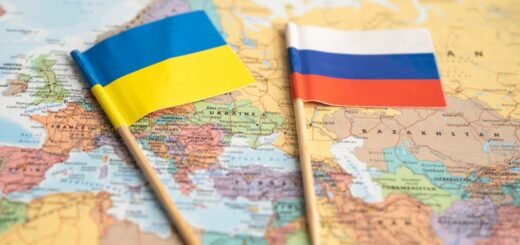
How Has Russian Imperialism Historically Shaped Eastern Europe?
When people talk about Russian imperialism today, it often sounds like a modern issue—about Putin, Ukraine, and current events. But Russian imperialism is nothing new. It’s a centuries-old pattern that has left its mark across Eastern Europe, reshaping borders, suppressing cultures, and fueling long-standing mistrust between Russia and its neighbors.
To really understand today’s war in Ukraine—or even why countries like Poland and the Baltics fear Russia so deeply—you need to look at how Russia has historically used empire to expand its power and influence.

The Russian Empire’s long reach reshaped Eastern Europe—including Ukraine—for centuries, leaving deep scars.
It All Started with the Tsars
Russian imperialism began long before the Soviet Union. Starting in the 16th and 17th centuries, the Tsardom of Russia began expanding outward—first to the east into Siberia, then south and west into Europe. This wasn’t just about land; it was about building an empire.
By the 18th and 19th centuries, under rulers like Peter the Great and Catherine the Great, Russia had become a full-fledged empire. It absorbed lands that are now Ukraine, Belarus, Moldova, the Baltic states, parts of Poland, and even parts of Finland.
The empire brought with it Russian language, Orthodox religion, and political control—often at the expense of local cultures and identities.
Imperial Rule Meant Forced Russification
Wherever the Russian Empire expanded, it pushed a policy of Russification—the idea that non-Russian peoples should adopt Russian language, customs, and political loyalty.
This hit Ukraine particularly hard. Ukrainian language was banned in schools and publications. Cultural figures were silenced or forced to assimilate. Similar patterns happened in Lithuania, Latvia, Estonia, and Poland.
Russia didn’t just occupy these places—it tried to make them more Russian. And in doing so, it deeply antagonized national identities that are still fighting for space today.
The Soviet Twist on Empire
After the Russian Empire fell and the Soviet Union rose in 1922, many hoped that imperialism was over. The Soviet Union claimed to be a union of equal republics, not an empire. But in practice, Moscow remained in charge—and imperial thinking didn’t go away.
Stalin’s rule brought deportations, purges, and famines to places like Ukraine, the Baltics, and the Caucasus. Resistance to Soviet control was crushed, sometimes brutally. And just like before, local identities were discouraged or outright banned in favor of a single “Soviet” identity—heavily centered on Russian language and leadership.

“Russian imperialism never ended—it just changed flags. And Eastern Europe still lives in its shadow.”
Even the borders of Soviet republics were drawn to undermine ethnic unity and promote dependence on Moscow—a tactic that’s still causing problems today.
Post-Soviet Independence—and a New Kind of Imperialism
When the Soviet Union collapsed in 1991, many former republics saw it as a chance to finally break free from Moscow’s grip. Countries like Estonia, Latvia, and Lithuania quickly moved toward NATO and the EU. Others, like Ukraine, tried to balance ties between East and West.
But Russia never really gave up its imperial mindset. It continued to view former Soviet republics as part of its sphere of influence—countries that were “independent” only on paper.
This attitude has shaped much of Russia’s foreign policy ever since. It has:
-
Invaded Georgia in 2008
-
Annexed Crimea in 2014
-
Interfered in Moldova and Belarus
-
And launched a full-scale war against Ukraine in 2022
All of this stems from a deep belief in Moscow that Russia has the right—or even duty—to control what happens in its former empire.
Why Eastern Europe Remembers
Eastern European countries remember Russian imperialism well. That’s why they’re so vocal in supporting Ukraine. They’ve seen this playbook before. They lived under it. And they’re determined not to go back.
For Ukraine, the fight against Russia today isn’t just about borders—it’s about breaking free from a centuries-old cycle of domination.
Final Thoughts
Russian imperialism shaped Eastern Europe not just by redrawing maps, but by trying to rewrite identities. The legacy of empire lingers—in languages, in memories, and in the very real fear that history could repeat itself.
What’s happening now isn’t the beginning of something new. It’s the latest chapter in a very old story.
Original Quote (For Image Use)
“Russian imperialism never ended—it just changed flags. And Eastern Europe still lives in its shadow.”