How Has Ukraine’s Path Toward Democracy Clashed with Russia’s Authoritarianism?
If you want to understand why Ukraine and Russia are on a collision course, look past the tanks and missiles—and take a closer look at the systems they chose to live under.
Since the collapse of the Soviet Union, Ukraine and Russia have followed two very different political paths. Ukraine has stumbled, struggled, and sometimes backslid—but it’s kept reaching for democracy. Russia, on the other hand, has slid deeper and deeper into authoritarianism under Vladimir Putin. That contrast has become more than just a difference in governance—it’s become a full-blown confrontation of values.
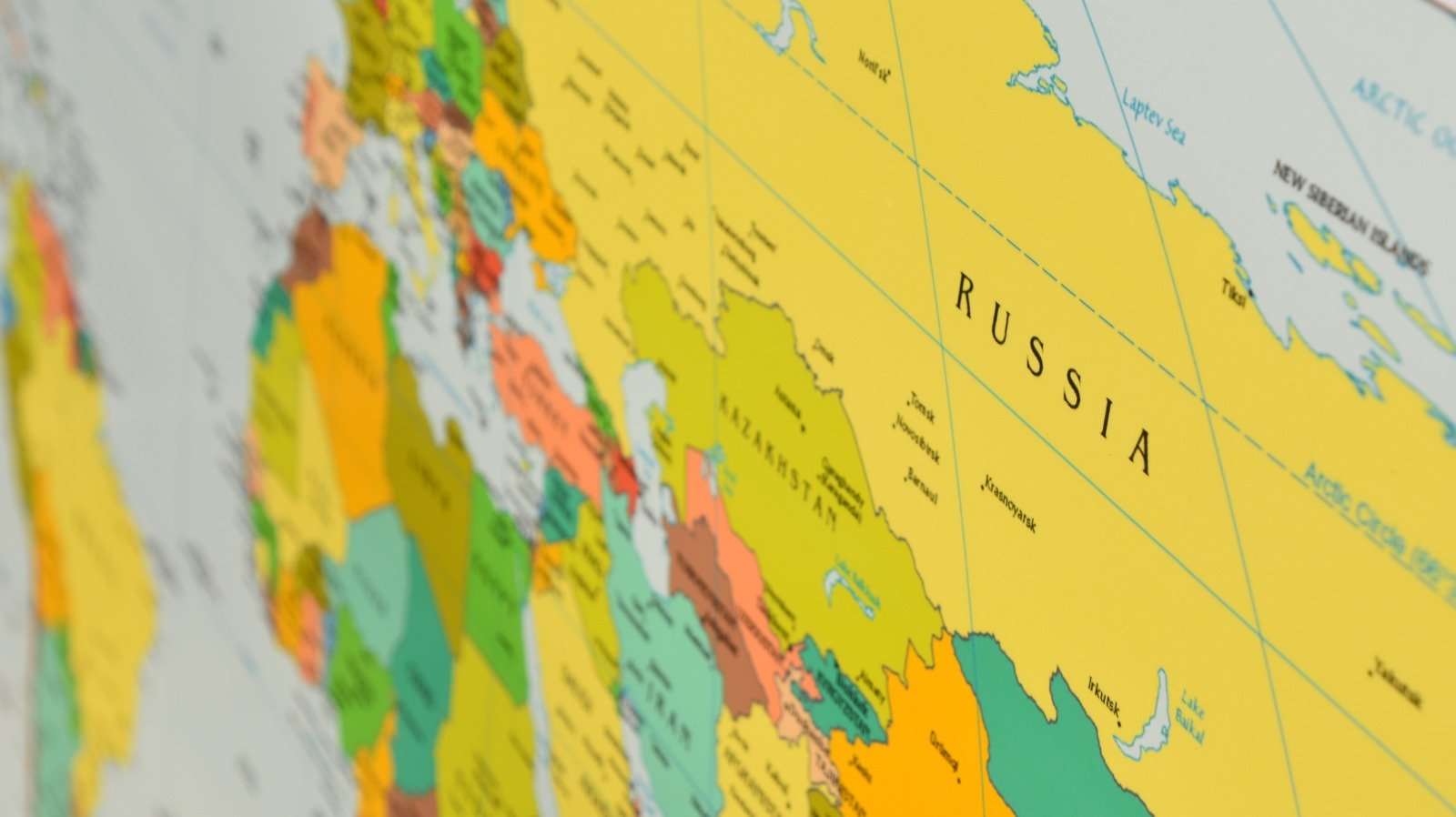
Ukraine and Russia, side by side on the map, have taken very different political paths since the Soviet collapse.
Two Countries, One Starting Line
Back in 1991, when the Soviet Union fell apart, both Russia and Ukraine became independent states. Both inherited broken economies, corrupt institutions, and post-Soviet confusion. But from the very beginning, their political futures started to drift apart.
Ukraine adopted a multi-party system, held regular elections, and developed an active (if chaotic) civil society. Russia held elections too—but over time, they became less free and less fair, especially once Putin came to power in 2000.
Ukraine’s Messy but Persistent Push for Democracy
Ukraine’s journey toward democracy hasn’t been smooth. Corruption has been a major issue. Oligarchs have held too much power. But the will of the people has shown up again and again.
The Orange Revolution in 2004 was one of the first signs. When a pro-Russian candidate tried to steal the election, Ukrainians flooded the streets and demanded a re-vote. They got it.
Then came the Euromaidan Revolution in 2013–2014. When President Yanukovych backed out of an EU agreement under pressure from Russia, Ukrainians protested for months. Despite government violence, they didn’t back down. Eventually, Yanukovych fled, and a more pro-Western government took over.
Ukraine’s message was clear: We want democracy. We want Europe. We want to choose our future.
Russia’s Steady Slide Into Authoritarianism
While Ukraine was protesting for freedom, Russia was doing the opposite. Under Putin, Russia cracked down on opposition, took control of the media, jailed critics, and removed independent voices from politics. Today, Russia is widely considered an authoritarian state.
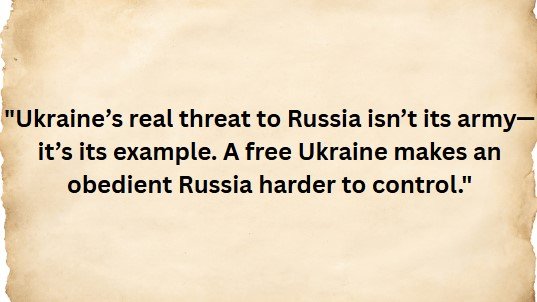
“Ukraine’s real threat to Russia isn’t its army—it’s its example. A free Ukraine makes an obedient Russia harder to control.”
Putin’s government claims to offer “stability,” but it does so by suppressing dissent and controlling narratives. Elections are held, but they’re not competitive. Protests are crushed. Journalists are threatened—or worse.
To Putin, Ukraine’s democratic movements are more than inconvenient—they’re dangerous.
Why This Terrifies the Kremlin
Here’s the real issue: a democratic Ukraine threatens Putin’s grip on power.
If a neighboring Slavic, post-Soviet country like Ukraine can build a functioning democracy and join the European Union, it sends a powerful message to Russians: “It’s possible. We could do that too.”
So instead of letting Ukraine succeed as a democratic nation, Russia has tried to sabotage it—through propaganda, political pressure, military invasion, and economic warfare.
Putin wants the world—and especially his own people—to see Ukraine as unstable, failed, and unworthy of joining the West.
A War of Systems
At its core, the Russia-Ukraine conflict is a clash between two systems:
-
One that’s trying to build a future on transparency, accountability, and rule of law
-
And another that depends on censorship, repression, and fear to survive
This isn’t just a territorial war. It’s a war between democracy and dictatorship, between the right to choose and the power to control.
Final Thoughts
Ukraine didn’t ask to be in this position. But by choosing democracy, it automatically challenged a system that thrives on submission. That’s why Ukraine’s fight is about more than borders—it’s about showing that freedom is still possible, even in the shadow of tyranny.
And that’s exactly why Russia is trying so hard to stop it.





