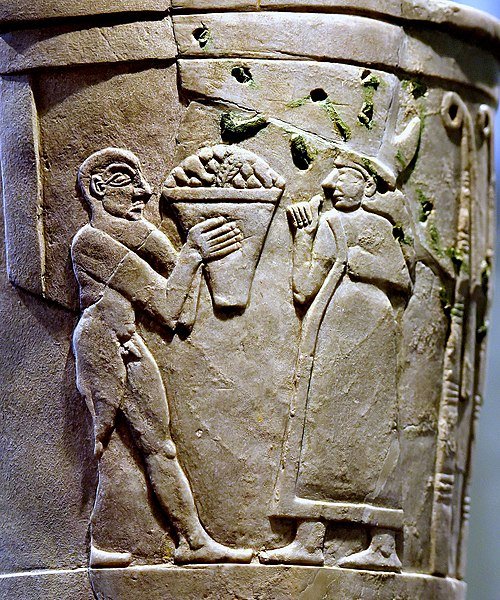
Inanna is depicted receiving offerings on the Uruk Vase, dating back to around 3200–3000 BCE.
If we’re going to talk about goddesses who ruled the ancient world with flair, fire, and a flair for the dramatic, we’ve got to start with Inanna—later known as Ishtar. She wasn’t just any goddess; she was the Queen of Heaven, the divine embodiment of love, war, and fertility in ancient Mesopotamia. That’s right—she didn’t just dabble in one sphere of influence; she reigned over some of the most powerful forces in human life. From wild romantic escapades and heart-wrenching underworld journeys to blazing battlefield conquests and political drama, Inanna’s story reads like the most epic mythological saga you’ve never heard.
The Goddess with Many Names and Faces
Inanna began her journey in the Sumerian city of Uruk, one of the oldest cities in Mesopotamia, sometime around 4000 BCE. Her original name, “Inanna,” is thought to come from the Sumerian phrase nin-an-ak, which roughly means “Lady of Heaven.” Fitting, right? Later, as the Akkadians, Babylonians, and Assyrians took cultural center stage, she became widely known as Ishtar. But here’s the twist: scholars believe Inanna and Ishtar may have started as entirely different goddesses. Over time, through cultural mingling and a whole lot of mythological cross-pollination, they merged into one mighty celestial figure.
And while we’re at it, let’s talk titles. Inanna wasn’t just a love goddess lounging around in a temple. She was the Queen of Heaven, a powerful deity who demanded respect across Mesopotamia. Her worship was so widespread that she ended up outshining even the national gods of entire empires—most notably in Assyria, where she eclipsed Ashur himself.
READ ALSO: Greatest Cities of Ancient Mesopotamia
Uruk and the Triple Inanna
Uruk was Inanna’s OG hometown, and her temple there, the Eanna (“House of Heaven”), was the epicenter of her cult. Early on, she was worshipped in three forms: Morning Inanna, Evening Inanna, and Princely Inanna—each associated with a different phase of the planet Venus, her celestial symbol. You can already see where this is going—Inanna wasn’t just a deity of Earth; she had one foot in the heavens, too. Her connection to Venus (Aphrodite in Greek mythology) added layers to her identity, tying her to cycles of appearance, disappearance, and rebirth, much like her famous underworld tale.
Inanna’s Symbols: Lions, Stars, and Doorposts
Inanna’s most iconic symbols say a lot about her character. The eight-pointed star was her most consistent sign, later linked directly to Venus. Lions—those regal beasts—were her frequent companions in art, representing her ferocity and royal status. And then there’s the twisted knot of reeds, shaped like a doorpost, marking sacred thresholds. It was such a key symbol that it became her cuneiform logogram. Altogether, these emblems paint a picture of a goddess both nurturing and terrifying, earthy and celestial, seductive and strategic.
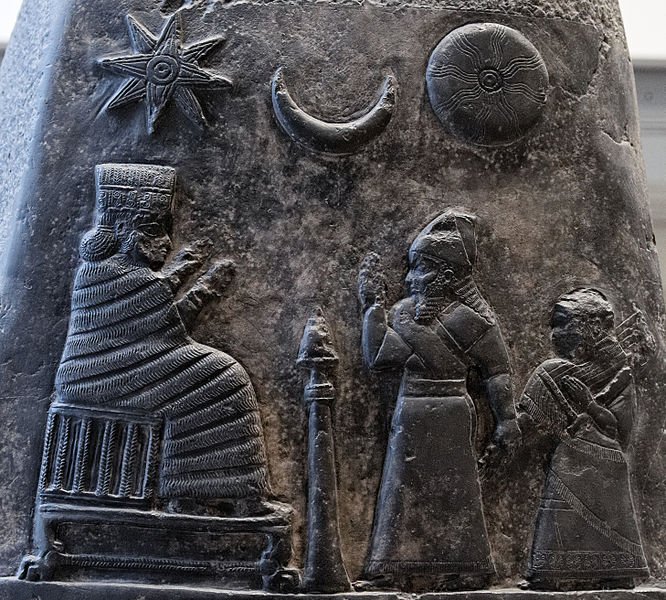
The eight-pointed star, accompanied by the crescent moon of her father Sin (Sumerian Nanna) and the solar disk of her brother Shamash (Sumerian Utu), is depicted on a boundary stone of Meli-Shipak II, dating to the 12th century BCE.
Goddess of Love—but Not Marriage
Now, don’t make the mistake of confusing Inanna with a domestic goddess. While she ruled over sensuality, romance, and procreation, marriage and motherhood were never really her thing. She embodied love in its wildest, most uninhibited form. Think irresistible magnetism, intoxicating beauty, passionate desire—not settling down with a picket fence. Her romantic partner was the shepherd god Dumuzid (or Tammuz), but their love was tumultuous, often filled with betrayal, longing, and death.
Inanna’s Mythical Drama
One of the most fascinating things about Inanna is that she appears in more myths than any other Sumerian deity. She wasn’t content to stay in her lane; she invaded others’ domains, acquired divine powers through cunning (and sometimes trickery), and brought justice down on those who wronged her. Take, for instance, the myth where she tricks Enki, the god of wisdom, into giving her the mes—divine principles governing civilization. She gets him drunk, sweet-talks him into handing them over, then bolts back to Uruk with his prized possessions.
And it doesn’t stop there. Inanna also claimed the Eanna temple from An, the sky god, and destroyed the rebellious Mount Ebih just for challenging her supremacy. She was justice incarnate, often alongside her brother Utu (later Shamash), the sun god. Together, they were celestial enforcers.
Her Descent into the Underworld
Inanna’s most haunting and iconic tale is her descent into the underworld, one of the oldest surviving myths in human history. She travels to the gloomy realm ruled by her sister Ereshkigal—not out of love, not in fear, but because she wants to extend her power even into the land of the dead. Before descending, she instructs her loyal servant Ninshubur to raise the alarm if she doesn’t return.
At each of the seven gates, Inanna is stripped of her royal garments and symbols of power, until she stands naked before the throne of Ereshkigal. The underworld judges strike her dead, and she is hung on a hook like a piece of meat. It’s raw. It’s chilling.
But Ninshubur follows through. Only Enki, the god of wisdom, agrees to help. He sends two genderless beings to sneak into the underworld and revive Inanna with the food and water of life. She returns—but there’s a price. The galla demons demand a replacement. Inanna chooses Dumuzid, who’s been lounging instead of mourning her. In a stunning twist, she condemns him, and the cycle of seasons is born: half the year he stays in the underworld, the other half he returns, replaced by his sister Geshtinanna.
Gender, Sexuality, and Sacred Roles
Inanna’s cult was radical in more ways than one. Her temples were inclusive spaces that embraced gender-nonconforming individuals. The gala priests—men who often took female names and wore female attire—performed lamentations in the goddess’s dialect.
In the Akkadian era, kurgarrū and assinnu took on similar roles, often wearing mixed-gender clothing and performing sacred dances. These individuals were central to her rites, and their presence suggests that Inanna’s power challenged conventional gender norms.
Some hymns even describe Inanna transforming men into women—a potent symbol of her control over identity and transformation. And while some early scholars suggested her rituals involved sacred prostitution, modern research casts serious doubt on that interpretation, emphasizing symbolic rather than literal enactments.
Cakes, Doves, and Sacred Celebrations
People across Mesopotamia adored Inanna. Women baked cakes in her honor, shaped like her divine image. Doves, another of her sacred animals, were sacrificed to her. These small, earthy offerings connected ordinary people to the celestial queen. And while her “sacred marriage” rite—where a king would symbolically unite with the goddess through a priestess—has long fascinated scholars, it’s not clear how literal or widespread this ritual actually was.
Venus and the Heavenly Dance
Inanna’s connection to Venus wasn’t just symbolic; it was astronomical. Ancient Mesopotamians recognized that Venus appeared as both a morning and evening star. Unlike the sun or moon, Venus disappears and reappears—mirroring Inanna’s mythic descent and return.
Some scholars even argue that her movements in myths like Inanna and Shukaletuda reflect the actual trajectory of Venus in the sky. And modern astrologers link her underworld journey with Venus’s retrograde cycle, suggesting a kind of mythic astronomy that blended narrative with celestial observation.
READ MORE: The Birth of Aphrodite in Greek Mythology
Across Cultures: From Sumer to Syria to Greece
Inanna’s legacy didn’t stay confined to Sumer. She morphed and migrated into countless cultures. In the Levant, she became Astarte. In Syria, her mythological cousin was the fierce Shaushka. And the Greeks? They gave us Aphrodite—a love goddess with more than a little warlike swagger, especially in her early depictions.
Aphrodite’s doves, her arms-bearing statues in Sparta, and even her myth with Adonis echo Inanna’s stories with Dumuzid. In fact, the Greek myth of Persephone’s descent and seasonal return probably borrowed a lot from Inanna’s journey to the underworld.
The Epic of Gilgamesh: A Clash of Egos
In the world-famous Epic of Gilgamesh, Ishtar appears with all her usual intensity. She proposes marriage to Gilgamesh, but he refuses, reminding her of all the lovers she’s spurned or destroyed. Insulted, she unleashes the Bull of Heaven. Gilgamesh and his friend Enkidu kill the bull, but the act leads to Enkidu’s death. It’s a story that showcases Ishtar’s dangerous allure, her wrath, and her inability to be tamed.
From Sacred Texts to the Bible
Although Inanna isn’t named directly in the Bible, many scholars believe she’s the “Queen of Heaven” condemned by the prophet Jeremiah. Women are described baking cakes for her and pouring out libations, much like her ancient followers. Meanwhile, her consort Dumuzid (as Tammuz) appears in Ezekiel as the subject of women’s mourning. These echoes of her worship show just how deeply embedded she was in the religious landscape of the Near East.
Did you know…?
- Even after temples crumbled and gods were forgotten, Inanna never really disappeared. She pops up in Islamic-era accounts of Middle Eastern festivals. She was remembered in the cult of Venus in pre-Islamic Arabia, and she inspired everything from 19th-century poetry to 20th-century feminist interpretations.
- Inanna’s myths have been reinterpreted in modern novels, operas, and artworks. In Wiccan rituals, she appears in chants, and her descent is retold as a metaphor for self-discovery and spiritual rebirth.
- Today, she’s been embraced by neopagan and feminist movements as a symbol of empowered femininity, duality, and transformation. Some even link her stories to the roots of the dominatrix archetype in BDSM culture.
The Goddess Who Refused to Be Contained
What makes Inanna so fascinating—so human, in a way—is her refusal to be boxed in. She’s sensual and vengeful, tender and terrifying, just and reckless. She’s not a neat archetype but a complex force of nature. Her myths remind us that power, love, pain, and transformation are often intertwined. And in her descent and return, we see perhaps the first cosmic allegory for death and rebirth, for loss and return, for the duality of light and darkness.
Whether Inanna is seen as a star in the sky, a warrior on the battlefield, or a goddess weeping in the underworld, she endures. She is, after all, the Queen of Heaven.
Frequently Asked Questions
What was Inanna’s main cult center?
Her primary cult center was the Eanna temple in the city of Uruk, where she was worshipped as the Queen of Heaven.
How was Inanna connected to the planet Venus?
She was identified with Venus, appearing as the morning and evening star, symbolizing her dual nature and celestial power.
What are her most common symbols?
Her symbols include the eight-pointed star, lions, the reed doorpost, and doves—each reflecting aspects of her power and presence.
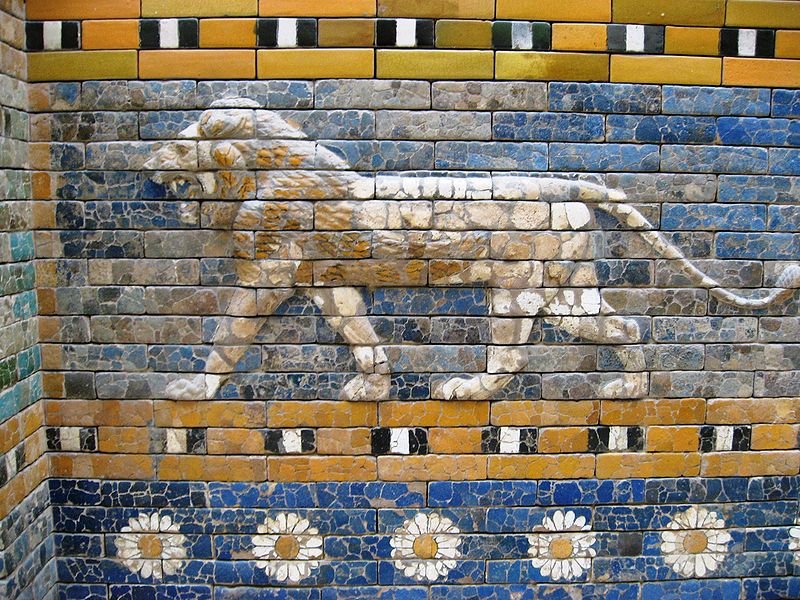
The lion above originates from the Ishtar Gate, the eighth gateway to Babylon’s inner city, constructed around 575 BCE under Nebuchadnezzar II.
Who was her consort, and what myth involves him?
Dumuzid (Tammuz) was her consort. In myth, he is taken to the underworld as a substitute for Inanna after her return from death, representing the cycle of seasons.
What is the story of her descent into the underworld?
Inanna descends to the underworld to extend her power, is stripped of her garments, judged, and killed. She is revived by Enki’s agents, but Dumuzid must take her place below.
What role did gender and sexuality play in Inanna’s worship?
Her cult included gender-nonconforming priests and sacred performers. Inanna blurred gender roles and transformed identities, reflecting her fluid and inclusive nature.
Was Inanna involved in sacred marriage rituals?
Yes, she was central to the “sacred marriage” rite, where kings symbolically mated with the goddess (via a priestess) to ensure fertility and legitimize rule.
Did Inanna influence other goddesses?
She heavily influenced deities like Astarte, Ashtart, and Aphrodite, who inherited her domains of love, war, and celestial symbolism.
How was she portrayed in the Epic of Gilgamesh?
She appears as Ishtar, proposing marriage to Gilgamesh. After his rejection, she unleashes the Bull of Heaven, leading to great destruction.
Was she ever mentioned in the Bible?
She is believed to be the “Queen of Heaven” criticized in the Book of Jeremiah, reflecting her worship among Judeans during exile.
What made her mythology unique?
She featured in more myths than any other Sumerian deity, often claiming power from others and embodying bold, paradoxical traits.





