James Watt: Biography, Major Works & Achievements
The steam engines and various instruments seen in the world today are all products of innovations of great historians and mathematicians. However, one of the most sophisticated characters of them all is Scottish inventor and mechanical engineer James Watt.
World History Edu delves right into his life, his inventions and other notable accomplishments.
Early Life of James Watt
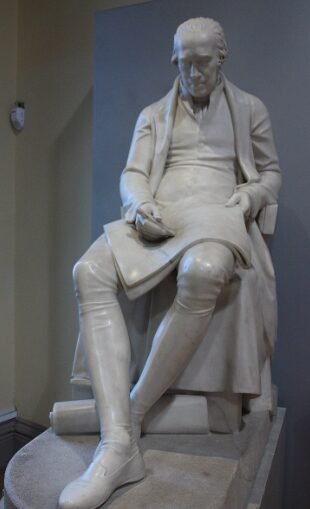
Scottish inventor James Watt is credited with transforming the world with his steam engine. Image: Statue of Watt (Hunterian Museum, Glasgow, by English sculptor Francis Chantrey)
James Watt was born on the 17th January 1973 and was the eldest of 5 siblings. His parents were Thomas Watt and Agnes Muirhead.
In his formative years, he received homeschooling as he was unable to attend Greenock Grammar School consistently due to a number of health issues. His mother was the one who taught him in his early years.
From Greenock Grammar School, he received some elementary schooling where he studied algebra, Latin, and Greek.
James Watt received a less formal education because he spent so much time in his father’s workshop picking up valuable skills. He became acquainted with tools and how to use them. He exceled at his father’s workshop and became familiar with the techniques in engineering.
Even though he came from a humble home, he was free to select his profession and Watt knew exactly what he wanted to do next. With little money to spare he headed to London in search of greener pastures.
The Birth of an Idea
James Watt worked long hours and ate little during his training in London. As a result, the young engineer suffered a lot of health difficulties.
Due to the hardship, he returned to Glasgow in 1756 and was now a skilled instrument maker. The University of Glasgow hired him to construct mathematical instruments. After a while, he was permitted to establish a shop at university based on his abilities. He made various instruments such as quadrants, compasses, and scales while he was at the university. He was later hired as a mathematical instrument maker at the university; and while there, he made acquaintances with many scholars. Particularly well-known economists like Adam Smith and physicist Joseph Black who were the people that helped him on his journey.
Professor John Robison, one of his university colleagues, once pondered the feasibility of a steam-powered car. Even though the idea was absurd, it enlightened Watt’s thinking about steam and its possibilities.
The Innovations made to the Steam Engine
Beginning around 1763, James Watt set his mind to fix some of the shortfalls of the Newcomen steam engine. This engine was being utilized for demonstrations at the time. Back then, Newcomen engines were employed to pump water from mines. He discovered that the engine design was inefficient and wasted a lot of energy. Noticing all of those issues, Watt’s interest in the steam engine grew tremendously. The engineer wanted to overcome the problem and came up with the system of employing a separate steam condenser.
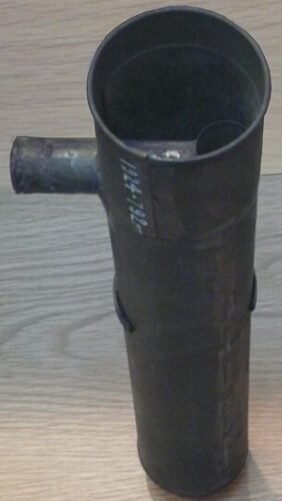
Original condenser made by James Watt
The steam engine was not invented by Watt, but he came up with a superior version that was more practical and effective. James Watt and his partner, Dr John Roebuck, began working on an engine. The first engine prototype was built in 1768. Following that, Watt visited Birmingham and met with Matthew Boulton. In 1774, he and his new partner began work on the steam engine. They built the Watt steam engines for a variety of industries which racked in a lot of revenue. Steam engines would later be employed in many locomotives even as of 2021.

James Eckford Lauder: James Watt and the Steam Engine: the Dawn of the Nineteenth Century, 1855
The coining of the term “Horse Power”
James Watt is credited with being one of the major players that ushered in the industrial revolution. The Scottish engineer made significant contributions when he was alive. He developed the term horsepower to describe the output of a steam engine. The term “horsepower” was widely used for gauging machinery and motors at the time. The unit was measured at 550 feet-pounds per second. In the current language, you can say that one horsepower equals 746 watts.

Image: James Watt by John Partridge, after Sir William Beechey (1806)
The invention of the Micrometer
James Watt invented the micrometre between 1770 and 1771. Among James Watt’s inventions, it was a significant one. It does not function like a modern micrometre in measuring small items. However, it functioned similarly to a rangefinder and was constantly used in surveying. The Watt micrometre was telescope-adapted and had cross-balls that could be modified in the eyepiece. He utilized this equipment to precisely measure the distances between slopes or canals.
Other Inventions by James Watt
Watt also invented the Rev meter or the tachometer in the 1980s, which became the first revolution counter to measure the speed of rotation of a shaft in his steam engines. Tachometers are now seen in automobiles, planes, and tape recorders. Watt also invented the first photo copier machine in 1779 and formulated ways to use ink and wet paper to facilitate the transfer of documents. This invention became a worldwide success in the 20th century.
The Watt Family
In 1764, James Watt married Margaret Miller, who was his cousin at the time. They had six children together, but only two of them, Margaret and James, survived into their late years. The family supported their father’s business, but his wife died at the delivery of their child in 1773. In 1776, he remarried Ann MacGregor for the second time and had two children with her, Janet and Gregory. The mechanical engineer died on 28th August 1819 after a long and extensive career.
READ MORE: Popular Inventions of the Industrial Revolution
Questions and Answers
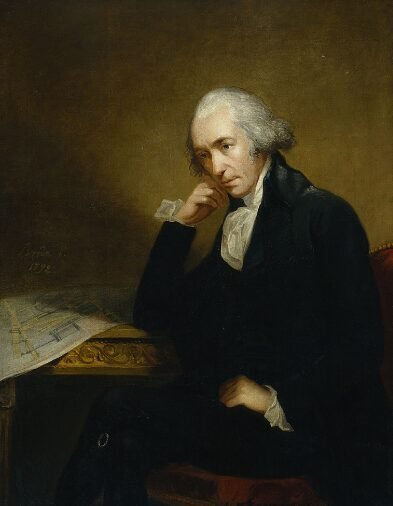
Portrait of Watt (1736–1819) by Swedish painter Carl Frederik von Breda
Who was James Watt, and what was his contribution to the Industrial Revolution?
James Watt was a Scottish inventor, mechanical engineer, and chemist born on January 30, 1736, in Greenock, Scotland. His most significant contribution to the Industrial Revolution was his improvement of the steam engine. He developed a separate condenser that made steam engines much more efficient, which played a crucial role in advancing industry in Great Britain and worldwide.
Where did James Watt begin his work with steam engines?
James Watt began his work with steam engines while employed as an instrument maker at the University of Glasgow. It was during this time that he became interested in improving the existing steam engine technology, particularly the Newcomen steam engine.
What was the main problem with the Newcomen steam engine that Watt identified?
The main problem with the Newcomen steam engine that Watt identified was its inefficiency. The engine wasted a substantial amount of energy by repeatedly cooling and reheating the cylinder during its operation.
What was Watt’s revolutionary solution to improve the steam engine’s efficiency?
Watt’s revolutionary solution was the invention of the separate condenser. By adding this component, Watt was able to prevent the engine’s cylinder from cooling down during operation, thereby conserving energy and making the steam engine significantly more efficient.
How did Watt’s invention of the separate condenser impact the steam engine’s use?
The invention of the separate condenser made steam engines more powerful, efficient, and cost-effective. This improvement allowed the steam engine to be adapted for a wider range of applications beyond pumping water, such as driving machinery in factories and powering transportation systems, which was a key development in the Industrial Revolution.

Engraving of a 1784 steam engine designed by Boulton and Watt
What was the significance of Watt’s adaptation of the steam engine to produce rotary motion?
Watt’s adaptation of the steam engine to produce rotary motion was significant because it expanded the engine’s use beyond simple pumping mechanisms. The ability to generate rotary motion allowed steam engines to be used in various industrial processes, thereby broadening their impact on industry and technology.
Who did James Watt partner with to commercialize his steam engine, and what was the outcome?
James Watt partnered with Matthew Boulton, a successful industrialist, in 1775 to commercialize his steam engine. The partnership, known as Boulton and Watt, was highly successful, leading to the widespread adoption of their steam engines across industries. This success not only enhanced Watt’s reputation but also made him a wealthy man.

A steam engine built to James Watt’s patent in 1848 at Freiberg in Germany
What concept did James Watt introduce that became a standard unit of measurement in the industry?
James Watt introduced the concept of horsepower, which became a standard unit of measurement for engine power output in the industry.
How is James Watt’s legacy honored in the field of science and engineering?
James Watt’s legacy is honored by naming the SI unit of power, the watt, after him. This reflects his lasting impact on engineering and his significant contributions to the development of modern technology.

James Watt’s story exemplifies the importance of innovation in overcoming technical challenges and driving progress. His ability to identify and solve critical engineering problems transformed the steam engine from a limited tool into a powerful engine of industrial growth, making him a key figure in the history of engineering. Image: Bust of Watt in the Scottish National Portrait Gallery, Edinburgh, Scotland