Who was John IV, and why is he significant in Portuguese history?
John IV, known as “John the Restorer,” was the King of Portugal from 1640 to 1656. He restored Portuguese independence from Spanish rule, established the House of Braganza, and defended the nation’s sovereignty during a time of political and military turmoil.
In the article below, World History Edu delves into the life and reign of John IV of Portugal.
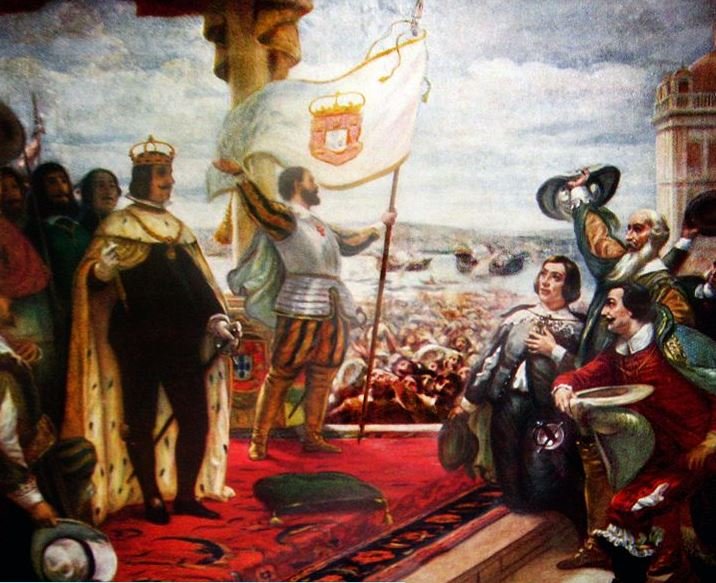
The 1908 painting “Acclamation of John IV as King of Portugal” by Veloso Salgado is housed in Lisbon’s Military Museum.
Early Life and Background
John IV of Portugal, often referred to as “John the Restorer” (Portuguese: João IV), was born on March 19, 1604, in Vila Viçosa, Portugal. He was the eldest son of Teodósio II, Duke of Braganza, and inherited a prestigious lineage tied to Portuguese nobility.
His family was directly descended from Catherine, Duchess of Braganza, a claimant to the Portuguese throne during the succession crisis of 1580. This heritage would later provide John with the legitimate claim to the crown.
Previously Duke of Braganza, John IV was the grandson of Catherine, Duchess of Braganza, a key figure in the 1580 succession crisis.
John’s early years were shaped by the duties of his noble station. In 1630, following the death of his father, who had succumbed to mental illness, John became the Duke of Braganza, assuming leadership over one of Portugal’s most influential noble houses.
His position carried not only wealth and influence but also political risks, as Portugal was under Spanish rule during the Iberian Union, a period when Spain and Portugal were governed by the same monarch.
In 1633, John married Luisa de Guzmán, the eldest daughter of the Duke of Medina Sidonia, a powerful Spanish noble. This alliance reflected the interwoven ties between Portuguese and Spanish aristocracy, though it would later prove significant in Portugal’s struggle for independence.
The Path to Revolution
By the early 17th century, tensions between Portugal and Spain had escalated. The Iberian Union, initiated in 1580, placed Portugal under Spanish rule, governed by a single monarch. This arrangement caused discontent among the Portuguese elite, as Spanish kings prioritized their own empire’s interests, often at the expense of Portuguese autonomy.
Under King Philip III of Portugal (Philip IV of Spain), the situation worsened. Portuguese merchants faced higher taxes, Spanish officials increasingly replaced Portuguese administrators, and the nobility feared losing their remaining influence. The Spanish crown even considered reducing Portugal to a Spanish province, stripping it of its sovereignty.
This climate of discontent culminated in the Portuguese Revolution of 1640, a well-coordinated uprising organized by a group of Portuguese nobles and intellectuals known as the Forty Conspirators. On December 1, 1640, they assassinated Miguel de Vasconcelos, the Secretary of State, who was seen as a symbol of Spanish oppression.
Margaret of Savoy, the Spanish-appointed Vicereine of Portugal, was arrested, and within hours, the conspirators declared John IV the King of Portugal. Legend suggests that John’s wife, Luisa de Guzmán, played a pivotal role in convincing him to accept the crown, allegedly saying, “Better to reign as king once than serve as a vassal forever.”

Image: A portrait of John IV by Flemish painter Peter Paul Rubens.
John IV as King
John IV’s ascension marked the beginning of a new era for Portugal. His reign, lasting from 1640 until his death in 1656, was characterized by political, military, and diplomatic efforts to secure and stabilize Portuguese independence. The immediate challenge he faced was the ongoing conflict with Spain, known as the Portuguese Restoration War (1640–1668), a protracted struggle that would not see its resolution until after his death.
The Portuguese Restoration War
The Portuguese Restoration War dominated John IV’s reign. Despite declaring independence, Portugal remained under constant threat of Spanish retaliation. Spain, however, was stretched thin, simultaneously engaged in the Thirty Years’ War and dealing with a rebellion in Catalonia. This weakened its ability to mount a full-scale invasion of Portugal, giving John IV crucial time to consolidate his position.
Portugal’s military efforts during the Restoration War were marked by defensive strategies and periodic offensives. One notable victory came in 1644 at the Battle of Montijo near Badajoz, where Portuguese forces defeated the Spanish. These skirmishes, however, were often localized, as Spain’s superior resources posed a constant challenge.
To strengthen Portugal’s position, John IV sought alliances abroad. In 1641, Portugal signed treaties with France and Sweden, seeking diplomatic support against Spain. While these alliances provided some relief, Portugal’s direct contributions to the broader Thirty Years’ War were minimal, as its focus remained on preserving its sovereignty and safeguarding its empire.
Colonial Struggles and Triumphs
John IV’s reign coincided with significant challenges to Portugal’s overseas empire. The Dutch, who had been encroaching on Portuguese colonial possessions since the late 16th century, intensified their efforts during this period. In 1641, they captured Portuguese Malacca, and by 1656, they had taken Portuguese Ceylon (modern-day Sri Lanka), including the vital port of Colombo. The Imam of Oman also seized Muscat in 1650, further diminishing Portuguese influence in the Indian Ocean.
Despite these setbacks, Portugal achieved notable successes in the Americas and Africa. In 1648, Portuguese forces recaptured Luanda in Angola from the Dutch, regaining control over vital African territories.
In Brazil, the Portuguese reclaimed northern regions by 1654, effectively ending Dutch colonial ambitions there. These victories not only preserved key parts of the Portuguese empire but also bolstered national morale during a period of intense struggle.
Cultural and Religious Contributions
Beyond his military and political endeavors, John IV was a patron of the arts and an intellectual in his own right. He amassed one of the largest private libraries of his time, though it was tragically destroyed in the Lisbon earthquake of 1755. John was an accomplished musician and writer, producing treatises on music and supporting the cultural development of his court.
Among his writings were a defense of the Renaissance composer Palestrina and a Defense of Modern Music (1649). While a composition known as Crux Fidelis is often attributed to him, stylistic analysis suggests it was likely written in the 19th century. Regardless, his contributions to music and the arts underscored his commitment to cultural enrichment.
In 1646, John IV took a significant step in aligning religion with national identity by proclaiming the Immaculate Conception of the Virgin Mary as the Patroness of Portugal. This declaration solidified Mary’s role as a unifying symbol for the Portuguese people, reflecting John’s deep piety and his use of faith to foster a sense of national cohesion.
Death and Succession
John IV passed away on November 6, 1656, leaving behind a Portugal that had reclaimed its independence but was still mired in conflict with Spain. His son, Afonso VI, succeeded him, inheriting the ongoing Restoration War. While the war would not conclude until the Treaty of Lisbon in 1668, John IV’s efforts laid the foundation for Portugal’s eventual victory and recognition as a sovereign nation.
John IV’s legacy extended beyond the battlefield. His daughter, Catherine of Braganza, married King Charles II of England, a union that strengthened Portugal’s ties with England. As part of her dowry, the Portuguese colony of Bombay (modern-day Mumbai) was ceded to the English Crown, an arrangement that further integrated Portugal into the European balance of power.
Treaty of Tordesillas and the division of the New World between Spain and Portugal
Frequently Asked Questions about John IV of Portugal





