King John of England
King John of England, born on 24 December 1166, was the youngest son of King Henry II and Duchess Eleanor of Aquitaine. He ruled England from 1199 until his death in 1216.
His reign is remembered for significant political, military, and legal events, most notably the loss of key English territories in France, his contentious relationship with the Church, and the baronial revolt that led to the sealing of the Magna Carta, one of the most important documents in British constitutional history.
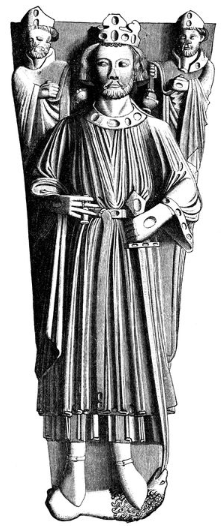
John, King of England, is best known for reluctantly signing the Magna Carta in 1215. Image: Effigy of King John on his monument in Worcester Cathedral
Early Life and Family
John’s early years were shaped by the ambitions and conflicts of his powerful family. His father, Henry II, ruled over a vast empire known as the Angevin Empire, which included England, parts of Ireland, and vast lands in France, including Normandy, Anjou, and Aquitaine. John’s mother, Eleanor of Aquitaine, was one of the most influential women of the time, having been married first to Louis VII of France and then to Henry II.

Henry II of England
John was the youngest of five sons, and from birth, he was not expected to inherit significant land or power. His older brothers—Henry the Young King, Richard, Geoffrey, and William (who died young)—were destined for greater positions, earning John the nickname “John Lackland” (Jean sans Terre), meaning “John without land.” This nickname reflected the expectation that John would not inherit any significant territories, as his father’s vast empire was divided among his older brothers.
However, John’s fortunes shifted after a series of dramatic events in his family. His three elder brothers—Henry the Young King, Richard, and Geoffrey—rebelled against their father in 1173–1174, seeking to assert their rights over various parts of Henry’s empire. John remained loyal to his father during this revolt, and after it was quashed, he became his father’s favored son. This loyalty and newfound favor from Henry II set John on a path to power.

Eleanor by Frederick Sandys, 1858, National Museum Cardiff
Early Career and Rise to Power
In 1177, Henry II appointed John as Lord of Ireland, hoping to secure control over the island. Although John made a visit to Ireland, his attempts to assert authority there were largely unsuccessful due to his inexperience and mismanagement. Nevertheless, his father continued to support him, and John received grants of land in England and on the continent.
John’s ambitions for greater power grew as his brothers’ positions weakened. In 1183, Henry the Young King died, and John’s older brother Richard became heir to the throne of England. Richard and John had a contentious relationship, but John continued to serve his father faithfully.

Richard I of England, also known as Richard the Lionheart, reigned from 1189 to 1199. He was the sixth child of Eleanor of Aquitaine
When Henry II died in 1189, Richard succeeded to the throne as Richard I, also known as Richard the Lionheart. Richard was more interested in his overseas ventures, particularly the Third Crusade, than in governing England. During Richard’s absence on crusade, John attempted to seize power, taking advantage of his brother’s absence to challenge the royal administrators left in charge. This rebellion failed, and John was forced to reconcile with Richard upon his return in 1194.
Richard I, however, died in 1199 without legitimate heirs, and John was proclaimed king. His claim to the throne was contested by his nephew, Arthur of Brittany, the son of his older brother Geoffrey. This dispute over succession sparked a conflict with France, as Arthur received support from King Philip II of France.

Philip II (1165- 1223)
Loss of French Territories and Collapse of the Angevin Empire
One of the defining features of John’s reign was his loss of the Angevin Empire’s territories in France. At the time of his ascension to the English throne, John inherited vast lands in France, including Normandy, Anjou, Maine, and Aquitaine. However, these territories were constantly under threat from the growing power of the French crown under Philip II.
Initially, John secured his position in France through the Treaty of Le Goulet in 1200, which confirmed his control over Normandy and his other French possessions. In return, John recognized Philip II as his overlord for these territories. However, this peace was short-lived.
In 1202, hostilities between John and Philip II resumed. The conflict was exacerbated by John’s poor relationships with the Norman, Breton, and Anjou nobles, many of whom were disillusioned with his rule. John’s treatment of these nobles, combined with his strategic missteps, led to a rapid decline in his position in France.
In 1204, John lost the crucial territory of Normandy to Philip II, marking a significant turning point in his reign. The fall of Normandy was a devastating blow to English prestige and power on the continent, and it marked the collapse of the Angevin Empire. Over the following years, John attempted to regain his lost territories in France, but he was never able to fully recover from these defeats.
Domestic Rule and Financial Reforms

Image: A drawing portraying King John on a hunting expedition.
Faced with the loss of his French territories, John turned his attention to strengthening his rule in England. One of his key objectives was to raise revenue for his military campaigns to retake Normandy and the other lost lands. To achieve this, John introduced a series of financial reforms that dramatically increased royal revenues.
John’s government became known for its efficiency in tax collection, but also for its ruthlessness. He imposed heavy taxes on the nobility, exploited feudal rights, and exacted large sums of money from towns, merchants, and the Church. This aggressive fiscal policy allowed John to fund his military campaigns but also led to widespread resentment among his barons and subjects.
John’s reforms also extended to the judicial system. He sought to centralize royal authority by reforming the administration of justice, which not only provided a more stable and efficient legal framework but also generated additional revenue for the crown. These judicial reforms had a lasting impact on the development of English common law, laying the foundations for the legal system that would evolve over the centuries.
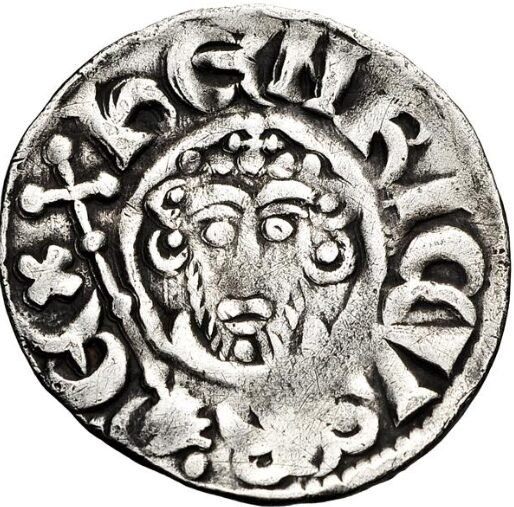
A silver King John penny
Conflict with the Church
One of the most significant disputes of John’s reign was his conflict with Pope Innocent III. The issue arose over the appointment of the Archbishop of Canterbury, the highest ecclesiastical position in England. When the previous archbishop died in 1205, John sought to appoint his own candidate, but the pope refused, instead appointing Stephen Langton to the position.
John refused to accept Langton’s appointment, leading to a bitter standoff with the papacy. In response, Pope Innocent III placed England under a papal interdict in 1208, a measure that effectively suspended religious services throughout the kingdom. John retaliated by seizing Church property and revenues.
In 1209, John was excommunicated by the pope, further deepening the crisis. The excommunication threatened John’s legitimacy as king and isolated him from many of his barons, who were deeply religious and uncomfortable with the king’s defiance of the Church.
The dispute was finally resolved in 1213 when John made a dramatic submission to the pope. He agreed to accept Stephen Langton as Archbishop of Canterbury and pledged to pay a large sum of money as compensation to the Church. In return, Pope Innocent III lifted the excommunication and the interdict, and John became a vassal of the pope, promising to defend the interests of the Church.
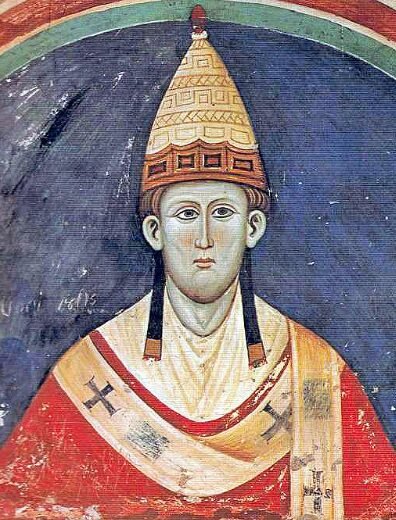
Pope Innocent III
Barons’ Revolt and Magna Carta
John’s heavy-handed taxation policies, his loss of French territories, and his conflict with the Church alienated many of his barons. By 1215, discontent among the nobility had reached a breaking point. A group of powerful barons, dissatisfied with John’s rule, launched a revolt against the king, demanding reforms to address their grievances.
To avoid a full-scale civil war, John agreed to negotiate with the rebel barons. The result was the Magna Carta, a charter of liberties that was signed at Runnymede on 15 June 1215. The Magna Carta is often seen as one of the most important documents in the development of constitutional law, as it sought to limit the powers of the king and protect the rights of his subjects.
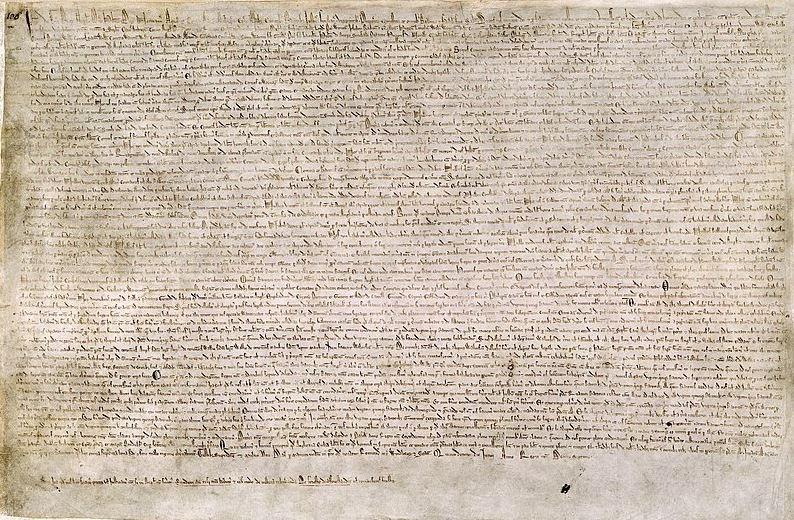
Many barons rebelled against King John, and in June 1215, they forced John to sign a peace treaty, later known as the Magna Carta. Image: Cotton MS. Augustus II. 106, one of four surviving exemplifications of the 1215 text
The Magna Carta addressed several key issues, including the protection of baronial rights, limits on royal authority, and the establishment of legal procedures to ensure that justice would not be arbitrarily denied. One of its most significant provisions was the foundation of habeas corpus, which ensured that no one could be imprisoned without due process of law.
Despite its significance, the Magna Carta was not immediately successful in resolving the conflict between John and the barons. Neither side fully adhered to its terms, and civil war broke out shortly after its signing. The rebel barons, seeking to depose John, invited Prince Louis of France to invade England and claim the throne.
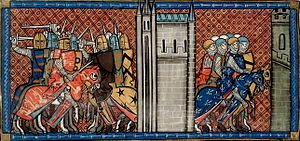
The rebel barons were supported by France’s Prince Louis (later King Louis VIII of France) who despite controlling Westminster Abbey could not take the English crown because Rome and the English Church supported Henry III. | Image: King John of England (left) in battle with the French under Louis VIII of France (right)
Final Years and Death
The civil war that followed the signing of the Magna Carta descended into a stalemate, with neither John’s forces nor the rebel barons able to gain a decisive advantage. In the midst of this ongoing conflict, John fell ill while campaigning in eastern England.
On 19 October 1216, John died of dysentery at Newark Castle. His death came at a critical moment in the civil war, and it provided an opportunity for a resolution to the conflict. John’s supporters quickly rallied around his nine-year-old son, Henry III, who was proclaimed king.
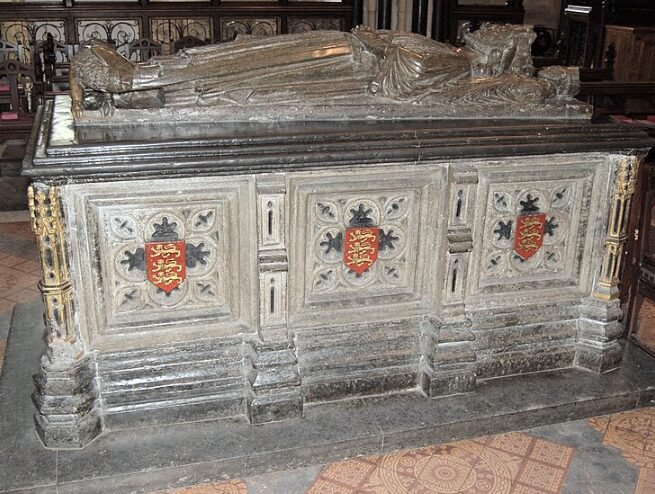
When John died in 1216, England was still engulfed in conflict, and his nine-year-old son, Henry III, became king. Image: King John’s tomb in Worcester Cathedral
With John’s death, the political situation in England changed dramatically. The barons, who had been reluctant to continue fighting against a child king, agreed to a compromise peace settlement. In 1217, the English forces loyal to Henry III, supported by key barons and the papacy, defeated Prince Louis of France and the rebel forces, securing Henry’s position as king.

Henry III inherited the English throne at the age of nine. Image: A 13th-century depiction of Henry III’s coronation
Did you know…?
- In October 1190, Richard named their nephew Arthur as his heir. When Richard was imprisoned in Germany three years later, John attempted to seize power but failed.
- Upon Richard’s return in 1194, John was banished but soon reconciled with his brother. In 1196, after Arthur was captured by Philip II, Richard designated John as his heir.
- Magna Carta was the first formal document to declare that the sovereign was subject to the rule of law and that individual rights should be protected even against the king’s will. It became a cornerstone of English constitutional principles and was later regarded as the foundation of the English people’s liberties.
- The most significant clauses of the Magna Carta established the foundation for habeas corpus, asserting that no one could be imprisoned without due legal process. The charter promised that justice would not be sold, refused, or delayed to anyone. Additionally, it created a council of barons to ensure the king adhered to its terms, granting them the right to rebel if he did not.
- John is frequently depicted as a villain in the Robin Hood legend, contributing to his enduring negative reputation.
Legacy and Historical Debate
King John’s legacy is a complex and controversial one. Contemporary chroniclers were highly critical of his reign, emphasizing his failures in war, his strained relationships with the nobility, and his conflicts with the Church. John was often depicted as a cruel and vindictive ruler, whose harsh treatment of his subjects and inability to hold onto the Angevin Empire contributed to his downfall.
Over time, John’s reputation became even more negative, especially with his portrayal in popular culture. In the Robin Hood legends, John is often cast as the villain, an incompetent and malevolent ruler whose misrule is only corrected by the rightful return of King Richard I. During the Victorian era, writers frequently depicted John as one of England’s worst kings, further cementing his place as a historical villain.
However, modern historians have offered more nuanced assessments of John’s reign. While his failures in France and his disputes with the barons and the Church were significant, some scholars have recognized his strengths as an administrator and reformer. John’s judicial reforms, in particular, had a lasting impact on the development of English common law. His ability to centralize royal authority and create an efficient financial system, while unpopular, demonstrated his administrative capabilities.
Historians like Jim Bradbury have acknowledged that John was a “hard-working administrator” and an “able man,” though his personal flaws, including what historian Ralph Turner describes as “petty, spiteful, and cruel” tendencies, undermined his achievements. John’s vindictive personality traits, combined with his political and military failures, contributed to his unpopularity and his ultimate downfall.
Despite his troubled reign, John’s role in the creation of the Magna Carta has ensured his place in history. Although the Magna Carta was initially a failed peace treaty, it laid the groundwork for future constitutional developments in England and later influenced legal systems around the world. Its principles of limiting royal power and protecting individual rights became central to the development of English law and governance.

Questions and Answers about King John and His Reign
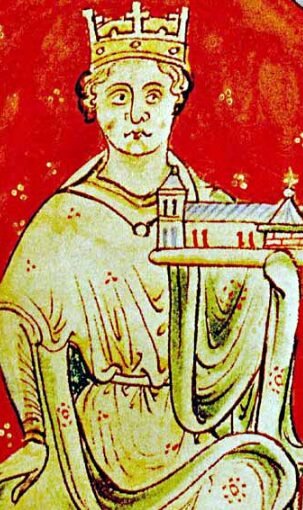
King John’s reign as king was defined by territorial losses, especially in France, and by domestic unrest fueled by his aggressive taxation policies, his conflicts with the Church, and his strained relationship with the barons. Image: King John presenting a church, painted c. 1250–1259 by Matthew Paris in his Historia Anglorum
When and where was King John born?
John was born on 24 December 1166 in England.

Image: John’s parents, Henry II and Eleanor of Aquitaine, holding court
What was King John’s reign most notably marked by?
His reign is most notably marked by significant territorial losses, especially in France, and the sealing of the Magna Carta.
The Magna Carta is considered a critical early step in the evolution of the United Kingdom’s constitution, establishing limits on royal power and affirming legal procedures, including habeas corpus.
Why was John nicknamed “John Lackland”?
John earned the nickname “John Lackland” (Jean sans Terre) because, as the youngest son, he was not expected to inherit substantial lands.
How did John become his father’s favorite son?
After the failed revolt of 1173–1174 by his brothers, Henry II favored John, who remained loyal during the rebellion.
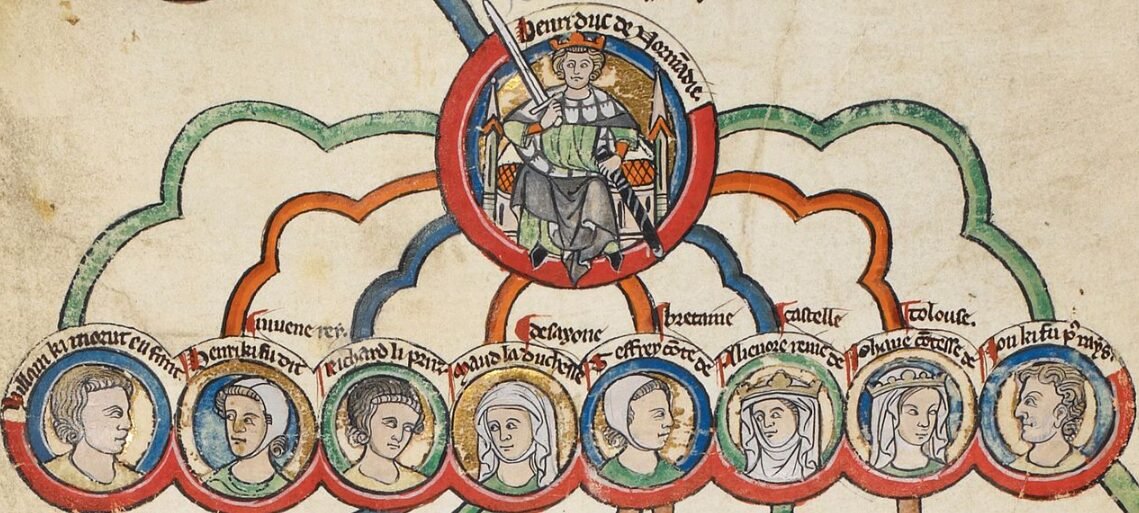
John, born in Oxford around Christmas in 1166 or 1167, was the youngest and favorite son of Henry II. After his father’s death in 1189, his brother Richard became king. John received lands, titles, and wealth, but it wasn’t enough for him. Image: 13th-century depiction of Henry II and his legitimate children, left to right: William, Henry, Richard, Matilda, Geoffrey, Eleanor, Joan and John
What title was John given in 1177, and what lands did he receive?
In 1177, John was appointed Lord of Ireland and was granted estates in England and on the continent.
What controversy surrounded John’s rise to the throne?
During King Richard I’s reign, John attempted to challenge royal authority while Richard was on the Third Crusade. Though his rebellion failed, he was proclaimed king after Richard’s death in 1199.
What was the Treaty of Le Goulet?
The Treaty of Le Goulet, signed in 1200, recognized John’s control over the Angevin lands in France after negotiations with King Philip II of France.
What happened to John’s French territories by 1204?
By 1204, John had lost Normandy and most of his French territories to Philip II, leading to the collapse of the Angevin Empire.
How did John’s rule affect English common law?
John’s judicial reforms had a lasting impact on English common law, providing a framework for future governance and legal procedures.
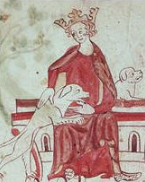
John was an able administrator with a keen interest in law and governance, but he neither trusted others nor earned their trust. His heavy taxation, conflicts with the Church (including his excommunication by the Pope in 1209), and failed attempts to reclaim French lands made him deeply unpopular. Image: A 13th-century depiction of John with two hunting dogs
Why did John have conflicts with Pope Innocent III?
John had a prolonged dispute with Pope Innocent III over the appointment of Stephen Langton as Archbishop of Canterbury, which led to his excommunication in 1209.
What was the outcome of the Battle of Bouvines in 1214?
The Battle of Bouvines in 1214 ended in a decisive defeat for John’s forces and allies, weakening his position both abroad and in England.

Image: La Bataille de Bouvines, by Horace Vernet in 1827. (Galerie des Batailles, Palace of Versailles).
What caused the barons to revolt against John in 1215?
The barons revolted due to John’s heavy taxation policies and his harsh treatment of England’s nobles, leading to widespread discontent.
What was the Magna Carta, and why was it created?
The Magna Carta was a peace treaty created in 1215 between John and the rebel barons, aiming to limit royal power and protect baronial rights.
The Magna Carta established the principle of habeas corpus, ensuring that no one could be imprisoned without due legal process.
Did the Magna Carta successfully resolve the conflict between John and the barons?
No, the Magna Carta failed to resolve the conflict, and civil war broke out shortly after its signing. The barons invited Prince Louis of France (later Louis VIII of France) to take the English throne.
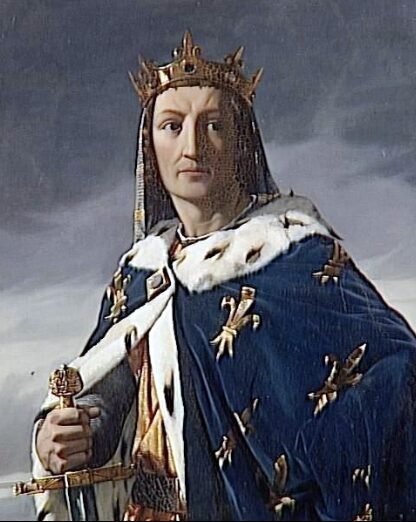
John claimed he signed the Magna Carta under duress, and Pope Innocent III supported him. The civil war resumed, with John devastating northern England and the Scottish border. At the barons’ request, Prince Louis of France invaded. Though John continued to fight vigorously, his death in October 1216 paved the way for a compromise peace and the succession of his son, Henry III. Image: Louis VIII of France, Painting by Henri Lehmann, 1837
How did King John die, and when?
King John died of dysentery on 19 October 1216 while campaigning in eastern England.
At the time of John’s death, England was in the midst of a civil war, but his supporters soon rallied around his son, Henry III.
How has John’s legacy been viewed by historians?
Contemporary chroniclers were critical of John’s reign, and modern historians agree that he had numerous flaws. However, some acknowledge his administrative abilities and judicial reforms.
John is often described as having negative traits such as pettiness, spitefulness, and cruelty, which contributed to his unpopularity.
Why was John’s marriage to Isabella of Angoulême controversial?
When Richard died in 1199, John became king. Conflict with France soon followed, largely due to John’s controversial second marriage. While mediating between the Lusignan and Angoulême families, John married Isabella of Angoulême, previously betrothed to Hugh de Lusignan. This sparked a rebellion, and John was summoned by Philip II of France to address the issue. His refusal led to war.
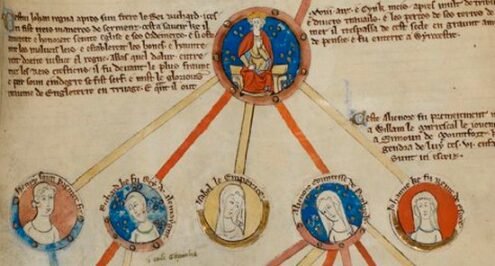
Image: A 13th-century depiction of John and his legitimate children, (l to r) Henry, Richard, Isabella, Eleanor and Joan
What territories did John lose?
By 1206, John had lost several territories, including Normandy, Anjou, Maine, and parts of Poitou. These losses damaged his reputation, and he was determined to regain them. To fund his efforts, John’s administration became more ruthless in collecting taxes and exploiting feudal rights, which fueled growing resentment among the barons.
When was the Magna Carta agreed?
As tensions escalated, civil war erupted in May 1215 after failed negotiations between John and the barons. When the rebels seized London, John was forced to negotiate further.
On June 19, 1215, at Runnymede on the River Thames, John agreed to the Magna Carta, a landmark document that limited royal power, upheld feudal rights, and reinforced English law. It was the first formal acknowledgment that the monarch was subject to the rule of law and that individual rights were protected, even against the sovereign’s wishes.
What were some other key clauses of the Magna Carta?
The Magna Carta limited royal power, defined feudal obligations between the king and the barons, and guaranteed certain rights. Key clauses addressed the freedom of the Church, redress of grievances for landowners and tenants, the necessity of consulting the Great Council to prevent unfair taxation, and mercantile regulations. It also sought to ensure that justice was accessible to all and prevent the king from unjustly imprisoning individuals.

The Magna Carta laid the foundation for future constitutional developments in England and influenced legal systems around the world. Image: The Articles of the Barons, 1215, held by the British Library





