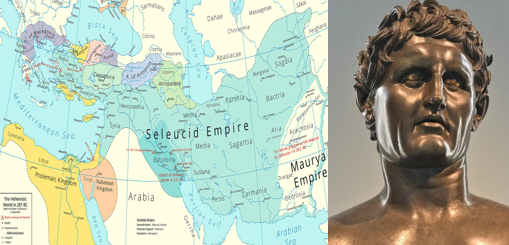
Laodice IV
Laodice IV (fl. 3rd–2nd century BC) was a prominent figure in the Seleucid Empire, renowned for her roles as a Greek princess, chief priestess, and queen. Her influence spanned decades and her life was marked by political and familial complexities. She was notably married to three kings of the Seleucid dynasty, all of whom were her brothers.
Family and Early Life
Laodice IV was the daughter of Antiochus III the Great, a powerful Seleucid monarch, and his consort, Laodice III. Her paternal lineage traced back to Seleucus II Callinicus and Laodice II, while her maternal grandparents were Mithridates II of Pontus and his wife, Laodice. The Seleucid dynasty was known for its intermarriages, and Laodice’s parents were first cousins. This familial tradition underscored their efforts to consolidate power and maintain dynastic continuity.
Born and raised in the Seleucid Empire, Laodice grew up amidst the political intrigues of one of the Hellenistic world’s most powerful kingdoms. She was honored during her lifetime, as evidenced by an inscription dedicated to her at Delos, reflecting her esteemed status within the empire.

Ancestry and Dynastic Context
Laodice IV’s ancestry linked her to a lineage of Seleucid and Pontic royalty. Her paternal and maternal lines converged in Antiochus II Theos and Laodice I, exemplifying the dynastic intermarriages typical of the Seleucid ruling family. These unions were designed to solidify alliances and preserve the monarchy’s control over its vast territories.
First Tenure as Queen Consort
In 196 BC, Laodice IV married her eldest brother, the crown prince Antiochus. This union marked the first instance of sibling marriage within the Seleucid dynasty, a practice later emulated to reinforce familial power. From this marriage, Laodice bore a daughter, Nysa.
In 193 BC, Laodice was appointed chief priestess of a state cult dedicated to her mother, Laodice III, in Media. This role elevated her status as a religious and political figure. However, her first tenure as queen consort ended tragically with her brother-husband’s untimely death later that year, a loss deeply mourned by the family.
Second Marriage: Union with Seleucus IV Philopator
Following the death of her first husband, Laodice married her second eldest brother, Seleucus IV Philopator. Their marriage produced three children: two sons, Antiochus and Demetrius I Soter, and a daughter, Laodice V.
In 187 BC, Antiochus III’s death ushered Seleucus IV to the throne, making Laodice the queen of the Seleucid Empire. Together, they reigned as the imperial couple until Seleucus IV’s assassination in 175 BC. Coins from their reign depict Laodice alongside her first son with Seleucus IV, a rare and symbolic representation of royal unity and dynastic legitimacy.
Third Marriage: Reign with Antiochus IV Epiphanes
After Seleucus IV’s death, Laodice married her youngest brother, Antiochus IV Epiphanes. This marriage further cemented her central role in the Seleucid dynasty’s political landscape. Together, they had two children: Antiochus V Eupator and Laodice VI.
Antiochus IV adopted and co-ruled with Laodice’s eldest son from her second marriage, but this arrangement ended with the young heir’s assassination in 170 BC, a move likely motivated by Antiochus IV’s ambition to consolidate power. During this time, her second son, Demetrius I Soter, was sent to Rome as a political hostage, ensuring Roman approval of Seleucid affairs.

Bust of Antiochus IV Epiphanes
Later Life and Legacy
Laodice IV’s youngest son, Antiochus V Eupator, succeeded Antiochus IV as king. This transition marked another chapter in her life, though her role in the subsequent political developments remains unclear due to limited historical records. Despite this, her influence as a queen and priestess left an indelible mark on the Seleucid Empire.
Cultural and Historical Significance
Laodice IV’s life exemplified the complex interplay of dynastic politics, religion, and familial loyalty in the Hellenistic world. Her three marriages to brothers underscore the Seleucid dynasty’s reliance on sibling unions to maintain power and secure succession. Her appointment as chief priestess also reflects the integration of royal women into state religion, emphasizing their dual roles in governance and spirituality.
The coins minted during her reign highlight her unique position as a queen represented alongside her children, signaling her importance in legitimizing dynastic continuity. Although much about her personal life remains speculative, her political and ceremonial roles made her one of the most influential women in the Seleucid Empire.
Frequently Asked Questions
Who were Laodice IV’s parents and what was their relation?
Her parents were Antiochus III the Great and Laodice III, who were first cousins due to their grandparents being siblings.
What was significant about Laodice IV’s first marriage?
She married her eldest brother, crown prince Antiochus, marking the first sibling marriage in the Seleucid dynasty, and bore him a daughter, Nysa.
How did Laodice IV become a chief priestess?
In 193 BC, her father appointed her as the chief priestess of a state cult honoring her mother, Laodice III, in Media.
What were the outcomes of Laodice IV’s second marriage?
She married her second brother, Seleucus IV Philopator, with whom she had three children, including Demetrius I Soter, and served as queen consort from 187 to 175 BC.

Silver coin of Seleucus IV Philopator
How did Laodice IV’s image appear in Seleucid history?
Coins from 175 BC depicted her and her first son with Seleucus IV, marking the first time a Seleucid queen was featured on currency.
What occurred during Laodice IV’s third marriage?
She married her youngest brother, Antiochus IV Epiphanes, bore two children, and became queen consort again during his reign, despite political turmoil and family conflict.
What happened to Laodice IV’s children in political transitions?
Her second son, Demetrius I Soter, was sent to Rome as a political hostage, while her son Antiochus V Eupator succeeded Antiochus IV as king after his death.