The Maccabean Revolt
The Maccabean Revolt was a pivotal uprising in Jewish history, unfolding between 167 BCE and 160 BCE. It marked a defiant stand by the Jewish people against the oppressive policies of the Seleucid Empire under King Antiochus IV Epiphanes. The revolt not only reshaped Jewish cultural and religious identity but also set the stage for the establishment of the Hasmonean dynasty, a period of semi-autonomous Jewish rule in the Land of Israel.

A monument commemorating the Maccabean revolt.
Historical Context
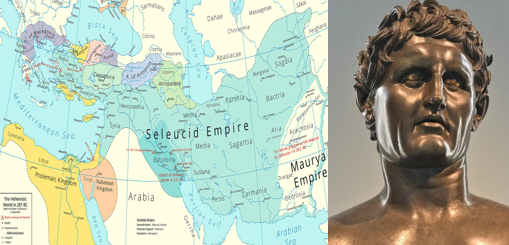
The Maccabean Revolt occurred during the Hellenistic period, which began with the conquests of Alexander the Great in the 4th century BCE. After Alexander’s death in 323 BCE, his empire was divided among his generals, with the Seleucid Empire eventually controlling the region of Judea. Under Seleucid rule, Jewish society was exposed to Hellenistic culture, which emphasized Greek language, customs, and religious practices. This cultural encounter created tensions, as some Jews embraced Hellenization, while others resisted, striving to maintain traditional Jewish laws and practices.
By the time Antiochus IV Epiphanes ascended to the Seleucid throne in 175 BCE, the empire was under strain due to external pressures and internal dissent. Antiochus sought to consolidate his power by enforcing Hellenistic culture across his territories, including Judea. This policy led to a growing divide between Hellenized Jews, who supported the Seleucid agenda, and traditionalists, who saw Hellenization as a threat to their religious identity.
Hellenistic Kingdoms: What were they and what were some of their notable achievements?
Causes of the Maccabean Revolt
The revolt was triggered by a series of oppressive actions by Antiochus IV Epiphanes.
In 167 BCE, Antiochus issued decrees outlawing Jewish religious practices. The observance of the Sabbath, circumcision, and dietary laws were prohibited, and copies of the Torah were burned. The Temple in Jerusalem was desecrated, and an altar to Greek god Zeus was erected within its precincts, forcing Jews to participate in pagan sacrifices.
The rural Jewish population, led by pious families like the Hasmoneans, grew increasingly resentful of both Seleucid oppression and the collaboration of Hellenized elites.
Antiochus’s aggressive promotion of Hellenistic culture alienated many Jews, particularly those in rural areas who adhered to traditional practices. The establishment of gymnasiums and the adoption of Greek attire and customs further symbolized the erosion of Jewish identity.
The high priesthood, a key institution in Jewish religious life, became a source of corruption under Seleucid influence. Antiochus sold the office to the highest bidder, leading to rivalries and undermining its legitimacy.
The rural Jewish population, led by pious families like the Hasmoneans, grew increasingly resentful of both Seleucid oppression and the collaboration of Hellenized elites.
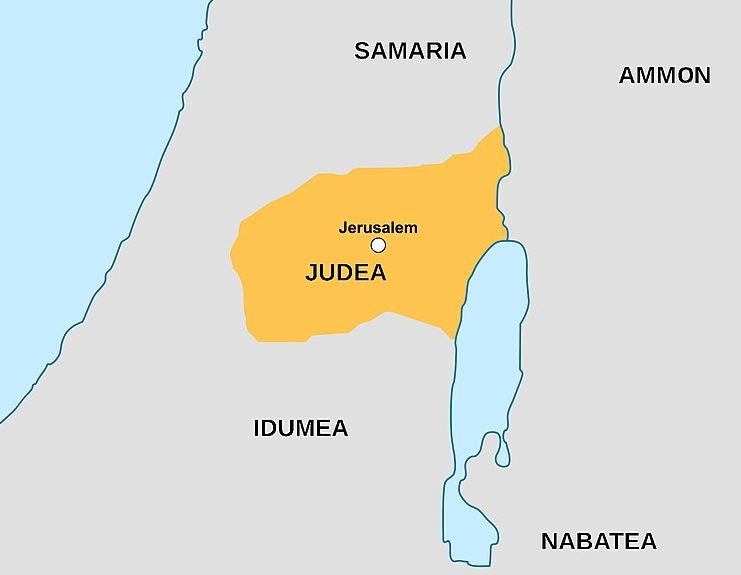
A map showing Jerusalem and Judea during the Maccabean Revolt.
The Revolt Begins: The Role of the Hasmonean Family
The revolt was spearheaded by the Hasmonean family, also known as the Maccabees. The family hailed from the village of Modi’in and was led by Mattathias, a priest who refused to comply with Antiochus’s edicts. When a Seleucid official attempted to enforce pagan sacrifices in Modi’in, Mattathias killed the official and fled to the mountains with his sons, calling for armed resistance.
Following Mattathias’s death, leadership passed to his son Judah, nicknamed “Maccabee” (possibly meaning “hammer” or derived from an acronym of a Hebrew phrase). Judah proved to be a charismatic and capable leader, rallying a band of rebels to launch guerrilla warfare against the Seleucid forces.
Key Events of the Revolt
- Early Skirmishes and Victories: The Maccabees initially focused on small-scale attacks, targeting Seleucid garrisons and collaborators. These victories boosted morale and attracted more supporters to their cause.
- Battle of Emmaus (166 BCE): One of the pivotal battles of the revolt occurred at Emmaus, where Judah Maccabee’s forces defeated a larger Seleucid army through strategic planning and the element of surprise.
- Restoration of the Temple (164 BCE): In one of the most celebrated moments of the revolt, the Maccabees recaptured Jerusalem and purified the desecrated Temple. The rededication of the Temple is commemorated annually in the Jewish festival of Hanukkah, which celebrates the miracle of a single day’s supply of oil lasting for eight days.
- Continued Resistance: Despite their successes, the Maccabees faced ongoing challenges. Seleucid forces, under generals like Lysias, continued to launch counteroffensives. However, internal divisions within the Seleucid Empire often worked to the rebels’ advantage, as resources were diverted to other fronts.
- Death of Judah Maccabee (160 BCE): Judah was killed in battle against a Seleucid force, dealing a blow to the rebellion. Leadership then passed to his brothers Jonathan and Simon, who continued the struggle.

Key battles of the Maccabean Revolt: circles indicate engagements against the Seleucids in Judea, while triangles mark outlying cities targeted by the Maccabees.
Consequences of the Maccabean Revolt
One of the immediate outcomes of the revolt was the restoration of Jewish religious practices. The Seleucid authorities, recognizing the futility of their policies, rescinded the decrees that had sparked the uprising.
Over time, the Hasmoneans transitioned from rebel leaders to rulers of an independent Jewish state. Under Simon’s leadership, the Hasmonean dynasty was formally established in 141 BCE, marking the first period of Jewish self-rule since the Babylonian exile.
The Maccabean Revolt is a powerful example of resistance against oppression, symbolizing the enduring struggle for faith, autonomy, and the preservation of cultural identity.
The revolt reinforced the centrality of Jewish law and traditions in defining communal identity. It also highlighted the tension between cultural assimilation and religious fidelity, a theme that would resonate throughout Jewish history.
The Maccabean Revolt became a symbol of resistance against oppression and the defense of religious freedom. Its legacy inspired later movements, including the Jewish revolts against Roman rule.

Historical Interpretations and Debates
Historians and scholars have debated the nature and impact of the Maccabean Revolt. Some view it as a nationalist uprising, emphasizing the desire for political independence. Others frame it as a religious conflict, focusing on the struggle to preserve Jewish traditions in the face of Hellenistic encroachment.
Additionally, questions have been raised about the role of the Hasmoneans as both liberators and rulers, with critiques of their later descent into authoritarianism and Hellenistic-style governance.
Questions and answers about the Maccabean Revolt

Who led the Maccabean Revolt, and what was its outcome?
The revolt was led by Mattathias, a country priest, and his sons, known as the Maccabees. It resulted in the recapture of Jerusalem and the rededication of the Temple, an event celebrated during Hanukkah.
What was the status of Judea under the Ptolemies?
Under the Ptolemies, Judea enjoyed religious freedom and limited interference. Jewish society retained its traditions, with the Second Temple as the center of religious, social, and economic life.
How did the Seleucid takeover of Judea differ from Ptolemaic rule?
The Seleucids actively promoted Hellenization, enforcing Greek culture and religion. This marked a turning point, as their policies became increasingly oppressive, especially under Antiochus IV Epiphanes.
What measures did Antiochus IV Epiphanes implement to enforce Hellenization?
Antiochus IV outlawed core Jewish practices such as Sabbath observance and circumcision, defiled the Temple by erecting an altar to Zeus, and enforced pagan sacrifices.

Bust of Antiochus IV Epiphanes
What sparked the Maccabean Revolt?
The revolt began in Modi’in when Mattathias refused to perform a pagan sacrifice, killed a fellow Jew who complied, and declared, “Let everyone who is zealous for the law and who stands by the covenant follow me!”
What role did Judah Maccabee play in the revolt?
Judah Maccabee, succeeding his father Mattathias, became a brilliant military leader, using guerrilla tactics to secure significant victories against the Seleucid forces.
What was the significance of the Battle of Emmaus?
The Battle of Emmaus was a key victory for Judah Maccabee, showcasing his strategic prowess and demoralizing the Seleucid forces.
How is Hanukkah connected to the Maccabean Revolt?
Hanukkah commemorates the rededication of the Temple in 164 BCE, following its purification by the Maccabees after the Seleucid desecration.
What was the aftermath of the Maccabean Revolt?
The revolt led to the establishment of the Hasmonean dynasty, granting Judea nearly a century of semi-independent rule and solidifying Jewish identity and religious freedom.