Pharnaces II of Pontus
Pharnaces II of Pontus was the king of the Bosporan Kingdom and Kingdom of Pontus until his death around 47 BC.
Early Life and Heritage
Pharnaces II (c. 97–47 BC), ruler of the Bosporan Kingdom and the Kingdom of Pontus, was a monarch of mixed Persian and Greek lineage. Born to Mithridates VI of Pontus and his sister-wife Laodice, he was the youngest of their children. His name honored his ancestor, Pharnaces I of Pontus. Raised amidst the grandeur of Pontus, Pharnaces was designated as the heir to his father’s expansive kingdom. However, after Mithridates VI’s defeat in the Third Mithridatic War (73–63 BC), Rome annexed much of Pontus. Pharnaces retained rule over the eastern portion of the kingdom as a client king under Roman oversight.

Coinage of Pharnaces II
Rebellion Against Mithridates VI
Pharnaces’ early reign was overshadowed by his betrayal of his father. When Mithridates planned an ambitious invasion of Italy—either through Scythia and the Danube or via Thrace and Greece—discontent brewed among his soldiers. Appian, Cassius Dio, and Florus describe this period as one of widespread mutiny and rebellion, fueled by dissatisfaction with the planned campaign’s risks.
Pharnaces capitalized on this unrest, conspiring against his father. Though initially captured and spared, he manipulated the soldiers’ fears, inciting further rebellion. When Mithridates fled to Panticapaeum, Pharnaces pursued him, ultimately securing the city and the loyalty of his father’s troops.
Mithridates, cornered and unable to poison himself due to years of immunity-building, was killed by his officer. Pharnaces embalmed his father’s body and sent it to Pompey the Great, symbolizing his loyalty to Rome. For his cooperation, Pompey granted Pharnaces control of the Bosporan Kingdom.Consolidation of Power
Pharnaces’ rule began with efforts to solidify his authority. According to Appian, he besieged Phanagoria and neighboring towns but refrained from punitive measures after securing their submission. This diplomatic approach contrasted sharply with his later campaigns in Anatolia. Despite initial cooperation with Rome, Pharnaces harbored ambitions of reclaiming his father’s lost territories.
Opportunistic Invasions During Roman Civil War
The outbreak of Caesar’s Civil War (49 BC) between Julius Caesar and Pompey provided Pharnaces an opportunity to act. With Roman forces distracted, he invaded Colchis, Lesser Armenia, and parts of Cappadocia, even annexing cities in the Roman province of Bithynia and Pontus. His forces overwhelmed Roman-aligned local rulers like Deiotarus of Galatia and Ariobarzanes III of Cappadocia.
Pharnaces II was a complex figure, defined by his betrayal of his father, opportunism during Roman conflicts, and eventual downfall.
Despite sending envoys to negotiate peace with Gnaeus Domitius Calvinus, the Roman governor, Pharnaces’ true intent was conquest. Domitius engaged him near Nicopolis in Lesser Armenia but suffered a decisive defeat. Pharnaces proceeded to plunder Pontus and enslave its population, preparing for further expansion.
Defeat by Julius Caesar
Pharnaces’ triumph was short-lived. In 47 BC, after resolving the siege of Alexandria, Julius Caesar turned his attention to Pharnaces. Recognizing the danger of Caesar’s rapid advance, Pharnaces attempted to negotiate, but Caesar launched a surprise attack near Zela. Despite Pharnaces’ use of scythed chariots and his advantageous position, Caesar’s disciplined forces routed his army. This swift victory prompted Caesar’s famous remark, “Veni, vidi, vici” (“I came, I saw, I conquered”).
Final Days and Death
After his defeat at Zela, Pharnaces fled to Sinope with a small retinue. Caesar, occupied with other matters, delegated the pursuit to Domitius, who forced Pharnaces to surrender the city. Pharnaces attempted to reclaim the Bosporan Kingdom but was defeated and killed by Asander, a former ally who had rebelled. This marked the end of his tumultuous reign.

Marriage, Issue, and Legacy
Pharnaces married a Sarmatian noblewoman, solidifying alliances with neighboring tribes. Together, they had three children: Darius, Arsaces, and Dynamis. His descendants, particularly through Dynamis, continued to rule the Bosporan Kingdom. This legacy reflects the enduring influence of Pharnaces’ Persian and Greek heritage.
Coinage and Cultural Contributions
Pharnaces minted gold and silver coins bearing his likeness and inscriptions celebrating his royal status. These coins often depicted Apollo, a nod to his Hellenistic roots. His legacy also inspired 18th-century operatic works, including Vivaldi’s Farnace and Mozart’s Mitridate.
Frequently Asked Questions
What was Pharnaces II’s heritage?
He was of Persian and Greek ancestry, the youngest child of Mithridates VI and his sister-wife Queen Laodice.
How did Pharnaces II come to power?
After Mithridates VI’s defeat by the Romans in 63 BC, Pharnaces rebelled against his father, leading to Mithridates’ death. Roman general Pompey rewarded him with the rule of the Bosporan Kingdom as a client king.

Bust of Mithridates VI
What major conflicts did Pharnaces II face with Rome?
He took advantage of Roman internal conflicts during Caesar’s Civil War to invade Anatolia but was defeated by Julius Caesar at the Battle of Zela in 47 BC.
What is the significance of the phrase “veni, vidi, vici”?
Julius Caesar used this phrase, meaning “I came, I saw, I conquered,” to describe his swift victory over Pharnaces at Zela.
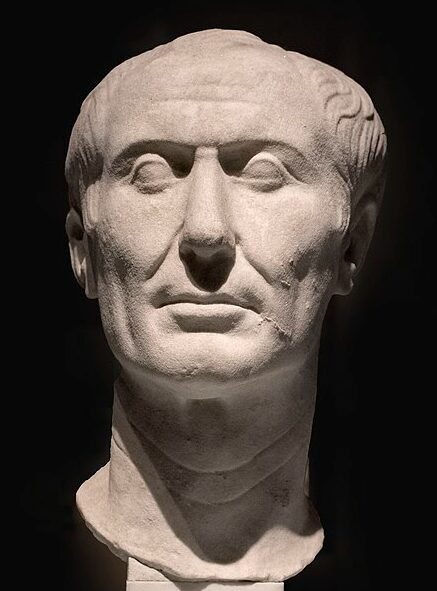
Bust of Julius Caesar
What role did Pharnaces’ family play in his reign and succession?
His Sarmatian wife bore him children who reflected his Persian and Greek heritage. His daughter Dynamis and her descendants later ruled the Bosporan Kingdom.
How did Pharnaces die?
After his defeat at Zela, he fled to reclaim the Bosporan Kingdom but was defeated and killed by his former general, Asander.
What is known about Pharnaces’ coinage?
His coins from 55–50 BC depict him and Apollo, emphasizing his title “King of Kings Pharnaces the Great.”





