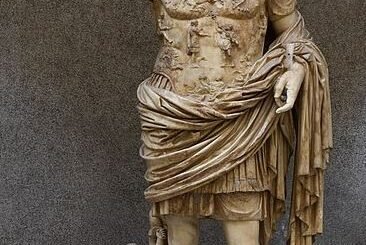
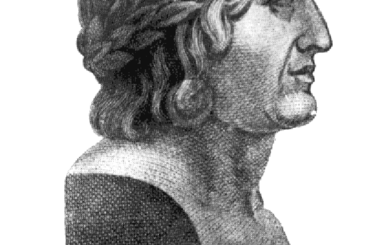
Major Accomplishments of Marcus Aurelius, the Philosopher-Emperor
Marcus Aurelius, often regarded as the philosopher-emperor, ruled the Roman Empire from 161 to 180 AD. His reign was characterized by a commitment to Stoic principles, ethical governance, military strategy, and a focus on legal and administrative reforms. As an emperor, Marcus balanced the challenges of war, plague, and political instability with a deep philosophical outlook, leaving a legacy that continues to inspire.

Marcus Aurelius (r. 161-180 AD) was the last Emperor of the Pax Romana. Image: Bust of Marcus Aurelius
Literary Contributions: Meditations
One of Marcus Aurelius’s most enduring achievements is his philosophical work, Meditations. Composed in Koinē Greek during his military campaigns, it reflects his personal commitment to Stoicism. The text serves as a guide to ethical living, focusing on themes like self-discipline, rationality, acceptance of fate, and the transient nature of life. Though intended as private reflections, Meditations has become a cornerstone of Stoic philosophy, influencing leaders and thinkers across generations.
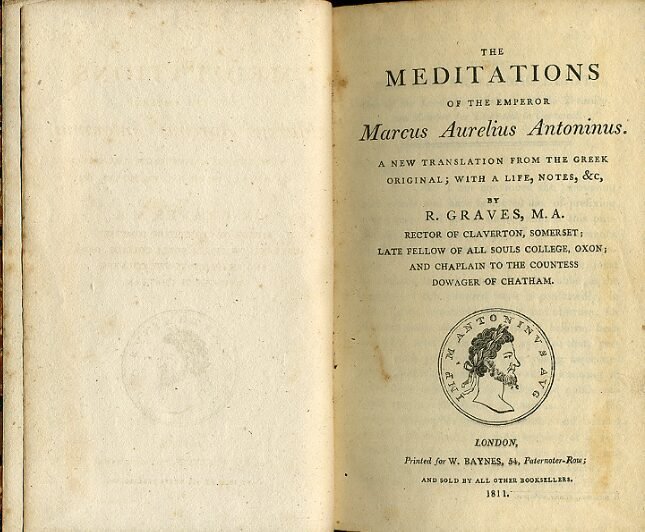
His Meditations remain a timeless testament to his philosophical mind, enduringly profoundly influencing moral thought worldwide through countless generations. Image: First page of the 1811 English translation by Richard Graves
Stoic Leadership
Marcus Aurelius epitomized the Stoic ideal of a ruler committed to duty and self-restraint. Guided by principles of justice, temperance, and rationality, he sought to govern with integrity. His emphasis on reason over emotion helped him navigate personal and political crises, demonstrating that philosophical principles could inform effective leadership.
Legal and Administrative Reforms
Marcus Aurelius made significant contributions to Roman law and administration. His legal reforms focused on protecting vulnerable groups, such as slaves, orphans, and widows, ensuring fair treatment and justice. He addressed inheritance laws, guardianship regulations, and measures against corruption. Marcus also streamlined administrative processes, working closely with the Senate to maintain stability and governance across the empire.
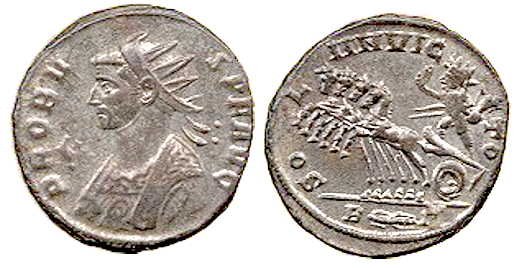
The last of the Five Good Emperors, Marcus Aurelius maintained stability, fought major wars, and reformed currency. Image: Coin of Roman Empero Marcus Aurelius Probus (reign: 276-282) depicting Sol Invictus (also known as the Unconquered Sun) riding a quadriga
The Co-Rule with Lucius Verus
A major innovation during Marcus’s reign was his decision to share power with Lucius Verus, creating a dual emperorship. This partnership was unprecedented in Roman history and demonstrated Marcus’s commitment to collaboration. While Marcus focused on administrative duties and philosophy, Lucius managed military campaigns, particularly against the Parthians. This arrangement showcased Marcus’s pragmatic approach to governance.

Busts of the co-emperors Marcus Aurelius (left) and Lucius Verus (right), British Museum
Military Campaigns and the Marcomannic Wars
The latter half of Marcus’s reign was dominated by military conflicts, especially along the Danube frontier. The Marcomannic Wars (166–180 CE) were fought against Germanic tribes like the Marcomanni and Quadi, who had invaded Roman territories. Marcus personally led several campaigns, securing key victories that stabilized the northern borders. His strategic leadership ensured the empire’s survival despite external threats.
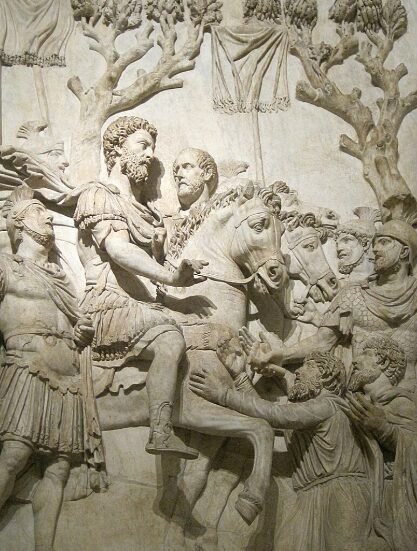
Relief from honorary monument to Roman Emperor Marcus Aurelius representing the submission of the Germans.
Response to the Parthian War
Marcus delegated the Parthian campaign (161–166 CE) to Lucius Verus. Although Marcus did not directly command these battles, his ability to manage the logistics and resources necessary for the war was instrumental. The campaign ended with a Roman victory and the reinstatement of a pro-Roman king in Armenia, securing the empire’s eastern borders.
Crisis Management: The Antonine Plague
One of the most severe challenges of Marcus’s reign was the Antonine Plague, which broke out during the Parthian War and spread throughout the empire. The pandemic caused significant population decline and economic hardship. Marcus responded with measures to stabilize the empire, such as reallocating resources, supporting the provinces, and ensuring that Rome’s grain supply remained steady.
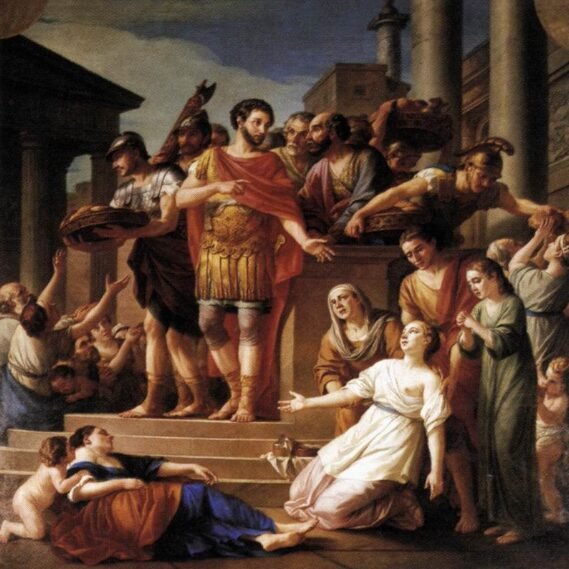
Despite hardships and the Antonine Plague, his reign embodied Rome’s golden age. Image: Marcus Aurelius distributing bread to the people. Painting by French painter Joseph-Marie Vien (1765).
Economic Adjustments
To address financial strains caused by wars and the plague, Marcus introduced monetary reforms. He adjusted the silver content of the denarius to stabilize the economy and ensure the availability of funds for military campaigns and public welfare. His economic policies reflected a pragmatic approach to balancing imperial needs with fiscal responsibility.
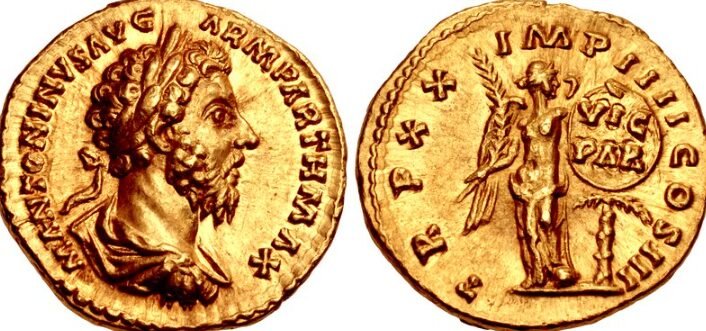
Aureus of Marcus (176–177) features trophy piles symbolizing the Marcomannic Wars’ conclusion. Inscription: M. ANTONINVS AVG. GERM. SARM. / TR. P. XXXI, IMP. VIII.
Cultural Patronage and Intellectual Engagement
Marcus Aurelius was a patron of the arts and intellectual endeavors. He supported scholars, writers, and educators, fostering a vibrant cultural environment. His correspondence with his tutor, Fronto, reveals a lifelong interest in rhetoric, philosophy, and literature. Marcus’s encouragement of intellectual pursuits helped sustain Rome’s cultural legacy during a time of political and social challenges.
Relationship with the Senate
Unlike some of his predecessors, Marcus Aurelius maintained a respectful relationship with the Roman Senate. He sought its counsel on important matters, reinforcing the institution’s role in governance. This collaboration helped to legitimize his rule and foster stability within the empire. Marcus’s respect for the Senate reflected his belief in shared governance and the importance of institutional continuity.

Marble bust of Roman Emperor Marcus Aurelius, Musée Saint-Raymond, Toulouse, France
Personal Challenges and Resilience
Throughout his life, Marcus faced numerous personal hardships, including the deaths of several children and the controversial behavior of his son and successor, Commodus. Despite these challenges, he remained steadfast in his commitment to Stoic principles. His resilience in the face of adversity became a defining feature of his character and leadership.
Succession Planning
Marcus Aurelius’s decision to appoint his biological son, Commodus, as his successor remains one of the most debated aspects of his reign. While critics argue that Commodus’s erratic rule marked a decline in imperial stability, Marcus’s choice likely stemmed from a desire to avoid civil war. His approach to succession reflected the complexities of balancing personal ties with political considerations.
Architectural and Monumental Contributions
Marcus Aurelius left behind several architectural and monumental legacies. The Column of Marcus Aurelius, erected in Rome, commemorates his military victories during the Marcomannic Wars. Adorned with detailed reliefs, it remains a testament to his leadership and the challenges of his reign. Other constructions, including temples and public works, reflected his commitment to enhancing Rome’s infrastructure.

Emperor Marcus Aurelius Triumph
Diplomatic Relations
During his reign, Marcus Aurelius maintained diplomatic relations with neighboring states, including client kingdoms and distant powers like Han China. Trade and communication between Rome and the East flourished under his administration, ensuring the empire’s continued prosperity and influence in global affairs.
Legacy as a Philosopher-King
Marcus Aurelius’s reign represents the pinnacle of the philosopher-king ideal. His integration of Stoic philosophy into governance demonstrated that ethical principles could coexist with political power. Meditations continues to inspire leaders and readers worldwide, offering timeless wisdom on the human condition and the responsibilities of leadership.

Equestrian Statue of Marcus Aurelius at the Capitoline Museums
Conclusion
Marcus Aurelius’s works and accomplishments as a philosopher-emperor left an indelible mark on history. From his Meditations and Stoic leadership to his military strategies, legal reforms, and cultural patronage, he embodied the virtues of wisdom, justice, and resilience. His reign marked the final phase of the Pax Romana, and his legacy endures as a model of principled and effective leadership.
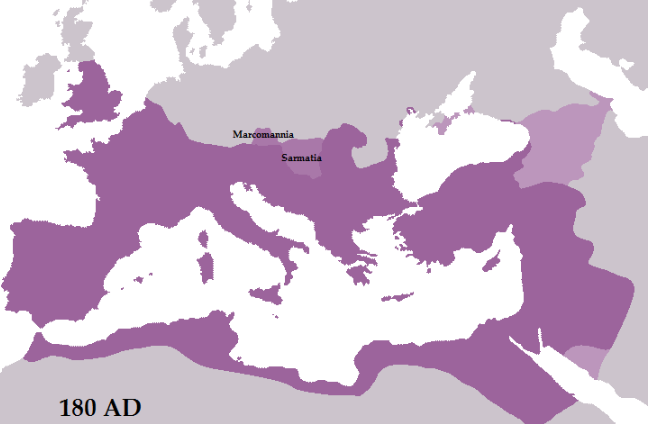
At Marcus Aurelius’s death in 180, the Roman Empire (purple) included incomplete annexations of Marcomannic and Jazyge lands, with dependencies (light pink) like Armenia and Iberia.
READ MORE: How did Emperor Augustus usher in Pax Romana?
Frequently Asked Questions

Marcus Aurelius Antoninus (121–180 AD) was a Roman Emperor (161–180) and Stoic philosopher. Image: A 2nd century Roman sculpted portrait of Marcus Aurelius, which captures the pensive temperament of the philosopher-emperor, now in the Walters Art Museum.
What are the primary sources for understanding Marcus Aurelius’s life and rule?
Key sources include the Historia Augusta, Marcus’s correspondence with his tutor Fronto, his Meditations, Cassius Dio’s histories, and additional writings by Galen and Aelius Aristides.
Why is the Historia Augusta considered unreliable?
Although its early biographies are credible, later ones, like those of Aelius Verus and Avidius Cassius, are considered dubious due to historical inaccuracies and potential biases.

A bust of young Marcus Aurelius (Capitoline Museum)
When and where was Marcus Aurelius born?
He was born on April 26, 121, in Rome.
How did Marcus Aurelius’s familial ties influence his political trajectory?
His connection to the Nerva-Antonine dynasty through his maternal grandmother and adoption by Antoninus Pius secured his path to emperorship.
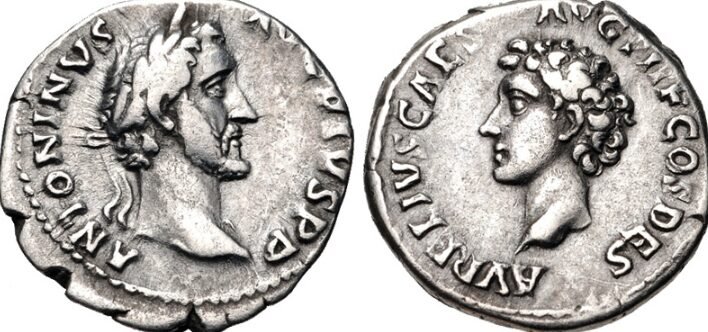
Related to Hadrian and Antoninus Pius, he studied under eminent tutors and co-ruled briefly with Lucius Verus. Image: Denarius of Antoninus Pius (AD 139) features Marcus Aurelius’s portrait on the reverse. Inscription: ANTONINVS AVG. PIVS P. P. / AVRELIVS CAES. AVG. PII F.
What major event marked Marcus Aurelius’s rise to power?
He became emperor in 161 following the death of Antoninus Pius, sharing power with Lucius Verus in an unprecedented co-rule.
What major crisis challenged the early years of his reign?
The Parthian War (161–166) and the outbreak of the Antonine Plague, which caused significant instability and population decline.
What were the Marcomannic Wars, and why were they significant?
These were conflicts with Germanic tribes along the Danube frontier (166–180). Marcus’s leadership was crucial in repelling invasions and maintaining imperial stability.
What reforms did Marcus Aurelius implement as emperor?
He addressed legal issues such as slavery and guardianship, respected Senate authority, and promoted shared governance.
What themes are central to Marcus Aurelius’s Meditations?
Key themes include Stoic principles of self-discipline, the transient nature of life, and aligning with the natural order of the universe.
What personal challenges did Marcus Aurelius face during his reign?
He endured significant family losses, with many of his 14 children dying young, and dealt with the controversial succession of his son Commodus.
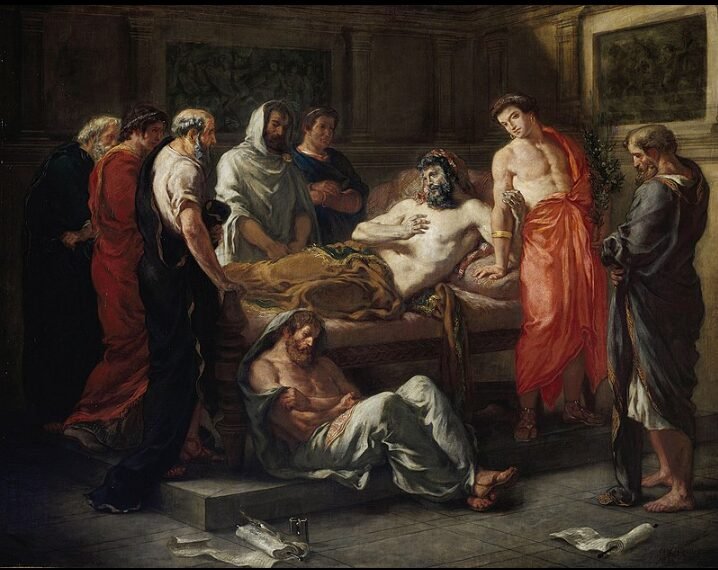
Last Words of the Emperor Marcus Aurelius (1844) by French painter Eugène Delacroix
Why is Marcus Aurelius remembered as a philosopher-king?
His commitment to Stoic ideals, ethical governance, and philosophical writings embody the ideal of a ruler guided by wisdom and virtue.
How did Marcus Aurelius’s reign impact Roman history?
His reign marked the end of the Pax Romana and left a legacy of philosophical insight that has influenced thinkers and leaders across centuries.