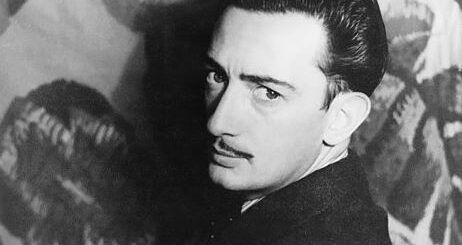
Marcel Duchamp: Life & Most Famous Works
Marcel Duchamp (28 July 1887 – 2 October 1968) is widely regarded as one of the most influential artists of the 20th century. His innovative approach to art, which challenged traditional ideas about aesthetics, perception, and the role of the artist, helped shape the modern art world. Duchamp’s work spans multiple movements, including Cubism, Dada, and conceptual art, and his influence can still be seen today in contemporary art practices.
World History Edu provides a comprehensive overview of Duchamp’s life, his major works, and his enduring legacy.

Marcel Duchamp’s intellectual approach, groundbreaking use of ready-mades, and constant questioning of what art could reshape the entire trajectory of 20th-century art. Image: The Large Glass, one of Duchamp’s most famous works.
Early Life and Influences
Marcel Duchamp was born in Blainville-Crevon, Normandy, France, into a family of artists. Two of his older brothers, Jacques Villon and Raymond Duchamp-Villon, were also accomplished artists, and his sister, Suzanne Duchamp, was a painter as well. Growing up in this environment, Duchamp was exposed to artistic thinking from an early age, fostering his interest in experimenting with creative expression.
Duchamp attended school in Rouen, excelling in mathematics and drawing. In 1904, he moved to Paris to study art at the Académie Julian, where he experimented with traditional styles such as Impressionism and Post-Impressionism. Early in his career, Duchamp painted in the style of these movements, but it was not long before he found their limitations unsatisfactory.
Early Artistic Experimentation
Between 1905 and 1910, Duchamp began experimenting with various artistic trends. His early works, like Landscape at Blainville (1907) and The Chess Game (1910), reflect the influence of Post-Impressionist artists like Paul Cézanne, whose reduction of objects into geometric forms had a significant impact on Duchamp’s approach to composition. This phase would be a stepping stone toward his later experiments in abstraction and conceptual thinking.
Cubism and the Birth of a New Vision
Around 1910, Duchamp became involved with the Cubist movement, which was gaining momentum in Paris thanks to artists like Pablo Picasso and Georges Braque. Cubism’s emphasis on deconstructing objects into geometric shapes and representing multiple perspectives at once fascinated Duchamp. However, he sought to push these ideas even further.
Nude Descending a Staircase, No. 2 (1912)
One of Duchamp’s most famous works from this period is Nude Descending a Staircase, No. 2 (1912), which brought him international recognition. In this painting, Duchamp combined the fragmentation of form typical of Cubism with the dynamism of Futurism, a movement that emphasized movement, speed, and the mechanical age. The painting depicts a figure in motion, but instead of focusing on the human form, Duchamp used a series of abstract, overlapping shapes to capture the sense of continuous movement.
The painting caused controversy at the Armory Show in New York in 1913, where it was exhibited. Many viewers found the work too abstract and difficult to understand, but it gained Duchamp widespread attention. The critical reception of Nude Descending a Staircase was a key moment in Duchamp’s career, marking him as a trailblazer of the avant-garde.
Rejection of Retinal Art
After the success of Nude Descending a Staircase, Duchamp began to question the role of visual pleasure in art. He coined the term “retinal art” to describe works intended primarily to please the eye. Duchamp rejected this idea, criticizing artists like Henri Matisse for focusing too much on aesthetic beauty without engaging the intellect.
Duchamp believed that art should provoke thought, challenge conventions, and serve the mind rather than merely entertain the eye. His desire to move beyond retinal art led him to explore new forms of expression, ultimately laying the groundwork for conceptual art.
The Birth of Dada and Ready-Mades
World War I was a time of great upheaval in Europe, and Duchamp’s work during this period reflects the disillusionment many artists felt with traditional values. Duchamp became involved with the Dada movement, an avant-garde artistic response to the war. Dada rejected the logic, reason, and aesthetic norms that had dominated art for centuries, embracing absurdity, chaos, and anti-establishment ideas.
Ready-Mades
Duchamp’s most significant contribution to Dada was the invention of the ready-made. A ready-made is an everyday object that is transformed into art simply by the artist’s selection and designation. Duchamp argued that by choosing an object and placing it in a new context, he could elevate it to the status of art, thereby challenging the traditional notions of creativity and artistic skill.
One of Duchamp’s earliest ready-mades is Bicycle Wheel (1913), which consists of a bicycle wheel mounted on a stool. By placing these ordinary objects together, Duchamp forced viewers to rethink their assumptions about what constitutes art. The ready-made concept reached its zenith with the infamous Fountain (1917), a porcelain urinal signed “R. Mutt.” Duchamp submitted this work to the Society of Independent Artists exhibition, but it was rejected, sparking a debate about the nature of art.
Fountain is now considered one of the most important works of 20th-century art. It questioned whether an object’s status as art depended on the artist’s intent or the object’s inherent qualities. Duchamp’s ready-mades blurred the line between art and life, forcing audiences to reconsider their preconceived notions of art.
Conceptual Art and Intellectual Approach
Duchamp’s rejection of retinal art and his invention of the ready-made led to his pivotal role in the development of conceptual art. Conceptual art emphasizes the idea behind a work rather than its physical execution. Duchamp’s works are not about craftsmanship or beauty but about intellectual engagement. He believed that the concept or thought behind a piece could be more important than the finished object itself.
The Large Glass (1915–1923)
One of Duchamp’s most famous conceptual works is The Bride Stripped Bare by Her Bachelors, Even, also known as The Large Glass (1915–1923). This monumental work, made of glass, metal, foil, and wire, is a complex piece that blends mechanical imagery, sexual symbolism, and Duchamp’s characteristic wit. The work was left unfinished, but Duchamp considered it “definitively incomplete.”
The Large Glass depicts a “bride” at the top and her nine “bachelors” below, separated by glass. The interaction between the figures is not physical but mechanical and abstract, exploring themes of desire, frustration, and the unattainability of fulfillment. The work has been interpreted as a metaphor for human relationships and the impossibility of achieving complete unity.
The Large Glass became a symbol of Duchamp’s break from traditional art forms, as it required viewers to engage with the work intellectually, puzzling over its meaning rather than simply enjoying its visual qualities. It is one of the earliest examples of conceptual art and remains one of Duchamp’s most analyzed works.
Chess, Later Life, and Artistic Withdrawal
In the 1920s, Duchamp made the surprising decision to withdraw from the art world to focus on chess, a game he had loved since childhood. He became a highly skilled chess player, competing in international tournaments and writing about the game. For many years, Duchamp was largely absent from the art scene, leading many to believe that he had abandoned art entirely.
However, Duchamp’s withdrawal was not complete. While he stopped producing conventional works, he continued to influence artists through his ideas and occasional projects. Duchamp played a behind-the-scenes role in the rise of Surrealism, helping to organize exhibitions and corresponding with artists like Man Ray and Salvador Dalí.
Étant Donnés (1946–1966)
Despite his claims of having abandoned art, Duchamp was secretly working on one final major piece, Étant Donnés: 1° la chute d’eau / 2° le gaz d’éclairage (1946–1966). This enigmatic work, which Duchamp constructed over the course of 20 years, was revealed only after his death in 1968.
Étant Donnés is an immersive installation featuring a wooden door with two peepholes. When viewers look through the peepholes, they see a tableau depicting a nude female figure lying on her back in a landscape, with a gas lamp and waterfall in the background. The work is mysterious, blending themes of voyeurism, eroticism, and hidden meanings.
Unlike his earlier ready-mades, Étant Donnés required years of meticulous craftsmanship, suggesting that Duchamp had not fully abandoned traditional artistic practices. However, the work’s conceptual complexity and interactive nature solidified Duchamp’s reputation as an artist who continually defied expectations and challenged the boundaries of art.

Major Works
Marcel Duchamp produced many works that challenged the conventions of art and laid the foundation for conceptualism. Below are some of his most notable creations:
Nude Descending a Staircase, No. 2 (1912)
A Cubist-Futurist work that gained Duchamp international recognition, Nude Descending a Staircase is a depiction of movement, breaking the human figure into abstract shapes and lines. Its radical departure from traditional figure painting shocked audiences and marked Duchamp’s break with conventional aesthetics.

Image: Nude Descending a Staircase, No. 2
Bicycle Wheel (1913)
One of Duchamp’s earliest ready-mades, Bicycle Wheel consists of an ordinary bicycle wheel mounted upside-down on a wooden stool. Duchamp intended the piece to be an experiment in non-art, a challenge to traditional notions of sculpture and artistic value.
Fountain (1917)
Fountain is perhaps Duchamp’s most famous and controversial ready-made. The porcelain urinal signed “R. Mutt” was rejected by the Society of Independent Artists, but it became a landmark work in art history, challenging the boundaries of what can be considered art.
The Large Glass (1915–1923)
Also known as The Bride Stripped Bare by Her Bachelors, Even, this work is a conceptual masterpiece that blends mechanical imagery, sexual tension, and abstract symbolism. Its unfinished nature and intellectual complexity have made it one of the most analyzed works of modern art.
L.H.O.O.Q. (1919)
In L.H.O.O.Q., Duchamp defaced a postcard reproduction of Leonardo da Vinci’s Mona Lisa by drawing a mustache and goatee on the figure and adding the title, which is a pun in French. The piece mocks traditional reverence for art and questions the cult of the masterpiece.
Étant Donnés (1946–1966)
Duchamp’s final major work, Étant Donnés is an immersive installation that invites viewers to peer through a door and witness a strange and eerie scene. The work combines eroticism and mystery, leaving its meaning open to interpretation.
Legacy
Marcel Duchamp’s influence on 20th- and 21st-century art cannot be overstated. His rejection of retinal art, his invention of the ready-made, and his embrace of conceptual thinking challenged traditional assumptions about the nature and purpose of art. Duchamp’s work has had a profound impact on numerous movements, including Dada, Surrealism, Minimalism, Pop Art, and conceptual art.
Artists like Andy Warhol, Jasper Johns, Robert Rauschenberg, and Joseph Beuys drew inspiration from Duchamp’s ideas about art and its relationship to everyday life. Duchamp’s ready-mades laid the groundwork for later art movements that questioned the boundaries between art and commercial products, as seen in Warhol’s Campbell’s Soup Cans or the rise of installation art.
Duchamp also influenced the development of performance art, with artists like Yoko Ono and Marina Abramović building on his idea that the concept behind a work can be more important than the physical object itself.
Moreover, Duchamp’s challenge to the role of the artist as a creator of objects has opened the door for later artists to explore more abstract and conceptual approaches to their work, furthering the evolution of the art world beyond traditional materials and forms.

By moving beyond aesthetic pleasure and toward intellectual engagement, Duchamp paved the way for conceptual art, installation art, and countless other forms of creative expression that continue to thrive today. Image: 5-way portrait of Duchamp.
Questions and Answers: Marcel Duchamp
Alongside Pablo Picasso and Henri Matisse, Duchamp is considered one of the key figures who redefined the art world in the early 20th century. His work had a significant impact on both painting and sculpture, as well as on the development of conceptual art.

Image: Marcel Duchamp during the early 1920s.
Below are some frequently asked questions about the French artist:
How did Duchamp’s early work reflect the influence of Cubism?
Duchamp’s early work, influenced by Cubism, experimented with breaking down objects into geometric shapes and presenting them from multiple perspectives. His famous painting Nude Descending a Staircase, No. 2 (1912) reflects these Cubist principles while adding a dynamic sense of movement, which distinguished his work from traditional Cubism.
What is “retinal art,” and why did Duchamp reject it?
“Retinal art” refers to art that is purely visual and intended to please the eye. Duchamp rejected retinal art, critiquing artists like Henri Matisse for focusing on aesthetic beauty without deeper intellectual meaning. He sought to create art that was conceptually thought-provoking, moving from visual to intellectual expression.
What was Duchamp’s role in the Dada movement?
He was a key figure in the Dada movement, an avant-garde artistic response to the horrors of World War I. Dada rejected traditional artistic values and embraced absurdity and anti-establishment ideas. Duchamp’s most significant contribution to Dada was his invention of the “ready-made”—everyday objects designated as art simply by being selected and presented in a new context.
What is Duchamp’s most famous ready-made, and why is it important?
His most famous ready-made is Fountain (1917), a urinal signed “R. Mutt.” This piece challenged traditional definitions of art, questioning whether the status of an object as art depended on the artist’s intent or the object’s inherent qualities. Fountain forced audiences to reconsider their preconceived notions of art and is considered one of the most influential works in modern art.
How did Duchamp influence the development of conceptual art?
His belief that art should serve the mind rather than merely the eye made him a foundational figure in the development of conceptual art. His focus on the intellectual concept behind an artwork, rather than its physical form, influenced movements such as Surrealism, Minimalism, Pop Art, and contemporary conceptual art.
What was the significance of Duchamp’s rejection of traditional aesthetics?
His rejection of traditional aesthetics reshaped the trajectory of modern art by challenging norms about what art could be. His ready-made designs, rejection of retinal art, and conceptual approach to art inspired artists to think beyond traditional mediums and forms, paving the way for new movements in the 20th and 21st centuries.