What is the Atrahasis epic about?
The Atrahasis Epic is one of the most significant and ancient Mesopotamian texts, believed to have been written around 1700 BCE. The epic tells the story of the creation of humankind, a great flood, and the subsequent relationship between gods and humans. The text, written in Akkadian, explores themes of human suffering, divine justice, and the interaction between gods and mortals. The tale also includes a narrative of a great flood, which bears striking parallels to the biblical story of Noah’s Ark.
In this discussion, World History Edu explores the Atrahasis Epic in detail, focusing on the great flood and its implications, particularly the role of suffering as it is portrayed in the narrative.
Background: The Structure and Characters of the Atrahasis Epic
The epic is divided into three main parts, corresponding to the stages of interaction between the gods and humans. It begins with the creation of humanity, then transitions to the growing tension between gods and humans due to overpopulation, and culminates in a catastrophic flood designed to reduce the human population.

Gods of Ancient Mesopotamia
The Gods in the Atrahasis Epic
The Atrahasis Epic features a pantheon of gods, each with a specific role in the creation and governance of the world. The most important deities include:
- Enlil, the god of wind and earth, who becomes increasingly frustrated with humanity.
- Enki (or Ea), the god of wisdom and water, who plays a key role in ensuring the survival of humanity.
- Belet-ili (or Ninhursag), the goddess of birth, who assists in the creation of humans.
READ MORE: Most Famous Deities from Ancient Mesopotamia
The Creation of Humanity
The story begins with the gods in distress. They are weary from the burdens of maintaining the cosmos, particularly from digging canals and performing agricultural labor. To ease their suffering, Enki proposes the creation of humans to take over the gods’ menial tasks. Humans are created from clay mixed with the flesh and blood of a slain god, imbued with the divine spark, yet bound to suffer and toil on behalf of the gods.
This initial act of creation already establishes a fundamental tension in the epic: humans exist to alleviate divine suffering, but in doing so, they are destined to experience hardship. This introduces the theme of suffering as an intrinsic part of the human condition.
The Growth of Human Population and Divine Frustration
As time passes, humanity grows in number. While humans were initially created to serve the gods by working and providing offerings, their ever-increasing numbers lead to new problems. Human overpopulation becomes a source of irritation for the gods, especially Enlil, who complains about the constant noise and clamor made by humans. This noise disrupts the gods’ peace, and they become angry with the humans.
Divine Attempts to Control Humanity
The gods attempt to control the human population by sending a series of calamities. First, they send plagues, then droughts, and finally famine, each designed to reduce the number of people. However, each time, Enki intervenes and teaches humans how to survive. For example, during the famine, he instructs humans on how to cultivate new sources of food. Enki’s repeated intercession reveals a complex relationship between the gods: while Enlil is punitive and seeks to reduce the human population, Enki is more compassionate and protective of humanity.
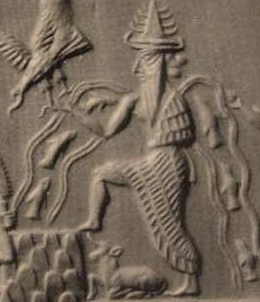
Image: A depiction of Enki on an ancient Akkadian cylinder seal.
The Great Flood: A Turning Point
Unable to control the human population through other means, the gods decide to send a massive flood to wipe out humanity. Enlil, in particular, is determined to silence the humans once and for all. However, Enki, who has consistently acted as a protector of humanity, secretly warns Atrahasis (the epic’s human hero) of the impending disaster.
The Survival of Atrahasis
Enki instructs Atrahasis to build a boat and take with him his family, animals, and supplies. When the flood comes, it devastates the earth, drowning all of humanity except for those aboard the boat. Atrahasis and his companions survive, floating on the waters until the flood subsides. This portion of the epic bears remarkable similarities to later flood myths, including the biblical account of Noah.
Divine Regret and Reconciliation
After the flood, the gods come to regret their decision. The destruction of humanity means that there are no more humans to offer sacrifices, which leaves the gods without sustenance. The gods’ regret highlights their dependence on humanity, a critical theme in Mesopotamian religious thought: the gods need human beings to maintain the cosmos through their labor and worship.
To prevent future disasters, the gods, led by Enki, devise a new plan for controlling the human population. Rather than attempting to destroy humanity entirely, they introduce mortality, disease, and infant mortality as natural checks on population growth. Thus, suffering, in the form of death and illness, is institutionalized as a permanent feature of human existence.
The Meaning of Suffering in the Atrahasis Epic
The Atrahasis Epic addresses the problem of human suffering in a variety of ways. While the suffering experienced by humans is largely the result of divine actions, it also reflects the inherent fragility of human life. The flood is a direct punishment, but suffering more broadly becomes an inescapable part of the human condition. Several key themes regarding suffering emerge from the text.
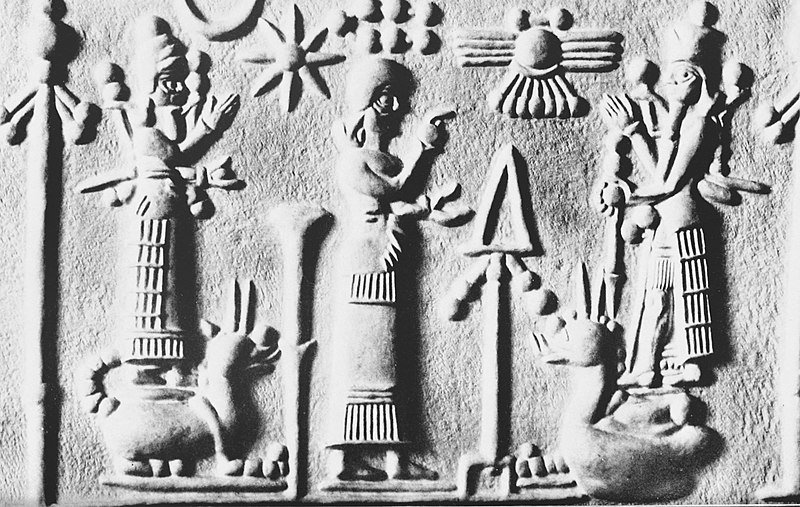
Image: Mesopotamian gods.
Divine Control and Human Fragility
One of the most significant aspects of the epic is the way in which human suffering is portrayed as a product of divine will. Humans were created to serve the gods, and their suffering is partly a result of their role in this cosmic order. When humans become too numerous, they disturb the gods, who punish them through suffering.
However, the gods themselves are not immune to suffering or regret. They feel remorse after the flood, when they realize that they have destroyed the beings on whom they depend. This divine vulnerability creates a complex dynamic: while the gods are powerful, they are also fallible, and human suffering arises from this interaction between the divine and mortal realms.
Suffering as a Means of Population Control
The epic provides a rationale for why suffering exists. It suggests that mortality, disease, and natural disasters are necessary to control the human population. In this sense, suffering becomes a practical solution to a problem. The gods, unable to bear the noise and clamor of an ever-growing human race, must limit humanity in some way. Instead of relying on catastrophic floods, they introduce more subtle forms of suffering that keep the population in check.
The Role of the Hero and Divine Compassion
Despite the widespread suffering, the epic also highlights the possibility of divine compassion. Enki, in particular, plays a critical role in saving humanity from total destruction. His repeated interventions, especially his warning to Atrahasis, show that while suffering is a part of life, it is not without hope. The gods, or at least some of them, are capable of mercy and care for humanity. Atrahasis, as the hero of the story, represents the potential for human survival and perseverance even in the face of divine wrath.
Broader Implications of the Atrahasis Epic
The themes of the Atrahasis Epic resonate with many of the core concerns of ancient Mesopotamian society, particularly the relationship between humans and the gods. The Mesopotamians believed that the gods were deeply involved in human affairs, and that suffering was often the result of divine will. At the same time, the gods were not seen as omnipotent or omnibenevolent. They could be capricious and could make mistakes, as evidenced by their regret after the flood.
The Mesopotamian View of the Divine
The portrayal of the gods in the Atrahasis Epic reflects a broader Mesopotamian belief in the complexity of divine beings. The gods were not distant or abstract, but actively involved in the world. However, their actions were not always just or kind. Humans could suffer as a result of divine decisions, and the reasons for this suffering were not always clear.
At the same time, the gods were not entirely indifferent to human suffering. Enki’s interventions suggest that the gods could be protective and caring, even if they could also be destructive. This tension between divine care and divine wrath is a central theme in Mesopotamian religion.
READ MORE: What was daily life like in ancient Mesopotamia?
The Legacy of the Flood Narrative
The story of the flood in the Atrahasis Epic has had a profound influence on later traditions. The most obvious example is the biblical story of Noah, which shares many similarities with the Mesopotamian tale. Both stories involve a divine decision to destroy humanity through a flood, the survival of a single hero, and the eventual reconciliation between the divine and mortal realms.
The flood narrative also reflects a broader human concern with the problem of suffering and divine justice. Why do humans suffer? What is the role of the gods in human suffering? These questions, raised in the Atrahasis Epic, continue to resonate in later religious and philosophical traditions.
Conclusion
The Atrahasis Epic is a powerful exploration of the relationship between gods and humans, and the role of suffering in the human experience. Through the story of creation, the flood, and its aftermath, the epic presents a complex view of the divine, one in which the gods are both powerful and fallible, protective and destructive. Human suffering, while often a result of divine will, is also portrayed
Frequently asked questions
The Atrahasis is an Akkadian/Babylonian epic that tells the story of a great flood sent by the gods to destroy humanity. The protagonist, Atrahasis, is warned by the god Enki about the impending flood and is instructed to build an ark to save himself and two of every kind of animal, ensuring the survival of life on earth.
When was the Atrahasis epic written, and what is its origin?
The Atrahasis was written in the mid-17th century BCE during the reign of Babylonian King Ammi-Saduqa (1646-1626 BCE). However, it is based on much older oral traditions. A similar version of the flood story, the Sumerian Flood Story (or Eridu Genesis), dates back to around 2300 BCE.
READ MORE: Greatest Ancient Mesopotamian Kings
What other ancient texts contain similar flood stories?
The flood narrative appears in Tablet XI of the Epic of Gilgamesh (written between 2150-1400 BCE) and in the biblical Book of Genesis (Noah’s Ark). These stories share common elements with the Atrahasis and the Sumerian Flood Story, and they were likely inspired by similar flood events in Mesopotamia.
What likely inspired these ancient flood stories?
Scholars believe that these flood stories were inspired by local flooding events, particularly those caused by the overflowing of the Tigris and Euphrates rivers. It is speculated that a significant flood around 2800 BCE might have served as the basis for these stories.
What do modern scholars say about the idea of a global flood in the Atrahasis?
Most modern scholars dismiss the idea of a global flood as depicted in the Atrahasis. Archaeological evidence does not support the occurrence of a worldwide flood. For example, scholar Stephanie Dalley points out that no significant flood deposits have been found from the third millennium BCE, debunking earlier theories, such as those by Archbishop Ussher.
How are humans created in the Atrahasis?
In the Atrahasis, humans are created by the goddess Nintu using the blood, flesh, and intelligence of a sacrificed god, We-Ilu, combined with clay. This act is performed after the younger gods rebel against the elder gods, who were overburdened with labor.
Why do the gods decide to send a flood to destroy humanity?
The gods initially enjoy the labor provided by humans, but over time, humans multiply and become too noisy, disturbing the gods’ peace. Enlil, the king of the gods, grows frustrated and sends several calamities to reduce the population. When these efforts fail, Enlil decides to send a great flood to annihilate humanity.

Image: A statue depicting the god Enlil.
How does Atrahasis survive the flood?
Atrahasis survives the flood because the god Enki, who pities him, warns him about the impending disaster. Enki instructs Atrahasis to build an ark and seal two of every kind of animal inside. Atrahasis follows these instructions, and the ark protects him from the devastating flood.
How do the gods react after the floodwaters subside?
After the floodwaters subside, the gods, including Nintu, mourn the destruction of humanity. They regret their actions, and Enlil becomes furious with Enki for allowing Atrahasis to survive. However, the gods eventually accept Atrahasis’ sacrifice and agree on a new solution to prevent overpopulation.
What solution do the gods propose after the flood to control human population?
After the flood, Enki proposes that, instead of sending another flood, the gods should create limitations on human reproduction. These include infertility, miscarriages, and infant mortality, to control the human population without resorting to such drastic measures again.
What are some other versions of the flood story?
In the Epic of Gilgamesh, the hero is named Utnapishtim, who is also saved by the gods and lives in paradise. The Sumerian version features Ziusudra as the hero. The biblical story of Noah’s Ark from the Book of Genesis also parallels these ancient tales, where God sends a flood to punish humanity but spares Noah and his family.
What is the underlying message of the Atrahasis epic?
The Atrahasis epic explains human suffering, mortality, and the hardships of childbirth as necessary to maintain balance and keep the gods at peace. The story conveys a message of hope and survival, showing that suffering has a purpose in the greater order of the cosmos, similar to the biblical story of Noah’s Ark.
Reasons why Mesopotamia is often called the “Cradle of Civilization”





