Who was Marco Polo and how did his adventures inspire European exploration and interest in Asia?
Marco Polo (c. 1254 – 8 January 1324) was a Venetian merchant, explorer, and writer whose name is synonymous with adventure and exploration. His extensive travels through Asia between 1271 and 1295, chronicled in “The Travels of Marco Polo,” offered Europeans their first comprehensive look into the cultures, geography, and inner workings of various Asian societies. His accounts, particularly of the Mongol Empire and China under the Yuan dynasty, played a pivotal role in inspiring European exploration and igniting interest in Asia.
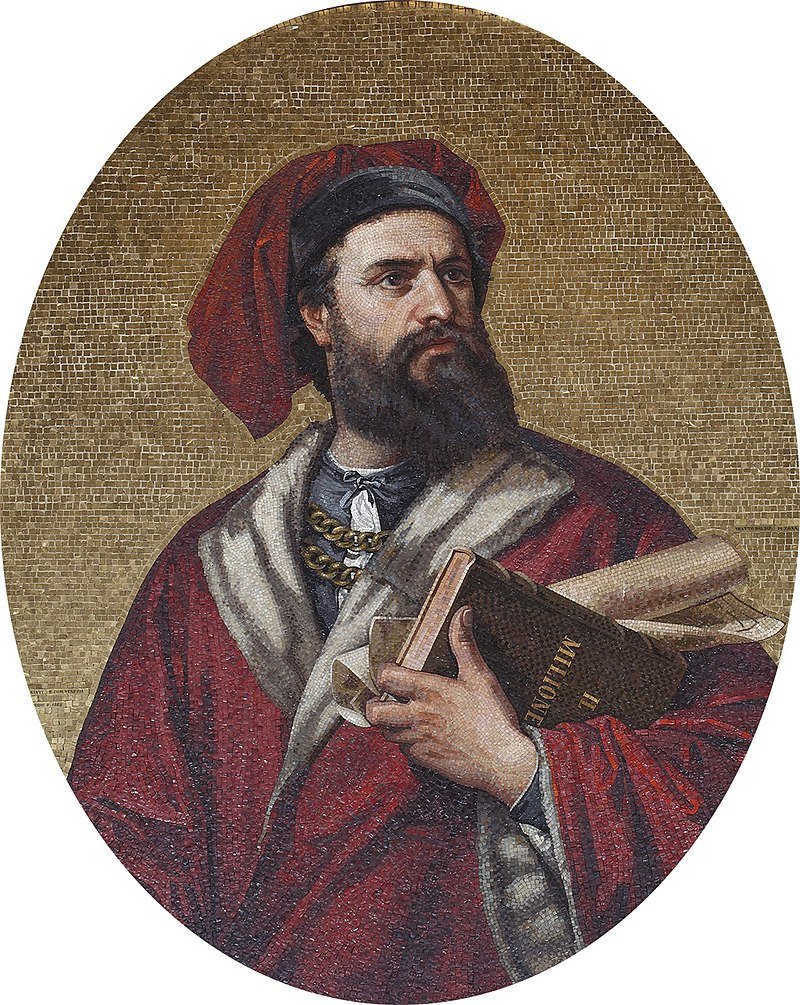
Marco Polo, the most famous Western Silk Road traveler, began his journey to China in 1271. Image: Mosaic of Marco Polo displayed in the Palazzo Doria-Tursi, Genoa, Italy
In the article below, World History Edu provides a detailed look at Marco Polo’s life, his journeys, and the profound impact his travels had on European exploration and perceptions of the East.
Early Life and Background
Marco Polo was born in Venice around 1254, into a family of merchants with extensive experience in trade and travel. His father, Niccolò Polo, and his uncle, Maffeo Polo, were seasoned traders who had previously embarked on a journey through Asia, reaching the court of Kublai Khan, the Mongol ruler. Their interactions with Kublai Khan laid the groundwork for future travels. In 1269, they returned to Venice, where they met Marco for the first time.
The Epic Journey Begins
In 1271, Marco Polo, then about 17 years old, joined his father and uncle on an ambitious journey back to Asia. They traveled along the Silk Road, a network of trade routes connecting Europe and Asia. This journey would ultimately take them to “Cathay,” known today as China. The Silk Road was fraught with peril, including harsh climates, treacherous terrains, and the threat of bandits, yet it was also a conduit for cultural and economic exchange.
Encounters with Kublai Khan
Upon reaching the court of Kublai Khan, the Polos were received with great honor. Kublai Khan, the grandson of Genghis Khan, ruled over the vast Mongol Empire, which at the time extended from Eastern Europe across Asia. Kublai was intrigued by the Polos, particularly by young Marco, whose intelligence and humility impressed him. He appointed Marco as a foreign emissary, a role that enabled him to travel extensively throughout the empire and beyond.
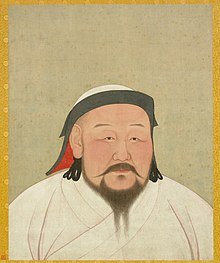
The initial purpose of Marco Polo’s journey, which he undertook with his father and uncle, was to reach the court of Kublai Khan, the Mongol ruler of China. They were tasked with delivering letters from the Pope and served as envoys. Later, Marco Polo’s role evolved into that of a special envoy for Kublai Khan, which allowed him to travel and see more of Asia. Image: Kublai Khan, founder of the Yuan dynasty
Diplomatic Missions and Discoveries
As Kublai Khan’s emissary, Marco Polo undertook numerous diplomatic missions. He traveled to regions that included present-day Burma (Myanmar), India, Indonesia, Sri Lanka, and Vietnam. These missions provided Marco with unique insights into diverse cultures, economies, and political systems. His travels were not confined to diplomatic endeavors; he also engaged in trade, gathering valuable knowledge about local products and commerce.
Marco Polo’s time in China was particularly significant. He spent 17 years in the emperor’s lands, during which he traveled extensively within China, observing and documenting its cities, infrastructure, and innovations. His accounts were filled with descriptions of the grandeur of the Yuan dynasty, the efficiency of its administration, and the sophistication of its cities. He provided detailed descriptions of Beijing, the capital, noting its palaces, marketplaces, and technological advancements.
The Return Journey and Imprisonment
Around 1291, the Polos undertook a significant mission to escort the Mongol princess Kököchin to Persia. This journey, which concluded around 1293, took them through various regions and eventually back to Venice. Upon their return, they found Venice embroiled in a conflict with Genoa. Marco Polo joined the war effort on behalf of Venice, but he was captured by the Genoans and imprisoned.
The Travels of Marco Polo
During his imprisonment, Marco Polo dictated the stories of his travels to his cellmate, Rustichello da Pisa, a romance writer. These stories were later compiled into “The Travels of Marco Polo,” also known as “Book of the Marvels of the World” or “Il Milione.” This book, written around 1300, became one of the most important travel documents of its time. It offered Europeans an unprecedented look into the wealth, size, and splendor of Eastern realms, including detailed accounts of regions such as China, Persia, India, and Japan.

Impact on European Knowledge and Exploration
Marco Polo’s accounts provided Europeans with a vivid and accurate depiction of the East’s geography, culture, and customs. His writings introduced Europe to various Asian technologies and products, such as porcelain, gunpowder, paper money, and exotic plants and animals. These detailed observations significantly influenced European knowledge and perceptions of Asia.
One of the most profound impacts of Marco Polo’s writings was their influence on future explorers. His detailed descriptions of the wealth and splendor of the East inspired many, including Christopher Columbus. Columbus carried a copy of “The Travels of Marco Polo” during his voyages, hoping to find a direct route to the rich lands described by Marco. Polo’s accounts fueled European imaginations and ambitions, contributing to the Age of Discovery, a period marked by extensive exploration and expansion by European powers.
Contribution to Cartography
Marco Polo’s detailed descriptions also significantly contributed to European cartography. His accounts helped in the creation of more accurate maps, such as the Catalan Atlas and the Fra Mauro map. These maps incorporated information from Polo’s travels, providing detailed representations of regions that were previously unknown or poorly understood by Europeans. This enhanced understanding of world geography facilitated further exploration and trade.
Cultural and Technological Insights
Marco Polo’s observations extended beyond geography and commerce. He provided detailed accounts of the social and cultural practices of the regions he visited. For instance, he described the court ceremonies of Kublai Khan, the administrative efficiency of the Yuan dynasty, and the diverse customs and traditions of the people he encountered.
His writings included the first Western records of many Asian technologies and innovations, such as the use of coal as a fuel source, the manufacture of silk, and the operation of postal systems.
Skepticism and Verification
Despite the richness of his accounts, Marco Polo faced skepticism from some of his contemporaries and later historians. Some questioned the veracity of his stories, doubting whether he had truly visited all the places he described.
However, many of his observations have been corroborated by subsequent research and historical evidence. For instance, his detailed descriptions of Chinese cities and technologies align with archaeological findings and Chinese historical records.
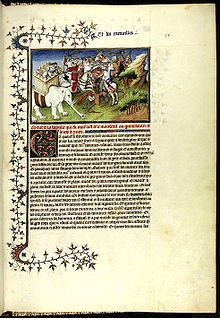
Marco Polo’s book, “The Travels of Marco Polo,” offered detailed descriptions of the wealth, size, and splendor of the Mongol Empire and China under the Yuan dynasty. Image: A page of The Travels of Marco Polo
Did you know…?
- Marco Polo did not “discover” new lands in the way that Christopher Columbus or Vasco da Gama did, but he provided Europe with its first comprehensive look at Asian lands and cultures. His accounts helped to inspire further exploration and interest in the East. He described various aspects of Asian culture, economy, and politics that were previously unknown in Europe.
- One of the first missions Marco Polo undertook with his father and uncle under Kublai Khan’s request was to acquire holy oil from the Church of the Holy Sepulchre in Jerusalem.
- Some significant omissions in Marco Polo’s accounts that have led to historical skepticism are the Great Wall of China, tea, chopsticks, and foot-binding.
Who were the 10 Most Influential Explorers of the Age of Discovery?
Legacy and Continuing Influence
Marco Polo’s legacy endures as a symbol of exploration and cultural exchange. His travels opened up a new world of understanding for Europeans, bridging the gap between East and West. His detailed accounts not only provided valuable information about the diverse cultures and geography of Asia but also served as a catalyst for future exploration and the eventual Age of Discovery.

Marco Polo’s detailed descriptions inspired future explorers, such as Christopher Columbus, and contributed to European cartography, facilitating further exploration and trade.
Frequently Asked Questions
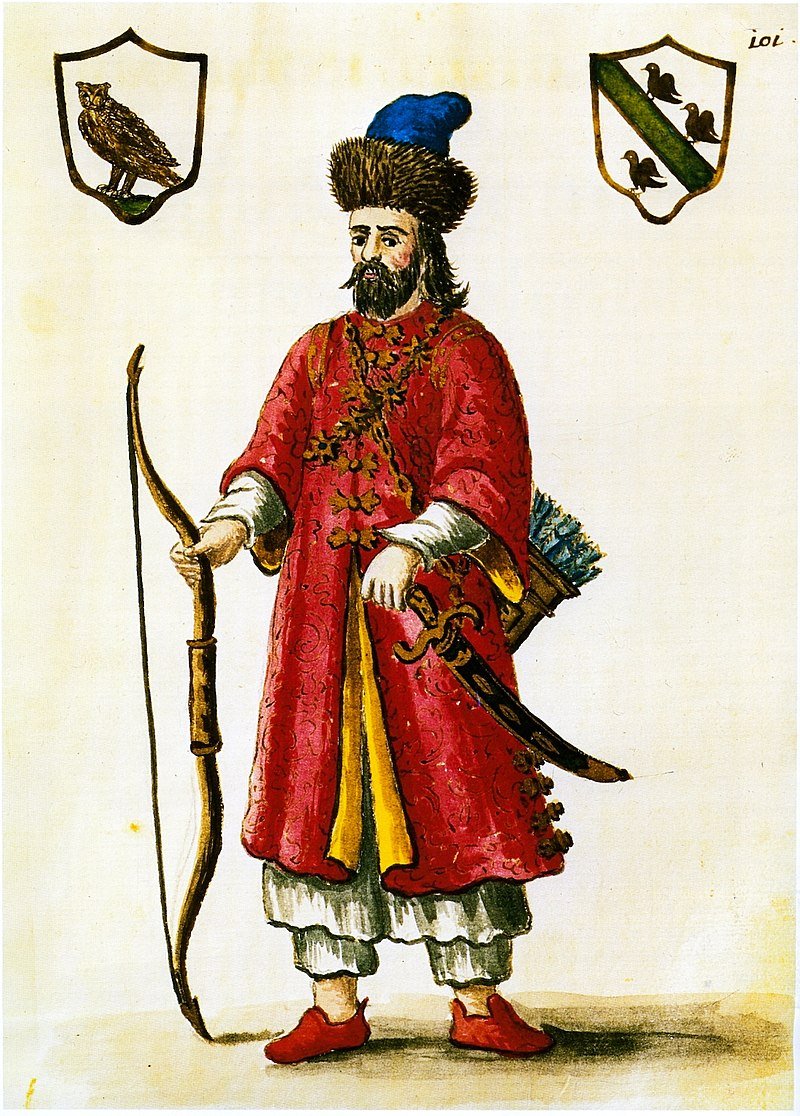
Despite facing skepticism, many of Marco Polo’s observations have been corroborated by historical evidence, solidifying his legacy as a pioneering explorer and chronicler of the East. Image: Polo wearing a Tartar outfit, print from the 18th century
Here are some frequently asked questions about Marco Polo, the Italian explorer:
Who was Marco Polo and what is he best known for?
Marco Polo was a Venetian merchant, explorer, and writer known for his extensive travels through Asia between 1271 and 1295. His travels are chronicled in “The Travels of Marco Polo,” a seminal work that offered Europeans their first comprehensive look into the cultures and inner workings of various Asian societies, particularly the Mongol Empire and China under the Yuan dynasty.
What significant contribution did Marco Polo’s book “The Travels of Marco Polo” make to European knowledge?
Marco Polo’s book provided Europeans with detailed accounts of the wealth, size, and splendor of Eastern realms, including China, Persia, India, and Japan. It depicted the geography, customs, and technologies of the East, introducing Europeans to porcelain, gunpowder, paper money, and various Asian plants and exotic animals.
Why didn’t the Great Mongol Emperor Genghis Khan invade India?
How did Marco Polo’s family influence his career?
Marco Polo was introduced to the mercantile trade by his father, Niccolò, and his uncle, Maffeo, who had extensive experience traveling through Asia and had previously met Kublai Khan. They involved Marco in their mercantile journeys, including their epic journey back to Asia along the Silk Road in 1271.

Marco Polo was a Venetian merchant, explorer, and writer whose extensive travels through Asia between 1271 and 1295 provided Europeans with their first comprehensive look into various Asian societies. Image: Detail of the Catalan Atlas depicting Marco Polo travelling to the East during the Pax Mongolica
What role did Kublai Khan play in Marco Polo’s travels?
Kublai Khan, the Mongol ruler, was impressed by Marco Polo’s intelligence and humility and appointed him as a foreign emissary. This role enabled Marco to undertake numerous diplomatic missions throughout the Mongol Empire and Southeast Asia, and to travel extensively within China.
What happened to Marco Polo after he returned to Venice?
Upon returning to Venice, which was at war with Genoa, Marco Polo joined the war effort on behalf of Venice. He was captured by the Genoans and imprisoned. While in prison, he dictated the stories of his travels to his cellmate, Rustichello da Pisa. After his release in 1299, Marco Polo returned to Venice, became a wealthy merchant, married, and had three children.
What was the impact of Marco Polo’s writings on future exploration and cartography?
Marco Polo’s detailed descriptions of the East inspired many future explorers, including Christopher Columbus, and fueled European imaginations about the wealth and splendor of the East. His writings also significantly contributed to European cartography, aiding in the creation of accurate and detailed maps such as the Catalan Atlas and the Fra Mauro map.
How did Marco Polo’s accounts influence European perceptions of Asia?

One significant mission Marco Polo undertook was escorting the Mongol princess Kököchin to Persia around 1291. This journey concluded around 1293, after which the Polos traveled overland to Constantinople and eventually returned to Venice. Image: 16th-century portrait of Marco Polo
Marco Polo’s accounts provided Europeans with vivid and accurate depictions of Asian geography and customs, greatly enhancing their knowledge and perceptions of the region. His detailed observations of Asian technologies and products introduced Europeans to many new concepts and items, significantly impacting European knowledge and trade.
When and where did Marco Polo die, and how is his legacy remembered?
Marco Polo died in 1324 and was buried in the church of San Lorenzo in Venice. His legacy is remembered for the profound impact he had on bridging the gap between the East and the West, opening up a new world of understanding for Europeans, and serving as a catalyst for future exploration and the Age of Discovery.
How accurate are Marco Polo’s accounts?
The accuracy of Marco Polo’s accounts has been a subject of debate among historians. Some details have been verified by modern research and archaeological discoveries, while others have been considered exaggerations or misinterpretations. Nonetheless, his descriptions have been invaluable in providing insights into 13th-century Asia.
Why is the game called Marco Polo?
Marco Polo is a popular form of tag played in a swimming pool. One player, known as “Marco,” closes their eyes and tries to find the other players by calling out “Marco!” The other players must respond with “Polo,” and Marco uses the sound of their voices to locate and tag them.
The game is named after the famous Italian explorer Marco Polo, though the connection between the game and the historical figure is not clear. The name may have been chosen simply because it is catchy and easy to remember.
Some accounts maintain that the game “Marco Polo” may have originated with sailors passing time on ships. The most popular explanation connects the game to Marco Polo’s supposed cluelessness, similar to a blind man. One story suggests Marco Polo became lost in the Chinese desert, hallucinating voices calling his name, to which he responded, “Polo.”
Another tale involves Kublai Khan preventing the Polo and his family from leaving China until they joined a wedding party. During a severe storm, the Polos and the princess survived by calling out “Marco” and “Polo” to find each other.
Regardless of its true origin, Marco Polo remains a popular pool game.

The above FAQs cover the basics of Marco Polo’s life and impact. If you have more questions or need additional information, feel free to ask!





