Most Renowned Spanish Baroque Artists and their Works
The Baroque period in Spain, spanning from the late 16th to the early 18th century, was marked by emotional intensity, dramatic lighting, and realistic portrayals. Spanish Baroque artists were known for their powerful religious themes, captivating realism, and use of light and shadow to evoke a sense of spirituality and drama.
In the article below, World History Edu explores ten of the most renowned Spanish Baroque artists, detailing their contributions and their most famous works that left an indelible mark on the art world.
Diego Velázquez (1599–1660)
Diego Velázquez is widely considered one of Spain’s greatest painters and a master of Baroque art. Serving as the court painter for King Philip IV, Velázquez became known for his realistic portraits of the Spanish royal family, nobility, and everyday life. His works feature incredible attention to detail and skillful manipulation of light and perspective, giving his subjects an unmatched sense of life and presence.

Image: Diego Velázquez
Notable Work: Las Meninas (1656)
Housed in the Museo del Prado, Las Meninas is one of the most analyzed and celebrated paintings in Western art. It portrays the young Infanta Margarita with her attendants, and includes a self-portrait of Velázquez at his easel. The complex composition, innovative use of perspective, and play on viewer perception make this painting a masterpiece of Baroque art.
Francisco de Zurbarán (1598–1664)
Zurbarán was known for his powerful religious paintings that emphasized the intensity and mysticism of faith. His use of dramatic contrasts between light and shadow (tenebrism) and his detailed renderings of monks, saints, and martyrs made his works deeply spiritual. Zurbarán’s ability to portray the solitude and introspection of monastic life earned him the title “The Spanish Caravaggio.”
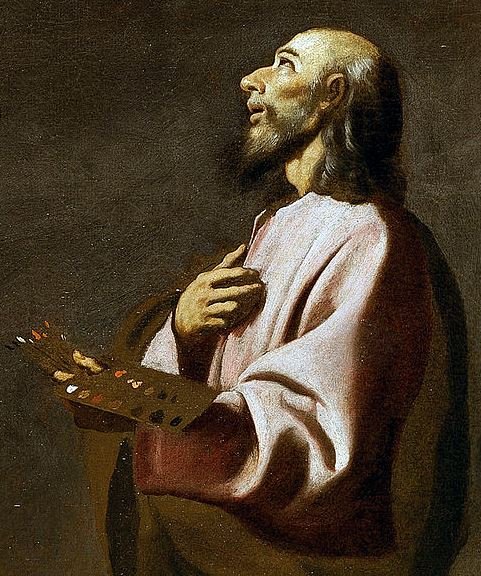
Image: Self-portrait of Francisco de Zurbarán.
Notable Work: Saint Serapion (1628)
This work, housed at the Wadsworth Atheneum in Hartford, Connecticut, depicts the martyred saint with a remarkable sense of realism and emotional depth. The simplicity of the composition, along with the contrast of light against the saint’s white robe, heightens the sense of solemnity and sacrifice.
Bartolomé Esteban Murillo (1617–1682)
Murillo was known for his warm, luminous style and his sensitive portrayals of religious figures, especially the Virgin Mary and Christ Child. His paintings often exhibit a tender, spiritual quality, with soft lighting and gentle expressions that appeal to the emotions. Murillo also painted scenes of everyday life, particularly of children, which added a humanistic dimension to his work.

Image: Bartolomé Esteban Murillo
Notable Work: The Immaculate Conception (1678)
One of his best-known works, The Immaculate Conception, captures the Virgin Mary surrounded by angels, with an ethereal glow surrounding her. Murillo’s delicate use of color and light embodies the grace and purity of the Virgin, making this painting a central piece of his legacy.
Jusepe de Ribera (1591–1652)
Ribera, originally from Valencia, spent much of his life in Italy, where he became an important figure in the Spanish Baroque movement. His style is noted for its intense realism and often brutal depictions of religious scenes and martyrdom. Ribera’s works frequently exhibit dramatic tenebrism, influenced by Caravaggio, and an unflinching portrayal of human suffering.

Image: Jusepe de Ribera. Artwork by English painter Hamlet Winstanley.
Notable Work: The Martyrdom of Saint Philip (1639)
This painting, located in the Museo del Prado, shows the saint’s crucifixion with stark realism and emotional intensity. Ribera’s use of tenebrism draws focus to Saint Philip’s face, capturing his anguish and spiritual devotion, which became a hallmark of Ribera’s style.
Juan de Valdés Leal (1622–1690)
Valdés Leal is best known for his paintings that reflect on the transitory nature of life and the inevitability of death. His works often convey a somber tone, with intense colors and detailed depictions that remind viewers of human mortality. Valdés Leal’s art was deeply influenced by Catholic teachings and was aimed at evoking a sense of repentance and contemplation.
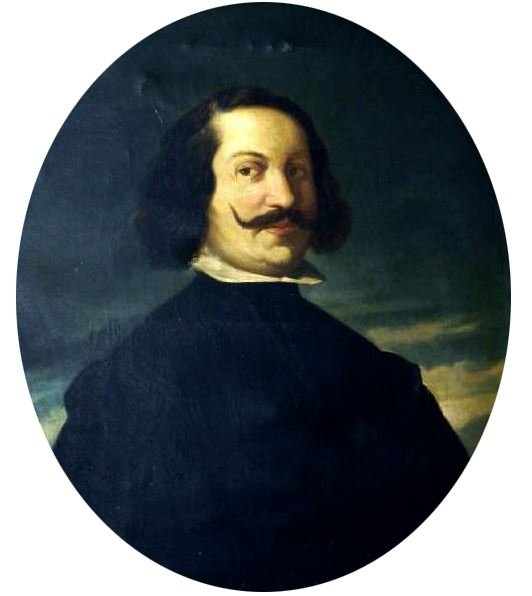
Image: Juan de Valdés Leal
Notable Work: In ictu oculi (1670–1672)
One of his most famous pieces, In ictu oculi (meaning “In the blink of an eye”), depicts a skeleton snuffing out a candle amidst symbols of wealth and power. Located in Seville’s Hospital de la Caridad, this painting serves as a powerful reminder of the fleeting nature of life and the certainty of death.
Juan Sánchez Cotán (1560–1627)
Sánchez Cotán is celebrated for his pioneering work in Spanish still-life painting, particularly his highly realistic depictions of fruits and vegetables. His still lifes are characterized by a distinctive, austere composition, where objects are arranged in stark contrast against a dark background. His style contributed to the development of Spanish realism and laid the foundation for later still-life artists.
Notable Work: Quince, Cabbage, Melon, and Cucumber (c. 1602)
This work, housed in the San Diego Museum of Art, is one of Sánchez Cotán’s most famous still lifes. The objects are meticulously detailed and suspended in a dark, empty space, creating a striking visual effect that emphasizes their form, texture, and color.
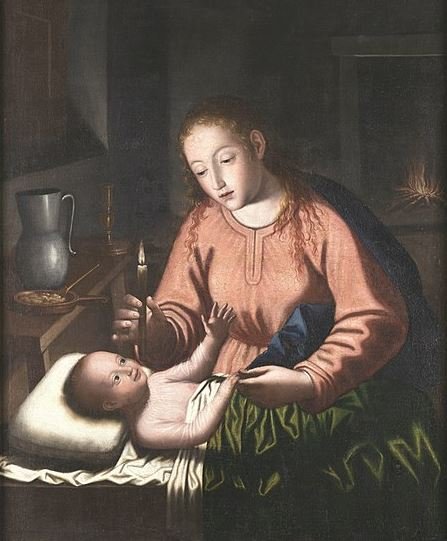
Image: “The Virgin Waking the Child” a painting by Cotán.
Alonso Cano (1601–1667)
Alonso Cano was a versatile artist skilled in painting, sculpture, and architecture. Known as the “Spanish Michelangelo,” Cano worked primarily in Granada and Seville, producing religious works that combined elegance and emotional depth. His paintings often portray saints and biblical figures with a delicate, refined touch.
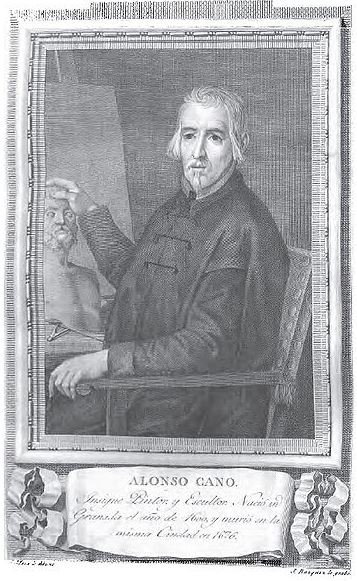
Notable Work: Virgin and Child with Saints (c. 1635)
This painting, housed in the Museo del Prado, is a prime example of Cano’s ability to infuse his religious subjects with serenity and grace. The composition, color palette, and gentle expressions create a sense of divine presence, showcasing Cano’s sensitivity and skill.
Juan Carreño de Miranda (1614–1685)
Carreño de Miranda was a prominent portraitist of the Spanish Baroque period, known for his depictions of Spanish royalty and nobility. His style, influenced by Velázquez, is characterized by a dignified realism and subtle use of color and light. Carreño became the official painter to King Charles II and is celebrated for capturing the personalities of his subjects with sensitivity.
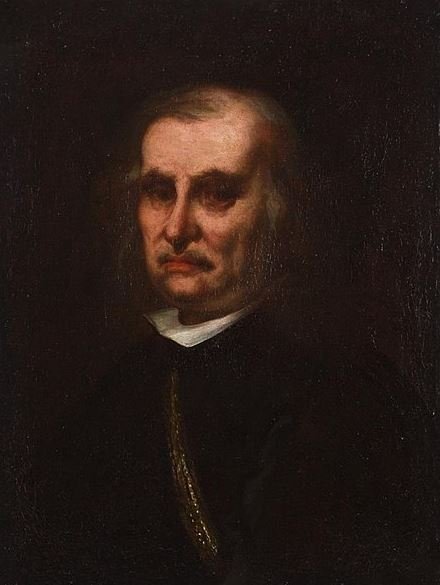
Image: Juan Carreño de Miranda
Notable Work: Charles II in Armour (1670)
This portrait of King Charles II is one of Carreño’s most recognized works. The painting captures the king in a commanding yet delicate pose, with the light focusing attention on his face, highlighting Carreño’s skill in portraying the inner character of his subjects.
Claudio Coello (1642–1693)
Claudio Coello was one of the last prominent Spanish painters of the Baroque era, known for his mastery of color and elaborate compositions. He served as a court painter to Charles II and created several religious and historical works characterized by their dynamism and complexity.
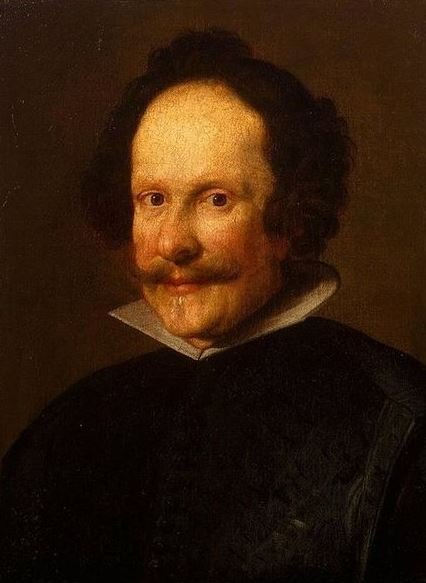
Image: Claudio Coello
Notable Work: The Adoration of the Holy Eucharist (1685–1690)
Located in the Escorial Monastery, this large-scale painting captures a scene of worship and reverence for the Holy Eucharist. Coello’s detailed depiction of figures and architectural elements, combined with a rich color palette, makes this work a magnificent example of late Spanish Baroque art.
José de Ribera (not to be confused with Jusepe de Ribera)
Though less well-documented than others, José de Ribera played a role in influencing religious and allegorical themes in Spanish art. His style combined elements of realism and symbolism, often exploring human frailty and the divine.
Notable Work: The Bearded Woman (1631)
This unusual portrait, which depicts a woman with a beard holding her infant child, challenges conventional beauty norms and highlights Ribera’s interest in unusual subjects. The painting, which conveys both dignity and vulnerability, reflects Ribera’s ability to evoke empathy and introspection in his viewers.





