What was the Pontiac’s War (1763-1766)?
Pontiac’s War, also known as Pontiac’s Rebellion or Pontiac’s Conspiracy, was a significant conflict between Native American tribes and British forces that took place from 1763 to 1766.
Named after Pontiac, an Odawa leader, the war was a widespread, coordinated uprising by a coalition of indigenous nations in the Great Lakes region. The conflict emerged shortly after the end of the French and Indian War (1754–1763), which had concluded with a British victory over the French, giving Britain control of former French territories in North America.
The shift in control led to drastic changes in Native relations, policies, and land occupation practices that would ultimately push Native American tribes to unite in a campaign to resist British encroachment and rule.
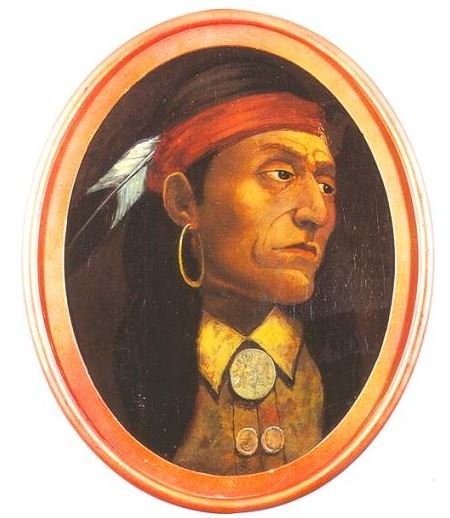
Image: A depiction of Pontiac by American painter John Mix Stanley.
Context and Causes
The origins of Pontiac’s War lie in the larger geopolitical shifts resulting from the French and Indian War. The British victory eliminated French influence in North America and awarded Britain control over French territories stretching from Canada to the Mississippi River.
This territorial change greatly impacted Native American tribes, who had established trade, military, and diplomatic relationships with the French. Unlike the French, who had generally treated Native Americans as allies, the British treated them as subjects of the British Empire, imposing policies that disregarded traditional alliances and the autonomy of the tribes.
British General Jeffrey Amherst, military commander of North America, played a particularly significant role in aggravating tensions. Amherst’s policies toward Native American tribes were markedly different from those of the French; he stopped the practice of giving gifts to tribes, a crucial custom that had been a foundation of French-Native relations.
Amherst considered these gifts an unnecessary expense, though they were viewed by Native tribes as vital to maintaining mutual respect and partnership. Amherst also limited the supply of ammunition and gunpowder to Native Americans, which disrupted their ability to hunt for food and defend themselves. The tightening of trade and supplies heightened Native Americans’ sense of vulnerability and mistrust toward British authorities.
Another critical issue was land. Native American leaders had long regarded land as a communal resource, integral to their societies, rather than an asset for individual ownership and exploitation. British settlers, however, sought to expand westward, and the British government saw the new territories as lands for colonization.
Many Native American tribes feared that their lands, already threatened by colonial expansion, would be further endangered by British settlers and policies. This clash of values—between land as a shared resource and land as private property—underpinned much of the resentment among Native American tribes.
Leadership of Pontiac
The leader most prominently associated with the uprising was Pontiac, an Odawa (Ottawa) leader who rallied various tribes in a coordinated effort to resist British encroachment. While Pontiac’s influence was instrumental in organizing the rebellion, he was not the sole leader of the conflict; other leaders from various tribes played essential roles.
Pontiac, however, had gained a reputation as a skilled and respected leader who saw the necessity of collective resistance against the British. He understood that only through unity could the Native tribes present a strong front.
In 1763, Pontiac held a council on the Ecorse River, near Detroit, where he persuaded leaders from other tribes, including the Ojibwe, Potawatomi, and Delaware, to join the cause. Pontiac’s vision of unity among diverse tribes inspired the confederation, which was able to act in a concerted manner against British forces. He also appealed to cultural and religious factors, reminding tribes of the prophecies of Neolin, a Delaware prophet who advocated for the rejection of European goods and customs and a return to traditional Native values.
The Start of the War
Pontiac’s War began in May 1763, with a series of attacks on British forts and settlements across the Great Lakes region. The first major attack was on Fort Detroit, where Pontiac led an assault that would set the tone for the rest of the rebellion. Although the initial attack on Detroit failed to capture the fort, it led to a protracted siege, demonstrating the seriousness and determination of Pontiac’s forces.
Over the following months, the rebellion spread as tribes attacked other British forts. Native warriors captured or destroyed nine forts, including Fort Sandusky, Fort St. Joseph, Fort Michilimackinac, and Fort Miami.
These successful assaults caused widespread panic among British settlers and soldiers, who had underestimated the coordination and strength of Native forces. The losses on the British side were significant: hundreds of British soldiers and settlers were killed, captured, or forced to flee the frontier.
This extensive network of attacks and sieges was a testament to the Native confederation’s ability to carry out a large-scale resistance campaign. Unlike previous conflicts, which had often been localized, Pontiac’s War demonstrated a pan-tribal resistance. The violence and destruction revealed the depth of Native frustration with British policies and their willingness to take decisive action.
British Response and Escalation
The British response to the uprising was marked by a mix of military force and brutal tactics aimed at breaking Native resistance. The conflict revealed a deep-seated racial divide, as both British forces and Native warriors engaged in extreme violence.
In one of the most infamous incidents of the war, British officers at Fort Pitt, under siege by Native forces, attempted to spread smallpox among the besieging warriors by giving them blankets exposed to the disease. Though the effectiveness of this attempt remains debated, it is a stark example of the lengths to which British forces were willing to go to weaken Native resistance.
General Amherst ordered punitive expeditions to quell the rebellion, and British troops engaged in a series of violent confrontations with Native forces. Colonel Henry Bouquet led one such expedition, employing scorched-earth tactics against Native villages.
The conflict was brutal, with both sides committing atrocities, including the killing of prisoners and the targeting of civilians. The brutality of the war underscored the racial animosities between British colonists and Native Americans, as each side viewed the other not only as an enemy but as a cultural threat.
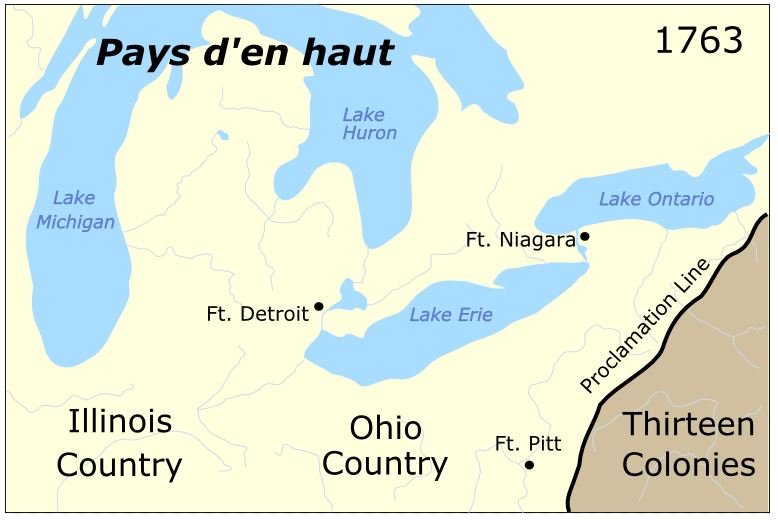
Image: A map depicting the main region of the Pontiac’s War.
End of the War and Peace Negotiations
By 1764, the rebellion had weakened due to the strain of sustaining a prolonged resistance, the logistical difficulties of coordinating between diverse tribes, and British military counterattacks. The British began a series of expeditions to reestablish control in the region and engaged in negotiations with Native leaders.
In 1765, British authorities reached an agreement with Pontiac and other leaders, effectively ending major hostilities. Pontiac ultimately accepted British peace terms, as it became clear that sustaining the war was not feasible.
The war officially came to an end in 1766 when Pontiac signed a formal peace treaty with the British. Although the Native confederation did not achieve its goal of expelling the British from the region, the rebellion forced British authorities to reconsider their policies toward Native Americans. Pontiac’s War highlighted the resilience and resourcefulness of Native American tribes, as well as the limitations of British power in enforcing control over distant frontier regions.
The Royal Proclamation of 1763
In response to Pontiac’s War, the British government issued the Royal Proclamation of 1763, an important document that sought to prevent further conflicts by establishing a boundary between colonial settlers and Native American lands.
The proclamation drew a line along the Appalachian Mountains, declaring all territory west of this line to be reserved exclusively for Native American use. Colonial settlers were forbidden from crossing into this territory, and trade with Native Americans was to be regulated.
The Royal Proclamation was a direct attempt to address the grievances that had led to Pontiac’s War, acknowledging that unrestricted colonial expansion would continue to incite Native resistance. British authorities hoped that by limiting colonial encroachment, they could stabilize relations with Native tribes and prevent future uprisings.
However, the proclamation was met with opposition from colonists, who felt entitled to expand westward, especially those who had already begun to settle in the newly acquired territories. This colonial dissatisfaction contributed to rising tensions between American colonists and the British government, tensions that would later culminate in the American Revolution.
Legacy and Significance
Pontiac’s War was a pivotal moment in the history of Native American-European relations in North America. Although the Native confederation did not succeed in driving the British out, the uprising had lasting impacts on British policy and colonial attitudes.
The war revealed the degree of Native discontent with British rule and highlighted the importance of respecting Native political autonomy. The British, recognizing that peaceful relations with Native tribes required diplomacy and acknowledgment of tribal sovereignty, became more cautious in their policies.
The conflict also intensified racial animosity between Native Americans and British colonists. The violence of Pontiac’s War, including the Fort Pitt smallpox incident, marked a shift in frontier warfare, where both sides began to adopt more ruthless and brutal tactics. This change in warfare practices contributed to a growing racial divide that would influence relations on the frontier for decades to come.
Pontiac himself remained an important figure in Native American history, symbolizing resistance and leadership in the face of foreign control. After the war, he attempted to maintain peace with the British, but his influence began to wane, and he was eventually assassinated by a Peoria warrior in 1769. His legacy, however, lived on, inspiring future generations of Native leaders to resist European encroachment.
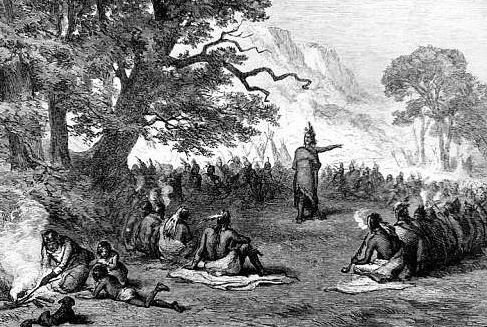
Image: On April 27, 1763 Pontiac passionately called upon his audience to unite and resist British control. Artwork by Alfred Bobbett.
Conclusion
Pontiac’s War was more than a military struggle; it was a cultural and political clash between two very different worldviews. For the Native tribes, land was not merely a resource but a foundation of their cultural and social identity. For the British, it was a commodity and an opportunity for expansion and profit. The conflict highlighted the tensions and misunderstandings that inevitably arose from these differing perspectives.
Ultimately, while Pontiac’s War did not achieve its immediate goals, it forced the British to acknowledge the limitations of their power and the necessity of respectful relations with Native tribes. It also served as a stark reminder of the resilience of Native American cultures and their willingness to defend their land and way of life. Pontiac’s War remains a significant chapter in the complex history of Native American-European relations, illustrating the long-standing struggle for sovereignty, respect, and autonomy on the North American frontier.
Frequently Asked Questions
Pontiac’s War was a significant conflict in 1763 between Native American tribes and British forces. It arose from Native dissatisfaction with British policies imposed after their victory in the French and Indian War, as the British took control of former French territories in the Great Lakes region. Native tribes feared British encroachment on their lands and launched a rebellion to resist.
Below are some frequently asked questions about the war:
Who was Pontiac, and what role did he play in the conflict?
Pontiac was a prominent Odawa leader whose leadership was crucial in organizing the resistance. His influence inspired various Native American nations, such as the Ojibwe, Potawatomi, and Delaware, to join efforts to push British forces and settlers out. Although Pontiac is often recognized as the conflict’s figurehead, many indigenous leaders across tribes contributed to the rebellion.
What British policies sparked the conflict?
The British policies instituted by General Jeffrey Amherst were central to the Native grievances. Unlike the French, who had maintained trade relations and gave gifts to build alliances with indigenous tribes, Amherst halted these practices, viewing them as unnecessary. He also restricted Native access to gunpowder and ammunition, essential for hunting and defense. These measures created fear and dissatisfaction among Native tribes, who felt disempowered and threatened by British expansion.

Image: Jeffrey Amherst
How did Native tribes respond to British policies?
Native warriors launched a series of surprise attacks on British forts and settlements across the frontier in 1763. By the end of the year, nine forts, including Fort Sandusky, Fort St. Joseph, and Fort Michilimackinac, had been captured or destroyed. Hundreds of British colonists and soldiers were killed or captured, while settlers fled frontier areas, reflecting the tribes’ frustration and determination to protect their lands and way of life.
What deeper issues were at play during Pontiac’s War?
Pontiac’s War was not only a military conflict but also a clash of worldviews. Native tribes viewed land as a communal resource integral to their cultures, while the British saw it in terms of private ownership and colonization. This cultural divide, coupled with British disregard for Native political systems, deepened misunderstandings and fueled tensions.
What controversial tactic did British officers allegedly use during the conflict?
At Fort Pitt, British officers reportedly attempted to spread smallpox among besieging Native American forces by distributing blankets from a smallpox hospital. This act, debated and widely condemned, illustrates the brutal and racially charged nature of the conflict. The incident reflected the intensifying racial divide and contributed to the brutal warfare tactics on both sides, including targeting civilians and committing atrocities.
How did Pontiac’s War come to an end?
In 1764, British military expeditions successfully ended the conflict by negotiating peace with the Native tribes. Although the Native confederation couldn’t expel the British entirely, their uprising led British authorities to reconsider policies toward Native Americans.
What was the Royal Proclamation of 1763, and what did it aim to achieve?
In response to the rebellion, the British issued the Royal Proclamation of 1763, establishing a boundary—known as the Proclamation Line—that prohibited colonial settlement west of the Appalachian Mountains, reserving these lands for Native Americans. This boundary was intended to ease tensions and prevent future conflicts by limiting colonial expansion into Native territories.
Did the Royal Proclamation of 1763 achieve its goals?
The Royal Proclamation had mixed results. Although it temporarily halted colonial encroachment on Native lands, it frustrated many colonists eager to expand westward. This dissatisfaction contributed to growing resentment toward British rule, which later became one of the factors leading to the American Revolutionary War.
What lasting impact did Pontiac’s War have on Native American and European relations?
Pontiac’s War underscored the determination of Native Americans to resist foreign control and protect their cultural integrity and land rights. Although they did not achieve a decisive military victory, the conflict forced the British to modify policies and acknowledge the need to negotiate with indigenous groups.





