Oliver Cromwell: History, Regicide, & Other Major Facts
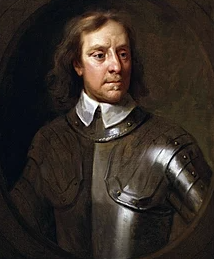
As Lord Protector of the Commonwealth, Cromwell governed England and Wales, Scotland, Ireland and the English overseas possessions. His rule lasted from 1653 to 1658.
The man Oliver Cromwell is set to be a permanent fixture who elicits mixed emotions among many. He is one of the most polarizing personalities in Britain’s history. One side of the divide praises him for his democratic stance; likening him to a savior of sorts. Others condemn him as a blood thirsty, puritanical tyrant who rose from obscurity to become a ruler. Where voices become unified is in respect to the role he played in helping to establish the British army and restore England’s prestige as a super power following the death of Queen Elizabeth I.
Why is Oliver Cromwell a controversial figure in history? And what were Oliver Cromwell’s major accomplishments?
In the article below, World History Edu explores the life and major exploits of Oliver Cromwell, including how he rose to become Lord Protector of England.
Early Life and Education
Oliver was born in 1599 in Huntingdon, Eastern London. He was the second son of Robert Cromwell and Elizabeth Steward. His father was a well-to-do-farmer and a member of Queen Elizabeth’s parliament.
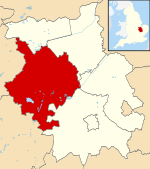
Oliver Cromwell was born on April 25, 1599, in Huntingdon, England, into a family of minor gentry. Aged 29, Oliver was elected to represent Huntingdon in Parliament. Image: Huntingdonshire shown within Cambridgeshire
Young Oliver Cromwell attended the local grammar school and continued on to the Cambridge University. Before he could graduate, his father died. He returned home to care for his mother and sisters.
In Huntingdon, he farmed and rented out some of the lands his father had bequeathed to him. He made a living as a land owner.
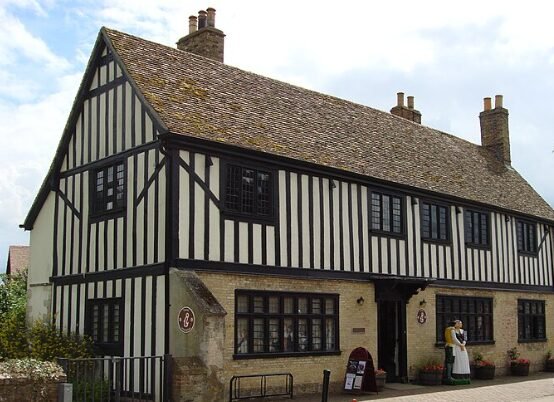
Cromwell was educated at Sidney Sussex College, Cambridge, and later studied at Lincoln’s Inn in London, though he did not complete a legal education. Image: Cromwell’s House in Ely, East Cambridgeshire district of Cambridgeshire, England
Entry into Politics
Cromwell’s first step into public life was as a Member of Parliament for Huntingdon in 1628 and later for Cambridge in the Short (1640) and Long (1640-1649) Parliaments.
His early political career was marked by his opposition to the policies of King Charles I, particularly regarding the issue of “ship money” and the king’s attempts to rule without Parliament.
Oliver Cromwell in the English Civil War. Cromwell was a leading and very radical figure in the New Model Army. He went on to become Lord Protector of the Commonwealth, governing England and Wales, Scotland, Ireland and the English overseas possessions. His reign lasted from 1653 to 1658.
Role in the English Civil War
The English Civil War broke out in 1642 between the Royalists, supporters of King Charles I, and the Parliamentarians, commonly known as the Roundheads, who opposed the king’s policies.
Cromwell quickly emerged as a prominent military figure on the side of the Parliamentarians. His leadership was instrumental in the formation of the New Model Army, a disciplined and effective military force that played a key role in the defeat of Royalist forces.
Cromwell’s military strategy and leadership culminated in several crucial victories, most notably the Battle of Marston Moor in 1644 and the decisive Battle of Naseby in 1645.
Cromwell’s command style in those battles was marked by strict discipline, religious fervor, and innovative tactics.
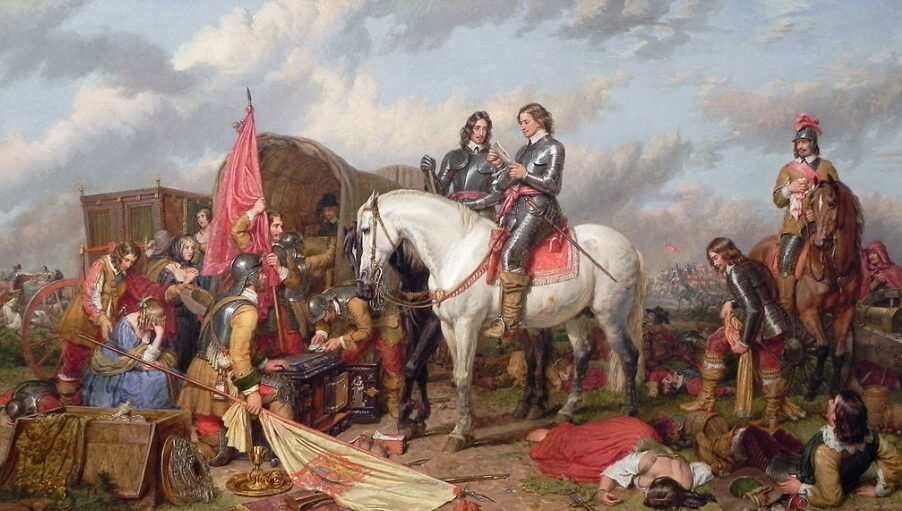
The Battle of Naseby was the most significant battle of the English Civil Wars. It was fought in June, 1645 in Naseby, Northamptonshire. Image: Cromwell in the Battle of Naseby in 1645 as depicted in a portrait by Charles Landseer
The Regicide of Charles I
As the war drew to a close, Cromwell’s position hardened against the king, who he saw as a tyrant and a traitor. In 1649, after a trial that remains controversial to this day, Charles I was executed. Cromwell was a signatory of the king’s death warrant, an act that would forever stain his reputation among royalists.
Did you know…?
Not only did the Roundheads and Cavaliers have differing ideologies, they also looked different from each other in appearance. While the Roundheads had a custom of shaving off their hair completely to their skull, the Royalists preferred to keep their hair long and in a way that complemented their aristocratic status.

Following Charles I of England’s defeat by Parliamentarian forces, the king was captured and executed. Led by Oliver Cromwell, Parliament went ahead to abolish the monarchy and establish a Commonwealth. Image: Charles (in the dock with his back to the viewer) facing the High Court of Justice, 1649
The Commonwealth and Protectorate
Following the king’s execution, England was declared a republic known as the Commonwealth, and Cromwell eventually became its Lord Protector in 1653, essentially ruling as a military dictator.
His rule was marked by the centralization of power and efforts to reform society according to Puritan morals. He also pursued aggressive military campaigns in Ireland and Scotland, which were both marked by brutality and have left a dark legacy in those countries.
Policies and Governance
Cromwell’s governance was characterized by his effort to cleanse the nation of what he saw as moral decay.
He implemented laws that promoted Puritan values, including bans on gambling, sports, and theater. His Puritan government imposed strict moral laws, viewing theatre and bear baiting as sinful activities. Celebrating Christmas with traditional festivities was prohibited; instead, contemplation of Jesus’ life was encouraged, along with monthly fasts. Sports on Sundays could lead to whipping, and swearing was fined or punished with prison time.
His foreign policy was assertive, expanding English influence in the Caribbean and offering a haven to European Protestants.
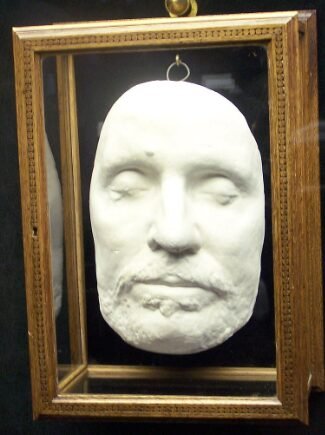
Cromwell’s campaign in Ireland is infamous for its severity. His forces besieged and captured towns, notably Drogheda and Wexford, where they committed massacres against both armed forces and civilians. Image: Oliver Cromwell’s death mask at Warwick Castle
Death, Burial, and Legacy

Oliver Cromwell died on September 3, 1658, at age 59, from complications related to malaria, pneumonia and kidney stone disease. His health likely worsened due to the emotional impact of his daughter’s death a month prior. Image: Burial place of Oliver Cromwell in Westminster Abbey from 1658 to 1661
Oliver Cromwell died on September 3, 1658, and was succeeded by his son Richard. However, Richard lacked his father’s authority and leadership, leading to his quick fall from power and the restoration of the monarchy in 1660 under Charles II.
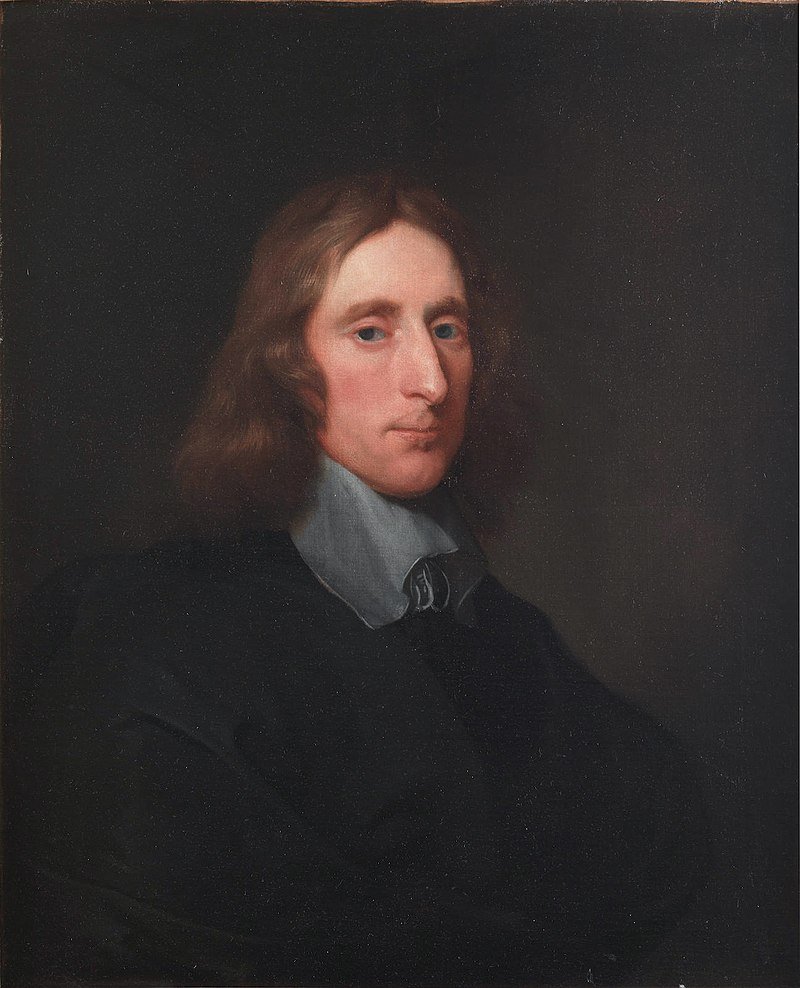
Cromwell appointed his son, Richard Cromwell (1626 -1712), as his successor. Unlike his father, Richard struggled with leadership, lacking a strong rapport with the army and facing conflicts between the army and Parliament. After only nine months in power, Richard relinquished his role in May 1659, ending the Protectorate. Image: Portrait of Richard Cromwell by Gerard Soest
Cromwell’s legacy is deeply divisive. In Britain, he is seen by some as a defender of liberty against tyranny, and by others as a regicidal dictator.
His actions, particularly in Ireland and Scotland, are remembered with bitterness. Statues of Cromwell stand outside the British Parliament and in his hometown of Huntingdon, symbolizing his enduring and controversial impact on British history.
Frequently Asked Questions about Oliver Cromwell
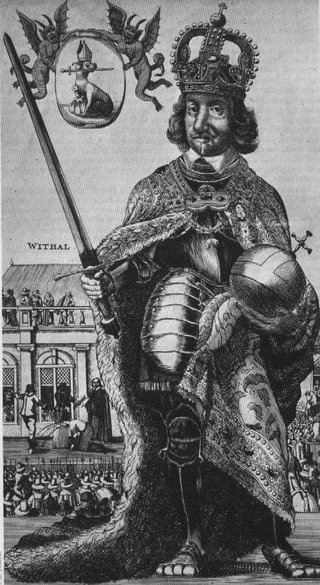
Cromwell is controversial due to his role in the execution of King Charles I, his military campaigns in Ireland and Scotland that were often brutal, and his authoritarian rule as Lord Protector. Image: A contemporaneous satirical view of Cromwell as a usurper of monarchical power
These questions can serve as a basis for further exploration of Oliver Cromwell’s complex and impactful life in history lessons or discussions.
When and where was Oliver Cromwell born?
Oliver Cromwell was born in 1599 in Huntingdon, Eastern London. Oliver’s father, Robert Cromwell, was a well-to-do farmer and a member of Queen Elizabeth’s parliament.

Cromwell was a Puritan. Puritans were Protestants who wanted to purify the Church of England of Roman Catholic practices. They believed that the Church of England was too similar to the Roman Catholic Church, and that the reformation was not complete until it became more protestant.
Who did Oliver Cromwell marry, and what was her family’s background?
In 1620, Oliver Cromwell and Elizabeth Bourchier tied the knot at a local church in Cripplegate. They went on to have nine children, three of which died at quite a young age. Elizabeth came from a family of devout Puritans who were leather and fur merchants. Many believe Oliver’s later conversion to Puritanism was largely influenced by his in-laws.

Oliver Cromwell married Elizabeth, who came from a family of devout Puritans who were leather and fur merchants. The couple had nine children, three of whom died at a young age. Image: Portrait of Elizabeth Cromwell painted by Robert Walker
At what age was Oliver Cromwell first elected to Parliament, and for which constituency?
Aged 29, Oliver was elected to represent Huntingdon in Parliament. This marked the beginning of his political career. His victory was partly attributed to the collective support he got from like-minded Puritans.
During his early years as an MP, his naivety in politics made him a passive and obscure figure during proceedings. Worse, his often rugged appearance and uncouth behavior did not quite fit the stereotype of what a statesman should look like.
How did Cromwell’s religious views influence his political actions against King Charles I?
Cromwell’s deep Puritanical beliefs led him to oppose the king’s changes in the Church of England, viewing the king’s radical stance as a divine invitation to act.
What were the main differences between the Parliamentarians and the Royalists during the English Civil War?
The Parliamentarians supported a constitutional monarchy and were known for their short hair, while the Royalists favored absolute monarchy and typically wore their hair long.
General Sir Thomas Fairfax was the Commander-in-Chief of the New Model Army.
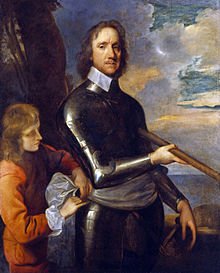
Oliver Cromwell was a key figure of the Roundheads. The Roundheads supported a constitutional monarchy in which the king exercised his power in accordance with a constitution. Their opponents, the Royalists or Cavaliers, championed absolute monarchy and the divine right of kings to rule England. Cromwell in a c. 1649 portrait by English portrait painter
What did Oliver Cromwell ban?
Oliver Cromwell and his Puritan government imposed a series of moral and social regulations, reflecting their desire to reform society according to their religious beliefs. Some of the notable bans included:
- Theater and Public Stage Plays: Believing them to be morally corrupting, Cromwell’s government closed all theaters, which remained shut until the Restoration in 1660.
- Festivals and Holidays: Traditional festivities such as Christmas, Easter, and Whitsun were banned or significantly toned down because they were associated with drunkenness and other behavior considered ungodly by the Puritans.
- Sports and Games: Activities like horse racing and cockfighting were prohibited, as were many forms of Sunday sports and leisure activities, which were seen as distractions from religious observance.
- Maypoles: Cromwell’s regime saw maypoles as idolatrous and banned them, reflecting their wider campaign against practices they viewed as pagan or un-Christian.
These bans were part of a broader effort to purify society from elements that the Puritans considered immoral, ungodly, or distracting from religious duties.
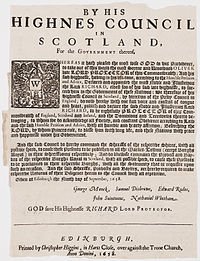
After the monarchy was restored, Cromwell’s body was exhumed and subjected to a posthumous execution; his head was displayed on a pike for over two decades. Image: Announcement of the death of Oliver Cromwell and the succession of Richard Cromwell as Lord Protector. Printed in Scotland 1658.
After more than a decade of Republican rule, Oliver Cromwell fell ill and died on September 3, 1658. He was 59. His body, along with those of Henry Ireton (a general in the Parliamentary Army) and John Bradshaw (President of the High Court of Justice), was buried at Westminster Abbey until it was dug up and beheaded on Charles II’s order. The new king, son of Charles I, had at that time, been restored to the throne in 1660. For over two decades, Cromwell’s decapitated head stayed on a pike on the roof of Westminster Hall.
During a storm in 1685, Cromwell’s head allegedly fell from its spike and was subsequently passed through various hands, appearing in private collections and museums, and even being displayed publicly several times. It was eventually buried at Sidney Sussex College, Cambridge University.
However, the authenticity of the head and the identity of the body hanged at Tyburn remain subjects of historical debate, as some suggest Cromwell’s remains might have been secretly relocated before the exhumation to protect them from royalist retribution.

After the death of Oliver Cromwell, Charles II, son of Charles I, was restored to the throne in what became known as the Restoration. The new king then ordered the posthumous execution of Oliver Cromwell for regicide. Image: Charles in Garter robes, c. 1660–1665
What is his legacy?
Oliver Cromwell remains a complex figure in the historical narrative of England. His life and actions reshaped the British Isles, influencing the direction of governance, the role of the military in politics, and the relationship between the state and its citizens. His legacy, marked by both his achievements and his excesses, continues to provoke debate and reflection on the nature of power and the role of leadership in shaping the course of history.

Cromwell’s regime outlawed Sunday work, with violators facing harsh penalties. Even wearing makeup was banned, with soldiers actively enforcing this by scrubbing it off women’s faces. Image: 1899 statue of Oliver Cromwell, Westminster by Hamo Thornycroft outside the Palace of Westminster in London.





