Pharaoh Psamtik II
by World History Edu · November 30, 2024
Pharaoh Psamtik II, the third ruler of Egypt’s Saite 26th Dynasty, reigned from 595 to 589 BC. His tenure was marked by significant military campaigns, strategic governance, and notable contributions to Egyptian architecture and culture. Though his reign was relatively short, Psamtik II’s leadership had a lasting impact on Egypt, both domestically and internationally.

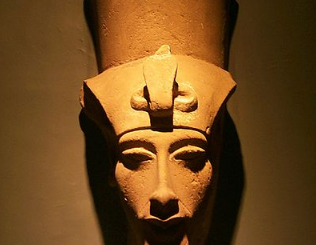
Psamtik II, also known as Psammetichus or Psammeticus, was a pharaoh of Egypt’s Twenty-sixth Dynasty, ruling from 595 to 589 BC. Image: A statue of Psamtik II; Louvre in France.
Early Life and Ascension
Psamtik II was the son of Pharaoh Necho II and Queen Takhut. He inherited the throne following his father’s death in 595 BC, during a period of considerable geopolitical tension in the ancient Near East. The 26th Dynasty was centered in Sais, a city in the western Nile Delta, and sought to restore Egypt’s former glory following centuries of foreign domination. Psamtik II’s ascension continued the dynasty’s policies of military strength, economic revitalization, and architectural innovation.
Military Campaigns

Psamtik II succeeded his father, Necho II, and is notable for his military campaigns in Nubia and efforts to strengthen Egypt’s independence during his reign. Image: Statue of Necho II.
Campaign Against Nubia
One of Psamtik II’s most notable accomplishments was his campaign against Nubia in 592 BC. This military endeavor marked the first major confrontation between Egypt and Nubia since the reign of Tantamani in the 25th Dynasty. Psamtik’s army, composed of Egyptian troops and Greek and Carian mercenaries, advanced as far south as the Third or possibly Fourth Cataract of the Nile. A stela from Karnak, dating to the third year of his reign, documents this campaign and highlights the decisive defeat inflicted upon the Kingdom of Kush.
The Egyptian forces, under commanders Potasimto and Amasis, reached Kerkis near the Fifth Cataract, well within the Kushite kingdom. The campaign culminated in the sacking of Napata, the Kushite capital under King Aspelta. Temples were looted, royal statues were destroyed, and Kushite resistance was crushed. This defeat forced the Nubian rulers to relocate their capital further south to Meroë for safety. The campaign not only ensured that Nubia would not attempt to reclaim Egypt but also secured Egypt’s southern border at Elephantine, which remained its frontier.
Campaigns in the Levant
In 591 BC, Psamtik II turned his attention to the Levant. His expedition sought to challenge Babylonian dominance in the region, reportedly encouraging a revolt among Levantine states against Nebuchadnezzar II of Babylon. This intervention demonstrated Egypt’s strategic interest in maintaining influence in the Eastern Mediterranean and limiting Babylonian expansion. Although the campaign’s long-term success remains unclear, it underscored Psamtik II’s proactive foreign policy.
Erasure of Kushite Legacy
Following his victory over Nubia, Psamtik II ordered the systematic defacement of monuments belonging to the Kushite 25th Dynasty across Egypt. Royal names, titles, and insignias were deliberately erased from statues, reliefs, and other monuments. This act of iconoclasm symbolized a rejection of Kushite rule and aimed to solidify the Saite Dynasty’s legitimacy. The destruction of Kushite monuments also served as a psychological strategy to deter any future claims to Egyptian territory by the Kushites.
Architectural Achievements
Psamtik II was a prolific builder, commissioning several grand projects during his reign that demonstrated his dedication to Egypt’s cultural and religious institutions.
Obelisks at Heliopolis
Among Psamtik II’s most notable architectural contributions were the twin obelisks he erected at Heliopolis. These massive monuments, over 21 meters high, celebrated his reign and the religious significance of the Sun Temple in Heliopolis. One of these obelisks was later transported to Rome by Emperor Augustus in 10 BC and is now known as the Obelisk of Montecitorio.

Image: One of the Obelisks of Heliopolis.
Kiosk at Philae
Psamtik II constructed a kiosk on the island of Philae, a significant religious site in southern Egypt. This structure consisted of double rows of columns connected by screen walls, showcasing the Saite Dynasty’s architectural style. The kiosk is considered one of the oldest surviving monuments on the island.
Hibis Temple at Kharga Oasis
Another monumental project initiated by Psamtik II was the Temple of Hibis at Kharga Oasis. Dedicated to the Theban triad of Amun, Mut, and Khonsu, the temple reflected Psamtik’s efforts to strengthen religious and cultural ties across Egypt. The structure included a hypostyle hall, sanctuaries, and a chapel dedicated to the cult of Psamtik II. Although the temple was later completed by Persian rulers, it remains a testament to his vision and influence.
Saite Temple at El-Mahalla El-Kubra
Psamtik II likely constructed a significant temple at El-Mahalla El-Kubra in the Nile Delta. Granite columns and architectural fragments discovered in the area suggest the scale of this project. The temple served as a focal point for religious and administrative activities in the region.
Domestic Policies and Governance
Psamtik II’s reign focused on consolidating Egyptian sovereignty and revitalizing its economy. His military campaigns, particularly against Nubia, secured Egypt’s borders and safeguarded its trade routes. By maintaining Elephantine as the southern boundary, he ensured stability in Upper Egypt. Domestically, Psamtik supported religious institutions and reinforced Egypt’s cultural identity through architectural and artistic patronage.
Legacy and Death
Psamtik II’s reign, though brief, left a lasting legacy in Egyptian history. He was succeeded by his son Apries, who continued the policies of the Saite Dynasty. Psamtik’s daughters also played influential roles; Ankhnesneferibre served as God’s Wife of Amun in Thebes, and Menekhubaste held a prominent position as a priestess at Heliopolis.
The date of Psamtik II’s death is recorded on the Adoption Stela of Ankhnesneferibre as Year 7, I Akhet day 23, corresponding to 589 BC. His architectural projects, particularly at Heliopolis, Philae, and Kharga Oasis, remain significant landmarks of his reign. His military achievements, especially the campaign against Nubia, ensured the stability of Egypt during a tumultuous period and curtailed any Kushite ambitions of reclaiming Egyptian territory.
Cultural Contributions

Psamtik II’s reign also had a notable cultural impact. His use of foreign mercenaries, including Greeks and Carians, highlighted the increasing interaction between Egypt and the Mediterranean world. This collaboration not only bolstered Egypt’s military but also influenced its artistic and architectural styles. The presence of Greek graffiti at Abu Simbel, left by mercenaries during the Nubian campaign, symbolizes this cross-cultural exchange.
Conclusion
Psamtik II was a dynamic ruler whose reign combined military prowess, strategic governance, and cultural patronage. His campaigns secured Egypt’s borders, curbed Kushite power, and asserted Egypt’s influence in the Levant. His architectural legacy, seen in grand monuments such as the Heliopolis obelisks and the Hibis temple, reflected his commitment to Egypt’s religious and cultural institutions. Although his reign lasted only six years, Psamtik II’s accomplishments ensured the continued strength and stability of the Saite Dynasty during one of Egypt’s last great eras before foreign domination.
Frequently Asked Questions about Psamtik II
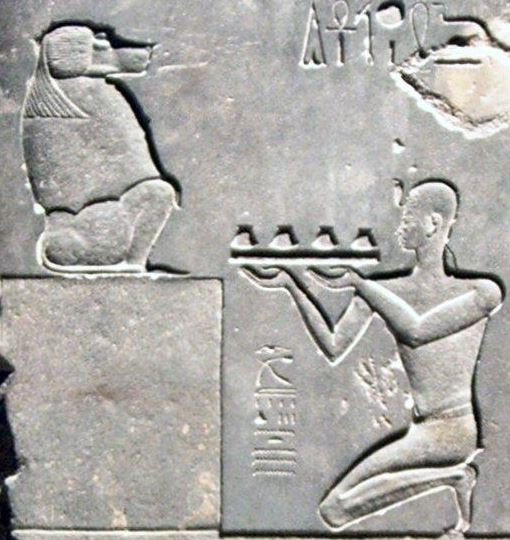
Psamtik II was the third king of Egypt’s Saite 26th Dynasty, ruling from 595 to 589 BC, renowned for his military campaigns and architectural achievements. Image: A wall relief depicting Psamtik II making an offering.
What was Psamtik II’s notable military campaign in 592 BC?
He led a campaign against Nubia, advancing as far south as the Third or Fourth Cataract of the Nile, marking Egypt’s first major confrontation with Nubia since the reign of Tantamani.
Who were the key commanders under Psamtik II in the Nubian campaign?
Greek and Carian mercenaries were led by Potasimto, while the Egyptians were commanded by Amasis.
What was the outcome of Psamtik II’s campaign against Nubia?
The Kushite capital Napata was sacked, its temples looted, and royal statues destroyed. This weakened Kushite power and prompted the Nubian rulers to relocate their capital to Meroë for safety.
Did Psamtik II expand Egypt’s control beyond Elephantine after his Nubian campaign?
No, despite his military success, Psamtik II did not extend Egyptian control beyond Elephantine, which remained Egypt’s southern border.
What actions did Psamtik II take against monuments of the Kushite 25th Dynasty?
He ordered the defacement of Kushite monuments, erasing royal names and insignias from statues and reliefs to reject their legacy.
What was Psamtik II’s involvement in the Levant?
Around 591 BC, Psamtik II launched an expedition to the Levant, reportedly to instigate a revolt against Babylonian control.
What were Psamtik II’s notable architectural achievements?
He built a Saite temple at El-Mahalla El-Kubra, erected obelisks at Heliopolis, constructed a kiosk at Philae, and initiated the Hibis temple at Kharga Oasis.
What is the significance of Psamtik II’s obelisks at Heliopolis?
One of the obelisks, over 21 meters high, was later transported to Rome and became the Obelisk of Montecitorio under Emperor Augustus.
What role did the Hibis temple play in Psamtik II’s legacy?
The Hibis temple, dedicated to Amun, Mut, and Khonsu, was a significant religious structure that showcased his contributions to Egypt’s cultural and religious infrastructure.
Who succeeded Psamtik II after his death in 589 BC?
Psamtik II was succeeded by his son Apries.
How did Psamtik II’s daughters contribute to his legacy?
His daughters included Ankhnesneferibre, who served as God’s Wife of Amun, and Menekhubaste, a priestess at Heliopolis, reflecting the prominence of his lineage in Egyptian religious life.