Tantamani: The Last Pharaoh of the 25th Dynasty of Egypt
by World History Edu · November 5, 2024

Tantamani, also called Tanutamun or Tanwetamani, ruled the Kingdom of Kush in present-day Northern Sudan and was the final pharaoh of Egypt’s Twenty-fifth Dynasty, dying in 653 BCE. Image: Portrait of Tantamani in his tomb at the royal cemetery El-Kurru
Tantamani, also known as Tanutamun, was the last ruler of Egypt’s Twenty-fifth Dynasty, often referred to as the Kushite Dynasty or Nubian Dynasty due to its origins in the Kingdom of Kush (modern-day Sudan). His life, reign, and ultimate fate offer insight into the final years of Nubian rule in Egypt, the cultural and political tensions between Egypt and Nubia, and the influence of the rising Assyrian Empire. Tantamani’s story reflects the broader struggle for control in a period marked by shifting power dynamics and foreign intervention, particularly from Assyria.
READ MORE: Nubian Rulers of Ancient Egypt
Early Life and Royal Lineage
Tantamani was born into the powerful Kushite royal family, which had extended its reach into Egypt through conquest. His lineage connects him to some of the most significant figures of the Twenty-fifth Dynasty, including Piye (Pianchi), the founder of Kushite control over Egypt, and Shabaka, who consolidated Nubian rule.
Tantamani was likely the son of Shabaka, although some early sources speculated he might have been the son of Shebitku. Assyrian records identify Tantamani’s mother, Qalhata, as the sister of Taharqa, a prominent pharaoh and Tantamani’s immediate predecessor. This royal bloodline highlights the close familial ties that bound the Kushite rulers of Egypt and Nubia, as well as the dynastic complexity that characterized the Twenty-fifth Dynasty.
Growing up in Nubia, Tantamani was influenced by Kushite culture, religious traditions, and the political ideology that linked Kush and Egypt. By the time he assumed power, Tantamani was already aware of the military and political challenges his predecessors had faced in maintaining control over Egypt, a land rich in history, resources, and culture, yet fraught with its own internal divisions and susceptible to foreign threats.
Ascension to the Throne and the Restoration Campaign

Portrait of King Tantamani, Sudan National Museum.
Upon Taharqa’s death, Tantamani ascended to the throne around 664 BCE, inheriting a kingdom in a precarious position. His primary goal was to reclaim Egypt, which had been weakened by previous conflicts with the Assyrian Empire.
During Taharqa’s reign, the Assyrians had already invaded Egypt, capturing the northern city of Memphis and establishing Assyrian control over parts of the Nile Delta. As a result, Necho I, an Egyptian leader backed by the Assyrians, had been installed as a vassal ruler over Lower Egypt.

Capture of Memphis by the Assyrians in 663 BCE.
Determined to restore full Kushite rule, Tantamani launched an invasion from Nubia, moving northward along the Nile with his forces. This ambitious campaign sought not only to reassert Kushite dominance but also to unify Egypt under his rule.
Tantamani’s forces advanced into Egypt, reclaiming Memphis and re-establishing Kushite control. During this campaign, Necho I and some of the Assyrian representatives were killed, marking a temporary victory for Tantamani and his efforts to expel Assyrian influence from Egypt.

Statue of Kushite ruler and last pharaoh of the 25th Dynasty, Tantamani (Louvre Museum, color-pigment reconstruction).
His successful initial campaign bolstered his legitimacy as the rightful ruler of Egypt and garnered the support of those who opposed foreign dominance. Tantamani’s reoccupation of Memphis symbolized the return of native leadership and the rejection of foreign interference, affirming the Kushite dynasty’s claim to the Egyptian throne. However, this triumph was short-lived, as his actions provoked a strong response from the Assyrians, who were determined to maintain their influence over Egypt.
The Assyrian Counterattack and the Sack of Thebes
In 663 BCE, the Assyrian king Ashurbanipal launched a counter-offensive to reclaim control over Egypt. Ashurbanipal’s forces, bolstered by Psamtik I—an Egyptian leader with Assyrian backing—and Carian mercenaries, advanced into Egypt to confront Tantamani’s forces. This coalition’s combined strength posed a formidable threat to Tantamani, who faced a well-organized and heavily armed army.

Relief depicting Ashurbanipal hunting a lion. 645 – 635 BC.
The decisive battle took place near Memphis, where Tantamani’s forces were ultimately defeated. Despite his determination to restore Egypt’s autonomy, Tantamani was forced to retreat southward into Upper Egypt, seeking refuge in territories less accessible to the Assyrians.
However, Ashurbanipal and his forces did not stop at Memphis; they continued their advance to Thebes, one of Egypt’s most sacred and culturally significant cities. Approximately forty days after the battle at Memphis, Ashurbanipal’s army reached Thebes.
In what became known as the Sack of Thebes, the Assyrians ravaged the city, looting its wealth and treasures. Ashurbanipal’s records describe the devastation, stating that the city was “smashed like a floodstorm.” The Assyrians seized vast quantities of valuable goods, including gold, silver, jewels, and luxury items, as well as two obelisks covered in electrum, each weighing approximately 75.5 tons. The brutal sacking of Thebes sent shockwaves throughout the ancient world, as it was one of the most prominent religious and cultural centers in Egypt, home to the temple of Amun and other important religious sites.
The destruction of Thebes had both immediate and long-term consequences. In the short term, it effectively ended Tantamani’s ability to reassert control over Egypt, as the Assyrian forces had firmly established their dominance.
Furthermore, the psychological impact of the city’s sacking reverberated across the region, emphasizing Assyria’s military power and dissuading further resistance from Egyptian factions.
The devastation was referenced in ancient texts, including the Book of Nahum and the Book of Isaiah in the Hebrew Bible, underscoring its significance and impact on the ancient Near East.
Aftermath and the Decline of Kushite Rule in Egypt

Painting of King Tantamani, in Thebes
Following the Assyrian conquest and the Sack of Thebes, Kushite rule in Egypt was effectively over. Tantamani managed to maintain authority in Upper Egypt for a short time, with some regions continuing to recognize his rule until his eighth regnal year, around 656 BCE. During this period, he continued to hold sway in parts of Upper Egypt, but his power was limited and increasingly under threat from the Assyrian-backed leaders in Lower Egypt.
In 656 BCE, Psamtik I, who had been strengthened by Assyrian support, peacefully took control of Thebes. This takeover marked the end of Kushite influence in Egypt and the beginning of the Twenty-sixth Dynasty, which would see Egypt under a more localized rule, although still influenced by the powerful Assyrian Empire. Psamtik I’s control of Thebes symbolized the final transition from Nubian to native Egyptian leadership, consolidating the Assyrian-supported rule and establishing a unified Egypt under Psamtik.
The peaceful transfer of Thebes to Psamtik I’s forces represented a strategic acceptance of the new political reality by the people of Upper Egypt. Thebes was a deeply revered city, and the peaceful nature of its transition suggests that many Egyptians were ready to end the cycle of invasion and conflict, opting instead for stability and unity under Psamtik’s rule.
Tantamani’s Later Reign in Nubia and Death

Prenomen and Nomen of King Tantamani
After losing control over Egypt, Tantamani retreated to Nubia, where he continued to rule the Kingdom of Kush from his capital in Napata. Although he no longer had influence over Egypt, he retained his authority in Nubia and maintained the Kushite kingdom’s traditions, governance, and cultural identity. Tantamani’s rule over Nubia marked the end of the Kushite Dynasty’s control over Egypt, but Nubia continued to flourish as an independent kingdom with its own political and cultural significance.
Tantamani ruled in Nubia until his death in 653 BCE. He was succeeded by Atlanersa, the son of Taharqa, who continued the Kushite lineage. Even after losing Egypt, the Kushite kings remained influential, with their legacy enduring through Nubian art, architecture, and the royal customs they had upheld during their time in Egypt.
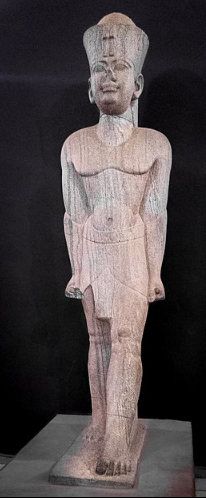
Kushite King Atlanersa
Burial and Legacy

Tantamani’s reign was marked by both triumph and loss, embodying the challenges faced by the Kushite rulers as they sought to maintain Egypt’s sovereignty against a backdrop of shifting regional powers. Image: Tomb of Tantamani
Tantamani was buried in the royal cemetery at El-Kurru in Nubia, a significant site for the Kushite kings. His tomb was located beneath a pyramid, though the pyramid itself has since disappeared. Only the entrance and the inner chambers of the tomb remain, adorned with intricate murals and decorations that reflect the grandeur of Kushite royal customs. The tomb’s layout and artistic detail illustrate the importance of Tantamani’s status and highlight the respect he commanded as a ruler, even after the loss of Egypt.

Burial Chamber of Tantamani
In 2003, archaeologist Charles Bonnet discovered a statue of Tantamani at Kerma (modern Doukki Gel), a site rich in Kushite history. This discovery provided further evidence of Tantamani’s significance and the continued reverence for his memory in Nubia. The statue, along with the tomb’s remnants, contributes to the understanding of Kushite royal iconography and its distinct blend of Egyptian and Nubian influences.
In 2003, Swiss archaeologist Charles Bonnet discovered a statue of Tantamani at Kerma (modern Doukki Gel), offering insights into the legacy of the last pharaoh of Egypt’s Twenty-fifth Dynasty.
Tantamani’s legacy endures as a symbol of resistance and resilience. His life and reign illustrate the complexities faced by the Twenty-fifth Dynasty rulers who sought to unite Egypt and Nubia, often in opposition to powerful foreign empires like Assyria. Tantamani’s campaigns and his ultimate struggle against the Assyrian forces reflect the determined efforts of the Kushite rulers to retain Egypt’s independence, despite external pressures.
“Glorious is the Soul of Re”
King Tantamani’s royal name, Bakare, meaning “Glorious is the Soul of Re,” emphasized his divine connection to Ra, the powerful Egyptian sun god. This title not only reinforced his legitimacy as a ruler but also linked him spiritually to Egypt’s longstanding religious traditions.
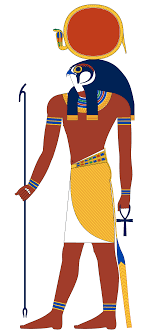
King Tantamani’s royal name, Bakare, translates to “Glorious is the Soul of Re,” reflecting his connection to the sun god Ra. His reign marked the end of the Kushite dynasty’s control over Egypt. Image: Popular depictions of Egyptian god Ra.
READ MORE: Most Revered Ancient Egyptian Gods
Conclusion
The life and reign of Tantamani, the last pharaoh of Egypt’s Twenty-fifth Dynasty, represent a significant chapter in the history of ancient Egypt and Nubia. His lineage linked him to some of the greatest Kushite rulers, and his ambition to restore full control over Egypt demonstrates the strong sense of duty and pride he felt for his family’s legacy. Although his campaigns against the Assyrians initially brought him success, the powerful response from Ashurbanipal and the Sack of Thebes effectively ended Nubian control over Egypt.
Despite losing Egypt, Tantamani continued to reign in Nubia, preserving the cultural and political traditions of the Kushite Kingdom. His burial at El-Kurru, beneath a now-lost pyramid, and the artistic richness of his tomb reflect his importance as a ruler and the reverence with which he was regarded in Kushite society. The discovery of his statue at Kerma underscores his enduring legacy and provides insight into the cultural interplay between Nubia and Egypt.
Although Tantamani’s efforts to reclaim Egypt were ultimately unsuccessful, his legacy endures, symbolizing the strength and unity of the Kushite dynasty and its influence on ancient Egyptian history.
Frequently Asked Questions

Tantamani’s reign represented the last phase of Kushite rule over Egypt, as his authority gradually diminished under the pressure of the Assyrian Empire’s expansion. His eventual retreat to Nubia marked the end of the Twenty-fifth Dynasty’s control, bringing Egypt into a new era under the native Egyptian Twenty-sixth Dynasty. Image: Tanotamun portrait in Kerma Museum
Who was Tantamani, and what was his relation to other members of the Twenty-fifth Dynasty?
Tantamani, also known as Tanutamun, was the son of King Shabaka and likely the nephew of Pharaoh Taharqa. Assyrian records identify his mother, Qalhata, as Taharqa’s sister, indicating close familial ties within the dynasty.

Tantamani’s predecessor was King Taharqa
What motivated Tantamani to invade Egypt after the Assyrians installed Necho I as a vassal ruler?
Tantamani aimed to reclaim Egypt for his family and restore Kushite control, launching an invasion from Nubia and advancing north along the Nile after the Assyrians left.
What major city did Tantamani recapture, and what happened to Necho I during this campaign?
Tantamani recaptured Memphis, Egypt’s capital, during his campaign. Necho I and other Assyrian officials were killed during this conflict.
How did the Assyrians respond to Tantamani’s victories in Egypt?
The Assyrian king Ashurbanipal, backed by Psamtik I and Carian mercenaries, returned to Egypt in 663 BCE with a large army. They defeated Tantamani near Memphis, forcing him to retreat to Upper Egypt.
What happened in Thebes following Tantamani’s retreat?
The Assyrians reached Thebes about forty days later, where they plundered the city in what is known as the Sack of Thebes. They seized immense wealth, including precious metals, gems, horses, and two large obelisks covered in electrum.

Tantamani’s life exemplifies the resilience of the Kushite dynasty, as well as the cultural and political impact they had on Egypt during their rule. Image: Statuette of god Amon dedicated by Tantamani
Why was the Sack of Thebes significant, and how is it remembered in ancient texts?
The Sack of Thebes had a profound impact on the region and is referenced in texts such as the Book of Nahum and a prophecy in the Book of Isaiah, highlighting its significance in the Near East.
What effect did the Assyrian conquest have on Nubian control in Egypt?
The Assyrian conquest effectively ended Nubian control over Egypt, although Tantamani retained some influence in Upper Egypt until his eighth regnal year in 656 BCE, when Psamtik I peacefully took control of Thebes, marking the start of Egypt’s Twenty-sixth Dynasty.
What role did Tantamani continue to play after losing control over Egypt?
After losing Egypt, Tantamani continued to rule in Nubia as king of Kush until his death in 653 BCE.
Where was Tantamani buried, and what remains of his tomb?
Tantamani was buried in the royal cemetery at El-Kurru. His tomb, originally beneath a pyramid, features a decorated entrance and interior chambers with mural paintings that reflect Kushite royal grandeur.
READ MORE: Major Events in the History of Ancient Egypt





