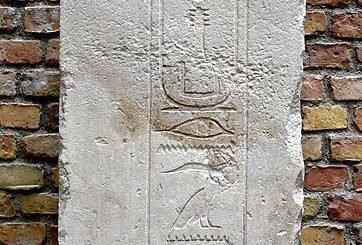
Pharaoh Senusret III

Senusret III remains one of ancient Egypt’s most influential rulers, whose military conquests, administrative reforms, and architectural projects reshaped the kingdom. Image: A statue of Senusret III at the British Museum, showing the traits that are peculiar for this king
Khakaure Senusret III, also known as Senwosret III or Sesostris III in its Hellenized form, was one of the most significant pharaohs of ancient Egypt. He ruled during the Twelfth Dynasty of the Middle Kingdom, between 1878 BC and 1839 BC. Senusret III’s reign marked a golden age of political stability, economic prosperity, and military strength, leaving behind an enduring legacy. His leadership saw vast territorial expansion, administrative reforms, and monumental construction projects that strengthened Egypt’s position both internally and externally.
READ MORE: 9 Famous Middle Kingdom Pharaohs
Family and Lineage
Senusret III was the son of Pharaoh Senusret II and Queen Khenemetneferhedjet I Weret, known as “the Elder.” He succeeded his father and married several queens, including Khenemetneferhedjet II, Itakayt, and Neferthenut. These queens played a ceremonial and familial role, evidenced by their burial sites near his pyramid complex at Dahshur.
He had several daughters, including Sithathor, Menet, Senetsenebtysy, and Mereret. However, their exact relationships remain uncertain due to limited evidence. His most prominent successor was Amenemhat III, who likely co-ruled with him for part of his reign. The absence of other known male heirs highlights Amenemhat’s critical role in continuing the dynasty.
Reign and Governance
Senusret III’s reign is often viewed as the peak of the Middle Kingdom. He centralized power by reducing the influence of regional governors (nomarchs), effectively ending their autonomy. These reforms strengthened royal authority and allowed him to oversee Egypt’s resources and administration more efficiently.
Domestically, his rule was characterized by stability, economic growth, and a renewed focus on the power of the central government. By curbing the independence of the nomarchs, Senusret III ensured a unified and tightly controlled state, setting a precedent for future rulers.
Military Campaigns
Senusret III is best known for his military leadership, particularly his campaigns into Nubia, Egypt’s southern neighbor. Between 1866 BC and 1863 BC, he launched at least four military expeditions into Nubia to secure trade routes, gold mines, and natural resources. His conquests established a clear southern border and solidified Egyptian dominance in the region.
He constructed massive fortresses along the Nile, including Buhen, Semna, Shalfak, and Uronarti. These forts acted as military outposts and protected Egypt’s borders from Nubian incursions. The Semna stela, an inscription from his 16th regnal year, records his boundary-setting declaration, warning his successors to maintain and defend the frontier.
Senusret III’s influence extended into Canaan as well, as documented by the Sebek-khu Stele. This artifact describes a campaign where Egyptian forces reached Sekmem (possibly Shechem in modern-day Israel) and subdued the “wretched Retenu” (a term for the inhabitants of the Levant). These military achievements marked the first significant Egyptian incursions into the Near East.
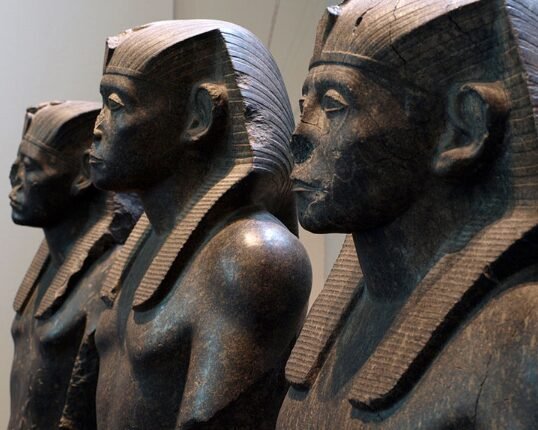
By securing Egypt’s borders and centralizing its administration, Senusret III laid the foundation for continued prosperity during the Middle Kingdom. His reign exemplifies the strength and vision of a king who balanced divine kingship with human responsibility, leaving an indelible mark on Egypt’s history. Image: Statues of Senusret III in the British Museum
Economic and Trade Contributions
Senusret III’s military efforts directly contributed to economic prosperity by securing critical trade routes and resources. His campaigns in Nubia ensured access to gold, ivory, and other precious goods that flowed into Egypt, fueling economic growth.
In addition to military efforts, Senusret III facilitated trade by clearing a navigable canal through the First Cataract of the Nile, improving transportation and commerce between Egypt and Nubia. This canal was separate from the Canal of the Pharaohs, an unfinished project linked to trade with the Red Sea.
These economic initiatives bolstered Egypt’s wealth and stability, ensuring that resources could be effectively managed under the central authority.
Architectural Achievements
Senusret III’s reign saw significant architectural contributions, reflecting his grandeur and commitment to religious devotion. His most notable construction was his pyramid complex at Dahshur, which exemplified engineering innovation and scale. The pyramid measured approximately 105 meters square and 78 meters high, with a mudbrick core encased in limestone. Surrounding the pyramid were burial sites for his queens and daughters, some of which yielded valuable treasures, including jewelry from Princess Mereret’s tomb.
Additionally, Senusret III commissioned an elaborate funerary complex at Abydos, suggesting he may have had dual burial sites. The Abydos tomb extended 30 meters underground and was aligned symbolically with Osiris, the god of the afterlife. This site later became a significant religious center for subsequent rulers.
Senusret also erected temples in Abydos and Medamud, solidifying his religious legacy. His construction efforts not only served as monuments to his reign but also strengthened his divine association with Egypt’s gods.
Art and Portraiture
Senusret III revolutionized Egyptian royal portraiture. His statues broke from the idealized depictions of earlier kings, instead portraying him with striking realism. He is often depicted with deep-set eyes, furrowed brows, prominent ears, and a solemn expression, emphasizing his humanity and the burdens of kingship.
While the face reflected a mature and contemplative ruler, the body maintained traditional youthful strength and vigor, symbolizing power and resilience. Scholars interpret these artistic choices as a representation of Senusret III’s vigilance, wisdom, and dedication to his people.

A pectoral inscribed with Senusret III’s cartouche was discovered in Mereret’s tomb at Dashur.
Religious Worship and Deification
Senusret III was one of the few Egyptian pharaohs to be deified during his lifetime. His military successes and leadership earned him reverence as a living god, particularly in Nubia, where he was worshipped extensively. His cult thrived at Semna and other locations, where he was honored for his role in protecting Egypt’s borders and maintaining order.
The “Cycle of Songs in Honor of Senusret III,” preserved in the Illahun papyri, reflects the king’s divine status. These hymns celebrated him as a conqueror, protector, and champion of prosperity, solidifying his role as a divine ruler. Even after his death, Senusret III’s cult persisted for centuries, particularly at Abydos, where his funerary complex became a focus of worship.
Length of Reign and Coregency
Senusret III likely ruled for 39 years, with evidence suggesting a coregency with his son, Amenemhat III, beginning around the 20th year of his reign. A double-dated papyrus and construction records support this theory. However, some scholars argue that Amenemhat III may have completed projects initiated during Senusret III’s reign, rather than co-ruling alongside him.

Statue of Amenemhat III in the Pushkin Museum, Moscow
Legacy and Influence
Senusret III’s reign left an indelible mark on Egyptian history. His military campaigns secured Egypt’s borders and resources, ensuring peace and economic stability. His administrative reforms centralized power, laying the groundwork for future rulers to maintain control over a unified state.
Architecturally, his pyramid complex and Abydos funerary site demonstrated innovation and reinforced his divine association with Osiris. His artistic legacy, through realistic portraits, set a new standard for royal representation, reflecting the king’s humanity and vigilance.
Senusret III’s deification and enduring cult highlight the profound respect and reverence he commanded during and after his reign. His achievements earned him a place as one of the greatest pharaohs of the Middle Kingdom, inspiring future generations and solidifying his legendary status.
Frequently Asked Questions

Senusret III was a powerful pharaoh of ancient Egypt’s Twelfth Dynasty, ruling from 1878 to 1839 BC during the Middle Kingdom, a time of stability and prosperity. Image: Head of King Senusret III at the Calouste Gulbenkian Museum, with its nose remarkably intact.
What were Senusret III’s military achievements?
Senusret III led multiple campaigns into Nubia, securing Egypt’s southern borders, building fortresses like Buhen and Semna, and extending influence into Canaan, as recorded on the Sebek-khu Stele.
How did Senusret III strengthen Egypt’s administration?
He centralized power by reducing the influence of regional governors (nomarchs), solidifying the monarchy’s control over Egypt.
What are Senusret III’s major architectural contributions?
He constructed a pyramid complex at Dahshur, temples in Abydos and Medamud, and an extensive funerary complex at Abydos that connected him symbolically to Osiris.
What made Senusret III’s statues unique?
His statues displayed realistic features like furrowed brows and deep-set eyes, portraying him as a vigilant and burdened ruler, in contrast to the traditional idealized imagery.
Why was Senusret III deified during his lifetime?
His military successes and leadership led to his worship as a god, particularly in Nubia and at Semna, where his cult endured for centuries.
What role did Senusret III play in Egyptian trade?
He cleared a canal through the First Cataract of the Nile, facilitating smoother trade and transportation between Egypt and Nubia.

Ruins of Pyramid of Pharaoh Senusret III at Dahshur
How long did Senusret III rule Egypt?
Senusret III reigned for approximately 39 years, possibly sharing a coregency with his son, Amenemhat III, during the final 20 years.
What significance did Abydos hold for Senusret III?
Abydos became a center of his posthumous cult, with a vast funerary complex symbolizing his connection to Osiris and serving as a religious hub for later kings.
What legacy did Senusret III leave behind?
Senusret III’s reign marked the peak of the Middle Kingdom, with his military, administrative, and religious reforms leaving an enduring impact on Egypt’s stability and cultural heritage.

The duration and achievements of Senusret III’s reign reflect his dedication to maintaining Egypt’s strength and legacy. Image: The Year 16 border stela of Senusret III (Altes Museum), Berlin