Pierre de Coubertin

Early Life and Background
Pierre de Coubertin was born as Charles Pierre de Frédy on January 1, 1863, in Paris, France, into an aristocratic family. His father, Charles Louis de Frédy, was an artist and staunch royalist. Growing up during the politically turbulent period of the Franco-Prussian War and the establishment of the French Third Republic, Coubertin’s worldview was shaped by these events. Educated at the Jesuit-run Externat de la rue de Vienne, he excelled academically and developed a deep interest in education and moral development.
Passion for Education and Sport
Coubertin’s focus on education was inspired by his belief that a well-rounded individual requires both intellectual and physical training. In 1883, he traveled to England and studied Thomas Arnold’s educational model at Rugby School, which emphasized the integration of sports into academics. Coubertin admired the role of sport in character-building and social cohesion and sought to introduce similar practices into French schools. His philosophy also drew inspiration from the ancient Greek concept of the gymnasium, which combined physical and intellectual development.
Vision for Reviving the Olympic Games
In the late 19th century, Coubertin became captivated by the idea of reviving the Olympic Games as a global athletic event. Influenced by figures such as William Penny Brookes, who had organized local “Olympian” competitions in England, and Greek philanthropists like Evangelos and Konstantinos Zappas, Coubertin envisioned an international sporting festival. He saw the Olympics as a way to promote peace, cultural exchange, and the value of amateur athleticism.
Founding of the IOC and the First Modern Olympics
In 1894, Coubertin organized a congress at the Sorbonne in Paris to discuss the revival of the Olympics. This meeting resulted in the establishment of the International Olympic Committee (IOC), with Coubertin serving as its secretary-general and later as its second president. The first modern Olympic Games were held in Athens in 1896. Despite initial challenges, such as limited funding and skepticism, the Games were a success and laid the foundation for future Olympic events.
Challenges and Growth of the Olympics
Coubertin faced numerous challenges in the early years of the Olympics. The 1900 Paris Games and the 1904 St. Louis Games were overshadowed by World’s Fairs, leading to low public interest. Despite these setbacks, Coubertin remained committed to expanding the Olympic movement. His leadership and perseverance helped establish the Games as a major international event. The 1906 Intercalated Games in Athens were particularly instrumental in reviving momentum for the Olympics.
Contributions to the Olympic Movement
Coubertin introduced the modern pentathlon to the 1912 Olympics, reflecting his belief in testing both physical and mental endurance. He also emphasized the cultural and educational aspects of the Games, incorporating arts and literature competitions. Coubertin’s philosophy centered on the idea that participation and effort mattered more than victory, captured in his famous motto: “The important thing in life is not the triumph but the struggle.”
Later Life and Personal Tragedies
In 1895, Coubertin married Marie Rothan, and the couple had two children. His later years were marked by personal losses, including the deaths of family members during World War I. Coubertin retired as IOC president in 1925, but he continued to support the Olympic movement. He died on September 2, 1937, in Geneva, Switzerland. Honoring his wishes, his heart was interred in Olympia, Greece, symbolizing his lifelong dedication to the Olympic ideal.
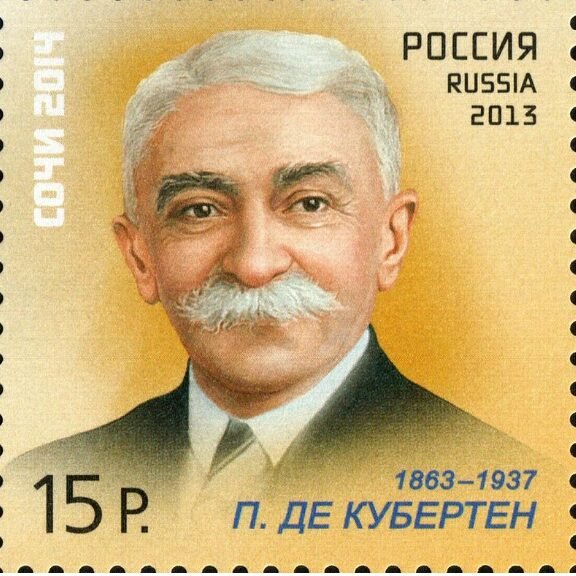
Russian postage stamp of Pierre de Coubertin
Legacy and Honors
Pierre de Coubertin’s legacy endures in the modern Olympic movement. The Pierre de Coubertin Medal, awarded for sportsmanship and fair play, and the Pierre de Coubertin World Trophy honor his contributions. His vision of the Olympics as a unifying force for humanity is reflected in the updated Olympic motto: “Faster, Higher, Stronger – Together.” Despite some criticisms of his romanticized view of ancient Greece and amateurism, Coubertin’s efforts have left an indelible mark on global sports culture.
Frequently Asked Questions
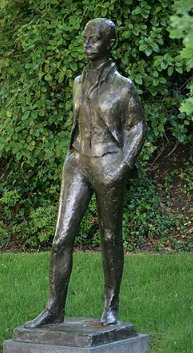
Pierre de Coubertin was a French educator, historian, and sports visionary, best known as the “father of the modern Olympic Games.” He co-founded the International Olympic Committee (IOC) and served as its second president. Image: Statue of Pierre de Coubertin at Lausanne
What inspired Coubertin to revive the Olympic Games?
Coubertin was inspired by ancient Greek traditions, Thomas Arnold’s educational model at Rugby School, and the efforts of figures like William Penny Brookes and Greek philanthropists to promote athletic competitions.
When and where were the first modern Olympic Games held?
The first modern Olympic Games were held in Athens, Greece, in 1896, following Coubertin’s proposal at the 1894 congress in Paris.
What were Coubertin’s key contributions to the Olympic Games?
Coubertin established the International Olympic Committee (IOC), introduced the modern pentathlon in 1912, and incorporated cultural and educational elements into the Games.
What was Coubertin’s Olympic philosophy?
He believed in the value of participation over victory, encapsulated in his famous motto: “The important thing in life is not the triumph but the struggle.”
What challenges did Coubertin face in organizing the Olympic Games?
Early Olympic Games faced limited attention, organizational hurdles, and competition with World’s Fairs. Coubertin also had to navigate international tensions and skepticism about his vision.
How did Coubertin influence physical education in France?
Coubertin advocated integrating physical education into French schools, inspired by the English model of combining sports with academics to foster character development.
What personal hardships did Coubertin face later in life?
Coubertin endured personal tragedies, including the loss of family members during World War I. He remained committed to his ideals until his death in 1937.
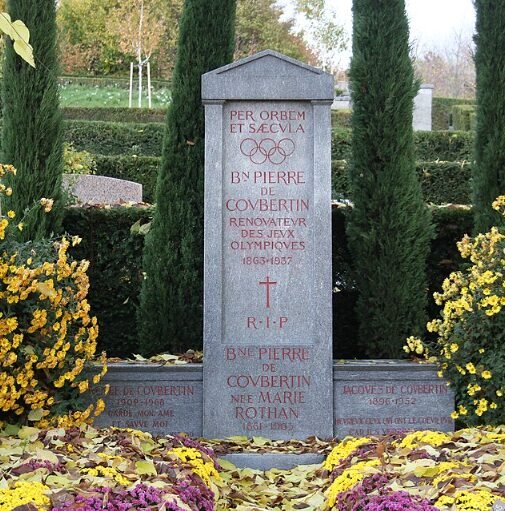
Grave of Pierre de Coubertin
What honors commemorate Coubertin’s legacy?
The Pierre de Coubertin Medal and World Trophy recognize sportsmanship and fair play, while his influence is celebrated through the Olympic motto, “Faster, Higher, Stronger – Together.”
Why has Coubertin’s vision been criticized?
Critics argue that Coubertin’s romanticized view of ancient Greece and emphasis on amateurism were idealistic and not historically accurate. His belief in sport as a force for peace has also been questioned.





