Reinheitsgebot: The German Beer Purity Law
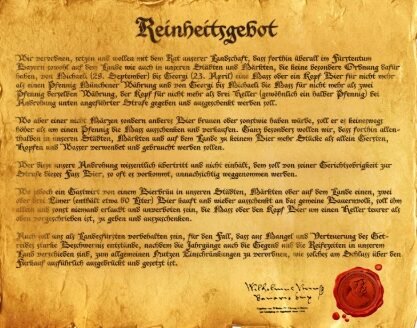
The Reinheitsgebot is Germany’s beer purity law established in 1516, declaring that beer must contain only malted barley, hops, and water; yeast was added after its role was understood in the 1800s.
This weekend marks the 508th anniversary of the Reinheitsgebot, also known as the German Beer Purity Law, introduced by Duke Wilhelm IV of Bavaria in 1516. Beer enthusiasts across Germany celebrate this historic regulation with events that not only honor the tradition but also offer opportunities to enjoy beer at subsidized prices. Even prominent figures participate in these festivities, highlighting the law’s enduring significance in German culture.
In the article below, World History Edu delves into the origins and purpose of the purity law.
Summary
The Reinheitsgebot, commonly known as the German Beer Purity Law, is one of the most significant regulations in the history of brewing. Its most influential predecessor was a law adopted in the Duchy of Bavaria-Munich in 1487. After the reunification of Bavaria, this Munich law was extended across the entire region on April 23, 1516. As Germany moved toward unification, Bavaria advocated for the national adoption of this law, emphasizing its importance in maintaining the quality and purity of beer.
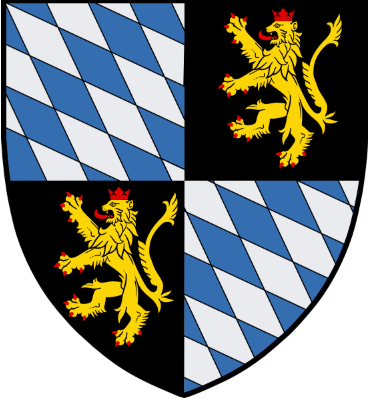
In 1487, the first German Beer Purity Law (Reinheitsgebot) was promulgated in Munich by Albert IV, Duke of Bavaria, stating beer should be brewed from only three ingredients – water, malt and hops. While German brewers can use adjuncts, they cannot label such beers as lagers within Germany. The law ensures purity but limits diversity. Image: Coat of arms of the Dukes of Bavaria-Munich
Permitted Ingredients
The Reinheitsgebot, also known as the German Beer Purity Law, was introduced in 1516 by Duke Wilhelm IV of Bavaria. It sets strict rules on the ingredients that can be used in beer production to ensure purity and quality.
According to the Bavarian law, beer production was restricted to three ingredients: water, barley, and hops. Notably, yeast was not mentioned in the original text.
At the time, brewers were aware of yeast’s role in fermentation but considered it a natural part of the brewing process rather than a separate ingredient. Yeast from one batch was often used to start fermentation in the next, giving it a continuous presence. The scientific understanding of yeast and fermentation came much later, with the work of Louis Pasteur in the 19th century.
Additional Regulations
Beyond ingredient restrictions, the 1516 law also regulated the price of beer based on the time of year and type of beer. It limited the profits of innkeepers and imposed penalties, including confiscation of beer, for those who violated its provisions. These measures aimed to prevent price gouging and ensure that beer remained affordable for the general population.

The Reinheitsgebot (“purity order”) is a German beer regulation limiting ingredients to specific types. The most renowned version was adopted in Bavaria in 1516 by William IV, though similar rules existed earlier. Modern regulations differ significantly from the original Bavarian law. Image: Portrait of William IV, Duke of Bavaria, by German painter Barthel Beham, 1533
Purpose of the Law
The primary motivation behind the Reinheitsgebot was to prevent price competition between brewers and bakers for essential grains like wheat and rye. By restricting beer ingredients to barley, wheat and rye were reserved exclusively for bread production, ensuring the availability of affordable bread. This was crucial during times when food scarcity could lead to social unrest.
Brewers adhering to the Reinheitsgebot avoid adjuncts like corn or rice, but it also excludes “desirable” adjuncts like oatmeal used in stouts.
The law may also have had protectionist motives. Beers from Northern Germany often contained additives not available or grown in Bavaria. By limiting ingredients, Bavaria could protect its local brewers from outside competition.
Religious and health considerations played a role as well. The law suppressed the use of certain plants associated with pagan rituals and potential health risks, such as gruit, henbane, belladonna, and wormwood. Additionally, it prohibited harmful preservation methods involving substances like soot and stinging nettle.
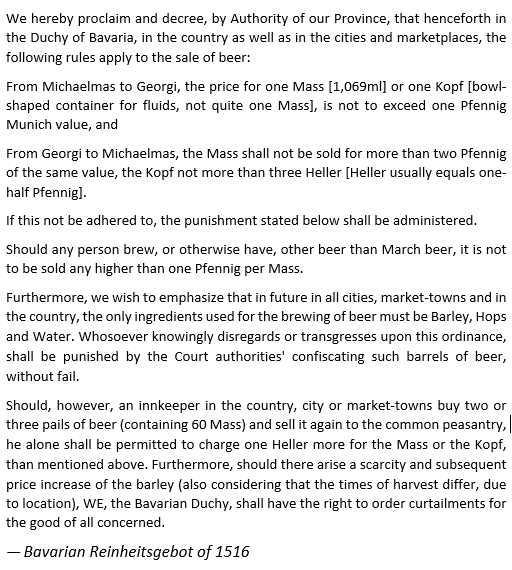
Bavarian Reinheitsgebot of 1516 (emphasis added), Eden, Karl J. (1993). “History of German Brewing”. Zymurgy. 16 (4).
Significance and Evolution
While some sources mistakenly claim that the 1516 law was the first food safety regulation, earlier food safety laws date back to ancient Rome. Moreover, the Reinheitsgebot has not remained unchanged since its inception. By the mid-1500s, Bavaria began allowing additional ingredients like coriander, bay leaf, and wheat. Yeast was eventually recognized and included in modern versions of the law after its role in fermentation was scientifically understood.
The Reinheitsgebot remains the most famous beer regulation globally and continues to influence brewing practices in Germany and around the world. It has become a symbol of quality and tradition in beer production.
Impact on Beer Diversity in Germany
Modern versions of the law have introduced significant exceptions for different beer types, such as top-fermented beers, export beers, and regional specialties. The basic law now permits only malted barley, wheat, or rye, hops, water, and yeast. It strictly forbids the use of adjuncts like rice, corn, sorghum, and other grains favored by some brewers to lighten the beer’s taste or reduce production costs.
In response to the global growth of craft breweries, some commentators, German brewers, and politicians have argued that the Reinheitsgebot has hindered Germany’s adoption of popular beer trends, such as Belgian lambics and American craft styles. In late 2015, Bavarian brewers voted in favor of revising the beer laws to allow other natural ingredients. Despite these changes, many German brewers continue to adhere to the original 1516 purity law, viewing it as an integral part of their national identity.
Historical Context
Until the mid-20th century, the Reinheitsgebot was relatively unknown outside Bavaria and was inconsistently applied across Germany. During this period, Bavarian brewers rallied around the law to protect themselves against competition amid European market integration.
Predecessors
Before the 1516 law, various beer regulations existed in German territories. The earliest documented mention of beer by a German nobleman dates back to 974, when Emperor Otto II granted a brewing license to the church at Liège (now in Belgium). Other regulations appeared in Nuremberg in 1293, Erfurt in 1351, and Weißensee in 1434, reflecting a long-standing tradition of beer regulation.
Broader Adoption
The 1516 Bavarian law gradually influenced beer regulations throughout Germany. Bavaria insisted on its application as a condition for German unification in 1871, but this move faced strong resistance from brewers outside Bavaria. The imperial law of 1873 taxed the use of non-traditional ingredients instead of banning them outright when used by Northern German brewers. It was not until 1906 that the law was applied consistently across all of Germany, and it was not formally referred to as the Reinheitsgebot until the Weimar Republic era.
In 1952, the basic regulations of the Reinheitsgebot were incorporated into West Germany’s Beer Taxation Law (Biersteuergesetz). Bavarian law remained stricter than that of the rest of the country, leading to legal conflicts during the 1950s and early 1960s. Initially, the law applied only to bottom-fermented (lager) beers, but brewers of other beer types eventually accepted it.
International Influence
Outside Germany, the Reinheitsgebot was formally incorporated into Greek law by the country’s first king, Otto, who was originally a Bavarian prince. German brewers at the Tsingtao Brewery in the German colony of Qingdao, China, also voluntarily followed the law, showcasing its international reach.
Modern Changes and Legal Challenges
In March 1987, French brewers challenged the Reinheitsgebot, leading to a ruling by the European Court of Justice that the law was protectionist and violated Article 30 of the Treaty of Rome. This decision applied only to imported beer, so Germany continued to enforce the law for domestically brewed beer. Greece’s version of the Reinheitsgebot was struck down around the same time.
After German reunification in 1990, the Neuzeller Kloster Brewery in East Germany faced legal issues for adding sugar to its black beer, which was against the purity law. Following a decade-long legal battle known as the “Brandenburg Beer War,” the brewery regained the right to label its product as beer.
Historically, the Reinheitsgebot was enforced only in Bavaria and, from 1906, throughout Germany, having minimal impact in other countries or regions. Today, it is frequently referenced in discussions about beer history.
The revised Provisional Beer Law (Vorläufiges Biergesetz) of 1993 expanded upon the original Reinheitsgebot. It stipulated that only water, malted barley, hops, and yeast could be used for any bottom-fermented beer brewed in Germany. The law also allowed the use of powdered or ground hops, hop extracts, and certain stabilizing and fining agents like PVPP. For top-fermented beers, a wider variety of malted grains and pure sugars for flavor and coloring were permitted.
A 2005 court ruling further limited the law’s applicability, allowing the sale of beer with different ingredients as long as it was not labeled simply as “beer.” The law thus became more of a labeling standard than a strict ingredient regulation. Exceptions have been granted, such as allowing gluten-free beers to be labeled as beer despite using alternative ingredients.
Marketing and Cultural Significance
Many German brewers continue to use the term “Reinheitsgebot” in their labeling and marketing, capitalizing on strong German consumer preferences. Labeling beer as compliant with the Reinheitsgebot is considered a valuable marketing tool, symbolizing purity and tradition.
German brewers have also attempted to promote the law internationally, including a failed bid to have it recognized by UNESCO as part of the intangible cultural heritage. Some breweries outside Germany claim compliance with the Reinheitsgebot as part of their marketing strategy. These include:
- Bierstadt Lagerhaus in Denver, Colorado
- WEST Brewery in Glasgow, Scotland
- Gordon Biersch in California
- Red Oak Brewery in Whitsett, North Carolina
- Olde Mecklenburg Brewery in Charlotte, North Carolina
- Namibia Breweries in Windhoek, Namibia
- Steam Whistle Brewing in Toronto, Ontario
These breweries adopt the Reinheitsgebot standards to appeal to consumers seeking traditional brewing methods.
For some vegans, adherence to the Reinheitsgebot serves as an indication that the beer does not contain animal-derived ingredients, as the law restricts additives to those derived from the permitted ingredients. This is significant in regions without legislation requiring full disclosure of beer ingredients.
Others view the law as integral to Germany’s national identity, ensuring consistent quality and preserving traditional brewing methods.
Criticism and Calls for Reform
Critics argue that the Reinheitsgebot has limited innovation in German brewing by restricting the use of alternative ingredients and styles. The global craft beer movement has embraced a wide variety of flavors and brewing techniques, often incorporating fruits, spices, and unconventional grains. German brewers who wish to experiment with these styles may find themselves constrained by the traditional purity law.
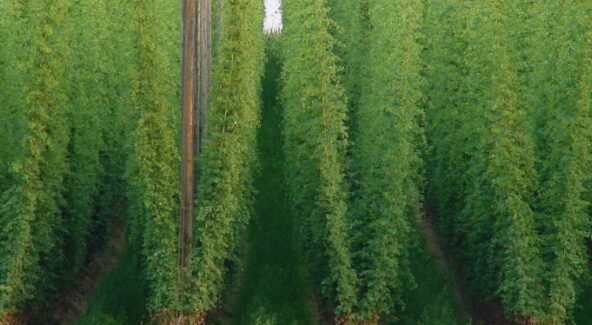
Some brewers argue that the purity law leads to uniformity in beer flavors and styles, discouraging innovation and favoring industrial-scale production over artisanal brewing. Image: Hop yard in Germany
In response to these concerns, there have been movements within Germany to modernize the law. Some brewers and politicians advocate for revisions that would allow more creative freedom while still maintaining high-quality standards. The 2015 vote by Bavarian brewers in favor of allowing other natural ingredients reflects a shift toward embracing broader brewing traditions.
Conclusion
The Reinheitsgebot has played a pivotal role in shaping beer production in Germany and has left a lasting impact on brewing practices worldwide. Originating as a means to regulate ingredients, ensure quality, and protect resources, it has evolved over centuries in response to scientific advancements, legal challenges, and changing consumer preferences.
While some view the law as a cherished tradition that upholds the purity and integrity of German beer, others see it as a hindrance to innovation and adaptation in a globalized market. The ongoing debate reflects the tension between preserving cultural heritage and embracing modern trends.
Ultimately, the Reinheitsgebot symbolizes more than just a set of brewing regulations; it represents a connection to history, culture, and identity. Whether adhered to strictly or adapted for contemporary tastes, its influence on the brewing world is undeniable. As the beer industry continues to evolve, the Reinheitsgebot will remain a significant touchstone in discussions about quality, tradition, and the future of brewing.
Beer in the Ancient World: Production Processes & Variations in Various Civilizations
Frequently Asked Questions

The Reinheitsgebot, commonly known as the German Beer Purity Law, is one of the most significant regulations in brewing history because it established strict guidelines for beer production to ensure quality and purity.
When and where was the most influential predecessor of the Reinheitsgebot adopted?
It was adopted in the Duchy of Bavaria-Munich in 1487.
When was the Reinheitsgebot extended across the entire region of Bavaria?
After the reunification of Bavaria, the law was extended across the entire region on April 23, 1516.
What ingredients were permitted in beer production according to the 1516 Bavarian law?
The law restricted beer production to three ingredients: water, barley, and hops.

The Reinheitsgebot is significant today as one of the world’s oldest consumer protection laws still in effect, symbolizing Germany’s rich brewing tradition and cultural heritage.
Why was yeast not mentioned in the original 1516 Reinheitsgebot?
Yeast was not mentioned because, at the time, brewers considered it a natural part of the brewing process rather than a separate ingredient; the scientific understanding of yeast came much later.
Besides ingredient restrictions, what other regulations did the 1516 law impose?
It regulated the price of beer based on the time of year and type, limited innkeepers’ profits, and imposed penalties, including confiscation of beer, for violations.
What was the primary purpose behind implementing the Reinheitsgebot?
The main purpose was to prevent price competition between brewers and bakers for essential grains like wheat and rye, reserving these grains for bread production to ensure affordable bread for the population.
How did the Reinheitsgebot serve protectionist motives for Bavarian brewers?
By limiting beer ingredients to those available in Bavaria, it protected local brewers from outside competition, particularly from Northern German beers that used additives not grown in Bavaria.
What impact has the Reinheitsgebot had on beer diversity in Germany?
Critics argue that it has limited innovation by restricting alternative ingredients and styles, potentially hindering Germany’s adoption of popular global beer trends like Belgian lambics and American craft beers.
Why did the Reinheitsgebot restrict the use of wheat and rye in beer production?
It restricted wheat and rye to reserve these essential grains exclusively for bread-making, ensuring staple foods remained available and affordable, especially during times of potential food scarcity.
What harmful ingredients did the Reinheitsgebot aim to eliminate from beer?
The law sought to eliminate toxic or undesirable ingredients such as henbane, thorn-apple, wood shavings, roots, soot, and pitch, which some brewers had used to enhance flavor or preserve beer, posing health risks to consumers.

The original law permitted only three ingredients in beer production: barley, hops, and water.
Why was yeast not mentioned in the original Reinheitsgebot, and how is it regarded now?
Yeast was not mentioned because its role in fermentation was not scientifically understood at the time. Brewers knew fermentation occurred but didn’t recognize yeast as a separate ingredient. Today, yeast is included in the list of permitted ingredients, acknowledging its essential role.
How did the Reinheitsgebot become a national law in Germany?
After its introduction in Bavaria, the law was gradually adopted by other southern German regions. By 1906, it became law throughout the entire country, unifying German beer production standards and solidifying Germany’s reputation for high-quality beer.
Did you know…?
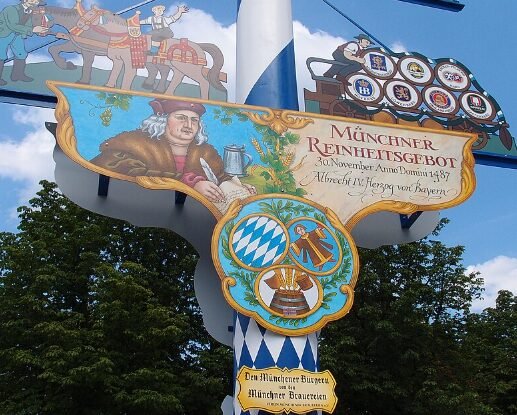
Sign celebrating the 1487 Munich Reinheitsgebot
- Beers brewed according to the Reinheitsgebot have a protected traditional foodstuff status under European Union laws, recognizing their historical and cultural importance.
- European Union law requires Germany to allow the sale of beers brewed elsewhere that do not comply with the Reinheitsgebot, introducing greater diversity into the German beer market while German brewers continue to adhere to the purity law.
- German brewers have developed gluten-free beer by using a new variety of Australian barley that is low in gluten. This innovation allows those with gluten intolerance to enjoy beer without compromising the purity standards set by the Reinheitsgebot.
- Non-alcoholic beers adhering to the Reinheitsgebot are available. They are produced by either inhibiting alcohol production during fermentation or removing alcohol after brewing, ensuring the beer remains true to the four-ingredient rule while catering to those who avoid alcohol.