Peyton Randolph: First President of the Continental Congress
Peyton Randolph (September 10, 1721 – October 22, 1775) was a distinguished American politician and planter from Virginia, revered as one of the Founding Fathers of the United States.
Born into one of Virginia’s most affluent and influential families at Tazewell Hall in Williamsburg, Randolph’s life was marked by significant political achievements and notable public service.
He played a pivotal role in the early stages of the American Revolution, particularly through his leadership in the Virginia House of Burgesses and the Continental Congress. As the first president of the Continental Congress, Randolph’s contributions were instrumental in shaping the path toward American independence.
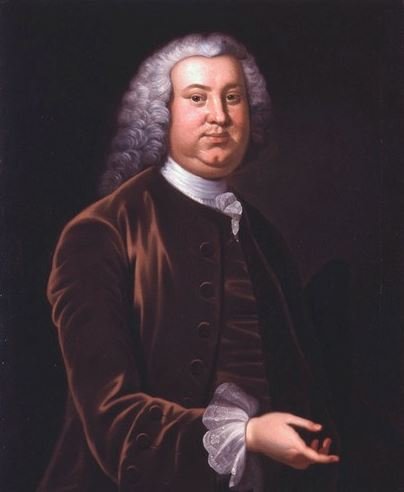
Born into Virginia’s elite, Peyton Randolph served as Speaker of the Virginia House of Burgesses, president of the first two Virginia Conventions, and president of the First Continental Congress, briefly leading the Second Continental Congress as well.
Early Life and Education
Peyton Randolph was born into privilege and political influence. His father, Sir John Randolph, and his brother, John Randolph, were prominent figures in Virginia’s political scene, embedding Peyton deeply into the colony’s elite society. At the age of fifteen, Peyton faced personal tragedy with the death of his father, an event that likely influenced his future pursuits and responsibilities.
Randolph pursued higher education at the College of William & Mary, where he developed a robust foundation in classical studies. Demonstrating a keen intellect and ambition, he sought to enhance his legal expertise by traveling to London. There, he studied law at Middle Temple within the Inns of Court, one of the prestigious legal institutions in England.
By 1743, Randolph had qualified as a member of the bar, returning to Williamsburg as a well-educated and legally trained individual prepared to embark on a career in law and politics.
Entry into Politics
Williamsburg, the capital of the Colony of Virginia, served as the epicenter of Randolph’s political career. Following a family tradition of public service, Randolph entered the Virginia House of Burgesses, the colonial legislative assembly where his ancestors had also served as speakers. His election to the House of Burgesses in 1748 marked the beginning of a long and influential tenure in colonial governance.
In the same year, Randolph was appointed Attorney General of Virginia, a position he held concurrently with his role as a burgess. This dual responsibility highlighted his significant influence within both the legal and legislative branches of the colony’s government. His role as Attorney General underscored his legal expertise, while his position in the House of Burgesses emphasized his legislative prowess.
Conflict of Interest and Advocacy
In 1751, Randolph encountered a notable conflict of interest that tested his loyalty and integrity. Governor Robert Dinwiddie had introduced a fee for certifying land patents, a move that the House of Burgesses strongly opposed. The House selected Randolph to present their objections to the British authorities in London. This situation placed Randolph in a challenging position: as Attorney General, he was responsible for defending the governor’s actions, yet his role as a burgess required him to advocate against the fee.
Choosing to support the House of Burgesses, Randolph traveled to London to represent their objections, despite Governor Dinwiddie’s disapproval. This decision demonstrated his commitment to the legislative body and its interests, prioritizing the collective stance of the House over his duty to defend the governor.
Randolph’s actions led to his temporary replacement by George Wythe, but he was reinstated upon his return after British officials recommended the removal of the contested fee. This episode highlighted Randolph’s dedication to his constituents and his ability to navigate complex political landscapes.
Opposition to the Stamp Act
Randolph’s political influence continued to expand, placing him at the forefront of colonial resistance to British policies. In 1765, he found himself in opposition to Patrick Henry regarding the colony’s response to the Stamp Act, a significant piece of legislation imposed by the British Parliament. The House of Burgesses appointed Randolph to draft objections to the act, reflecting his position as a moderate and conservative leader within the colonial assembly.
However, Randolph’s approach was overshadowed by Patrick Henry’s more radical stance, encapsulated in the Virginia Stamp Act Resolutions. These resolutions, which advocated for more stringent opposition to the Stamp Act, ultimately prevailed over Randolph’s conservative proposals.
The passage of Henry’s resolutions during a meeting of the House of Burgesses, where most members were absent and Randolph was presiding in the absence of the speaker, underscored the growing influence of more radical voices within the colonial resistance movement.
Speaker of the House of Burgesses and Financial Scandal
In 1766, following the death of Speaker John Robinson, Peyton Randolph was elected as the new Speaker of the House of Burgesses. This elevation to the speaker’s role further cemented his status as a leading figure in Virginia politics.
However, his tenure was soon marred by a financial scandal. The House appointed Randolph as one of the executors of Robinson’s estate, a decision that generated significant controversy due to potential conflicts of interest and questions about propriety.
Despite the scandal, Randolph maintained his position and continued to influence colonial politics. His ability to navigate this controversy demonstrated his resilience and the respect he commanded among his peers, even in the face of contentious circumstances.
Advocacy for Independence and Leadership in Colonial Resistance
As tensions between Britain and the American colonies escalated, Randolph increasingly aligned himself with the push for independence. The dissolution of the House of Burgesses by Governor Norborne Berkeley in 1769, in response to colonial resistance against the Townshend Acts, and again in 1774 by Governor John Murray following solidarity actions with Boston, underscored the intensifying conflict.
Randolph played a crucial role in organizing resistance efforts within Virginia. In 1773, he chaired the Virginia Committee of Correspondence, which facilitated communication and coordination among the colonies in response to British policies. Additionally, Randolph led the Virginia Conventions, legislative bodies that sought to address and counteract British impositions.
Notably, Randolph presided over the Second Virginia Convention in March 1775, a pivotal gathering that debated the colony’s stance on independence. This convention was marked by intense debates, including Patrick Henry’s iconic “Give me liberty, or give me death!” speech, which epitomized the fervent desire for freedom among the colonists.
Origin Story of the Phrase “Give me liberty or give me death!”
Role in the Continental Congress
In June 1775, Randolph was selected as a delegate to the Continental Congress in Philadelphia, representing Virginia. His leadership and experience made him a key figure in the early stages of the American Revolution. Randolph was elected president of both the First and Second Continental Congresses, although his tenure was hampered by health issues.
Under Randolph’s presidency, the First Continental Congress adopted the Continental Association, a collective trade boycott designed to protest the Intolerable Acts imposed by the British Parliament. This agreement marked a significant step toward unified colonial resistance and laid the groundwork for future coordinated actions against British policies.
Despite falling ill during his terms, Randolph’s leadership was instrumental in guiding the colonies toward greater unity and cooperation. His role in the Continental Congress underscored his commitment to the cause of independence and his ability to inspire collective action among the disparate colonies.

In 1774, he signed the Continental Association boycott against the British Intolerable Acts. Randolph was a first cousin once removed of Thomas Jefferson and related to John Marshall and Robert E. Lee. Image: Portrait of John Marshall.
Death and Legacy
Peyton Randolph’s life was tragically cut short on October 22, 1775, when he suffered a severe fit of apoplexy while dining with Thomas Jefferson in Philadelphia. His untimely death marked the end of a significant career dedicated to the pursuit of American independence and public service.
Randolph was honored posthumously in various ways. Naval vessels, such as the USS Randolph, and counties across several states, including Randolph County in North Carolina, Massachusetts, and Indiana, were named in his memory. Additionally, the Peyton Randolph House in Colonial Williamsburg, a National Historic Landmark, stands as a testament to his contributions and legacy.
Randolph’s role as Speaker of the House of Burgesses and president of the Continental Congress positioned him as a central figure in the organization of colonial resistance and the establishment of unified action among the American colonies. His leadership, dedication to public service, and commitment to the principles of liberty and independence exemplify the qualities of the Founding Fathers who were instrumental in shaping the early political landscape of the United States.
Conclusion
Peyton Randolph’s life and political career were marked by significant contributions to the American Revolution and the founding of the United States. From his early education and legal training to his influential roles in the Virginia House of Burgesses and the Continental Congress, Randolph played a crucial role in organizing and leading colonial resistance against British oppression. His ability to navigate complex political landscapes, advocate for his constituents, and inspire collective action underscores his importance as a Founding Father.
Despite facing personal tragedies and political controversies, Randolph remained steadfast in his commitment to the cause of independence. His legacy endures through the public works he commissioned, the institutions he helped shape, and the lasting impact of his leadership on the formation of the United States. Peyton Randolph’s dedication to public service and his pivotal role in the early stages of the American Revolution continue to be remembered and honored as foundational elements in American history.
Randolph’s contributions highlight the importance of leadership, resilience, and dedication in the face of adversity. As the first president of the Continental Congress, he set precedents for future governance and unity among the American colonies. His efforts in fostering communication, coordination, and collective action were vital in the successful pursuit of independence, ultimately leading to the establishment of a new nation founded on principles of liberty and self-governance.
In summary, Peyton Randolph was a key architect of American independence, whose life and work exemplified the spirit of the Founding Fathers. His legacy is preserved through historical landmarks, commemorations, and the enduring recognition of his role in the creation of the United States. Randolph’s story is a testament to the impact that dedicated individuals can have on the course of history, shaping the destiny of nations through their vision, leadership, and unwavering commitment to the greater good.
Frequently Asked Questions
Where and when was Peyton Randolph born, and what was his family background?
Peyton Randolph was born on September 10, 1721, at Tazewell Hall in Williamsburg, Virginia. He hailed from one of Virginia’s most affluent and influential families. His father, Sir John Randolph, and his brother, John Randolph, were significant political figures in Virginia, embedding Peyton deeply into the colony’s elite society.
What education did Peyton Randolph receive, and how did it prepare him for his career?
Randolph attended the College of William & Mary, where he developed a strong foundation in classical studies. He furthered his education by studying law at Middle Temple within the Inns of Court in London, becoming a member of the bar in 1743. This extensive education in rhetoric, philosophy, and law prepared him for his future roles in politics and public service.
How did Randolph’s dual roles as Attorney General and burgess lead to a conflict of interest in 1751?
In 1751, Governor Robert Dinwiddie imposed a fee for certifying land patents, which the House of Burgesses opposed. As both Attorney General and a burgess, Randolph faced a conflict of interest. The House selected him to present their objections to British authorities in London, despite his duty to defend the governor’s actions. Randolph chose to support the House’s stance, leading to his temporary replacement by George Wythe until he was reinstated after the contested fee was dropped.
What was Randolph’s involvement in the opposition to the Stamp Act in 1765?
In 1765, Peyton Randolph was appointed to draft objections to the Stamp Act. However, his conservative approach was overshadowed by Patrick Henry’s more radical Virginia Stamp Act Resolutions, which ultimately prevailed. Henry’s proposals were approved during a meeting of the House of Burgesses where most members were absent, and Randolph was presiding in the speaker’s absence.
How did Randolph become the Speaker of the House of Burgesses, and what controversy arose during his tenure?
He was elected as the new Speaker of the House of Burgesses in 1766 following the death of Speaker John Robinson. During his tenure, he was involved in a financial scandal when the House appointed him as one of the executors of Robinson’s estate, a decision that caused significant controversy due to the potential conflict of interest.
What roles did Randolph play in the Virginia resistance against British policies?
Randolph was instrumental in organizing resistance against British policies. He chaired the Virginia Committee of Correspondence in 1773 and led the Virginia Conventions that addressed British impositions. Notably, he presided over the Second Virginia Convention in 1775, where debates on independence were intense, including Patrick Henry’s famous “Give me liberty, or give me death!” speech.
What was Randolph’s role in the Continental Congress, and what significant actions did he oversee?
Randolph was a delegate to the Continental Congress in Philadelphia in 1774 and 1775. He was elected president of both the First and Second Continental Congresses. Under his leadership, the First Continental Congress adopted the Continental Association, a collective trade boycott in response to the Intolerable Acts. Despite falling ill, Randolph’s leadership was crucial in guiding the colonies toward unified action against British policies.
How did Peyton Randolph’s life end, and what were the circumstances surrounding his death?
Peyton Randolph died on October 22, 1775, after suffering a severe fit of apoplexy while dining with Thomas Jefferson in Philadelphia. His death marked the end of a significant career dedicated to the cause of American independence. He was honored posthumously, with naval vessels and counties named after him, and his legacy preserved through landmarks such as the Peyton Randolph House in Colonial Williamsburg.
What familial connections did Randolph have with other notable American figures?
Randolph was a first cousin once removed of Thomas Jefferson. He was also related to John Marshall, the fourth Chief Justice of the United States, and Robert E. Lee, the commander of the Confederate States Army during the American Civil War. These connections highlight his integration into a network of influential American families.

Image: Thomas Jefferson
What public works did Randolph and his wife Appia Annia Regilla commission, and what is their significance today?
Randolph and his wife Appia Annia Regilla commissioned numerous public works in Athens, including the Panathenaic Stadium and the Odeon, among others. These structures were significant for their architectural and cultural contributions and stand to the present day as enduring landmarks that reflect their philanthropic legacy.
How is Peyton Randolph’s legacy remembered and honored in the United States today?
Peyton Randolph is honored through various means, including the naming of naval frigates such as the USS Randolph and counties like Randolph County in North Carolina, Massachusetts, and Indiana. Additionally, the Peyton Randolph House in Colonial Williamsburg is a National Historic Landmark, commemorating his contributions to American history and his role as a Founding Father.





