Women in Ancient Greece were integral to the culture, religion, and family life, though their roles and freedoms varied significantly across the different city-states and historical periods. Their status was shaped by the patriarchal norms of Greek society, and much of what we know about their lives comes from literary texts, inscriptions, and archaeological evidence.
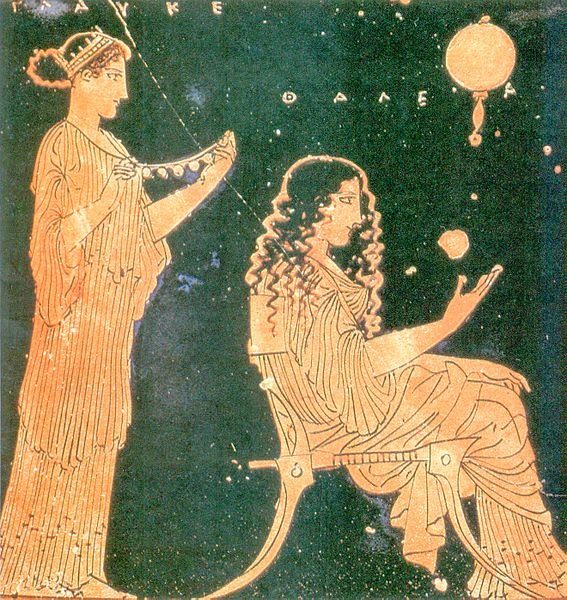
In Classical Athens, women lacked legal personhood and were considered part of the oikos (household) under the authority of the male kyrios (master).
The Role of Women in Different Greek City-States
The lives of women in Ancient Greece were shaped by their city-states, class, and roles within the family and society.
Athens
Athens, a hub of cultural and intellectual achievements, placed stringent limitations on women’s public roles. Women were generally excluded from political life and public decision-making. The Athenian ideal envisioned women as guardians of the household, responsible for managing domestic tasks, overseeing slaves, and ensuring the continuation of the family line through marriage and childbirth.
Athenian women were legally under the authority of a male guardian, typically their father, husband, or another male relative. They were rarely seen in public without a chaperone and were expected to maintain modesty and avoid interactions with men outside their family. However, exceptions existed, particularly in religious contexts. Women participated in significant festivals like the Thesmophoria, a celebration of fertility dedicated to Demeter, and held roles as priestesses, which could confer considerable prestige.
Sparta
In contrast to Athens, Spartan women had relatively more freedom and influence, a reflection of the militarized and egalitarian structure of Spartan society. Spartan women were educated alongside boys in their youth, focusing on physical fitness to ensure they could bear healthy children. They were also economically significant, often managing family estates while men were engaged in military campaigns.
Unlike their Athenian counterparts, Spartan women could own and inherit property, and they played a vital role in sustaining the Spartan economy. Their involvement in public life and their outspoken nature sometimes shocked other Greeks, who viewed Spartan women as overly liberated.
Other City-States
The roles of women in other city-states varied but generally fell between the strict confines of Athenian norms and the relative freedoms of Spartan women. In places like Corinth and Thebes, women could participate in religious and cultural activities, but they largely remained secondary to men in legal and societal frameworks.
Marriage and Family Life
Marriage was central to a woman’s life in Ancient Greece, and her primary role was to bear and rear legitimate children. Girls were often married in their early teens to older men, and marriages were arranged by their male guardians. The husband provided a dowry to ensure the wife’s financial security, but this wealth remained under the control of the husband.
In the household, women were responsible for weaving, food preparation, and child-rearing. They also managed domestic slaves, who performed much of the labor-intensive work. Wealthier women had larger households to oversee and were less involved in manual tasks, focusing instead on supervising servants.
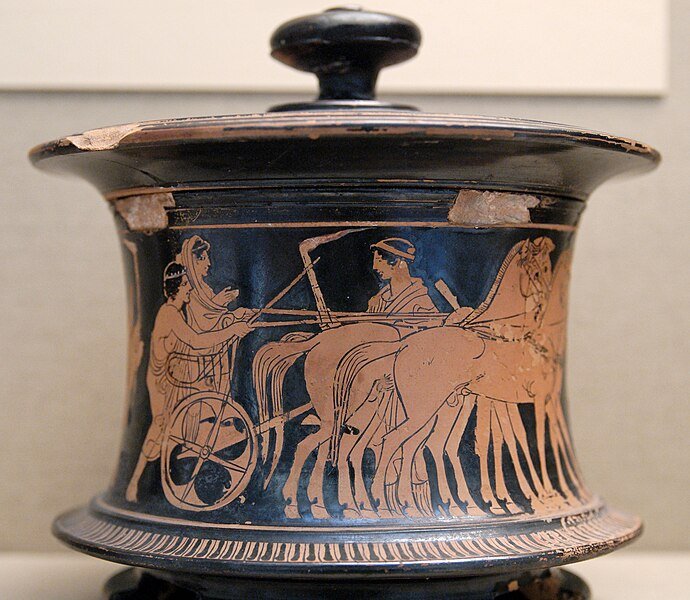
This pyxis, a box used to store a woman’s jewelry or cosmetics, is adorned with a wedding procession scene.
Religion and Ritual
Religious practice provided one of the few domains where women could achieve public prominence. Women played essential roles in rituals and festivals, often serving as priestesses or participants in sacred ceremonies. In Athens, for example, the priestess of Athena Polias, the city’s patron goddess, wielded significant authority.
The Eleusinian Mysteries, a major religious festival dedicated to Demeter and Persephone, were open to both men and women, though women’s participation was particularly notable. Similarly, festivals like the Arkteia, associated with Artemis, allowed young girls to participate in rites of passage before marriage.
Education and Literacy
Education for women in Ancient Greece was limited and largely focused on preparing them for their roles as wives and mothers. In Athens, most girls received no formal education beyond basic household skills, while boys studied literature, philosophy, and rhetoric. However, some evidence suggests that elite women, particularly in aristocratic families, might have been educated to a higher degree, learning to read and write.
In Sparta, girls received more formal education, including physical training, to prepare them for their roles as mothers of warriors. Despite these differences, intellectual pursuits for women were generally discouraged, and few women had the opportunity to contribute to the arts or sciences.
Prominent Women in Ancient Greece
Though women were often relegated to the private sphere, a few achieved prominence and left a lasting impact. Sappho of Lesbos, a renowned lyric poet, is one of the few female voices from antiquity whose works survive. Her poetry, often centered on themes of love and beauty, reveals a nuanced perspective on the lives and emotions of women.
Despite their largely subordinate status, women contributed significantly to Greek culture, religion, and economy, leaving an indelible mark on the civilization’s legacy.
Other notable figures include Aspasia of Miletus, a companion of Pericles, who was known for her intelligence and rhetorical skill. Though controversial in her time, Aspasia was respected by some contemporaries for her influence on Athenian politics and culture.
Legal and Economic Rights
Women’s legal and economic rights were severely restricted in most Greek city-states. In Athens, for example, women could not own property independently, vote, or represent themselves in court. Inheritance laws were designed to keep property within the male line, often requiring heiresses to marry close male relatives to preserve family wealth.
Most surviving accounts come from male authors, making the historical record on Greek women incomplete and often biased.
However, in Sparta and some other regions, women enjoyed more substantial economic rights. Spartan women could own land and inherit property, often controlling significant wealth due to the frequent absence of men at war.
Women and Work
While elite women were primarily confined to domestic roles, poorer women often worked outside the home. They engaged in various trades, such as weaving, pottery, and selling goods in markets. In rural areas, women participated in agricultural labor alongside men. Enslaved women, who formed a significant part of the population, performed the most grueling tasks, including working in mines, households, and workshops.
Artistic Depictions
Women are frequently depicted in Greek art, providing valuable insights into their roles and activities. Vase paintings, for example, often show women engaged in domestic tasks, religious rituals, or musical performances. While these images idealize certain aspects of women’s lives, they also reflect societal expectations and norms.
Philosophical Views on Women
Greek philosophers often debated the nature and role of women, with opinions ranging from respect to outright disdain. Aristotle viewed women as biologically and intellectually inferior to men, suitable only for subordinate roles in society. Plato, on the other hand, proposed in his Republic that women could serve as guardians alongside men in an ideal state, provided they received the same education.
Despite occasional progressive ideas, philosophical discourse largely reinforced the patriarchal structures of Greek society.
Frequently asked questions
What roles and rights did women have in ancient Greece?
Women in ancient Greece were largely excluded from public life, unable to vote, own land, or inherit property. Their primary roles were within the household, focusing on raising children and managing domestic duties.
How did the status of women differ between Athens and Sparta?
Athenian women were confined to the home and controlled by male guardians. Spartan women, by contrast, had more freedoms, including physical training, property ownership, and the ability to drink wine.
What roles existed beyond those of citizen women?
Other categories of women included professional workers, prostitutes, and courtesans, for whom social rules were even less defined. Some exceptional women, like poet Sappho and philosopher Arete of Cyrene, transcended societal limitations.
How were women portrayed in Greek mythology?
Greek mythology featured strong female figures like Athena, Demeter, and Persephone, but also depicted women as troublemakers, such as Medea and Hera. Others, like Penelope, embodied loyalty and chastity, while the Muses represented beauty and artistic skill.
READ MORE: Major Challenges Women Faced in Greek Mythology
What was the focus of girls’ education in ancient Greece?
Girls’ education was limited and aimed at preparing them for marriage and household management. They learned dancing, gymnastics, and music, which were showcased at festivals and ceremonies.
What was the role of marriage in a woman’s life?
Marriage was central to a woman’s life, typically arranged by her father. Women married young, often at 13 or 14, and were expected to manage the household, rear children, and maintain family honor.
What legal and economic limitations did women face?
Women were under the authority of male guardians and could not own property or make wills. Inheritance laws prioritized male heirs, and heiresses were often required to marry male relatives to keep property within the family.
What roles did non-citizen women and priestesses hold?
Non-citizen women worked as slaves, brothel workers, or courtesans. Courtesans, or hetaira, were often educated and attended male-only symposiums. Priestesses participated in cult rituals and festivals, with notable figures like the Pythia at Delphi serving as oracles.





