10 Most Famous Women of Ancient Greece
Women in ancient Greece lived under a patriarchal system, often confined to domestic roles and limited rights. However, a number of women defied these norms and left indelible marks on history. Some were celebrated for their intelligence, courage, and achievements, while others gained notoriety for their bold actions and rebellion against societal expectations.
Below are ten noble and notorious women who shaped ancient Greek history and mythology.
Sappho of Lesbos
Known for: Poetry and Literature
Sappho is arguably the most renowned female poet of ancient Greece. Born on the island of Lesbos around 630 BCE, she wrote lyrical poetry that celebrated love, beauty, and personal emotion. Her works were so influential that Plato referred to her as the “Tenth Muse.” Sappho’s poetry often explored themes of love and desire among women, contributing to her reputation as a cultural and literary icon. Though much of her work has been lost, her legacy endures through fragments that capture her genius.
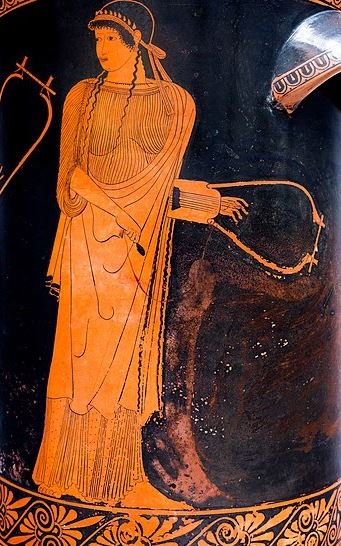
Sappho of Lesbos
Aspasia of Miletus
Known for: Political Influence and Intellectual Prowess
Aspasia, born in Miletus around 470 BCE, was an influential figure in Athens, known for her intelligence and eloquence. She was the companion of Pericles, the Athenian statesman, and played a significant role in the cultural and intellectual life of Athens during its Golden Age. Aspasia’s salon attracted philosophers like Socrates, and she is believed to have contributed to Pericles’ speeches. Despite criticism from contemporary sources, she remains a symbol of female intellectuality and independence in a male-dominated society.
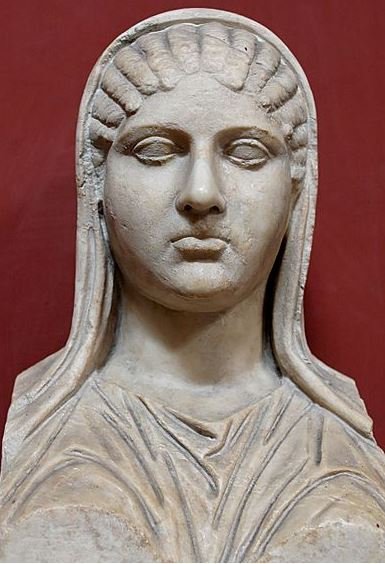
Sculpture work depicting Aspasia.
Helen of Troy
Known for: Mythological Beauty and the Trojan War
Helen of Troy, often referred to as the most beautiful woman in Greek mythology, is said to have been the cause of the Trojan War. According to legend, she was the wife of Menelaus, king of Sparta, but was abducted (or eloped) with Paris, prince of Troy. Her story has been immortalized in epic works like Homer’s Iliad. Helen’s role in the war made her a complex figure, embodying both allure and controversy, as her beauty and choices led to destruction.
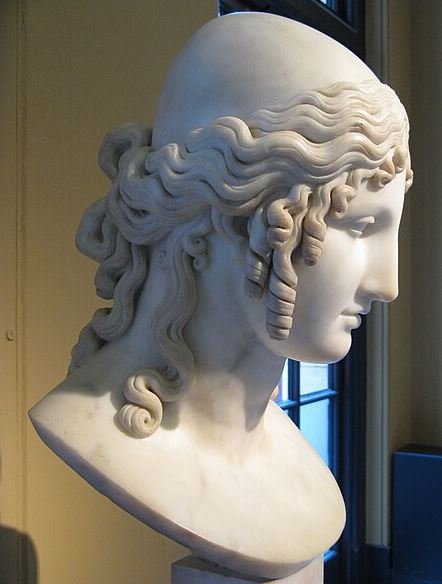
Bust of Helen.
READ MORE: Major Challenges Women Faced in Greek Mythology
Hypatia of Alexandria
Known for: Mathematics, Philosophy, and Astronomy
Though born in Egypt, Hypatia lived during a time when Alexandria was deeply influenced by Greek culture. A scholar and teacher, she led the Neoplatonist school and was renowned for her knowledge in mathematics, philosophy, and astronomy. Hypatia’s life came to a tragic end when she was murdered by a mob in 415 CE, a victim of political and religious turmoil. Her legacy as a pioneer of science and philosophy has made her a symbol of reason and intellectual freedom.

Hypatia of Alexandria
Medea
Known for: Mythological Sorcery and Revenge
Medea, a figure from Greek mythology, was a sorceress and the wife of the hero Jason. She is best known from Euripides’ tragedy Medea, which portrays her as a complex character capable of both great love and horrifying revenge. When Jason abandoned her for another woman, Medea killed their children in an act of vengeance. Her story highlights themes of betrayal, justice, and the power dynamics between men and women, making her one of the most controversial figures in Greek literature.

Medea on her golden chariot
Gorgo of Sparta
Known for: Leadership and Political Acumen
Gorgo, Queen of Sparta, was the wife of King Leonidas I and is remembered for her wisdom and political influence. Unlike women in other Greek city-states, Spartan women enjoyed greater freedoms, and Gorgo exemplified this autonomy. She is credited with offering sound advice during critical moments, including warning her husband about Persian invasions. Her recorded words and actions reflect the importance of women in Spartan society and their potential to shape political events.
Clytemnestra
Known for: Mythological Infamy and Revenge
Clytemnestra, wife of King Agamemnon, is another figure from Greek mythology whose story has captivated audiences. Angered by Agamemnon’s sacrifice of their daughter Iphigenia, she plotted his murder upon his return from the Trojan War. In Aeschylus’ play Agamemnon, she is depicted as a strong-willed and vengeful woman who challenges traditional gender roles. Clytemnestra’s actions have been interpreted as both a quest for justice and an act of tyranny, making her a polarizing character.

Clytemnestra by British artist John Collier.
Artemisia I of Caria
Known for: Naval Command and Strategy
Artemisia I, queen of Halicarnassus, was a naval commander who served under Xerxes I during the Persian Wars. She played a pivotal role in the Battle of Salamis in 480 BCE, demonstrating remarkable tactical skills and bravery. Her leadership earned her the respect of Xerxes, though she remains a controversial figure due to her alliance with Persia. Artemisia’s actions challenged the traditional roles of women in warfare and governance.
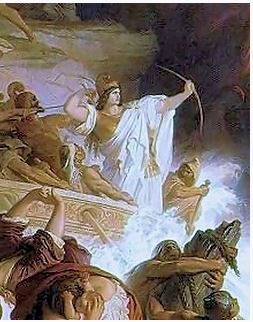
1868 painting of Artemisia attacking Greek fleet by Wilhelm Kaulbach.
Pythia (The Oracle of Delphi)
Known for: Religious Influence and Prophecy
The Pythia, or Oracle of Delphi, was one of the most powerful women in ancient Greece, serving as the mouthpiece of Apollo’s divine will. Seated at the Temple of Apollo in Delphi, she delivered prophecies that influenced political and personal decisions across the Greek world. Though the identity of individual Pythias remains unknown, their collective role underscores the spiritual authority and respect afforded to women in religious contexts.
Olympias
Known for: Political Manipulation and Royal Ambition
Olympias, the mother of Alexander the Great, was a formidable political figure. Born in Epirus, she married King Philip II of Macedon and played a key role in securing her son’s ascent to the throne. Olympias was known for her fierce determination and alleged involvement in plots against her rivals. She is often depicted as a woman who wielded power strategically, using her intelligence and influence to shape the destiny of one of history’s greatest empires.
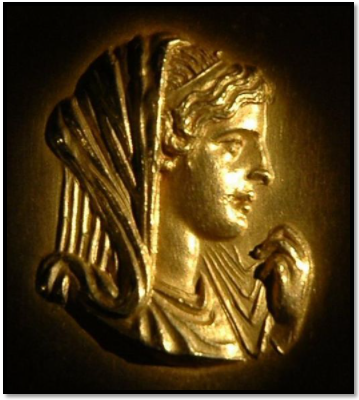
Queen Olympias of Macedon – the second wife of King Philip II of Macedon
Frequently Asked Auestions
What was the status of women in ancient Greece, and how did some defy societal norms?
Women in ancient Greece, except in Sparta, had minimal rights and little to no political or legal power. Despite these constraints, some women challenged cultural norms and achieved remarkable feats at great personal risk.
Why did Greek historians often neglect to document notable women?
Some historians have noted that Greek historians, like Herodotus, were more likely to record Persian queens than Greek women. This was not because Persian women had more power, but because Greek monogamy did not require lineage clarification, leading to the omission of many notable Greek women from historical accounts.
Who were Queen Gorgo and Aspasia, and why are they well-known?
Queen Gorgo of Sparta and Aspasia of Miletus are famous for their wisdom and influence. Gorgo was known for her leadership and connection to King Leonidas, while Aspasia gained renown as an intellectual companion of Athenian statesman Pericles.
What is Hydna of Scione remembered for?
Hydna, trained by her father, sabotaged the Persian fleet in 480 BCE during the Battle of Salamis by cutting ship moorings. Her heroic act was honored with a statue at Delphi.
What contributions did Anyte of Tegea make to Greek literature?
Anyte, a poet of the 3rd century BCE, focused on nature in her epigrams and epitaphs, celebrating animals and the environment. Her works were highly revered, and she likely ran a poetry school in the Peloponnesus.
How did Telesilla of Argos save her city?
Telesilla, a poet, organized the women of Argos to defend the city against the Spartans in 5th century BCE. Her leadership forced the Spartan King Cleomenes I to retreat.
What made Phryne of Thespiae notable in Athens?
Phryne, a courtesan and model for sculptures of Aphrodite, was famously acquitted of impiety when her beauty swayed the judges during her trial. She later lived a luxurious life and offered to rebuild Thebes after its destruction.
What was Arete of Cyrene’s philosophical legacy?
Arete, a 4th-century BCE philosopher, succeeded her father as head of the Cyrenaic School. She promoted enjoying life’s pleasures without being controlled by them and wrote over 40 books, though none survive.
How did Hipparchia of Maroneia challenge societal norms?
Hipparchia, a Cynic philosopher, rejected traditional gender roles, married Crates of Thebes, and embraced a minimalist lifestyle. She taught philosophy and lived according to Cynic ideals of independence and honesty.
What act of defiance is Timycha of Sparta known for?
Timycha, a Pythagorean philosopher, refused to reveal her sect’s secrets even under torture. She bit off her tongue in defiance, becoming a symbol of courage and conviction.
What was controversial about Philaenis of Samos’ writings?
Philaenis, a 4th-century BCE courtesan, wrote a bold manual on seduction and sexual practices. Her work, while condemned, highlighted the complexities of women’s roles in Greek society.
How did Agnodice of Athens change the medical profession?
Agnodice disguised herself as a man to study medicine and became Athens’ first female physician. Her success led to accusations of misconduct, but her patients defended her, resulting in a law allowing women to practice medicine.
What role did Thargelia of Miletus play in Greek diplomacy?
Thargelia, a courtesan, influenced Greek elites to support Persia during its invasion in 480 BCE. Though criticized as a traitor, her actions demonstrated women’s subtle power in diplomacy.
What legacy did these women leave?
These women transcended societal barriers, making significant contributions as poets, philosophers, warriors, and pioneers. Their resilience and achievements continue to inspire despite historical neglect.