Roman Province of Dacia
Roman Dacia was a province of the Roman Empire from 106 to 271–275 AD. It encompassed modern-day Oltenia, Transylvania, and Banat (spanning Romania, Hungary, and Serbia). The province was established following the Dacian Wars led by Emperor Trajan, who defeated King Decebalus. Dacia’s population, estimated between 600,000 and 1,250,000, was diverse, including native Dacians, Roman settlers, and other ethnic groups. The province was vital for its strategic position and natural resources, especially its gold mines, making it an essential part of the empire’s economy and defense.

A map showing Roman Dacia.
The Conquest of Dacia
The Dacians, a Thracian people, frequently interacted with the Romans before their incorporation into the empire. Under King Burebista (82–44 BC), the Dacians established a powerful kingdom extending from Pannonia to the Black Sea. However, internal divisions following Burebista’s assassination weakened the kingdom, fracturing it into smaller entities.
The Roman province of Dacia, also known as Dacia Traiana or Dacia Felix, was established after Emperor Trajan’s conquest of the Dacian Kingdom.
During the late Republic and early Imperial period, Roman attention focused on the lower Danube due to Dacian raids and their growing influence. This culminated in clashes under Domitian, who signed an unfavorable treaty with Decebalus, setting the stage for Trajan’s campaigns.
Emperor Trajan launched two significant military campaigns against the Dacians. The first war (101–102 AD) resulted in a temporary settlement, with Decebalus agreeing to become a Roman client king. However, he soon violated the terms, prompting the second campaign (105–106 AD). Trajan decisively defeated the Dacians, capturing Sarmizegetusa, their capital. Decebalus committed suicide, and Roman forces seized vast amounts of treasure, securing control over the region.
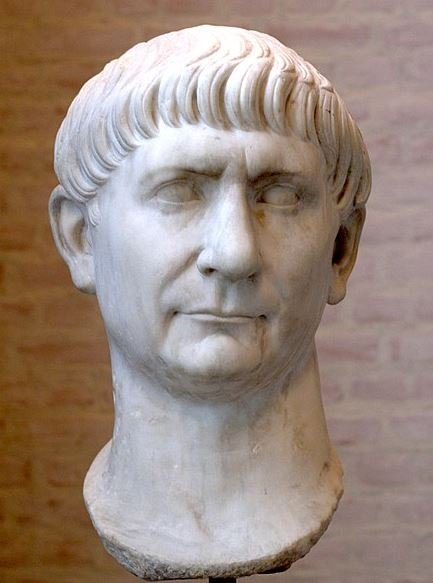
Bust of Emperor Trajan.
Administrative and Military Organization
Roman Dacia underwent constant administrative evolution. Initially, it was divided into Dacia Superior and Dacia Inferior under Emperor Hadrian (119 AD). By 124 AD, Dacia Superior was further subdivided into Dacia Apulensis and Dacia Porolissensis. In 166 AD, the provinces were unified as Tres Daciae to streamline administration during the Marcomannic Wars.
Dacia became a highly urbanized province with around ten cities, most originating from military camps. Eight held colonia status, the highest urban rank, including Ulpia Traiana Sarmizegetusa, the provincial capital and administrative center, and Apulum, a key military hub.
Dacia was heavily militarized due to its exposed borders. The province housed two legions—Legio XIII Gemina at Apulum and Legio V Macedonica at Potaissa—alongside numerous auxiliary units. Forts, watchtowers, and roads facilitated defense and rapid troop movement.
Economic Significance
Dacia was renowned for its gold, silver, and salt mines. The Romans intensified mining operations, particularly in Alburnus Maior (modern Roșia Montană). These resources enriched the empire and supported Rome’s monetary economy.
Dacia’s fertile lands supported agriculture, with wheat, grapes, and livestock as primary products. Roman roads connected cities and facilitated trade, linking Dacia to the empire’s economic network.
Urban centers like Apulum and Sarmizegetusa became hubs of manufacturing, producing pottery, weapons, and textiles. Specialized industries, such as bronze casting and glassmaking, thrived, showcasing the province’s integration into Roman economic life.
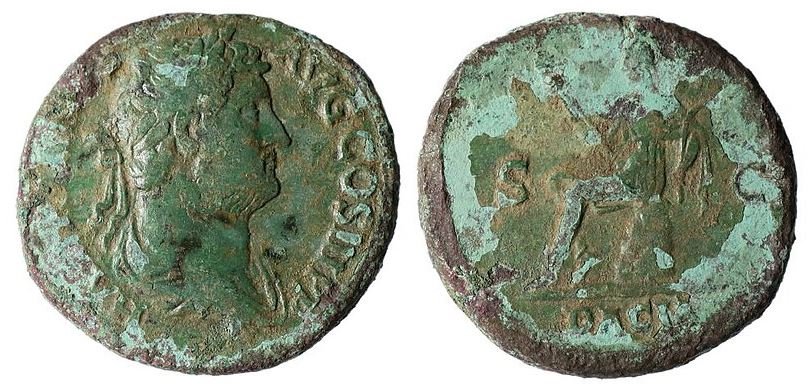
A bronze coin of Emperor Hadrian, issued to commemorate his visit to Dacia.
Cultural and Religious Transformation
The Romans introduced their language, laws, and architectural styles. Latin became the lingua franca, and Roman cultural practices spread among the urban and rural populations. Native Dacians, especially elites, adopted Roman names and customs.
Roman Dacia was a melting pot of religious traditions. Major Roman gods like Jupiter, Juno, and Minerva coexisted with Eastern deities such as Mithras and Cybele. The Thracian Rider cult and other local beliefs persisted, blending with Roman practices.
Roman Dacia contributed to the cultural and linguistic foundations of modern Romania.
Roman towns boasted forums, amphitheaters, baths, and temples, reflecting the province’s integration into the broader Roman world. Festivals and games became common, further Romanizing the population.
Challenges and Decline
Dacia faced persistent raids from the Free Dacians, Sarmatians, and Germanic tribes like the Goths and Taifali. These incursions strained the province’s defenses and resources.
The Crisis of the Third Century weakened the Roman Empire, leading to economic instability and reduced military effectiveness. Dacia’s remote location made it increasingly difficult to defend.
Under Emperor Aurelian (270–275 AD), the Romans officially withdrew from Dacia. A new province, Dacia Aureliana, was established south of the Danube. The fate of the Romanized population left behind remains a subject of debate.
Legacy and Controversy
One theory suggests that the Daco-Roman population remained in the region, evolving into the modern Romanian people. Linguistic evidence, including the preservation of Latin roots in Romanian, supports this view.
Another theory posits that the Romanians originated south of the Danube, migrating northward later. Archaeological evidence remains inconclusive, fueling ongoing debate.
Major Provinces and their Annexation Timeline in the Roman Republic
Frequently Asked Questions
What was the significance of Dacia to the Roman Empire?
Dacia was a source of valuable resources like gold, silver, and agricultural products. It also served as a key military and administrative region on the empire’s northeastern frontier.
Who were the Dacians, and what happened to them after the Roman conquest?
The Dacians were an indigenous people who were largely defeated by Trajan. Many were enslaved or assimilated into Roman culture, while others continued to resist Roman rule as “Free Dacians.”
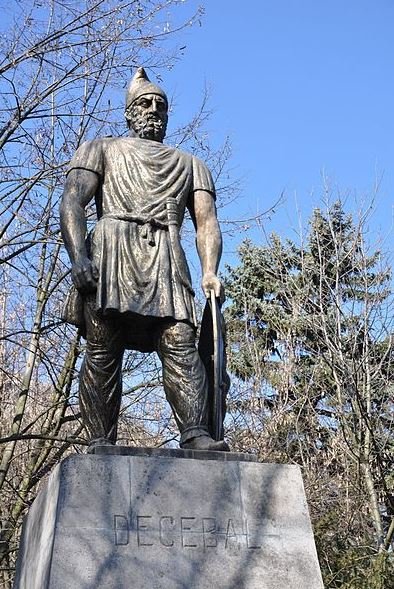
Decebalus’ statue at Deva in Romania.
What was the administrative structure of Roman Dacia?
Initially a single province, Dacia was divided under Hadrian into Dacia Superior and Dacia Inferior, later split further into three provinces (Tres Daciae) during the Marcomannic Wars.
What led to the decline and abandonment of Roman Dacia?
Continuous invasions by the Goths, Carpi, and other tribes, along with internal Roman instability during the 3rd century, made Dacia indefensible. Emperor Aurelian withdrew Roman forces and administration around 271–275 AD.
What happened to the Romanized population after the withdrawal?
The fate of the Romanized Dacians is debated. One theory posits their continuity in the region, evolving into modern Romanians. Another suggests their migration south of the Danube, leaving the area to subsequent barbarian groups.
How did Roman infrastructure influence Dacia?
Roman Dacia featured extensive urbanization, roads, military camps, and mining operations. Cities like Ulpia Traiana Sarmizegetusa and Apulum became centers of governance and commerce.