Major Provinces and their Annexation Timeline in the Roman Republic
The Roman provinces (provinciae) were administrative regions outside Italy, governed by Roman-appointed officials under the Republic and later the Empire. For centuries, they were the largest units managing Rome’s foreign possessions. Provinces played critical roles in administration, taxation, and military control. Under Emperor Diocletian’s administrative reforms, provinces became third-level subdivisions, grouped into dioceses, which were further divided into imperial prefectures. This structure helped streamline governance and adapt to the growing complexities of the late Roman Empire.

Roman provinces on the eve of the assassination of Julius Caesar, 44 BC
Rome’s provinces often originated from military conquests. Territories like Sicilia, Macedonia, and Hispania served as bases for further expansion and as buffers against external threats.
Many provinces provided crucial resources; Sicily and Egypt supplied grain to sustain Rome’s population; Hispania offered silver and other minerals; and Africa Proconsularis produced olive oil and agricultural products.
Provinces such as Asia and Gallia Narbonensis became centers for Romanization, blending local traditions with Roman law, architecture, and governance.
Several provinces, including Bithynia and Asia, were added to Rome through royal bequests, showcasing Rome’s diplomatic strategy of absorbing allied or dependent territories.
Roman Provinces and Their Annexation Timeline in the Roman Republic
The Roman Republic and early Empire expanded its dominion over centuries, creating provinces as administrative and military units.
Below is a detailed account of the establishment of key provinces, their origins, and their significance in the Roman Republic.
241 BC – Sicilia (Sicily)

Sicily became Rome’s first province following the First Punic War (264–241 BC). The island was taken from Carthaginian control.
Sicilia (modern-day Sicily) was annexed by Rome in 241 BC after its victory over Carthage in the First Punic War (264–241 BC). This marked the conclusion of Rome’s first large-scale overseas conflict. The island transitioned from Carthaginian control to Roman governance, becoming the Republic’s inaugural province.
As Rome’s first province, Sicily held immense strategic and economic value. Its location in the central Mediterranean made it a pivotal maritime hub, enabling Rome to control key trade routes and maintain dominance in the region.
Sicily’s fertile plains, particularly those around Mount Etna, produced vast quantities of grain. This agricultural wealth became vital to feeding Rome’s growing population and army, solidifying Sicily as a cornerstone of the Republic’s food supply.
The establishment of Sicilia as a province laid the groundwork for Rome’s provincial administration system. A governor was assigned to oversee taxation, justice, and defense, marking the beginning of Roman bureaucratic expansion.
Sicily’s annexation demonstrated the feasibility of managing territories outside Italy, encouraging future conquests and the establishment of additional provinces.
237 BC – Sardinia and Corsica

The islands of Sardinia and Corsica were seized from the Carthaginians during the Mercenary War (241–238 BC). They were officially annexed as a province by 237 BC.
Sardinia and Corsica were annexed by Rome in 237 BC during the aftermath of the Mercenary War (241–238 BC). This conflict arose when Carthage faced internal revolts from its mercenaries following its defeat in the First Punic War. Taking advantage of Carthage’s weakened state and preoccupied leadership, Rome seized the islands, officially incorporating them as the province of Sardinia et Corsica in 237 BC.
Sardinia and Corsica provided Rome with critical naval bases to secure its maritime dominance in the western Mediterranean. These islands effectively allowed Rome to challenge Carthaginian influence and monitor sea routes between Italy, Africa, and Iberia.
By controlling Sardinia and Corsica, Rome established strategic outposts to thwart future Carthaginian resurgence and any other regional threats.
While less fertile than Sicily, Sardinia’s agricultural output, particularly its grain and other crops, contributed to Rome’s food supply, especially during shortages.
Sardinia’s mines, particularly for lead and silver, became valuable assets for Roman economic expansion.
The annexation of Sardinia and Corsica tested and refined Rome’s provincial governance system, especially in handling rebellious territories. The islands’ population frequently resisted Roman rule, necessitating military campaigns and administrative interventions.
197 BC – Hispania Citerior and Hispania Ulterior
The establishment of Hispania Citerior and Hispania Ulterior as Roman provinces in 197 BC marked a pivotal moment in Rome’s expansion. These provinces were created in the aftermath of Rome’s victory over Carthage in the Second Punic War (218–201 BC), during which Carthaginian influence in Iberia was dismantled. Roman control in Iberia initially served as a safeguard against future Carthaginian resurgence, but by 197 BC, it became clear that governance and defense of these territories required formalized provincial structures.
Hispania Citerior covered the eastern Iberian coast, including key regions like Tarraco (modern Tarragona). It served as a hub for Roman operations and administration.
Hispania Ulterior encompassed the southern territories, including the Guadalquivir Valley and the resource-rich Baetica (modern Andalusia), this province was vital for Rome’s economic and strategic interests.
The rich silver mines of Hispania, particularly in regions like Baetica and Carthago Nova (modern Cartagena), were essential for funding Roman campaigns and bolstering the economy.
Hispania became a major producer of olive oil and wine, commodities that fueled Rome’s economic and social systems.
Coastal cities facilitated trade routes in the western Mediterranean, generating additional revenue for the Republic.
Hispania provided a steady supply of soldiers, known for their toughness and skill, to bolster Roman legions.
The provinces served as staging grounds for further Roman campaigns into the Iberian interior and eventual domination of the entire peninsula.
Hispania became a crucible for cultural integration, as Roman infrastructure, governance, and language spread, influencing the region’s long-term development.

The provinces of Hispania Citerior and Hispania Ulterior were established following Roman victory in the Second Punic War (218–201 BC). Hispania Citerior covered the eastern Iberian coast, while Hispania Ulterior encompassed the southern territories. Hispania became a key source of silver, olive oil, and soldiers for Rome. It also provided a strategic foothold for further expansion into the Iberian Peninsula.
147 BC – Macedonia
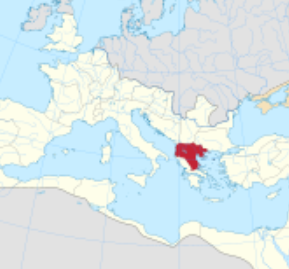
After the Roman victory in the Fourth Macedonian War (150–148 BC), Macedonia was annexed as a province. Its final incorporation followed the Achaean War. Macedonia was a vital link between Italy and the eastern provinces, offering resources and access to Greek culture. Its defeat marked the end of Greek political independence.
Macedonia became a Roman province in 147 BC, following the Roman victory in the Fourth Macedonian War (150–148 BC). The conflict ended the last remnants of resistance from the Macedonian kingdom under Andriscus, who had claimed the throne as a pretender. Andriscus’ defeat marked the final dissolution of the Antigonid dynasty, a prominent successor state of Alexander the Great’s empire.
This annexation also followed the Achaean War (146 BC), which saw Rome crushing the Achaean League and consolidating its dominance over Greece. The province of Macedonia was formally organized to include parts of modern northern Greece, parts of North Macedonia, and southern Albania.
Macedonia served as a critical link between Italy and Rome’s expanding eastern territories. Its position allowed for easier movement of troops and goods, reinforcing Rome’s military and economic control. The province also provided a stable base for further conquests and campaigns in the Balkans and beyond.
Rich in natural resources, including timber and minerals, Macedonia contributed significantly to Rome’s economic stability. Its fertile plains supported agriculture, adding to Rome’s food supplies.
The annexation marked the end of Greek political independence and initiated Rome’s cultural assimilation of the Hellenistic world. Greek culture, philosophy, and art continued to influence Roman society deeply, furthering the Greco-Roman cultural synthesis. The province’s cities, like Thessalonica, became important urban centers under Roman rule.
146 BC – Africa (Tunisia, Eastern Algeria, and Western Libya)
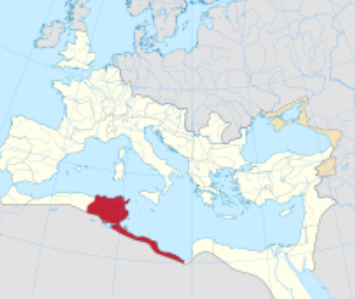
The province was established after Rome’s destruction of Carthage in the Third Punic War (149–146 BC). Africa became a major supplier of grain and olive oil for Rome.
The Roman province of Africa Proconsularis was created following the Roman victory in the Third Punic War (149–146 BC), which culminated in the total destruction of Carthage, a long-standing rival of Rome. This marked the final chapter in the Punic Wars, ending over a century of conflict between Rome and Carthage.
After Carthage was razed to the ground, the surrounding territories were annexed and organized into a Roman province. This included the fertile farmlands of modern Tunisia, as well as parts of eastern Algeria and western Libya. The new province’s capital was established at Utica, which became an administrative center until Carthage was rebuilt as a Roman colony during the rule of Julius Caesar and later expanded by Augustus.
Africa Proconsularis quickly became one of Rome’s most economically vital provinces. Its fertile lands, especially those around Carthage, were ideal for agriculture, making it a significant supplier of grain to Rome. The province was also a major source of olive oil, critical for Roman households, industry, and trade. Olive oil from Africa became a staple export, bolstering Rome’s economy.
The establishment of Carthage as a Roman colony showcased Rome’s capacity to rebuild conquered lands.
The province provided Rome with a secure foothold in North Africa, ensuring control over Mediterranean trade routes. Its location served as a base for future expansions into Numidia (modern Algeria) and Mauretania (modern Morocco).
The annexation demonstrated Rome’s power to utterly defeat and rebuild a rival state. Carthage was later refounded as Colonia Julia Carthago, a thriving Roman city and one of the empire’s most prominent urban centers. Africa’s integration into the Roman world introduced its Punic and Berber populations to Roman law, culture, and governance, contributing to the broader Romanization of the region.
How and Why did Carthage Fall? – The Destruction of Rome’s Fiercest Rival
129 BC – Asia (Western Anatolia)
The Roman province of Asia was established in 129 BC after the death of King Attalus III of the Attalid Kingdom in 133 BC. In his will, Attalus bequeathed his kingdom to Rome, an unprecedented act that transferred his prosperous territories in western Anatolia (modern-day Turkey) to the Roman Republic without conflict. However, organizing the region into a formal province took several years, largely due to local resistance and the need for military intervention to stabilize the territory.
Asia was one of the wealthiest provinces of the Roman Republic and later the Empire. Its fertile lands yielded abundant crops, particularly grain, while its cities were hubs of commerce and trade. The region’s wealth was also derived from mineral resources and heavy taxation, which often became a source of tension with local populations. Publicani (tax collectors) played a significant role in exploiting the province’s economic potential.
Pergamum, the former capital of the Attalid Kingdom, and Ephesus emerged as key centers of Roman administration and Hellenistic culture. Pergamum was home to a renowned library and impressive architectural achievements. Asia Minor’s cities embodied a fusion of Greek and Roman traditions, preserving Hellenistic art, philosophy, and education while integrating Roman governance.
Asia served as a gateway between the eastern Mediterranean and the Roman heartland, facilitating the flow of goods, culture, and ideas. Its central location allowed Rome to project power further into the eastern territories, including campaigns against the Kingdom of Pontus and Parthia.

Western Anatolia, the former Attalid Kingdom, was bequeathed to Rome by its last king, Attalus III, in 133 BC. Official organization as a province occurred in 129 BC. Asia Minor was rich in wealth, art, and culture. Cities like Pergamum and Ephesus became centers of Roman administration and Hellenistic tradition.
120 BC – Gallia Narbonensis (Southern France)
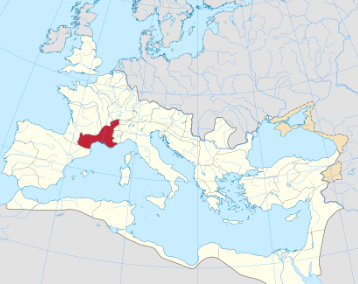
Formerly Gallia Transalpina, this province was annexed after securing Roman influence over the Greek city of Massalia (modern Marseille).
The region known as Gallia Narbonensis, initially called Gallia Transalpina (Gaul across the Alps), was annexed in 120 BC. Roman involvement in the area began with its alliance with the Greek city of Massalia (modern Marseille), a key trading hub. Massalia sought Roman protection against hostile Gallic tribes, prompting Rome to intervene militarily. Following successful campaigns, Rome consolidated its hold over the region and formalized it as a province. The city of Narbo Martius (modern Narbonne), founded in 118 BC, became the provincial capital and a major Roman settlement.
Gallia Narbonensis was a critical link between Italy and Hispania (modern Spain), providing a secure overland route through the Via Domitia, the first Roman road built in Gaul. This facilitated the movement of troops, goods, and information, strengthening Rome’s influence in western Europe. Its location along the Mediterranean coast made it a vital naval and trade route.
Narbonensis provided a critical land route to Spain and furthered Rome’s foothold in Gaul. Its fertile lands supported agriculture and trade.
The fertile lands of the province supported a thriving agricultural economy, producing wheat, olives, and wine. These resources were crucial for trade and contributed to Rome’s food supply. The establishment of Roman colonies, such as Narbo Martius, spurred urbanization and the development of local economies.
Narbonensis was among the earliest Gallic regions to adopt Roman culture, language, and governance. Its Romanization set a precedent for later conquests in northern Gaul. The integration of the province into the Roman state eased further expansion into Gallia Comata (the “long-haired Gaul” of central and northern France).
67 BC – Crete and Cyrenaica
The province of Creta et Cyrenae was officially formed in 67 BC by combining the island of Crete with the region of Cyrenaica (modern eastern Libya).
Cyrenaica was originally bequeathed to Rome in 78 BC by its last Greek ruler, Ptolemy Apion, who left his kingdom to the Roman Republic. However, Rome did not immediately administer the territory, and Cyrenaica remained semi-autonomous until its formal integration into the province.
Crete, a stronghold of piracy in the Mediterranean, became a Roman target due to its disruption of trade and security. In 69 BC, a military campaign led by Quintus Caecilius Metellus subdued the island after a fierce three-year struggle. Crete was annexed in 67 BC, and the two territories were united as a single province.
The combined province was a strategic bridge connecting the eastern Mediterranean with North Africa. It provided a critical base for controlling trade routes, ensuring the flow of goods, and maintaining Roman dominance in the region.
Crete’s central location in the Mediterranean allowed Rome to suppress piracy effectively and enhance maritime security.
Both Crete and Cyrenaica were rich in agricultural resources. Cyrenaica produced grain, olives, and silphium (a highly valued medicinal plant), while Crete contributed wine and timber. The province facilitated trade between Africa, the Aegean, and the eastern provinces, boosting economic connectivity.
The province served as a staging ground for Roman campaigns in Africa and the eastern Mediterranean, reinforcing Rome’s military presence.

Cyrenaica was bequeathed to Rome in 78 BC but formally organized into the province of Creta et Cyrenae when Crete was annexed in 67 BC after Rome’s conquest of the island. The combined province served as a strategic bridge between the eastern Mediterranean and Africa, enhancing trade and military logistics.
63 BC – Bithynia et Pontus
The province of Bithynia et Pontus was formally established in 63 BC following the conclusion of the Third Mithridatic War (73–63 BC), during which Rome defeated Mithridates VI of Pontus, a persistent adversary.
Bithynia had been a Roman ally for decades. Its last king, Nicomedes IV, bequeathed his kingdom to Rome in 74 BC, leading to its initial incorporation as a Roman province.
The conflict with Pontus began when Mithridates sought to reclaim influence over Bithynia and other territories. The Third Mithridatic War, led by the Roman general Lucius Licinius Lucullus and later completed by Pompey the Great, resulted in Mithridates’ defeat.
After Mithridates’ death and the dissolution of his kingdom, Pompey reorganized the region, incorporating parts of Pontus into the newly expanded province of Bithynia et Pontus.
The province secured Rome’s dominance in northern Anatolia, a region critical for controlling trade and military routes between Asia Minor and the Black Sea. Bithynia’s coastline and proximity to the Bosporus provided access to key maritime passages, enhancing Rome’s influence in the Black Sea region.
Bithynia and Pontus were known for their fertile lands, producing grain, wine, and olives. The region also contributed valuable natural resources, including timber and minerals, to Rome’s economy. Pontus, particularly its coastal cities like Amisus (modern Samsun), facilitated trade with neighboring Black Sea regions.
The annexation eliminated a long-standing rival in Mithridates and solidified Roman control over Anatolia. The province became a base for Roman operations in eastern campaigns, especially against the Parthian Empire.

The Kingdom of Bithynia was bequeathed to Rome by its last king, Nicomedes IV, in 74 BC. After the Third Mithridatic War (73–63 BC), Pompey reorganized the region, incorporating parts of the defeated Pontic Kingdom. The province was critical for securing Rome’s dominance in northern Anatolia and the Black Sea region.
63 BC – Syria
The province of Syria was established in 63 BC after Pompey the Great defeated the remnants of the Seleucid Kingdom during his eastern campaigns. This marked the end of the once-dominant Seleucid dynasty, which had controlled much of the eastern Mediterranean since the breakup of Alexander the Great’s empire.
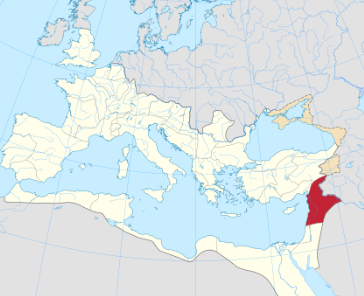
Syria became a vital eastern hub for Roman trade and military operations, serving as a base for campaigns against Parthia.
By the mid-1st century BC, the Seleucid Kingdom had weakened due to internal conflicts and external pressures. Following his victory over Mithridates VI of Pontus in the Third Mithridatic War, Pompey turned his attention to the unstable Seleucid territories. Pompey deposed the Seleucid king Philip II Philoromaeus, formally incorporating Syria as a Roman province.
Pompey reorganized the region, integrating Syria into Rome’s expanding eastern territories. Roman governance brought order to the previously fragmented region. Cities like Antioch, one of the largest and most prosperous cities in the ancient world, became major administrative and cultural centers under Roman rule.
Following Pompey’s defeat of the Seleucid kingdom, the province of Syria was established.
Syria served as a key eastern frontier for the Roman Empire, providing a base for operations against the Parthian Empire, a powerful rival. The province housed significant Roman military forces, particularly along the Euphrates River, to secure the empire’s eastern borders.
Positioned at the crossroads of several trade routes, including the Silk Road, Syria became a hub for commerce between the Roman world and the East. The province generated wealth through the trade of luxury goods such as silk, spices, and precious stones.
Syria was a melting pot of Hellenistic, Roman, and local cultures, exemplified by cities like Antioch and Palmyra. The region played a significant role in the spread of early Christianity, with Antioch becoming one of the first centers of Christian thought.
63 BC – Cilicia
Cilicia, located in southeastern Anatolia, was initially designated as a military command area in 102 BC to combat piracy in the eastern Mediterranean. For much of the early Roman intervention, the region lacked full Roman control, with operations largely focused on eliminating pirate strongholds.
Cilicia’s rugged coastline, with its numerous coves and inlets, made it an ideal base for pirates who disrupted trade and threatened coastal settlements. Rome’s intermittent campaigns against piracy culminated in Pompey the Great’s decisive actions during the Third Mithridatic War (73–63 BC). After defeating Mithridates VI of Pontus and suppressing piracy, Pompey reorganized Cilicia as a formal Roman province in 63 BC.
Under Pompey’s reorganization, Cilicia was expanded to include the neighboring regions of Lycia and Pamphylia, which had previously been loosely controlled by Rome. The province became more strategically important due to its proximity to other Roman territories, including Syria and Bithynia et Pontus.
Originally a military command area to combat piracy (102 BC), Cilicia came fully under Roman control after Pompey’s reorganization at the end of the Third Mithridatic War.
Cilicia was pivotal in ending Mediterranean piracy, restoring security to vital trade routes connecting Rome to the eastern provinces. Its coastal control allowed Rome to dominate maritime commerce in the region.
With its fertile plains and access to trade networks, Cilicia became an economically productive province. Agricultural goods, timber, and other resources from the region contributed to Rome’s wealth.
Located at the crossroads of Anatolia, the Levant, and Mesopotamia, Cilicia served as a staging ground for campaigns in the eastern Mediterranean and against Parthia. Cilicia’s cities, such as Tarsus, flourished under Roman rule, becoming centers of education, culture, and administration.
58 BC – Cyprus

The island of Cyprus was annexed after the death of its last king, Ptolemy of Cyprus, and merged with the province of Cilicia to form Cilicia et Cyprus.
The annexation of Cyprus occurred in 58 BC, marking the end of the island’s sovereignty under the rule of the Ptolemaic dynasty in Egypt. The island’s last king, Ptolemy of Cyprus, was a brother of Cleopatra VI and an independent ruler. His reign ended abruptly when Marcus Porcius Cato (Cato the Younger) was dispatched to oversee the island’s transition to Roman control following a decree by the Roman Senate.
The annexation of Cyprus was a politically motivated move during the turbulent late Republic. Cyprus was wealthy, strategically located, and controlled significant trade routes in the eastern Mediterranean. The Roman Senate justified its takeover by accusing Ptolemy of aiding pirates, a common pretext for Roman interventions during this period. Ptolemy of Cyprus chose suicide rather than face the humiliation of Roman subjugation. Following his death, Cyprus was incorporated into the province of Cilicia, forming the new combined province of Cilicia et Cyprus.
Cyprus’ central position in the eastern Mediterranean made it a critical asset for controlling trade routes between Asia Minor, Syria, Egypt, and Greece. It served as a key naval and logistical hub for Roman military operations in the region.
The island was renowned for its copper resources, essential for manufacturing weapons, tools, and coins in the Roman economy. Cyprus also produced timber, wine, and grain, contributing significantly to Rome’s provincial wealth.
Cyprus was strategically located for trade and provided valuable copper resources.
Roman rule brought administrative stability, which encouraged the development of cities like Salamis and Paphos. These cities became centers of Roman culture and governance, integrating Cyprus into the broader Roman world. Roman temples and infrastructure projects underscored the island’s assimilation into Roman civilization.
The merging of Cyprus with Cilicia allowed for streamlined governance, especially as both regions were strategically and economically interconnected. Under Roman rule, Cyprus played a dual role as a supplier of resources and a defensive outpost in the eastern Mediterranean.
46 BC – Africa Nova (Eastern Numidia)
The province of Africa Nova was created in 46 BC by Julius Caesar after his victory in the Battle of Thapsus, where he defeated the remnants of the Pompeian forces and their ally, King Juba I of Numidia. This annexation marked a pivotal expansion of Roman control in North Africa.
Juba I had aligned with Pompey during Caesar’s civil war. His defeat and subsequent suicide after the fall of his kingdom allowed Caesar to annex Numidia’s eastern territories. The territory, rich in resources and strategically located, was incorporated into the Roman provincial system under the name Africa Nova (New Africa) to distinguish it from Africa Vetus (Old Africa), the earlier province created after the destruction of Carthage in 146 BC.
Julius Caesar annexed Eastern Numidia following the defeat of Pompeian forces in the civil war.
Africa Nova included most of Eastern Numidia, corresponding to parts of modern-day Algeria and Tunisia. Caesar merged this new province with Africa Vetus, creating a larger and more consolidated North African economic zone. For a brief period, Augustus restored Juba II, the son of Juba I, as a client king (30–25 BC), but the territory later reverted to direct Roman control.
Agriculture: The fertile lands of Numidia were ideal for producing grain and olive oil, making the region one of Rome’s primary food suppliers. Africa Nova facilitated trade across the Mediterranean, boosting Rome’s economic dominance.
The annexation secured Rome’s western flank in North Africa and provided a base for future campaigns in Mauretania and beyond. It stabilized the region, reducing threats from local tribes and external adversaries.
Africa Nova’s cities, such as Cirta (modern Constantine), became centers of Roman administration and culture, advancing the Romanization of North Africa.
40 BC – Western Numidia
The annexation of Western Numidia in 40 BC marked the final step in integrating the territories of ancient Numidia into the Roman provincial system. Following a period of political instability and war, Rome expanded its hold over the region by merging Western Numidia with the existing province of Africa Nova, which had been established by Julius Caesar in 46 BC.
After the defeat of Pompeian forces in North Africa and the subsequent annexation of Eastern Numidia, Western Numidia remained a contentious and semi-autonomous territory.
The region’s ruler, King Arabio, initially maintained some level of autonomy after aligning with Caesar, but his reign ended abruptly in 40 BC when Marcus Antonius (Mark Antony) annexed the territory outright during the political reshuffling of the Second Triumvirate.
Western Numidia included parts of modern-day Algeria, west of the previously annexed Eastern Numidia. This annexation unified all of Numidia under Roman rule, consolidating it into a single administrative zone as part of Africa Nova. By integrating these territories, Rome extended its direct control further westward in North Africa.
The unification of Numidia into the Roman administrative system reinforced Roman authority in North Africa and ensured stability in the western Mediterranean.
The annexation eliminated any remaining threat of regional instability or external interference in the western Mediterranean. Western Numidia became a buffer zone, protecting Roman territories in Africa from incursions by tribal groups to the south and west.
Like Eastern Numidia, the western region was rich in fertile land that supported the production of grain, olive oil, and other agricultural goods, vital for the Roman economy. The annexation opened access to new trade routes and resources, further integrating the region into the Roman economic system.
Cities in Western Numidia, such as Cirta (modern Constantine), became centers of Roman administration and culture, spreading Roman law, architecture, and customs.
The integration of Western Numidia helped stabilize the broader African provinces, allowing for more efficient administration and reduced risk of rebellion.
Questions and Answers: Origins and Evolution of Roman Provinces
What was the original meaning of the term “provincia” in the Roman Republic?
Initially, “provincia” referred to a task or responsibility assigned to a Roman magistrate, often military in nature, rather than a geographic territory.
How did the concept of provinces evolve during the Roman Republic?
As Rome expanded, provinces became territorial units requiring governors to oversee taxation, law enforcement, and defense, transitioning from tasks to administrative regions.
Which was the first territorial province established by Rome, and when?
Sicily became Rome’s first territorial province in 241 BCE after the First Punic War.
What roles did Roman governors play in provincial administration during the Republic?
Governors, usually ex-consuls or ex-praetors, managed provinces with authority over judicial matters, military command, and financial administration.
What problems arose in the governance of Roman provinces during the Republic?
Corruption and exploitation by governors and tax collectors (publicani) caused resentment among local populations, leading to reforms like the Lex Calpurnia in 149 BCE to curb abuse.
How did provinces serve Rome’s military and economic strategies?
Provinces acted as bases for military campaigns and sources of revenue, providing taxes, grain, and other resources vital to Rome’s economy and expansion.
What major changes did Augustus introduce to provincial governance?
Augustus divided provinces into imperial provinces (controlled directly by him, containing most legions) and senatorial provinces (demilitarized and governed by proconsuls), ensuring stability and centralizing military control.
What was unique about the governance of Egypt under Augustus?
Egypt was governed by an equestrian prefect, not a senatorial governor, as it was considered Augustus’s personal domain due to its wealth and strategic importance.
What administrative innovations did Augustus implement?
Augustus standardized taxation with a census, extended governors’ terms in imperial provinces, and began forming a professional bureaucracy.
What reforms did Diocletian introduce in the 3rd century?
- Diocletian increased the number of provinces to over 100, improving governance.
- Provinces were grouped into dioceses overseen by vicars.
- Civil and military authority were separated to reduce rebellion risks.
How did Constantine the Great further develop the provincial system?
Constantine grouped dioceses into praetorian prefectures, overseen by praetorian prefects. He shifted the empire’s administrative focus to the eastern provinces by establishing Constantinople as a new capital.
What was the theme system, and when did it emerge?
By the 7th century, the theme system replaced the older provincial structure, integrating civil and military administration around military units, marking the transition to the Byzantine period.
What were the economic contributions of Roman provinces?
Provinces provided crucial revenue through taxes, grain, and resources, forming the economic backbone of the empire.
How did provinces contribute to Rome’s military strategy?
Border provinces housed legions, serving as buffers against external threats and securing Rome’s extensive frontiers.
What role did provinces play in cultural exchange?
Provinces facilitated Romanization, blending Roman and local traditions, laws, and languages, spreading Roman influence across diverse regions.
How did the governance of provinces reflect Rome’s adaptability?
The evolution from tasks to administrative regions, coupled with reforms by Augustus and Diocletian, highlights Rome’s ability to manage a vast and diverse empire effectively.





